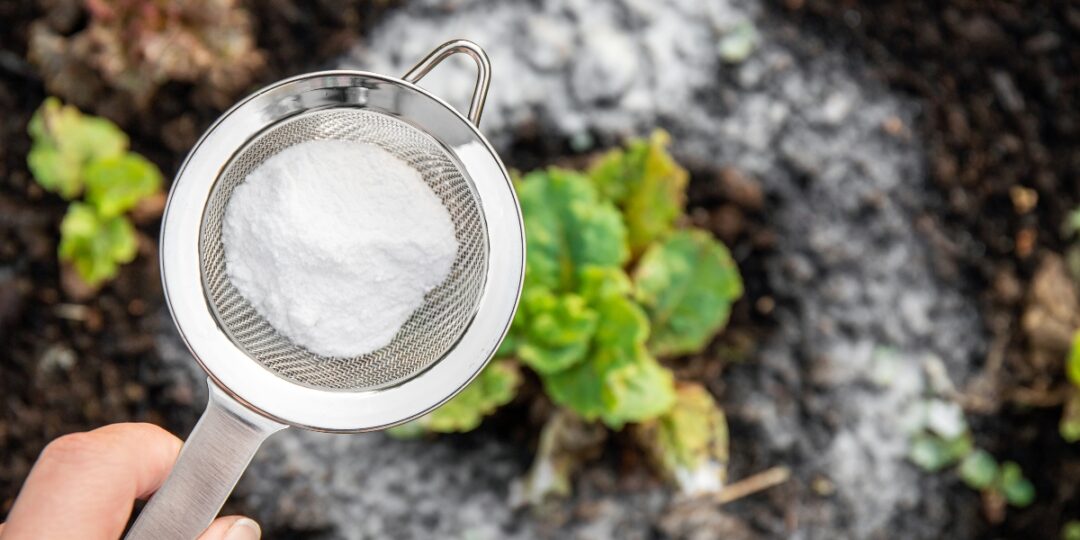
You already know what baking soda does in the kitchen. It lifts your biscuits and it takes the smell out of the fridge, and if you’ve ever scorched a pot, you know it’s the only thing that gets the bottom clean.
But that same baking soda is one of the best things you can carry out to the garden, and I think every homesteader should know what it can do!
It costs around $1, it never goes bad, and it handles a whole list of jobs you’ve probably been buying separate products for.
This is why I want to share with you how I use baking soda around the garden.
Also, I want to tell you more about some uses you can see promoted everywhere online that are actually not true, and even worse, they can destroy your harvest.
How Baking Soda Works
Baking soda is a salt; this explains both why it works and why you have to go easy with it.
When you mix it with water, it raises the pH of water, making it more alkaline. This means it makes whatever it touches a little less acidic.
This property is what makes it a trustworthy partner in your garden.
Now, let’s see what exactly the problems baking soda can handle.
The White Dust on Your Squash Leaves 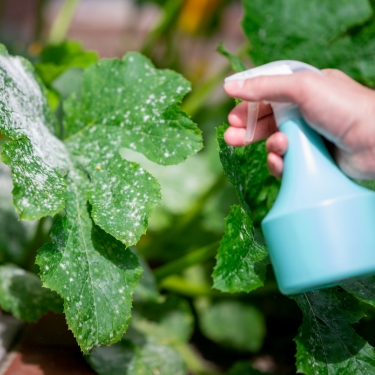
If you grow squash, cucumbers, or melons, you know the white dust that shows up on the leaves in late summer. That’s powdery mildew, and once it settles in, it’s very hard to get rid of it. So the trick is to spray before you see much of anything, or right when the first spots show up.
Now, baking soda can help you big time with this fungus because, due to its alkaline state, it kills it. But baking soda alone won’t do the job. You need to mix it with some oil. A light horticultural oil is perfect because the oil holds the baking soda on the leaf where it needs to stay.
Test one leaf first and wait a day. And don’t spray every week all summer, since that sodium ends up in your soil. Nothing exceptionally bad will happen, but the soil will become more alkaline and this migh mess up some plants.
But powdery mildew isn’t the only problem you might find on those squash leaves. Aphids and other little pests can cause plenty of trouble too, and baking soda isn’t the answer to everything.
There’s another homemade spray I want to show you. It’s a garlic-based pest spray the Amish still use in their gardens, and you can make it with ingredients you probably already have in your kitchen.
The interesting part is how you prepare the garlic before mixing everything together. Here you can find the exact amounts, the steps, and when to apply it.
See the homemade garlic spray recipe and exact measurements →
Wash More Pesticide Off Store-Bought Produce
I always wash everything I get from the store. Most of the fruits and vegetables you get from the supermarket were sprayed with pesticides. This is a risk I don’t want to take, so I prefer washing them well, not just a rinse.
This is how I found out about the baking soda bath trick.
Researchers at the University of Massachusetts soaked apples in a baking soda solution and compared it to plain tap water. The baking soda pulled far more pesticide residue off the skin. After about twelve minutes, 80 percent of one pesticide was gone, and 96 percent of the other came off after fifteen. Some of it had already worked its way into the fruit, though, and no amount of washing reaches that.
I use about one teaspoon of baking soda to two cups of water. So fill your sink or a big bowl, stir it in, and let your apples or grapes or tomatoes sit for twelve to fifteen minutes. Then rinse them under clean water and dry them.
Now, you probably grow a good bit of your own food, and that’s the whole point of a homestead. But you still buy things in the winter, and someone always sends you home with a bag of something.
Clean Pots and Seed Trays Before You Replant
Each time I pull my clay pots out for replanting, I notice that chalky white crust on the sides. This is normal. Just mineral and salt buildup from water and fertilizer.
If this is something you notice too, then you know very well how difficult it is to remove that buildup. Many times I ended up just dumping some good trays in the trash just because I was unable to clean them.
Then I discovered that you can actually use baking soda for this job and that stubborn buildup can’t stand it.
If you want to give it a try, dump the old soil, make a paste with baking soda and a little water, and scrub the pot with a stiff brush. The crust comes right off and you’re not breathing in anything harsh while you do it.
One single note: Baking soda cleans, but it does not disinfect. If the plant in that pot died of a disease, you should still soak it afterward in a bleach solution of one part bleach to nine parts water, then rinse it well and let it dry in the sun.
Clear Weeds Out of Cracks and Gravel
This is one of the most annoying gardening tasks. Getting the weeds out of cracks is difficult and doing it by hand is not a good choice for most people. Then you can use herbicides, but they are strong and poisonous.
Hopefully, baking soda can take care of the weeds quite well! It handles them without you crawling around on your knees.
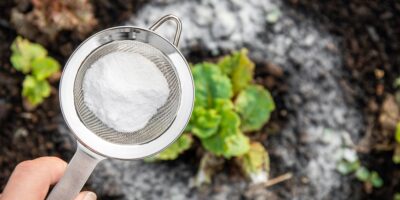
To do this, you first need to wet the area down so the powder sticks, or wait for a rain and apply the baking soda while the ground is still wet.
Sprinkle it straight onto the weed, right at the crown where the leaves meet the root. Sweep whatever spills down into the crack and leave it alone for a few days.
It works best on young, broadleaf weeds like dandelions, crabgrass and clover. The only thing is that this is not a quick fix. You need to give it time. Apply it a couple of times. The good news is that once the weeds are gone, they are gone for good.
But before you start getting rid of every weed on your property, there’s something I want you to know.
Remember those dandelions I mentioned? Well, they’re actually edible! You can eat the leaves, use the flowers in recipes, and even roast the roots to make a coffee substitute.
And dandelions aren’t the only useful plants we spend our time trying to get rid of. Some of the weeds growing around your homestead might be worth keeping.
The Forager’s Guide to Wild Foods shows you over 400 wild plants, with large color photos to help you identify them, their edible uses, and the poisonous lookalikes to watch out for.
See which common backyard weeds you might be throwing away →
Take Rust and Sap Off Your Tools
Pruners, trowels, and shears all get dirty and rusty while you’re working in the garden. This is normal. But you can extend their lifespan by taking care of them. This means cleaning them regularly.
And once again, you can use baking soda for this job.
Mix baking soda with just enough water to make a thick paste, smear it on, and let it sit for ten or fifteen minutes. Then scrub with steel wool or a stiff brush and rinse. Dry everything right away, because wet metal rusts again fast.
This works on light surface rust, not on a shovel that spent the winter out in the rain.
Once they’re clean, wipe the metal down with a little oil before you hang them up.
Stop the Scraps Bucket From Smelling Bad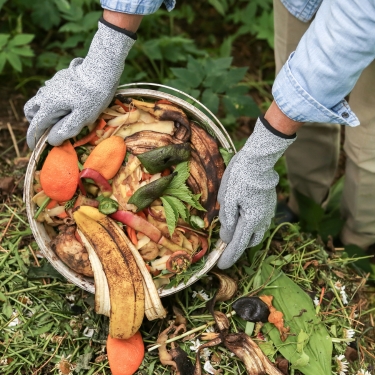
If you compost, there’s a high chance you’ve got a bucket sitting by the sink where you throw all the scraps. The main problem is that the bucket will start to smell. This is unavoidable.
The good news you can make the smell disappear.
A spoonful of baking soda sprinkled over the top knocks the odor back. Do the same with the trash can and the lid of your outdoor bin. And this is the secret: you need to place the baking soda on the lid. You can’t just throw it inside the bucket because it will kill the good bacteria that make the compost good.
Clean Your Hands
Tomato vines leave that dark green stain on your fingers, and black walnut hulls will dye them brown for a week. Garlic and onion stick with you no matter how much soap you use.
Pour a little baking soda into your wet palms, scrub it around like you would with soap, and rinse. It lifts the stain and takes the smell with it, and it’s gentler on cracked, dry hands than the gritty shop soap in the garage.
Now, baking soda is good at getting the dirt out of your hands, but what about the dry, cracked skin you’re left with after a long day in the garden?
This is the herbal salve I use on my hands. It’s made with yarrow, calendula, and plantain, three herbs traditionally used to soothe irritated skin. The olive oil and beeswax also help soften rough skin and lock in moisture. I especially like having it around when my hands get dry from working outside.
Three Baking Soda Tips You Should Avoid
These three show up everywhere, and I don’t want you wasting your time on them.
Sweeter tomatoes – This one tells you to sprinkle baking soda around the base of the plant to cut the acid. Sweetness comes almost entirely from the variety you planted and the sun it gets, not from small pH tweaks, and a dusting on the surface barely moves the soil pH anyway. If you want sweet tomatoes, grow a sweet variety.
Fixing your soil pH – Baking soda is not a soil amendment and it’s not a fertilizer. When your soil runs too acidic, you should reach for agricultural limestone instead. All you’d accomplish with the baking soda is loading sodium into your beds.
The vinegar and baking soda soil test – It’s a fun kitchen experiment and that’s about it. It only gives you a rough range, never a real number. Your county extension office will test a sample properly, often for very little money, and that’s the one you should act on.
Final Thoughts
What I like about baking soda is the same thing I like about most of the old tricks. It’s cheap and it’s already in the house, and it handles a few jobs that a whole shelf of expensive bottles claims to handle.
This is why I have baking soda within reach on my homestead.
Do you use baking soda on your homestead? Tell me in the comments section below!
You may also like: 
If You See This Weed In Your Garden, Your Soil Is in Trouble…
10 Amish Recipes Every Homesteader Should Know (Video)
Veggies You Only Plant Once And Harvest Forever
Why You Should Bury Your Cotton Underwear in the Garden
Too Much Zucchini? 10 Smart Ways to Use and Preserve It