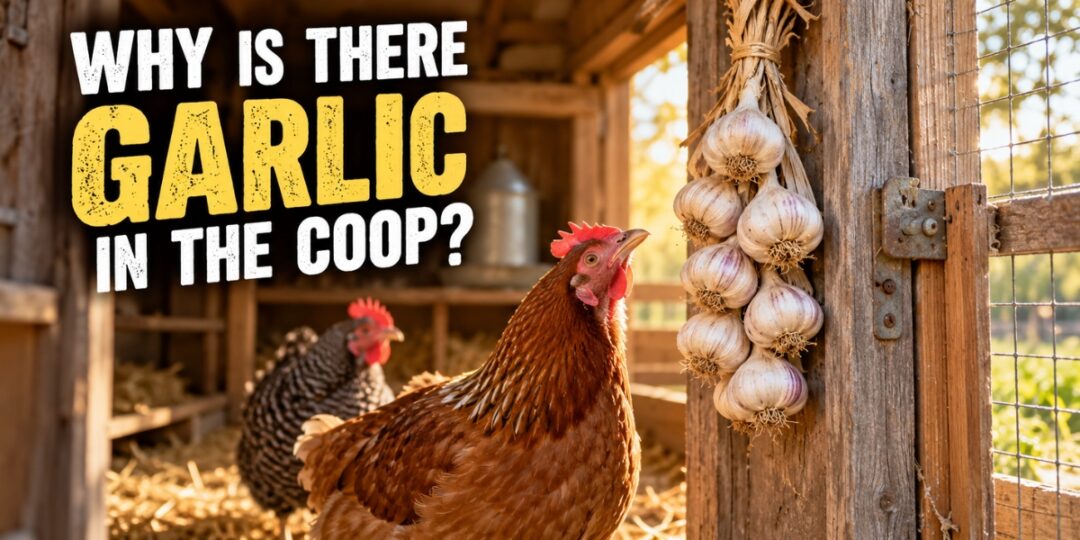
Each time I visited a fellow homesteader, I started noticing something: they all had garlic in their chicken coops. I also braid garlic and keep it hung in my barn or shed, so I was curious why these guys chose the coop.
First it was one coop, hanging off a nail by the door. Then another one, tucked up in the rafters. And after the third time, I finally asked about it, because at that point it stopped looking like a coincidence.
The man I asked spent close to forty years running a commercial laying house before he got out of it. Thousands of birds. He keeps about two dozen hens now, for himself, and there’s a braid of garlic hanging right inside his coop door.
He told me it keeps the smell down in there, and that it keeps the bugs off his birds. He also told me that people will swear it runs the mice off, and that in forty years he has never once seen that happen.
And then he told me the part I wasn’t expecting, which is that the bulb hanging on the nail is the smallest piece of it, and if that’s all you’re doing, you’re mostly just decorating.
So let me pass along the whole thing, the way he passed it to me.
Why People Started Using Garlic in Coops
Mostly because of mites and lice. People wanted to protect their birds and that’s how they came up with this solution.
Those little pests can wear a bird down without making a big show of it. A hen may not look sick at first. She just gets quieter. She may stop wanting to go into the coop at night. Her comb can start looking pale. Egg production falls off.
Then one day you realize she has not laid in two weeks and you start wondering what happened.
Mites are easy to miss because they are tiny. If you are suspicious, go out after dark, pick up one of your hens, and part the feathers around her vent. Look right down at the skin. If something is there, you may see it moving.
The trouble is, the birds are only part of the problem.
You have to pay attention to the building too.
And one big problem you might have is the structure of your chicken coop itself. Many coops are just tiny spaces that are cramped and do not let the birds breathe properly.
Besides the fact that this type of coop makes viruses and parasites in general spread faster between chickens, it’s also the perfect place for mites. They tend to hide during the day in tight, dark cracks and crevices such as roost joints, screw holes, seams, nest-box corners, and gaps between boards.
I struggled with this problem and this is how I decided it’s time to upgrade my chicken coop. I was treating my chickens for mites and it was simply not working.
The coop was to blame…
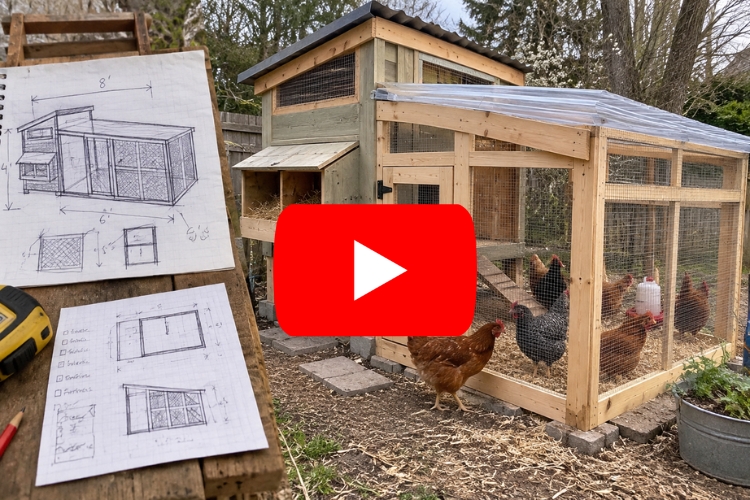
I sorted this out by creating an additional space for my coop. I created an “Amish chicken annex.” This is basically a smaller coop attached to the main one that is built respecting the Amish rules.
They value the lives of their birds so much more than us and this is why they have so much eggs and also healthier birds. This additional space gave my birds what was missing: a larger nesting area, light, and ventilation.
If you want to try this project yourself, I just want to let you know that it’s much simpler than it sounds.
Click here if you want to keep your hens healthier and more productive.
The Bulb Hanging There Isn’t the Important Part
This was the part that made the whole thing click for me.
Garlic does not release much until you break it open.
Think about a head of garlic sitting on your kitchen counter. It can sit there for weeks and barely smell like anything. Smash one clove with the side of a knife and suddenly the whole kitchen knows about it.
The same thing applies in the coop.
A dry bulb hanging untouched from a nail is not releasing much. It may look right, and it may smell a little when the air is damp, but that is not where most of the useful action is happening.
The old fellow I talked to still hangs his.
So do I.
Mostly because it is handy to have there.
This Is The Most Important Thing 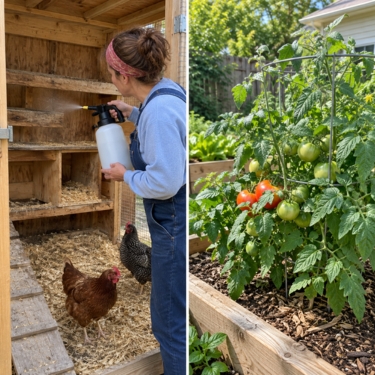
If you want to fully take advantage of “coop garlic,” you need to know about this.
This is the garlic spray and how to make it.
For a roughly 10% garlic spray, use about one part garlic to nine parts water. For a quart-sized batch, that works out to around two good heads of garlic, depending on how big they are.
Peel the cloves and crush them well. I mean really break them up. A garlic press works, or a food processor is faster.
Once they are crushed, let them sit for about 10 to 15 minutes before adding the water. Then pour in the water and let the mixture steep for a couple of hours.
I make mine fresh. I don’t mix it the night before and leave it sitting on the counter until morning. Garlic changes pretty quickly once it is crushed and diluted, and I would rather use it while it is fresh.
After it steeps, strain it well. Cheesecloth works, or a fine kitchen strainer.
When you spray the coop, don’t waste your time misting the open middle of the wall.
Go where the bugs hide. Spray the underside and ends of the roost bars. Get into cracks, seams, nest-box corners, joints, screw holes, and any place where two pieces of wood meet.
One treatment may not be enough because eggs can hatch after the first spraying. The routine I was shown was once a week for three weeks.
Virginia Cooperative Extension has also discussed a 10% garlic solution for fowl mites.
And here’s a little secret I want to share with you. You can make this garlic spray more potent just by adding ginger.
And you know what’s the best part?
If you do this, you can also use it in your garden as a pest spray that will keep annoying plant-eating bugs away. The first month I tried it in my garden beds, I was amazed by what it can do.
And it’s 100% organic, made by your own hands. What more can you want?
So if you want to keep your coop and garden healthy, click here.
Should You Add It to the Water Too?
You can do this if you want. You can also add it to feed.
The easy version is a clove or two of crushed garlic in a gallon of drinking water for a short stretch.
If your hens refuse it, start lighter. If the water tastes strange enough, some of them will simply drink less of it. You don’t want this to happen.
Another trick is to mix garlic powder into the feed. Some poultry research has used around a pound and a half of garlic powder per fifty pounds of feed.
I put garlic in the water, but I don’t do this all the time. I’m more likely to use garlic when the weather warms up and the bugs get active, or if I notice a bird looking a little run down.
Also, I won’t expect garlic in the water or feed to clear an infestation on its own. If there’s an active infestation, it’s vet time.
The Story of The Coop That Smelled Like a Pizzeria
This was one of my favorite things I found while looking into all of this.
Researchers at Clemson fed garlic to laying hens while looking at ways to reduce the manure smell inside poultry houses.
After a few weeks, the building reportedly smelled more like a pizzeria than a chicken house.
If you have ever opened a shut-up coop in August, you know why anybody would be interested in that.
They tested the eggs too.
Unfortunately, the eggs didn’t come out tasting like garlic bread. The garlic-fed hens actually produced eggs that tasters described as milder than eggs from the regular group.
So if you were picturing garlic-flavored scrambled eggs, that does not seem to be much of a concern.
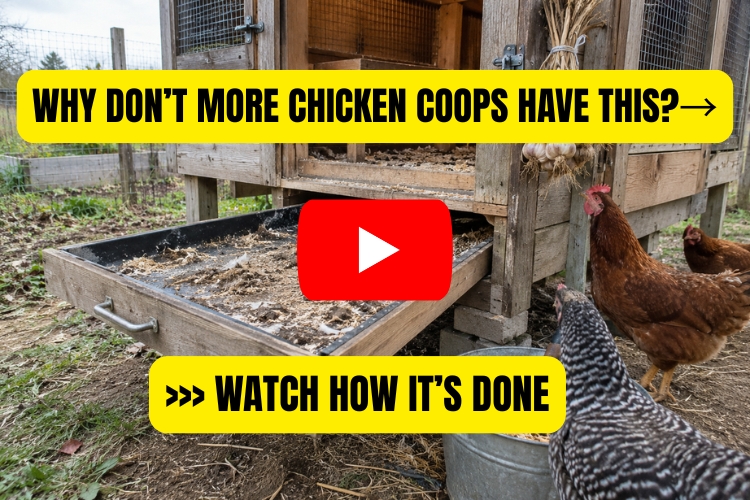
But do you know what would be even better than a coop that smells like pizza? A coop that’s easy to clean.
Cleaning the chicken coop is one of the most tedious tasks on a homestead. But you can reduce the cleaning time by using one simple trick.
All you have to do is transform your regular coop into an easy-cleaning chicken coop.
This is an easy DIY upgrade that makes cleaning more accessible. And it’s great if you struggle with back pain like me.
Click here and see how it’s done, step-by-step.
What Garlic Will Not Fix
Garlic gets credit for all sorts of things, and not all of them hold up.
It will not solve a mouse problem.
That was the first thing the old poultry man warned me about. Strong smells may bother mice for a while, but if they have easy access to feed, they have a good reason to stay.
If you have mice, fix the feed storage and close up their way into the coop. I also like to set some DIY traps. See how to make them here.
It is not a replacement for a proper wormer.
If you are dealing with an actual worm problem, use the right treatment.
It will not rescue a coop that is crawling with mites.
If your birds are pale, weak, and covered in pests, strip the coop, clean it out, and use an appropriate treatment for the infestation.
You can bring it back into the garlic routine afterward.
More is not always better.
Garlic belongs to the same plant family as onions. The amounts used in normal poultry-feed trials are one thing. Dumping huge quantities into feed because a little seemed useful is another.
Be careful, especially with young birds.
You may also like: 
How to Build a Predator-Proof Automatic Chicken Coop Door
What Doctors Do to Keep Their Immunity High (Video)
Should You Paint Your Chicken Coop Blue?
Why Your Chickens Might Be Poisoning Their Own Eggs
I Put Cayenne Pepper in My Chicken Feed (Here’s What Happened)