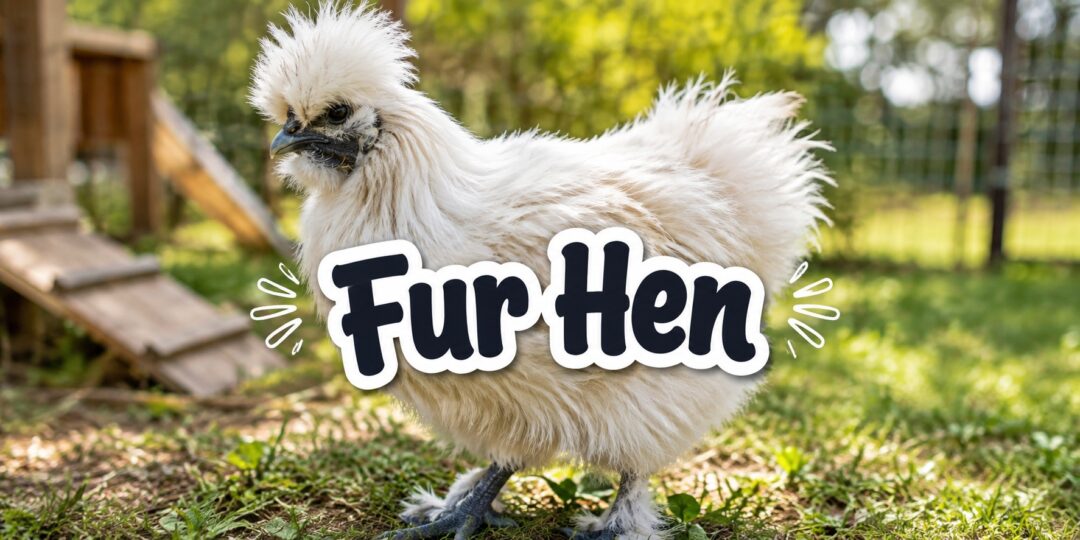
If you have ever seen a photo of a chicken that looks more like a small, walking pom-pom than a bird, you have met a fur hen. It is not an official breed name, it is a descriptive nickname that has caught on for chickens whose feathers grow soft, loose, and fur-like instead of the sleek, interlocking feathers you would picture on a typical hen.
This guide covers what actually causes that fur-like texture, which breeds earn the nickname, and the real care differences that come with owning one of these unusually soft birds.
What Does “Fur Hen” Actually Mean?
A fur hen is any domestic chicken with unusually soft, downy, fur-textured feathers rather than the smooth, tightly structured feathers of a standard breed. These birds are entirely ordinary chickens genetically, Gallus gallus domesticus, the same species behind every laying hen in a typical backyard flock. The difference comes down to one specific structural change in how their feathers grow.
The Genetics Behind Fur-Like Feathers
A normal chicken feather stays sleek because of tiny hooked structures called hooklets, which lock adjacent barbules together into a flat, closed vane, the same way Velcro grips itself closed. According to research published in PLOS Genetics, fur-feathered chickens carry a recessive mutation that reduces expression of a gene called PDSS2, and birds with two copies of this mutation fail to form those hooklets at all. Without hooklets, the feather barbs stay loose and separated, which is exactly what produces that soft, fur-like texture instead of a normal closed feather.
This trait, sometimes called silky-feather or hookless plumage, is fixed in a small number of breeds and is inherited in a straightforward recessive pattern, meaning a chicken needs the mutation from both parents to actually display the fur-like coat.
The Silkie: The Original Fur Hen
When most people picture a fur hen, they are picturing a Silkie, the breed responsible for popularizing this look. Silkies have been documented for centuries, with the earliest Western account often credited to Marco Polo’s 13th-century travel writing describing chickens with hair like a cat’s fur. The breed was formally recognized in the American Poultry Association’s Standard of Perfection in 1874.
- Fur-like plumage: Caused by the PDSS2 mutation described above, giving the bird its signature soft, hair-like coat
- Black skin and bones: Silkies carry a separate genetic trait called fibromelanosis, an extra deposit of dark pigment in the skin and connective tissue, giving them a striking blue-black skin tone unrelated to their feather texture
- Five toes: Most chickens have four toes per foot. Silkies have five, a trait called polydactyly
- Blue earlobes and a walnut-shaped comb round out the breed’s unmistakable look
Despite their exotic appearance, Silkies are a well-established, widely available breed rather than some kind of rare hybrid or genetically engineered novelty.
Other Chickens People Call “Fur Hens”
Silkies are the true fur-feathered breed, but a couple of other fluffy-looking chickens sometimes get lumped into the same casual nickname.
- Frizzle: Frizzle feathering curls backward toward the head instead of lying flat, caused by a completely different mutation in a gene called KRT75 that weakens the feather’s central shaft. Frizzled birds look wild and windblown rather than furry, but the unusual texture invites the same comparison
- Cochin: Known for extremely dense, fluffy plumage that covers even their legs and feet, giving them a soft, rounded silhouette. Cochin feathers still have normal hooklet structure, so they are fluffy rather than genuinely fur-textured, but their sheer volume of soft feathering often earns them the same nickname
If you are shopping for a fur hen specifically for that fur-like feel, Silkies are the only breed that will actually deliver it, since they are the only common breed carrying the true hookless mutation.
Fur Hen Care: What’s Actually Different
Fur-feathered birds need a few adjustments compared to standard breeds, and it all traces back to the same missing hooklets that give them their look. The same PLOS Genetics research notes plainly that these chickens lose normal flight function and cope poorly with extreme temperatures because their feathers never form the closed, weatherproof vane that gives standard feathers their insulating and water-shedding properties.
- Not waterproof: Fur hen feathers soak through in rain far more easily than standard feathers, so reliable dry shelter is essential, not optional
- Reduced cold tolerance: The open, air-filled structure that would normally trap warmth in a standard feather doesn’t form the same way, so a well-insulated, draft-free coop matters more for these breeds heading into winter
- Limited flight: Fur hens can barely fly, which makes them easy to contain with a low fence, but also more vulnerable to ground predators since they cannot escape upward
- Vision and mud issues: Crested varieties can have feathers that obscure their eyesight, and heavily feathered feet track more mud and bedding into the coop, so more frequent cleaning helps prevent matting and health issues
- Heat handling: Despite the fluffy look, most fur hens tolerate moderate heat reasonably well, though shade and fresh water remain essential in summer like any flock
Egg Laying and Broodiness
If eggs are your primary goal, a fur hen like the Silkie will disappoint you on volume alone, typically producing around 100 to 120 small, cream-colored eggs a year, well behind standard production breeds. What they lack in quantity, they make up for in one specific behavior: broodiness.
Silkies are famous among poultry keepers for going broody more readily and more persistently than almost any other breed, and for being exceptional mothers once they do. Many backyard flock owners keep a Silkie specifically to hatch and raise eggs from other, less broody breeds, including duck and quail eggs, since a determined Silkie hen will reliably sit on and raise chicks that aren’t genetically her own.
Temperament and Why They’re So Popular
Fur hens, and Silkies especially, have a reputation as some of the calmest, friendliest birds in the chicken world. They tolerate handling well, get along easily with children, and adapt to confinement better than more active breeds, which is part of why they have become popular both as working flock members and as genuine backyard pets rather than purely production animals.
Practical Fur Hen Coop Setup Tips
- Prioritize a fully weatherproof roof and walls, since these birds cannot rely on their own feathers for water resistance the way standard breeds can
- Keep the run as mud-free as possible with good drainage or a layer of sand, since fluffy foot feathering picks up dirt and moisture easily
- Provide a lower roost bar than usual. Fur hens are poor flyers and can struggle to reach a standard-height roost
- House them separately from more aggressive, standard-feathered breeds when possible, since fur hens tend to rank low in flock pecking order
- Check leg and foot feathering periodically for mud balls or mites, which can go unnoticed under all that fluff
Common Mistakes
- Assuming a fur hen is a rare or exotic species rather than a standard chicken breed with a specific feather mutation
- Leaving fur-feathered birds without adequate rain shelter, assuming their fluffy look means extra insulation from moisture
- Buying one expecting strong egg production, when broodiness and temperament are really the draw
- Housing them with larger, more assertive breeds without watching for bullying, given their calm, lower-ranking temperament
Keeping Chickens Is Only One of the Skills Worth Bringing Back
Learning how to raise a hardy backyard flock is about much more than choosing the right breed. Once you start keeping chickens, you quickly discover how many practical skills previous generations simply considered part of everyday life—building and repairing what you need, producing and preserving food, working with animals, making useful household supplies, and becoming less dependent on things you have to buy.
That is exactly the kind of knowledge collected in The Lost Skills of Independence.
This practical guide brings forgotten self-reliance skills back into the modern home and homestead, showing you how to do more for yourself with straightforward projects and traditional know-how. Instead of relying on expensive equipment or specialized services for every problem, you can begin developing the skills to grow, build, preserve, repair, prepare, and provide with your own hands.
And chicken keeping fits naturally into that bigger picture. A backyard flock can provide eggs, help control insects, turn scraps into something useful, contribute valuable manure to the garden, and even hatch the next generation of your flock. Combine that with gardening, food preservation, practical DIY projects, and other traditional skills, and you are no longer learning isolated tricks—you are building a more resilient household.
Whether you already have a homestead or simply want to become more capable, resourceful, and prepared at home, there is enormous value in rediscovering the knowledge our grandparents once took for granted.
👉 Discover The Lost Skills of Independence and start rebuilding the practical skills that can help you depend less on stores, services, and fragile modern conveniences, and more on what you can do for yourself!
Frequently Asked Questions
Is a fur hen a genetically modified chicken?
No. The fur-like feather trait is a naturally occurring, centuries-old mutation, formally identified in a gene called PDSS2, not a product of modern genetic engineering.
Can fur hens fly over a fence?
Generally no. Their lack of properly structured flight feathers severely limits their ability to fly, so a modest fence is usually enough to contain them, though this also means they cannot escape ground predators as easily.
Do fur hens taste different if raised for meat?
Silkies, the primary fur hen breed, are valued in some Asian cuisines specifically for their dark blue-black meat and bones, prized in certain traditional dishes and considered a delicacy rather than a standard meat bird.
Are fur hens good for beginners?
Their calm temperament makes them excellent for first-time keepers and families with children, though their vulnerability to wet, cold conditions means beginners do need to pay closer attention to shelter quality than they might with a hardier standard breed.
You may also like: 
Join Our Homesteading Facebook Group!
This Secret Amish Recipe Will Keep Your Chickens Healthy All Year Long (Video)
Step By Step For Butchering Chicken
How Many Eggs Does a Chicken Lay a Day?
Can Chickens Have Pineapple? What Every Flock Owner Needs to Know