
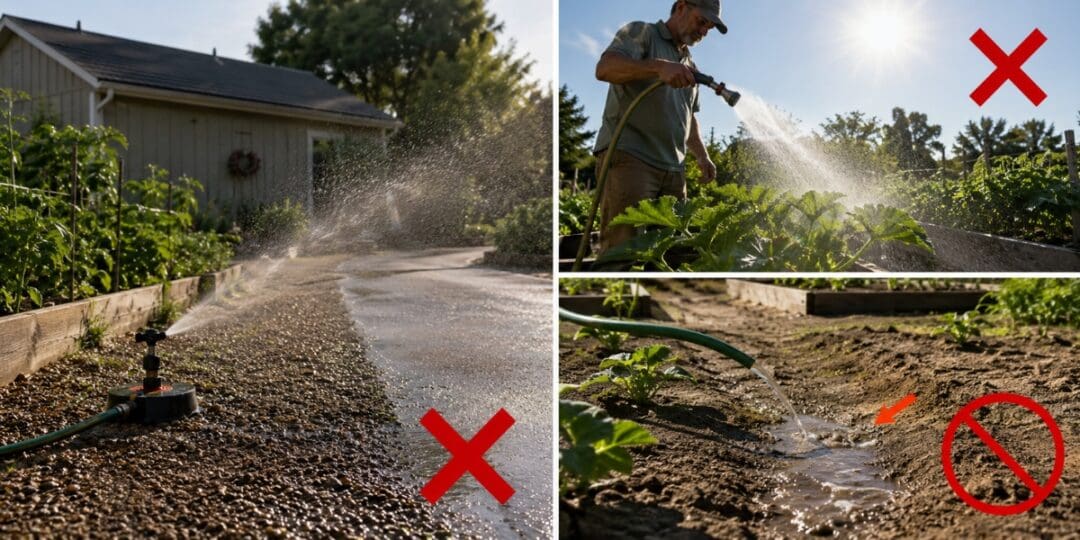
There’s a high chance you water the garden, walk away, and maybe think the job’s done. But a lot of the water you use never gets near a root because of some basic but incredibly common mistakes even the most experienced homesteaders make!
In many cases, the water runs off, blows sideways, or dries up before it soaks in. If you’re pulling from a well or watching your rain barrels drop every dry week, that waste adds up fast. Here are ten watering habits that waste your water and also how to fix each one of them.
Watering So Fast It Runs Right Off
Dry, compacted, or clay-heavy soil can’t absorb water as fast as your hose pours. Water pools, then slides off toward the path or the low spot in the yard, and you’ve watered your gravel instead of your garden. Bone-dry soil is even worse. When it gets too dry, it turns water-repellent, so the first splash beads up and rolls off like it hit wax.
I ran into this with a patch of tomatoes I let dry out during a hot stretch. I watered it every evening and the top would look damp, but when I dug down two inches, the soil was dust. The water was running off the sides faster than it could soak in.
The fix is to slow down and water in stages. Give the soil a short soak, let it rest ten or fifteen minutes so the surface softens, then come back and water again. Folks call this cycle and soak, and it gives the ground time to actually take the water in. The same trick works for a dried-out pot. Set it in a tub of water and let it drink from the bottom for half an hour.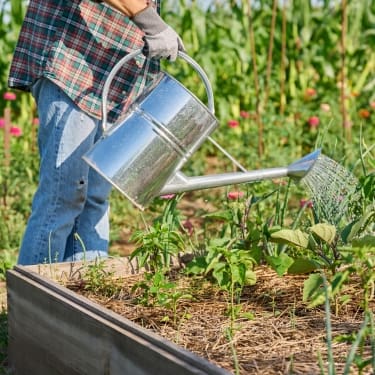
But if you want to avoid this problem effectively, one of the easiest fixes is to plant inside garden beds.
Many homesteaders avoid garden beds because they don’t last long. And they are right. Wooden beds rot after a while and metal ones rust. These are facts.
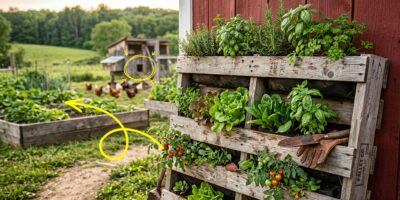
But what people always miss is that the way you build those garden beds makes a huge difference. For example, the Amish have a special method they use to make their raised garden beds, and these beds last for decades. Nobody talks about this.
Considering that they’ve mastered the art of self-sufficient living, the Amish found a way to make their garden beds literally indestructible. Water doesn’t make their beds rot and the most surprising thing about all of this is that you don’t even need exceptional tools to do that.
All you have to do is build all of your garden beds instead of buying cheap ones that get destroyed in one or two seasons.
👉 Here’s how Amish build their garden beds…
Watering the Whole Garden the Same Way
Your tomatoes, your established fruit trees, and your herbs don’t drink at the same rate, so watering them all on one setting means somebody’s always getting shorted or drowned.
Usually you end up overwatering the tough plants just to keep the thirsty ones happy, and all that extra water you use because of this is pure waste.
This matters even more when your water is finite. If you’re hauling from a tank or pulling off rain barrels, every gallon you dump on a shrub that didn’t need it is a gallon your seedlings don’t get.
So group your plants by how much they drink. Keep the thirsty ones, like seedlings, greens, and anything in a container, close together where you can give them attention, and let the drought-tough plants fend for themselves once they’re established. If you run drip, put those groups on separate lines so you can water them differently.
Quick Daily Sprinkles Instead of Deep Soaks
A light splash every evening might feel like the right thing to do, but it might be the reason your plants can’t handle a dry week. Shallow watering only wets the top inch or two, and roots follow the water. Keep the moisture up top and your roots stay up top, shallow and fragile, right where the sun cooks them first.
Water deep and less often instead. When you soak the soil down six or eight inches, roots chase it down and build a system that can ride out a hot spell without you needing to water them constantly. Deep, infrequent watering grows deep roots and real drought tolerance. Frequent little sips do the opposite, keeping everything shallow and needy.
Most vegetable gardens do fine on about an inch of water a week, given in a couple of good soaks rather than seven little ones.
The DIY “Well” That Doesn’t Need Drilling
Most people never think twice about water.
They turn on the faucet, fill a glass, and assume it will always be there.
But wells can run dry. Pumps can fail. Storms can interrupt the supply. And when something goes wrong, bottled water disappears from store shelves faster than almost anything else.
Also, when you have no water left, this means your garden will become thirsty and if you don’t do something quickly, all your plants will be gone in just a couple of days.
One misfortune and you not only lose your access to water but also lose all the food you were growing on your land.
That’s why having a few containers stored away is helpful, but it still leaves one big question:
What happens when the stored water runs out?
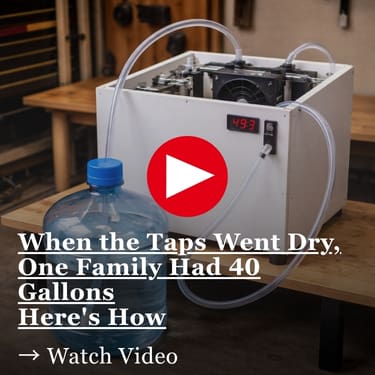
Joseph’s Well is a powerful device that offers a different approach. It’s a small system you can build that is designed to collect moisture from the air and turn it into water. It is all based on condensation and the best thing about it is that it uses common components and doesn’t require drilling a well.
You don’t need to be an engineer to have this on your homestead. All you need to do is be responsible and think about the future of your homestead.
👉 Watch this video and see how Joseph’s Well works
Never Checking How Deep the Water Got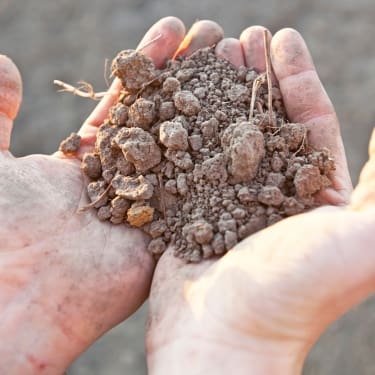
Here’s the one that fooled me for months when I first started gardeing. The surface looks wet, so you assume the job’s done. But just because the top layer of soil gets dark doesn’t tell you anything about what’s happening down where the roots live.
You need to check it yourself. Wait twenty minutes after watering, then push a long screwdriver or a stick into the bed. If it slides in easily, the water got down there. If it stops short, you didn’t water deep enough. It’s a two-second check that costs you nothing.
Pro Tip
While you’re at it, set an empty tuna can under your sprinkler next time it runs. Once the can has about an inch of water in it, you’ve put down roughly a week’s worth. It’s a junk-drawer way to find out how much you really need to water.
Spraying the Leaves Instead of the Roots
Water sitting on leaves for too long is one of the worst things that can happen to a plant. Most of it dries off the foliage before it ever reaches the soil, and the water that lingers overnight equals trouble. Wet leaves in the dark are how powdery mildew and leaf spot creep take over a garden. It also attracts various bugs that, besides being annoying, can destroy your harvest.
When watering, aim low, at the base of the plant where the roots are. A watering wand, a soaker hose, or a drip line keeps the water where it belongs and off the leaves entirely.
This matters double if you’re watering from a pond or creek during a dry spell. That surface water can carry things you don’t want splashed on your lettuce or anything else you’ll eat raw. Get it to the soil, not onto the salad.
How To Make An Organic Insecticide
Ok, so if standing water attracts pests that can’t wait to munch on your harvest, there should be a way to make them disappear, right?
In fact, there are many ways to deal with these intruders, but you’re the only one who can decide which one is the best for you and your safety. Many people rely on store-bought insecticides. This might be the first instinct you get, but think about what happens in the long run. In most cases, the bugs are not the only ones that end up eating the insecticide! If you use them in your garden, you might also end up eating poison and this is probably a thing you don’t want. Poisoning your entire harvest doesn’t sound like a smart idea.
Hopefully you don’t need to rely on store-bought poisonous insecticides because when nature causes a problem, the same nature offers you solutions.
This is why making your own organic insecticide might be the best decision in the long run. I’ve been preparing this easy DIY insecticide for years, and both I and my garden are happier than ever. All you need are natural ingredients you can find in your garden, such as ginger, garlic, and chilli. All of these are irritants that keep bugs far, far away from your harvest.
Letting the Sprinkler Water the Driveway
Try to go out while your sprinkler is running sometime and just watch where the water actually lands. I did this once and found a whole arc of mine soaking the fence and a strip of gravel path. That water wasn’t growing anything but moss.
Wind makes it worse. A breeze that doesn’t feel like much will carry fine spray clear off your beds and onto the pavement. The EPA’s WaterSense program figures we lose as much as half our outdoor water to wind, evaporation, and runoff, and a sprinkler throwing spray onto the driveway on a breezy afternoon is a big piece of that.
Point your heads at your plants and away from the driveway and the fence. It sounds obvious until you go check your own setup.
Move or adjust your heads so every drop lands on something living. And skip sprinkler watering on windy days. You’re just feeding the air.
Watering in the Heat of the Day
Midday watering seems a good idea, especially during a severe heat wave, but I want to tell you why this is one of the biggest mistakes you can make.
When the sun’s high and the ground’s hot, more of your water evaporates before the soil can take it in, and with a sprinkler, the wind carries off even more.
Water early in the morning instead, before the day heats up. The soil’s cool, the wind’s usually calm, and your plants go into the hot hours already full. Somewhere between five and nine is the sweet spot. And while we’re here, that old worry about water droplets scorching leaves in the sun is a myth. Your plants are fine.
Ignoring a Slow Leak
A drip you can barely see will out-waste every other mistake on this list, because it runs day and night whether you’re watering or not. An irrigation leak no wider than a dime can waste thousands of gallons in a single month. That’s a whole stack of rain barrels gone to nothing.
Homestead drip systems might have this problem. You run a line off a barrel or a tank, it works, and you forget about it. Then a connector loosens, or a critter chews through an emitter, and your gravity-fed pressure starts losing water.
So, you need to be careful and, from time to time, just check and see if there are any problems. Check the spot where your hose screws onto the spigot, since a worn washer there drips constantly. Look for a puddle or a patch that’s greener and wetter than everything around it. That’s usually where your water is escaping.
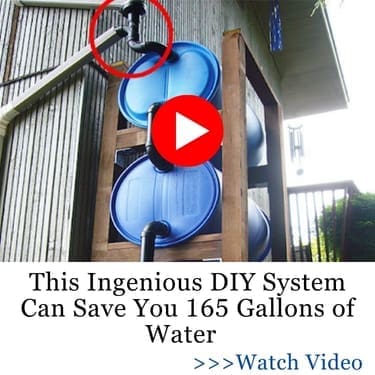
How to Store Rainwater For 365 Days
Considering that this article is all about water, I also wanted to touch on this subject.
When you want to become 100% self-sufficient, rainwater might be your greatest friend. After all, it’s free water.
But the main problem with rainwater is that it doesn’t last long. Like, sure, you can collect it in barrels, and after a while, mold and fungus can grow and I am sure you don’t want that on your plants.
The secret is that not so many homesteaders know how to store their water correctly. Putting it in a blue barrel is not enough.
Hopefully, making it last longer is an easy task that anybody can do at home with just a few items you find in any Walmart.
Once you use this “water storage protocol,” your water will remain usable and will also become safe to drink.
Here, you can see how to make your rainwater last for an entire year.
Watering on a Timer Through the Rain
An automatic timer is a wonderful thing right up until it’s watering your garden in the middle of a downpour. A simple clock timer has no idea when it’s raining or not.
So if there’s rain, it dumps water on already-soaked soil, which drowns roots and washes nutrients down past them. Horrible things to happen to your garden.
Get in the habit of shutting the timer off when rain is coming, or add a cheap rain sensor that does it for you. And reset the whole schedule as the seasons turn, because your July watering has no business running in October.
A smarter, weather-aware controller can cut your watering by a good chunk over a season, which is real money off the well pump or the water bill.
Leaving the Soil Bare
Bare dirt is an open door for your water to escape. With nothing covering it, the sun and wind pull moisture straight out of the top few inches all day long, so a lot of what you put down in the morning is already gone by afternoon.
A couple inches of mulch changes that. Straw, wood chips, shredded leaves, whatever you’ve got on hand. It shades the soil, holds the damp in, and chokes out the weeds that would drink your water anyway. A bed I keep mulched needs watering about half as often as one I leave bare.
Spread two or three inches around your plants and keep it pulled back an inch or so from the stems so nothing rots. It’s the cheapest water-saver you’ll ever put down, and it feeds the soil as it breaks apart.
Final Thoughts
If I had to point you to one thing you need to fix first, I’d start with mulch and morning watering, since they cost almost nothing and pay off right away.
The biggest advantage fixing these mistakes gives you is that you’ll water less, your plants will do better, and your barrels will stretch further into the dry months.
You may also like: 
What Happens if You “Water” Your Garden With Spoiled Milk
How to Make S.O.s (S*** on a Shingle) (Video)
9 Plants That Grow With No Water
How to Build a DIY Rainwater Collector
7 Old-Fashioned Ways to Find Water on Your Land












This explained so much about why my beds dry out so fast — I’ve definitely been guilty of shallow evening watering. Checking the soil a knuckle deep before reaching for the hose is such a simple habit, yet it clearly changes everything. Drip lines are going on the shopping list this weekend. Thanks for breaking these mistakes down so clearly!