The first time you reach into a nesting box and pull out a blue egg, you stop and stare. I did. It was sitting right there next to the usual brown ones, and the blue color was so clear and so unexpected that I was almost sure something had gone wrong with my hen.
It hadn’t. That blue egg is one of the prettiest surprises a backyard flock can hand you, and there’s a real reason behind it. So I want to walk you through why it happens, which hens give you those eggs, and how to get blue ones if that’s what you’re after. At the end, I’ll show you how to figure out which hen in your flock is laying the blue ones.
What Makes a Blue Egg Blue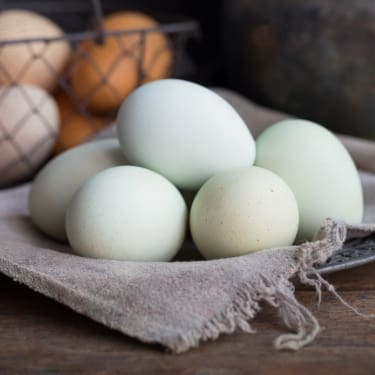
Every eggshell starts out white. That’s just the calcium it’s built from. The color comes later, from pigments the hen adds while the egg is still forming inside her.
A brown egg gets its color near the very end, almost like a last coat of paint brushed over the outside of the shell. That’s why a brown egg is still white on the inside when you crack it open.
Blue eggs are different because the pigment gets worked all the way through the shell while it’s being built, instead of going on at the end. So the egg comes out blue outside but also inside. If you crack one open and look at the inside of the shell. It’s blue there too, and that’s the easiest way to tell apart a real blue egg from one that’s only tinted on the surface.
And the pigment itself? It’s the same stuff that gives a healing bruise that greenish color. The hen’s body makes it on its own, and in blue-egg hens, a little of it gets into the shell.
The Strange Reason This Happens
This is the most surprising part.
Hens lay blue eggs because… *drum rolls*
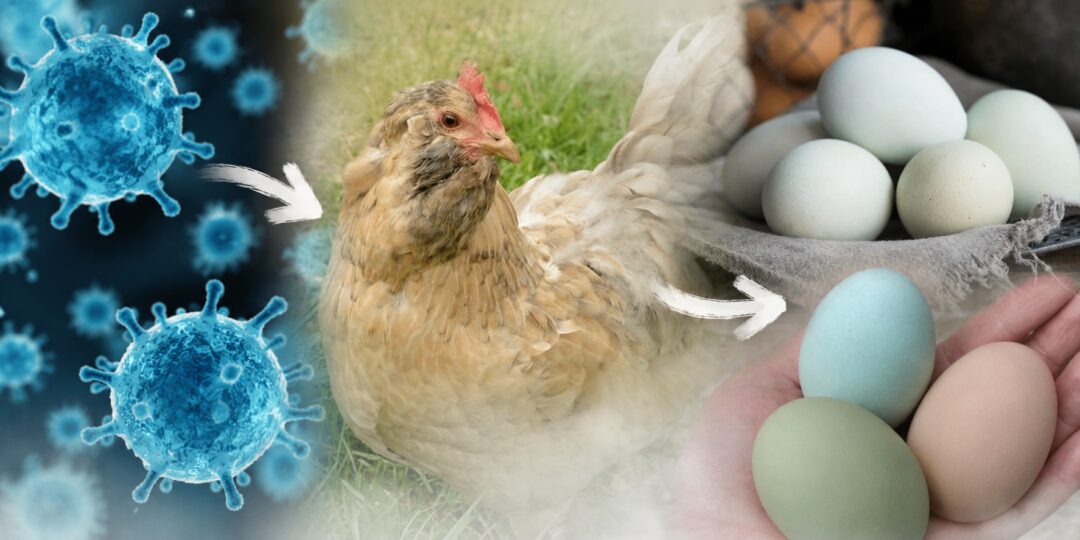
It all happens because of an ancient virus. A very long time ago, a harmless virus slipped a tiny piece of itself into the DNA of some chickens, and instead of causing a disaster, that little piece flipped a switch that told the hen’s body to send blue pigment into her eggshells.
The switch got passed down, generation after generation, all the way to the hens in coops today. So every blue egg you’ve ever seen traces back to that one event. And it happened twice, on its own, in two different corners of the world. Once in South America and once in Asia. Two separate weird events, leading to the same strange result.
When you hold a blue egg, you’re holding the tail end of something that happened thousands of years ago.
Now, this was all about a harmless virus, but eggs can also be infected by viruses that can make you sick. Is there a way to recognize an infected egg? If you’re thinking about the color, well, you’re not looking in the right place.
Usually sick eggs come from sick chicken. I’ll leave an image for you to see what a sick chicken looks like. I had no idea about this at first, but someone who grew up on a homestead showed me this photo, and I immediately understood… so if you see a chicken that looks like that, think twice before eating the egg. It might be very bad.
Some chickens seem fine, but if they sit down as you see in the image, stay away! I’ll leave you the resource right here that taught me how to see if a chicken is sick before it lays eggs.

Does the Color Change the Egg Inside?
This is the question most of us have and I want to make things clear from the start.
No. A blue egg is the same inside as a white or brown one. Same taste, same nutrition, same everything. The shell color only tells you about the hen’s genetics.
It has nothing to do with her health or her feed either. You can’t feed a hen something to turn her eggs blue, and a brown-egg hen will never start laying blue ones no matter how well you treat her. It’s all settled before she even hatches.
So when someone tells you blue eggs are healthier, it’s just misinformation. No matter the color of the shell, the eggs are all the same.
The Coop That Will Make Your Chickens Lay More Eggs
Before I tell you more about what breeds to choose if you want blue eggs, I want to talk a little bit about how to give your chickens the best conditions. After all, this is the only way to boost egg production.
The #1 cause of a sudden drop in laying is stress. Yes, chickens stress too and this affects how many eggs they lay and also their overall health. This is why you should strive to offer them the most comfortable coop possible.
Their coop should be designed to meet all their needs, things like enough light, good nest boxes, ventilation without drafts, protection against extreme temperatures, and enough space. I know all of these sound like common sense, but meeting all of these needs is not always that easy.
For example, hens need around 14 hours of daylight to keep laying steadily, which is why production drops off on its own as the days get short in fall. Yes, you can let them roam free most of the day, but this is mostly possible during spring and summer, depending on where you live. Winter is another story, but they still need all that light even during colder months.
What you can do
Now, you have two options: you can buy an already built coop or build one yourself.
The first option might be tempting, and I get it; getting the whole thing already done is so convenient. But here’s the catch: since you don’t want to compromise on quality, you’ll have to pay. Really, if you want to buy a coop that meets all of the requirements to have a happy and healthy flock, you are going to end up spending thousands of dollars.
So, let’s take another glance at the other option, building your own coop. The effort might sound off-putting, but if you think about it, this is probably the best option. You control how everything is made and how much you spend. And trust me, you can make a perfectly functional coop on a budget.
When my husband and I built the coop we use today, we wanted to make it by the book and be sure it’s comfortable for our chickens. That’s how we found out that the Amish build their chicken coops following a strict set of rules they preserved for generations.
You can imagine that once we heard about that, we wanted to build the Amish chicken coop since it seemed like a great option. The problem is that we were not able to find information about this anywhere. So, we started asking around.
At some point, someone from the local Facebook group reached out and told us that they might have what we’re looking for. They told us about this book that has this project and maybe we would like it.
And indeed, there we found the full instructions for building the Amish chicken coop, with pictures and materials and everything you need. This is the coop that we have today, and it truly meets all the needs our chickens have. The needs I listed above about space and light.
👉 If this is of any interest to you, there’s more info about this project here
The Breeds That Actually Lay Blue Eggs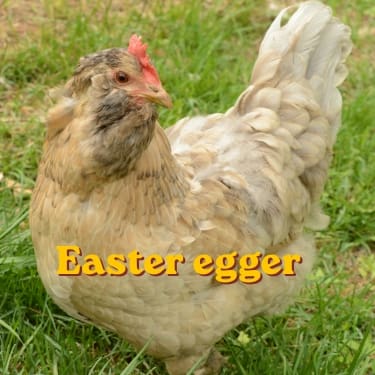
If you want blue eggs in your basket, you need the right birds. Here are the ones worth knowing.
Ameraucana – This is the breed I usually point new folks toward, and I’ll tell you why through my own dumb mistake. My first two “Ameraucanas” came from a feed store, and I didn’t find out they were something else until they started laying green instead of blue.
Turned out they were Easter Eggers wearing the wrong label. A true Ameraucana lays blue, full stop. They’ve got a fluffy beard and muffs around the face that give them a friendly, whiskered look, and they take the cold just fine. Just buy from someone who actually knows their stock, not a bin by the register.
Araucana – Here’s the original blue-egg breed, the one all the others came from. They’re rare, a little tricky to breed, and they have no tail and tufts of feathers near their ears. Beautiful birds, but harder to find, so most homesteaders go with one of the others.
Cream Legbar – A good layer that gives you blue to blue-green eggs, with a little crest of feathers on the head. There’s a bonus here too. You can tell the boys from the girls the day they hatch by their markings, which saves you the wait and the surprise roosters.
Easter Egger – This is the fun one, but you’ll want to understand it before you buy. An Easter Egger isn’t a true breed. It’s a mixed bird that carries the blue gene from a blue-egg parent crossed with something else. Because of that mix, you don’t know what color any single Easter Egger will lay until she gives you her first egg. She might lay blue, green, pinkish, or even a soft tan.
That surprise is exactly how people end up with green when they were promised blue, and I’ll explain why that green happens in a minute. None of it makes them lesser birds, though. Those two accidental Easter Eggers of mine turned into some of the sweetest hens in my coop.
If you want a guarantee, go with a true Ameraucana, Araucana, or Cream Legbar from a real breeder. If you like a little mystery and don’t mind a rainbow basket, Easter Eggers are usually cheaper and just as fun.
One thing to set straight before you order a dozen chicks. None of these are heavy layers. My Ameraucana gives me about four eggs a week in her good stretch, while my brown hens hand me six or seven without breaking a sweat.
That’s the trade. So if you want eggs to sell, keep some steady brown layers in the mix and treat the blue ones as the bonus. And don’t be surprised when the color fades a bit as a hen ages or lays hard. The first eggs of the season come out the most vivid, and they soften over the months. That’s just how it goes.
Also, there’s a pretty common problem most people have when they start to raise chickens. And what’s funny about it is that when experienced homesteaders hear what this “problem” is, they’ll smile because in reality this is a blessing people don’t know how to take advantage of.
So, what happens when you realize you have too many eggs? Yes, this might happen and you might be baffled by it. As I mentioned earlier, one way is to sell them. This is a great way to make some extra cash. Also, if you want to learn more about bartering items just like the Amish do, you can find more info here.
But besides this, there is one more thing the Amish do with eggs. They add a secret white powder and nobody knows for sure why they do this. Some say it’s for preservation; others think it serves another purpose, but what we know for sure is that they do this only when they have a surplus of eggs. This is one of the most well-kept secrets of the Amish community.
So, why the Amish coat fresh eggs with this mysterious white powder?
👉 Click here and find out the real answer straight from an ex-Amish.
Why Some “Blue” Eggs Come Out Green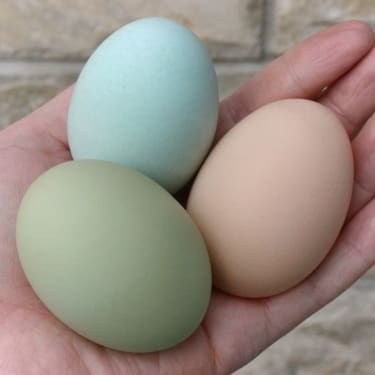
If you bring home a blue layer and start finding green eggs in the box, you haven’t been cheated. This is the most common surprise with these birds.
The first time one of mine came out a muddy olive, I was sure the hen was sick, or the egg had gone bad somehow. Nope. She was just doing exactly what her genes told her to.
Green happens when a hen carries the blue gene and the brown gene at the same time.
Remember how blue goes all the way through the shell and brown gets painted on top? Well, when a hen does both at once, you end up with a blue shell wearing a brown wash, and your eye reads that combination as green. The more brown she lays down, the more olive the egg looks. A little less brown, and it stays closer to a soft blue-green.
So a green egg isn’t a blue egg gone wrong. It’s just a blue egg wearing a light brown coat. This is why Easter Eggers are such a tossup, and why olive and sage and teal all show up in the same basket.
How to Tell Which Hen Laid Which Egg
Once I had a few colored layers going at the same time, I kept finding eggs in the box with no idea which hen to thank. It bugged me more than it should have. So I found a simple way to match each bird to her eggs, and it doesn’t cost a thing.
Start by watching their faces. A hen that lays blue or green eggs usually has what’s called a pea comb, which is that small, low, bumpy comb sitting flat against the head, instead of the tall single comb you see on most brown-egg hens. It’s not a perfect rule, but it’ll narrow the field down fast.
Next, do a little detective work over a week or so. All you need is a soft pencil and a small notebook you can leave out in the coop.
Keep your hens penned in the run one morning instead of letting them out, so every egg gets laid in the box where you can find it. Check the box a few times through the morning rather than once at the end of the day. When you find a colored egg, see which hen is sitting in there or has just stepped out, and write down what she looks like and the egg color on the same line.
Do this for a few mornings and a pattern starts to show up. The same hen keeps turning up with the same color egg, and pretty soon you can match each bird to her eggs without even thinking about it.
Final Thoughts
Blue eggs are one of those small but fun things about owning chickens.
If you want them, get a true Ameraucana or a Cream Legbar and you’ll have them. If you’d rather be surprised, a few Easter Eggers will fill your basket with every shade under the sun.
I still have my first blue layer’s daughter out in the coop. Every time I find one of her eggs, I think about how far back that color goes, and how it found its way to me through nothing more than a hen doing what hens do.
New to Chickens? Start Here
If reading this article has you thinking about starting your own flock, I am happy to hear that. But I want to tell you some things I wished somebody told me when I first started.
When I got my first chickens, I made lots of mistakes and all of them cost me money and time. For example, I lost a couple of birds to a raccoon I should have planned for, bought feed and gear I never used, and picked breeds that didn’t suit my space.
None of it was the end of the world, but it was a discouraging way to begin, and most of it came down to not being properly informed. Simply, I was lacking knowledge.
But you don’t have to go thoug all of this. I know that when you’re about to start something new, buying your first chickens feels exciting, but try to take a step back and make sure you first know what you need to do.
There’s no real reason to buy gear that you don’t really need and lose money. This is the most common mistake homesteaders make. And I get it; I did it too, and it is hard, especially nowadays when the internet is full of products for everything just a click away.
Try to focus on the important things. How to pick breeds that fit your climate and space, how to set up a coop the right size with the gear you truly need, a simple daily routine, and how to keep your flock safe from predators and sickness.
If you want to see more, you can find everything you need in Emma Harrison’s First-Time Chicken Keeper’s Checklist. This is a 5-out-of-5-star guide when it comes to chicken raising and offers you a deep understanding of the first steps you need to take when starting your own flock.
Inside you’ll find 6 modules:
- Getting Started – the first decisions to make before any birds arrive
- Coop Essentials – size, ventilation, nesting, and build-or-buy
- Choosing Your Chickens – picking breeds for your climate and goals
- Daily Care Routine – feeding, water, and the everyday rhythm
- Seasonal Management – keeping the flock healthy through summer and winter
- Problem Prevention – spotting and avoiding the common, costly mistakes
This will prepare you to welcome your first blue egg-laying hens.
👉 Find out more about this guide here
You may also like: 
What Happens When You Let Chickens Free Range Full Time
Building Your Garden Beds Like This Will Double Your Harvest (Video)
How to Raise Chickens for Reliable Egg Production
I Fed Stinging Nettles to My Chickens, and This Happened