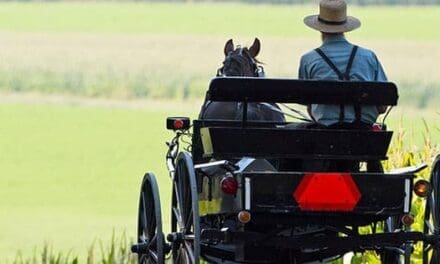
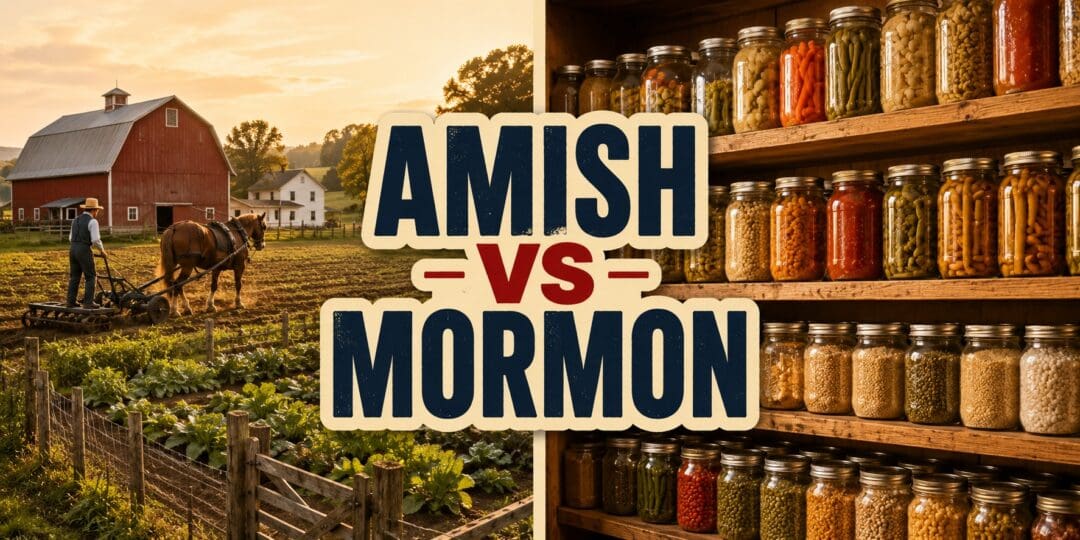
When it comes to self-sufficiency in America, two communities stand above the rest: the Amish and the Latter-day Saints, commonly known as Mormons. Both have built cultures around independence from outside systems, with deep traditions of food production, preservation, community cooperation, and practical skills that most of the modern world has completely forgotten. Both have survived economic downturns, social upheaval, and disruption that devastated less-prepared neighbors.
But their approaches could hardly be more different. The Amish achieve self-sufficiency through deliberate technological restraint, keeping modern systems at arm’s length and building deep community bonds within tight-knit settlements. The Latter-day Saints pursue self-sufficiency through systematic preparation within modern life, using contemporary tools and infrastructure to build robust household reserves and individual skill sets.
For homesteaders, preppers, and self-reliance practitioners, studying both communities is one of the most efficient ways to upgrade your own preparedness philosophy. You do not need to share either group’s religious beliefs to benefit enormously from what they have built. This article compares the two traditions across every dimension that matters to the self-sufficient homesteader: food storage, farming, community structure, practical skills, and the philosophical frameworks that sustain it all.
A note on terminology and respect: The term ‘Mormon’ is the commonly used informal name for members of The Church of Jesus Christ of Latter-day Saints (LDS Church). Both terms are used here interchangeably, as both are widely recognized. This article approaches both communities with respect. The self-sufficiency practices described here draw on publicly documented, widely shared information from both traditions and are presented for educational purposes.
At a Glance: How the Two Traditions Differ
Before going deep on each dimension, it helps to have a clear picture of how these two communities approach self-sufficiency at a high level.
On technology, the Amish deliberately limit what tools and systems they adopt, evaluating each through the lens of community and faith. The Latter-day Saints embrace modern technology fully, seeing it as a neutral resource in service of preparedness goals. On food storage, the Amish grow, preserve, and consume seasonally in a continuous agricultural cycle, while the LDS tradition emphasizes systematic long-term reserves with documented quantities and rotation systems. On community, the Amish organize around the Gmay, a tight geographic church district of 25 to 35 households with deep daily interdependence, while LDS members organize through a ward and stake system that spans modern suburban and urban geographies.
On the question of what drives the self-sufficiency, the motivations diverge sharply. Amish self-sufficiency flows from a theological worldview of separation from the world and communal yielding. LDS preparedness is framed explicitly as religious duty, with the church teaching that temporal readiness is a commandment. On skill transmission, the Amish pass skills through daily lived practice and apprenticeship from childhood, while the LDS tradition relies more heavily on formal programs, published curricula, and organized church training. Both approaches work, and both have produced communities that stand as models for anyone serious about resilience.
The Philosophical Roots of Self-Sufficiency in Each Tradition
Understanding why each community values self-sufficiency is essential to understanding how they practice it. The motivations are different, which produces different strengths and different blind spots.
Amish: Separation from the World
The Amish are an Anabaptist Christian tradition descended from 16th-century Swiss and German religious reformers. Their approach to self-sufficiency flows directly from the theological concept of Gelassenheit: a German word encompassing yielding, humility, submission to God and community, and separation from the corrupting influence of the world. Technology is not rejected on principle but evaluated through the lens of whether it strengthens or weakens community bonds and separation from worldly dependency.
This is why the Amish will use a tractor but keep its steel wheels to prevent it being used on roads. Why they will accept a telephone in a shared barn but not in the home. The goal is not primitivism; it is deliberate insulation from systems that create dependency and erode community. Self-sufficiency is not a preparedness strategy; it is the natural expression of a theological worldview that has been lived continuously for more than 300 years.
The Amish population in the United States has grown from approximately 8,000 in 1900 to more than 370,000 today, doubling roughly every 20 years. This is a community not in decline but in vigorous growth, suggesting its model is sustainable in ways that merit serious study.
Latter-day Saints: Preparedness as Commandment
The LDS Church has taught formal self-reliance and preparedness doctrine since the 19th century, rooted in the experiences of early church members who crossed the American plains under enormous hardship. The theological basis is explicit: members are taught that the body is a stewardship from God and that failure to prepare for temporal needs is a form of poor stewardship. The LDS Church’s official preparedness teachings frame self-reliance as one of the fundamental duties of a faithful member.
Unlike the Amish approach, LDS preparedness is explicitly forward-looking and system-oriented. The church has published detailed, practical guidance on food storage quantities, rotation systems, financial preparedness, and skill development that would be at home in any serious prepper library. Members are encouraged to build their preparedness incrementally within the context of normal modern life.
The LDS Church operates one of the largest private welfare systems in the United States, including bishop’s storehouses, humanitarian aid programs, and employment assistance centers. This infrastructure represents a mature, tested mutual aid network that has operated at scale for generations.
Food Storage: The Core Self-Sufficiency Practice
Food storage is where the practical differences between the two traditions are most visible and most instructive for homesteaders.
The Amish Approach: Cellar, Root Vegetables, and Fermentation
Amish food storage is inseparable from Amish food production. The system is not about buying products and stockpiling them; it is about growing, harvesting, preserving, and storing in a continuous seasonal cycle. A well-provisioned Amish household typically maintains a root cellar stocked with potatoes, carrots, beets, turnips, cabbages, and winter squash from the summer and autumn harvest, alongside hundreds of quarts of home-canned vegetables, fruits, meats, and soups. Crocks of lacto-fermented vegetables, smoked and cured meats from autumn butchering, dried beans and grains, rendered lard and tallow, and quantities of apple butter and fruit preserves round out the stores.
What distinguishes Amish food storage from most modern preparedness approaches is that it is fully integrated into daily life. The canning does not happen on a special preparedness weekend; it happens every summer as a matter of course. The root cellar is not a backup; it is the pantry. The system is self-renewing because it is embedded in the agricultural cycle. Amish communities in Lancaster County, Pennsylvania, are estimated to maintain enough food in storage to sustain their households for six months to a full year at any given time, simply as a byproduct of their normal food production practices.
The LDS Approach: Systematic, Documented, and Scalable
The LDS Church has published specific, detailed guidance on food storage that is freely available to anyone. The current standard recommendation is a three-month supply of foods your family normally eats, combined with a longer-term supply of staple foods sufficient for one year per person. Staples include wheat, rice, legumes, oats, sugar, salt, and powdered milk, with specific quantities, storage guidelines, and rotation systems all documented and distributed through church channels.
The LDS Church Home Storage Center system operates facilities across the United States where members can purchase bulk staple foods at cost and package them in sealed cans or mylar pouches with oxygen absorbers for long-term storage. These facilities are open to non-members in many locations. The church estimates that properly stored wheat sealed in nitrogen-flushed cans will remain nutritionally viable for 25 to 30 years.
The LDS food storage system is specifically designed for modern households that do not farm. It works in apartments, suburban homes, and urban environments. The emphasis is on shelf-stable, calorie-dense staples that require minimal infrastructure to store and can be integrated into normal cooking through a regular rotation system. Water storage is explicitly included in the framework, with one gallon per person per day as the standard recommendation for a minimum two-week supply. Financial reserves are treated as part of the same preparedness system, with members taught to maintain three to six months of living expenses in accessible savings.
Farming and Food Production
Amish Farming: Small-Scale, Intensive, and Animal-Powered
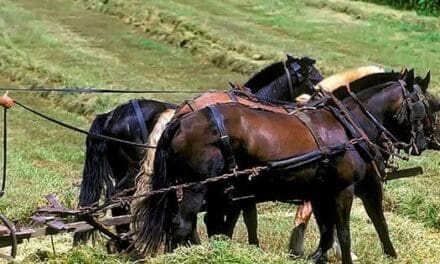
Amish farming practices vary significantly by district and region but share common features that distinguish them sharply from mainstream American agriculture. Most Amish farms are 50 to 150 acres, small by commercial standards, and intensively cultivated using draft horses or mules for primary field work. The combination of animal power, high crop diversity, and deeply ingrained traditional knowledge produces farms that are remarkably productive without the fossil fuel dependency of modern agriculture.
A comprehensive study by researchers at the Rodale Institute found that organic farming systems comparable to Amish practices maintain yields within 20 percent of conventional systems after a transition period, with dramatically lower input costs and significantly better soil health outcomes over time. The Amish figured this out through practice centuries before the research confirmed it.
Typical Amish farm production includes field crops such as corn, wheat, oats, and hay, alongside large kitchen gardens, orchards, dairy cattle, beef cattle, hogs, and poultry. The integration of livestock into the farming system provides manure fertility, closing the nutrient loop in a way that modern industrial farming has broken. Many communities also maintain specialty crops such as tobacco in some Pennsylvania districts or market vegetables in others, providing cash income that funds community needs while keeping the farm operation central.
LDS Approach: Home Gardens and Practical Food Skills
LDS preparedness teachings explicitly include home food production as part of the self-reliance system, though farming is not the cultural center of LDS life as it is for the Amish. The emphasis is on what is practical for the average member: a productive kitchen garden, fruit trees where space allows, and the food preservation skills to convert fresh produce into long-term storage.
The LDS Church has historically operated agricultural programs and continues to encourage home gardening through its welfare and self-reliance curriculum. Many LDS communities maintain group gardens and orchards that members tend collectively. The BYU-Idaho Center for Self-Reliance offers publicly accessible courses on food production, financial literacy, and practical homesteading skills that draw on generations of LDS preparedness tradition.
Practical Self-Sufficiency Skills: Side by Side
This is where both communities offer the most concrete lessons for homesteaders. Both have maintained practical skill traditions that the broader culture has largely abandoned.
Skills the Amish Excel At
The Amish skill base is broad, deep, and maintained through daily practice across generations. Draft horse management, including hitching, working, breeding, and caring for horses, is a living skill in Amish communities that has largely disappeared from mainstream farming. Traditional woodworking and furniture making allows many Amish communities to generate significant income from hand-crafted products produced with minimal power tool use. Quilting and textile skills maintain real garment construction and mending knowledge that few modern households retain.
Water-powered and hand-powered food processing tools including grain mills, butter churns, and apple presses are in active daily use rather than in museums. Traditional barn raising remains how barns get built, with dozens of community members contributing skilled labor in a single coordinated effort. Whole-animal butchering knowledge, from slaughter to finished cuts, sausage, lard, and cured meats, is transmitted across generations as a matter of course. Many Amish communities also maintain active knowledge of herbal remedies and traditional healing practices, often blended with practical modern medicine for serious conditions.
Skills the LDS Tradition Excels At
The LDS skill base is strongest in the organization and management dimensions of self-sufficiency. The LDS rotation and inventory system is the most practically refined food storage management approach of any major community in America. LDS preparedness culture includes specific training on cooking with stored staples and using camp stoves, dutch ovens, and solar ovens when grid power is unavailable. Because wheat berries are central to LDS food storage, many LDS households maintain active skill in grinding wheat, baking whole-grain bread, and cooking whole grains in ways most modern households have completely lost.
The LDS emphasis on financial self-reliance produces measurable outcomes: active LDS members carry significantly lower consumer debt levels than comparable demographic groups, a direct result of generations of formal teaching on debt avoidance and reserve building. The ward system creates a ready-made neighborhood mutual aid network with established leadership and communication systems that activates rapidly in disasters. LDS families who follow the storage program also develop genuine proficiency in pressure canning, water bath canning, and food dehydration across a broad range of foods.
What to Learn from Each Tradition by Skill Area
For homesteaders wanting to draw practical lessons from both traditions, here is how the two approaches compare across the skill areas that matter most.
- Food preservation: Learn fermentation, smoking, curing, and whole-animal processing from the Amish. Learn systematic canning rotation, long-term staple storage, oxygen absorbers, and mylar sealing from the LDS tradition.
- Food storage duration: The Amish excel at root cellar management, no-electricity storage, and eating seasonally from what you grew. The LDS tradition excels at 25-plus year staple storage using moisture and oxygen control systems.
- Farming: The Amish offer unmatched knowledge of draft animal use, soil stewardship, and mixed farming systems. The LDS tradition is more instructive on maximizing home garden productivity and small-space food production within a suburban context.
- Community resilience: The Amish barn-raising model and embedded daily mutual aid has no modern equivalent for depth. The LDS organized ward welfare, bishop’s storehouse, and ministering networks offer a more replicable structural model for dispersed modern communities.
- Financial resilience: The Amish minimal-debt culture, barter economy, and community financial pooling is difficult to replicate without the surrounding community. The LDS formal debt-avoidance teaching and three-to-six-month expense reserve recommendation is immediately actionable for any household.
- Water and energy independence: Amish spring-fed systems, wind pumps, gravity water, and no-grid operations represent deep off-grid operational knowledge. LDS preparedness addresses water storage protocols and 72-hour kit planning more systematically for modern households.
- Skill transmission: The Amish daily apprenticeship model, where children learn by doing from birth, is the gold standard for genuine skill retention. The LDS formal classes, published curricula, and church-organized training events are more accessible entry points for adults starting from scratch.
Community Structure and Mutual Aid
Both communities have built mutual aid systems that dwarf anything available to isolated modern households. This is perhaps the most important lesson for independent homesteaders.
The Amish Gmay
The foundational unit of Amish community life is the Gmay, or church district, typically comprising 25 to 35 households within a defined geographic area. The Gmay is simultaneously the worship community, the governance structure, the mutual aid network, and the social world of its members. When an Amish family faces a barn fire, a medical crisis, or a crop failure, the Gmay responds immediately with labor, materials, food, and financial assistance.
This is not charity in the modern sense; it is mutual obligation that flows in all directions. Every family contributes to every other family’s crises because they know the same support will be available to them. The system does not require bureaucracy, applications, or means testing. It requires only community membership and the trust built through shared daily life. Many Amish communities also maintain their own mutual aid insurance funds that cover fire, storm damage, and major medical costs, keeping money within the community and maintaining community accountability for risk.
The LDS Ward System
The LDS Church organizes its members geographically into wards (congregations of roughly 200 to 500 members) and stakes (groups of wards covering a region). Unlike the Amish Gmay, LDS wards encompass members spread across modern suburban or urban geographies, but the organizational system still creates meaningful mutual aid capacity. Ward members are assigned ministering brothers and sisters who maintain regular contact with assigned households, creating a welfare check network that operates continuously.
The LDS Bishop’s Storehouse system represents one of the most sophisticated private welfare infrastructures in the country. Members experiencing hardship can receive food, household goods, and financial assistance through their bishop without means testing or government involvement. The system is funded by member fast offerings and operates on a dignity-preserving model that treats recipients as temporary beneficiaries who will contribute again when able.
What Homesteaders Can Take From Both Traditions
You do not need to join either community or adopt either faith to implement the most valuable lessons from both. Here is what to take, practically.
From the Amish
- Integrate production and storage into daily life. The most powerful insight from the Amish is that their food security is not a preparedness project; it is simply how they live. Build your homestead so that self-sufficiency is the default, not the exception.
- Reduce energy dependency at the production level. Amish farms demonstrate that significant food production is possible with minimal fossil fuel input. A farm that relies on horse power or human labor is not vulnerable to fuel supply disruptions in the same way a tractor-dependent operation is.
- Build community before you need it. The Gmay works because the mutual aid relationships were built over years of daily shared life before any crisis. An isolated homesteader with a full pantry is still vulnerable to the crises that require community: a broken leg during harvest, a barn fire, a medical emergency.
- Ferment and cure as primary preservation methods. Lacto-fermentation and curing require no electricity and no canning equipment, and they produce foods with long shelf lives and enhanced nutritional profiles. Sauerkraut in a crock, cured pork in a cool cellar, and dried beans in a bin are achievable in almost any homestead context.
- Maintain animal-powered backup capability. Even if you do not farm primarily with draft animals, understanding how to use them is a meaningful resilience asset. Several Amish communities have been the only functioning agricultural operations in their regions following extended power outages.
From the Latter-day Saints
- Use the three-month rule as your starting point. Before you think about a year’s supply of anything, build a genuine three-month supply of foods your household actually eats and rotates regularly. This is achievable for almost any household in almost any living situation.
- Learn the oxygen absorber and mylar system for long-term grains. The LDS preparedness community has developed, tested, and documented food storage methods that achieve genuinely multi-decade shelf life for staple grains. This knowledge is publicly available and proven at scale. Sealed 5-gallon buckets of wheat, rice, and dried beans with oxygen absorbers represent some of the most calorie-dense, cost-effective long-term food storage available.
- Build financial reserves with the same seriousness as food reserves. A household with six months of living expenses in accessible savings can weather most of the crises that derail unprepared families. Treat your financial reserve as a preparedness line item, not an investment goal.
- Organize your community on the ward model. You do not need a church to create a ward-like structure in your neighborhood. Assign specific roles (who has medical training, who has a generator, who has the tractor), maintain regular contact with assigned households, and establish a communication protocol for emergencies.
- Develop your wheat-to-bread skill chain. Whole wheat berries stored in sealed containers provide substantial caloric density at low cost, but only if you know how to sprout, grind, and bake with them. Many households have wheat in storage and no idea how to use it. Close that gap before you need to.
Honest Limitations: What Neither Tradition Has Fully Solved
Presenting either community as a flawless model would be dishonest. Homesteaders should be aware of the real limitations of both approaches.
Amish Limitations
The Amish approach to healthcare is complex and variable by community. Some communities have strong relationships with modern medical providers; others rely heavily on traditional remedies and alternative practitioners to the detriment of members with serious conditions. Homesteaders emulating Amish self-sufficiency should maintain clear plans for accessing modern medical care rather than assuming traditional knowledge covers all scenarios.
The Amish system also works because it is embedded in a dense, geographically concentrated community with generations of shared practice. An isolated homesteader cannot simply replicate the Amish system without the community infrastructure that makes it function. And the community approval process for new technologies can be slow to adapt, which has in some communities delayed adoption of practices with significant food safety implications.
LDS Limitations
LDS food storage doctrine is excellent at creating reserves of shelf-stable food but does not always develop the underlying food production skills that would allow a household to replenish those stores after they are consumed. Many households have a year’s worth of wheat but no garden and no knowledge of how to grow wheat. The storage system without the production skills is a one-time supply, not a sustainable cycle.
The ward system is designed for a suburban, mobile population, and the geographic dispersion of members means that mutual aid often requires vehicle transportation. The ward model is less effective when infrastructure such as roads and fuel supply is disrupted. Like most preparedness systems designed for normal times, LDS food storage provides excellent short-to-medium-term resilience but was not specifically designed for the challenges of long-term off-grid survival.
The Synthesis: A Homesteader’s Integrated Approach
The most resilient homesteading approach draws on both traditions without being limited to either. The synthesis works in three layers.
- Layer 1, LDS-inspired: Build a systematic, well-organized, documented food storage system with a genuine three-month supply of normal foods and a growing long-term staple reserve. Use oxygen absorbers and proper sealing for long-term grains. Maintain three to six months of financial reserves. Know your numbers.
- Layer 2, Amish-inspired: Embed food production and preservation into your seasonal life. Grow a serious kitchen garden. Raise some livestock if space permits. Learn to ferment, cure, and dry. Build a root cellar or cold storage. Use the harvest to continuously replenish your Layer 1 storage.
- Layer 3, from both traditions: Invest seriously in community. Build a network of neighbors and fellow homesteaders with complementary skills and resources. Establish mutual aid expectations before they are needed. Practice the skills regularly enough that they are genuinely reliable under stress.
A 2020 report from FEMA’s National Household Survey found that households with both individual preparedness measures and strong community connections were significantly more likely to report confidence in their ability to handle a major disaster than those with either element alone. The Amish and LDS traditions arrived at this conclusion independently, through different paths, centuries before the researchers confirmed it.
Learn the Everyday Habits That Make the Amish So Self-Reliant
The Amish didn’t become one of America’s most self-sufficient communities overnight. Their resilience comes from generations of practical knowledge, simple routines, and time-tested skills that anyone can begin learning today.
The Amish Ways reveals hundreds of traditional techniques for preserving food, growing abundant gardens, caring for livestock, cooking from scratch, maintaining a homestead, and living with greater independence from modern systems. Whether you’re a prepper, homesteader, or simply want to become more self-reliant, this book is packed with practical wisdom you can put to work immediately.
👉 Get your copy of The Amish Ways today and start building a stronger, more resilient way of life!
Final Thoughts
The Amish and the Latter-day Saints have built the two most successful models of deliberate self-sufficiency in modern America. One achieved it by stepping back from the modern world and building deeply within a tight community. The other achieved it by working systematically within modern life while maintaining the discipline to prepare for its disruptions.
Neither model is complete on its own. The Amish system is extraordinarily resilient but requires a level of community density and cultural continuity that most modern homesteaders cannot immediately replicate. The LDS system is practical and accessible for modern households but can create well-stocked pantries without the production skills and community depth to sustain them through a genuine long-term disruption.
The homesteader who studies both traditions carefully and takes the best from each will build something more practical and more resilient than either tradition provides alone: a household that produces its own food through embedded seasonal practice, stores it systematically and in depth, knows how to use everything it has stored, and is genuinely embedded in a community capable of mutual aid when it is needed most.
That is not a religious model. It is a human one, and it is available to anyone willing to build it.
You may also like:
7 Amish Blacksmithing Skills That Will Save You $500 a Year
This Is The First Thing You Should Do With The Food In Your Fridge During A Blackout (Video)
12 Amish Farming Secrets Every Homesteader Should Know
Why Do Amish Women Remove Their Teeth? The Sad Truth Behind The Practice
Amish Chicken Coop Design – What Makes It Work and How to Build Your Own