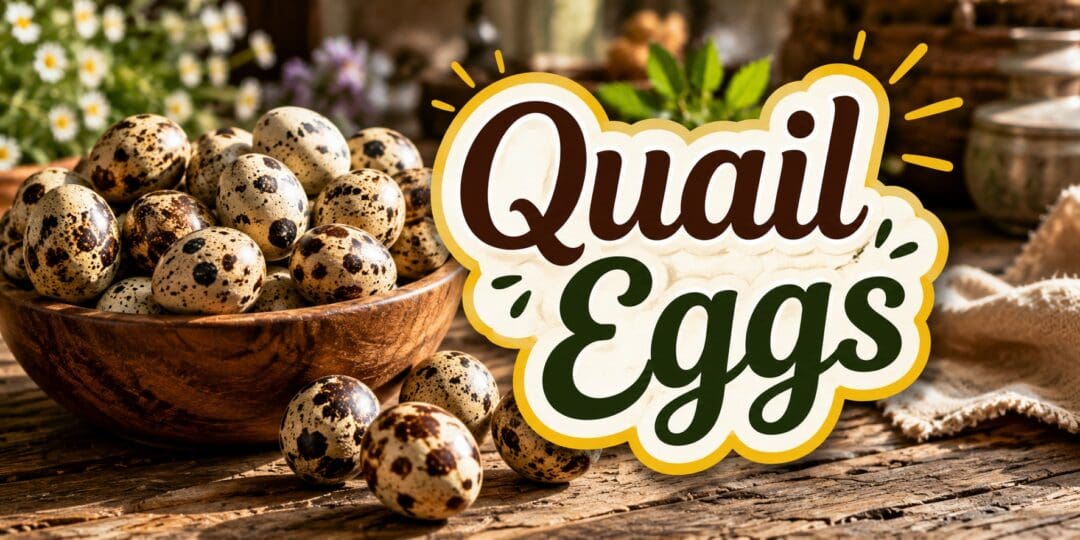
If you have ever held a quail egg in your hand, the first thing you notice is how small it is. About a quarter the size of a standard chicken egg, speckled brown and cream, sitting in your palm like something from a different world. The second thing you notice, once you start learning about them, is how much is packed inside that tiny shell.
Quail eggs have been a staple food in Asia for centuries and a prized ingredient in European cuisine for decades. On the homestead, they represent something else entirely: one of the most efficient, low-footprint sources of fresh protein you can produce yourself. The birds are small, quiet, productive, and remarkably easy to keep even in limited space.
This article covers everything a homesteader needs to know about quail eggs: what they contain nutritionally, how they compare to chicken eggs, how to cook and preserve them, and what it takes to raise the birds yourself. Whether you are starting from scratch or already keeping poultry and wondering if quail deserve a place alongside your flock, this is a thorough starting point.
What Makes Quail Eggs Different
The obvious difference is size. A single quail egg weighs roughly 9 to 10 grams compared to about 50 grams for a medium chicken egg. That size difference shapes everything about how you use them, from how many you crack for a recipe to how you store and preserve them.
But size is not the most interesting difference. Per gram of edible content, quail eggs are nutritionally denser than chicken eggs across several key measures. They contain more protein per gram, significantly higher levels of vitamin B12, more vitamin A, higher riboflavin content, and a stronger antioxidant profile. A quail egg is not just a smaller version of a chicken egg. It is a more concentrated one.
According to USDA nutritional data cited by homestead researchers, a single quail egg contains 64 mg of calcium compared to 48 mg in a chicken egg, and provides 1.32 g of polyunsaturated fat (the omega-3 fatty acids the body cannot produce on its own). When you adjust for equivalent serving sizes, four quail eggs to one chicken egg, those numbers scale up considerably.
The flavor is also slightly richer and more pronounced than chicken eggs, with a creamier yolk. This makes them particularly well-suited to applications where the egg itself is meant to be tasted rather than buried under other ingredients.
Quail Egg Nutrition Breakdown
A single quail egg, hard-boiled, contains approximately:
- 14 calories
- 2 g protein
- 1 g fat
- 04 g carbohydrate
- 14 mg calcium
- 8 mg phosphorus
- 32 mg iron
- 76 IU vitamin A
- 1 mg riboflavin (vitamin B2)
- 14 mcg vitamin B12
Scale those numbers up to a serving of four eggs, which is roughly equivalent to one chicken egg in volume, and the nutritional picture becomes more compelling. Four quail eggs deliver close to 5 g of protein, meaningful amounts of vitamins A and B12, iron, and calcium, all in about 56 calories.
The antioxidant content of quail eggs deserves specific mention. Their antioxidant profile is higher than that of chicken eggs, with compounds that help protect cells from oxidative stress. Research published in Scientific Reports found evidence that quail eggs may help reduce allergic symptoms including sneezing and nasal congestion, an effect researchers attribute to ovomucoid, a protein that acts as an enzyme inhibitor. These findings are preliminary, but they add to an already strong nutritional case.
Quail Eggs vs. Chicken Eggs: A Practical Comparison
The question most homesteaders ask is simple: are quail eggs worth the extra effort compared to just keeping chickens? The honest answer depends on what you are optimizing for.
Where quail eggs win: nutritional density per gram is higher, the antioxidant profile is stronger, and the birds producing them require a fraction of the space and feed. Quail reach laying age in just 6 to 8 weeks compared to 4 to 6 months for most chicken breeds. A quail hen can produce up to 300 eggs per year. The feed-to-egg conversion ratio is also favorable: roughly two pounds of feed produces one pound of quail eggs, compared to three pounds of feed for one pound of chicken eggs.
Where chicken eggs win: size. One chicken egg replaces four quail eggs in most recipes, and cracking and using four small eggs takes more time and patience. If you are baking in volume or feeding a large household, the math of quail eggs gets tedious quickly. Chicken eggs are also far more widely available for purchase if your flock has a slow period.
Where the comparison becomes interesting for homesteaders is in the space question. Many urban and suburban areas that ban backyard chickens permit quail, which are classified as game birds. A dozen quail can be housed in a space that would barely accommodate two or three hens, and they are quiet enough to keep on a balcony or in a garage. For self-sufficient households operating in tight spaces, quail are not a compromise. They are often the better choice.
How to Use Quail Eggs in the Kitchen
Quail eggs are versatile in the kitchen, though their size does require some adjustment in approach. Here are the most practical ways to use them.
Hard-Boiled
Hard-boiled quail eggs are a staple for a reason. They make excellent high-protein snacks, salad additions, charcuterie board elements, and appetizers. Bring a pot of water to a full boil, lower the eggs in gently, and cook for exactly 2 minutes for a slightly soft center or 3 to 4 minutes for a fully set yolk. Transfer immediately to an ice bath for several minutes before peeling.
Peeling is the main challenge. The membrane beneath the shell clings stubbornly to the white. The most reliable method is to roll each egg gently on a hard surface to crack the shell all over, then peel starting from the wider end under a thin stream of cool running water. Once you develop a rhythm, it moves quickly. Alternatively, soaking boiled eggs briefly in white vinegar or apple cider vinegar softens the shell and makes peeling substantially easier.
Fried and Scrambled
Fried quail eggs are a visual treat and take under a minute to cook. Use a small pan over medium-low heat with a touch of butter. The yolk sets fast, so watch closely if you want it runny. Three to four fried quail eggs make a satisfying topping for toast, grain bowls, or alongside cured meats.
Scrambled quail eggs cook the same as chicken eggs but faster and in smaller volume. A dozen eggs scrambled serves roughly three people as a side. The flavor is slightly richer than scrambled chicken eggs, and they work well with fresh herbs.
Raw Applications
One practical advantage of quail eggs that rarely gets discussed is their low salmonella risk. A 2019 study published in the International Journal of Current Research examined over 350 quail eggs and found no salmonella presence. Researchers attribute this to the higher body temperature of quail (approximately 107 degrees Fahrenheit), which creates a less hospitable environment for the bacteria. Raw quail eggs are commonly used in Japanese cuisine, in steak tartare, and in Caesar salad dressings in European cooking traditions.
That said, raw eggs of any species carry some risk, particularly for pregnant people, young children, the elderly, and those with compromised immune systems. Common sense applies.
Pickled Quail Eggs
Pickling is one of the best preservation methods for quail eggs and one of the most practical for homesteaders dealing with seasonal surplus. Hard-boil the eggs, peel them, and pack into sterilized glass jars. Cover completely with a hot brine made from equal parts water and white vinegar with salt, sugar, and spices of your choice: peppercorns, dill, garlic, red pepper flakes, and bay leaves all work well.
Refrigerator pickled quail eggs keep for 3 to 4 months when stored at 40 degrees Fahrenheit or below and kept fully submerged in brine. They are ready to eat after about 3 days and reach peak flavor at 5 to 7 days. Important note: this is a refrigerator method only. Home canning of pickled eggs is not recommended by food safety authorities, including the National Center for Home Food Preservation, because the dense protein of an egg does not allow sufficient heat penetration to ensure safety in shelf-stable canning.
Storing Fresh Quail Eggs
Fresh quail eggs that have not been washed retain the natural protective bloom on their shell and can be stored at room temperature for a week or two in cool conditions, similar to unwashed chicken eggs. Washed eggs should be refrigerated. The thicker shell of the quail egg relative to its size gives it a slight advantage in staying fresh compared to chicken eggs.
Unwashed eggs stored at 50 to 55 degrees Fahrenheit, such as in a cool basement or root cellar, can remain fresh for up to 6 weeks with the pointed end down to keep the yolk centered and the air cell stable.
For longer preservation beyond fresh storage or pickling, quail eggs can be hard-boiled and frozen in an airtight container for up to 3 months, though the texture of the white becomes slightly rubbery after freezing. Freezing raw eggs out of the shell, beaten lightly, is another option for preserving surplus.
Raising Quail for Eggs: What You Need to Know
The Coturnix quail (Coturnix coturnix japonica), also called the Japanese quail, is the breed of choice for egg production on a homestead. They are docile, productive, fast-maturing, and well-suited to small-scale keeping. Everything below applies primarily to this breed.
Space Requirements
Quail need a minimum of 1 square foot per bird in a cage setup or 2 to 3 square feet in a floor pen. This is a fraction of what chickens require, making quail genuinely viable in small urban and suburban spaces. A standard 4 by 2 foot cage can comfortably house 8 birds.
Housing must be predator-proof. As small birds, quail are vulnerable to virtually every predator in the food chain: raccoons, rats, foxes, cats, hawks, and opossums will all take them given the opportunity. Hardware cloth with a maximum opening of 1/4 inch is the standard recommendation. Larger openings allow raccoons to reach through and injure or kill birds. Line the bottom as well to prevent rats from accessing the birds from below.
Cage height should be kept to 8 to 10 inches. Quail flush straight upward when startled, and a tall cage leads to head injuries from birds hitting the ceiling. Low, horizontal housing prevents this.
Feed
Laying quail require a high-protein diet: a minimum of 20 percent crude protein is the standard recommendation, with some keepers running 24 percent during peak laying. Standard game bird starter and layer feeds meet these requirements. Supplement with crushed oyster shell for calcium to support strong eggshell production.
The feed efficiency of quail is one of their most compelling homestead arguments. Two pounds of feed produces approximately one pound of eggs, making them among the most efficient egg producers relative to feed cost of any commonly kept poultry.
Light and Laying
Coturnix quail begin laying at 6 to 8 weeks of age, dramatically faster than chickens. A healthy hen produces approximately 300 eggs per year during her first 12 to 18 months of peak production. After that, output begins to decline, and most production flocks replace hens at the 1 to 2 year mark.
Consistent egg production requires 14 to 16 hours of light per day. Natural daylight is sufficient in summer months, but supplemental lighting becomes necessary in winter. Homestead keepers in northern climates who add a simple timer-controlled light to their quail housing maintain near year-round production. A standard LED bulb on a timer is all that is needed.
Stress disrupts laying quickly. Loud noises, sudden changes to the pen, overcrowding, or predator scares will tank egg production noticeably. Consistent routine, adequate space, and cover within the pen (even something as simple as a few overturned pots) helps birds feel secure and lay steadily.
Water
Fresh, clean water must be available at all times. Quail will stop laying within 24 to 48 hours of being without water. Nipple waterers are popular because they keep the water clean and reduce bedding dampness, which can become a health issue in small enclosures. Check and refill daily.
Health and Common Issues
Coturnix quail are considered a hardy breed with relatively few disease problems when kept in clean, well-ventilated conditions. The most common issues homesteaders encounter are respiratory illness from poor airflow (ammonia from droppings accumulates quickly in small cages), wet bedding leading to bumblefoot, and feather pecking from overcrowding.
Good biosecurity practices, including regular cleaning of the housing, keeping new birds quarantined before introduction to an existing flock, and ensuring adequate ventilation, prevent the vast majority of health problems. Quail do not share diseases with chickens and can be kept in proximity without the disease transmission concerns that apply to mixing different species of traditional poultry.
Incubation and Breeding Your Own Stock
Unlike chickens, Coturnix quail have largely lost the instinct to go broody and sit on eggs. If you want to hatch your own chicks, a small egg incubator is necessary. Quail eggs incubate at 99.5 degrees Fahrenheit with humidity around 45 to 55 percent for the first 14 days, then increased to 65 to 70 percent during the final lockdown period. Hatch typically occurs at day 17 to 18.
Fertilized eggs intended for incubation can be stored at around 60 degrees Fahrenheit for up to 7 days before setting. Eggs collected over a week allow you to set a full batch at once and have a synchronized hatch.
Keeping your own breeding stock closes the loop on your food production. A ratio of one male to every three to five females is standard. Males are identified by the reddish-brown breast feathers, while females have a spotted or dotted breast pattern.
Quail Eggs as a Homestead Business
Quail eggs command a premium price at farmers markets and specialty grocers in most regions of the United States. A dozen quail eggs typically sells for $3 to $6, sometimes higher in urban markets where they are considered a specialty item. Given that a small flock of 20 to 30 hens can produce well over 100 eggs per week at peak, even a modest quail operation can offset feed costs and generate meaningful income.
The birds themselves, both live chicks and adult breeders, also have a market. People entering quail keeping for the first time reliably look for starter birds and hatching eggs, and an established flock with quality genetics can produce both.
Quail meat represents an additional income and food stream. Birds not kept for laying can be processed at 7 to 10 weeks and yield 10 to 14 ounces of lean, flavorful meat per bird. The processing is simpler and faster than processing chickens due to the small size, and quail is considered a delicacy in many culinary traditions.
Is Raising Quail Right for Your Homestead?
The honest checklist looks like this. If you have limited space, quail are worth serious consideration over or alongside chickens. If you value nutritional density and want to grow a high-quality protein source yourself, quail eggs deliver. If you want birds that reach productive maturity fast and do not require the management overhead of larger poultry, quail fit that requirement well.
The limitations are real too. Processing volume in the kitchen takes more time per egg than chicken eggs. Managing a breeding population requires an incubator investment. And if your primary goal is maximum egg volume for a large family, a small flock of laying hens will outproduce quail on sheer volume.
Most experienced homesteaders who try quail find that the birds earn their place and stay. They are not a replacement for chickens in every context, but they fill a niche that nothing else on the homestead fills as efficiently.
Learn The Self-Reliant Skills The Amish Still Use Today
Discover the time-tested Amish methods for raising food, preserving harvests, caring for livestock, and building a more independent homestead.
The same principles that make quail such an efficient homestead animal are the principles the Amish have relied on for generations: simplicity, practicality, and self-sufficiency.
The Amish Ways reveals hundreds of traditional skills that modern families are rediscovering, including food preservation, animal care, gardening techniques, off-grid living strategies, and proven methods for producing more while spending less.
If you’re serious about creating a resilient homestead and learning the forgotten knowledge that helped families thrive long before supermarkets existed, this book belongs on your shelf.
👉 Click here to discover The Amish Ways and start building a more self-reliant future today!
Final Thoughts
Quail eggs are small in size and large in just about everything else: nutrition, flavor, efficiency, and homestead value. The birds that produce them are among the most practical livestock you can add to a self-sufficient operation, particularly if space is at a premium.
Start with a small group of Coturnix hens, get your housing right, and pay attention to light and feed. Within two months you will have a steady supply of some of the most nutrient-dense eggs you can produce yourself. From there, the kitchen possibilities and the preservation options open up quickly.
Few things on a homestead come together as fast, or deliver as consistently, as a small flock of well-kept quail.
You should also read: 
Join Our Homesteading Facebook Group for Tips And Tricks You Will Love
How to Make Old-Fashioned Amish Ice-Box Pickles (Video)
The Best Old Fashioned Pickled Eggs Recipe
How To Raise Quail And Why You Should Do It
Stop Washing Fresh Eggs! (Do This Instead)
How to Build a Fire Pit – A Step-by-Step Guide for Your Backyard