
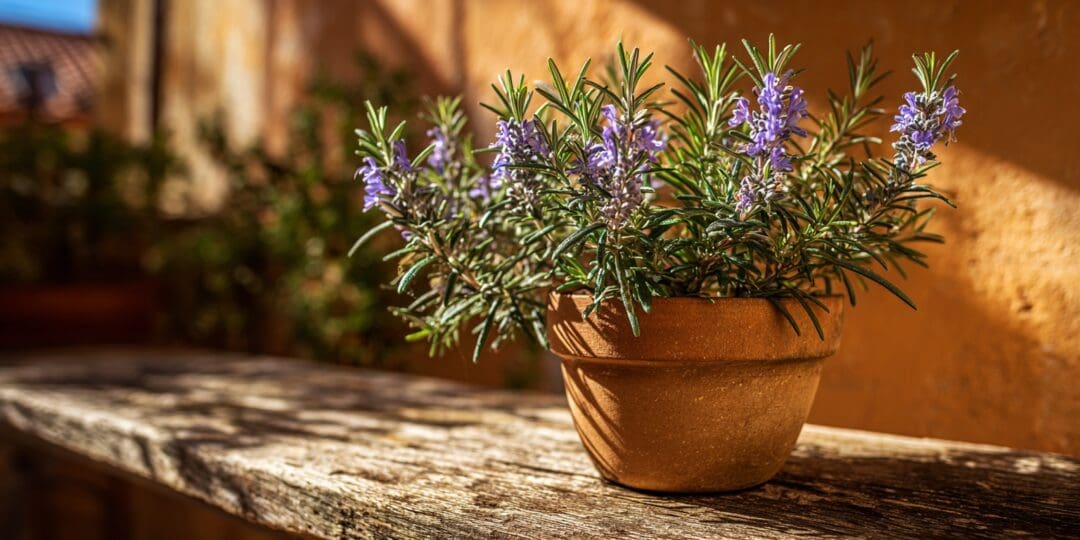
Rosemary is one of those plants that rewards you for leaving it mostly alone. Give it the right conditions and it will grow into a sprawling, fragrant shrub that lives for a decade or more, providing fresh sprigs year-round, feeding the bees every spring, and pulling its weight in the kitchen through every season. Neglect the basics, though, and it will sit there looking sulky, yellow, or dead by March.
The good news is that rosemary care is not complicated. Most problems come down to one of three things: too much water, too little sun, or planting it somewhere with poor drainage. Get those three things right and the rest takes care of itself. This guide covers everything else: soil, feeding, pruning, propagation from cuttings, overwintering in cold zones, common pests and diseases, and the best way to harvest and preserve what you grow.
One naming note before we dive in: rosemary was reclassified from Rosmarinus officinalis to Salvia rosmarinus in 2017. Many seed packets, nurseries, and reference books still use the old name. Both names refer to the same plant.
Rosemary at a Glance
- Botanical name: Salvia rosmarinus (formerly Rosmarinus officinalis)
- Plant type: Woody evergreen perennial shrub
- USDA Hardiness Zones: 7 to 11 as a perennial outdoors; treat as an annual or grow in containers in Zones 6 and colder
- Mature size: 2 to 6 feet tall depending on variety and climate; some warm-climate specimens reach 10 feet
- Light: Full sun, 6 to 8 hours minimum daily
- Soil: Well-drained, sandy or loamy, pH 6.0 to 7.0
- Watering: Low; drought-tolerant once established, allow soil to dry between waterings
- Fertilizing: Light; in-ground plants need little to none; container plants benefit from a balanced feed in spring
- Spacing: 2 to 3 feet apart
- Primary threats: Overwatering, root rot, powdery mildew, spider mites
Understanding What Rosemary Actually Needs
Rosemary comes from the rocky, sun-baked hillsides of the Mediterranean. Its natural habitat is hot, dry, and well-draining, with thin, mineral-poor soil and brutal summer sun. That context explains every care decision you will ever make for this plant. It is not built for soggy English borders, heavy clay soil, or shady corners. It is built for conditions that most other herbs struggle with.
According to the University of Maryland Extension, rosemary is a hardy evergreen shrub in areas where winter temperatures stay above 5 degrees Fahrenheit, and in cooler regions it should be moved indoors or kept as a container plant through winter. Understanding this hardiness boundary is the single most important factor in planning where and how to grow it.
The needle-like leaves are coated with a waxy cuticle that reduces water loss in drought and reflects excess heat. Those same leaves hold the essential oils, including rosmarinic acid and carnosol, that give rosemary its powerful aroma and flavor. The more sun the plant receives, the more oil it produces, which is why rosemary grown in full sun will always taste and smell more intensely than one grown in partial shade.
Planting Rosemary
When to Plant
In most zones, plant rosemary outdoors in spring after the last frost has passed and the soil is beginning to warm, typically when temperatures are consistently in the 60s Fahrenheit. In Zones 8 and warmer, you can also plant in fall, giving the roots time to establish before summer heat arrives. Avoid planting when a cold snap is forecast, as young transplants are more vulnerable than established plants.
Start seeds or take cuttings indoors 8 to 10 weeks before your last expected frost date. Be warned that rosemary is slow from seed, often taking two to three weeks just to germinate and several years to reach a useful harvesting size. Most experienced growers start from nursery transplants or cuttings.
Where to Plant
Choose the sunniest spot you have. Rosemary needs a minimum of 6 hours of direct sunlight daily; 8 hours is better. More sun means more essential oil, stronger flavor, and a plant that dries out between waterings as it should.
Avoid low spots in the garden where water pools after rain. Rosemary will tolerate occasional dry spells better than it will tolerate wet feet for even a few days. Slopes, raised beds, and elevated mounds all work well because they shed excess water naturally.
A south-facing location near a masonry wall can extend rosemary’s range in borderline zones. The wall absorbs heat during the day and releases it overnight, moderating temperature swings and protecting the plant from the harshest winter conditions.
Soil Preparation
Rosemary demands fast-draining soil above all else. A soil pH between 6.0 and 7.0 is ideal, as noted by Penn State Extension. If your native soil is heavy clay or consistently waterlogged, do not plant rosemary directly into it. Instead, plant in a raised bed, an elevated mound amended with coarse grit or perlite, or in containers.
To prepare a bed, work in several inches of coarse sand or fine grit along with aged compost. The goal is a soil that drains within seconds of being watered rather than holding moisture. For container planting, use a potting mix specifically designed for Mediterranean herbs or cactus and succulent mix, or blend two parts standard potting mix with one part perlite and one part coarse sand.
Spacing
Space plants 2 to 3 feet apart. Rosemary does not like being crowded. Poor air circulation around closely planted rosemary invites powdery mildew and makes the interior of the plant dark and woody. Give each plant room to spread to its natural width.
Container Growing
Rosemary grows well in containers, which makes it the best option for gardeners in Zone 6 and colder who want to bring the plant indoors for winter. Choose a pot at least 12 to 14 inches across with generous drainage holes. Terracotta is an excellent material because it is porous and allows the soil to breathe and dry out between waterings.
Do not plant rosemary in the ground if you plan to bring it indoors later. Rosemary transplants poorly from ground to container, and digging it up in fall will stress the root system just as it needs to prepare for dormancy. If you are in a cold zone, start in a container and keep it there.
Watering Rosemary
Overwatering is the number one killer of rosemary. More plants are lost to soggy roots than to drought, cold, or any pest or disease. The rule is simple: let the soil dry out before you water again.
For established in-ground plants, a watering every 1.5 to 2 weeks is typically sufficient in summer. During cooler, wetter weather, you can stretch this further. The plant will tell you when it needs water: the soil surface will be completely dry and the foliage may lose a little of its stiffness. Container plants dry out faster than in-ground ones and may need watering once a week in hot weather, but always check the soil first by pressing your finger an inch into the mix.
A useful rule for containers: water thoroughly until it drains freely from the bottom, then do not water again until the top inch or two of soil is completely dry. Never let a potted rosemary sit in a saucer full of water. Empty saucers after watering.
Water at the base of the plant rather than overhead. Wetting the foliage, especially in humid conditions or late in the day, encourages powdery mildew and other fungal problems.
In winter, established in-ground rosemary in Zones 7 and warmer needs almost no supplemental irrigation. Potted rosemary brought indoors should be watered sparingly, just enough to prevent the soil from becoming bone-dry. The plant is semi-dormant and using far less water than during the growing season.
Sunlight and Temperature
Full sun is not negotiable for good rosemary growth. Plants in partial shade will survive but produce fewer oils, grow more sparsely, and become more susceptible to disease. Position outdoor plants where they receive direct sun from morning through midday at a minimum.
Temperature tolerance varies by variety. Most rosemary dies when exposed to sustained temperatures below 15 to 23 degrees Fahrenheit. Some cold-hardy cultivars such as ‘Arp’ and ‘Madeline Hill’ can push down to around 0 to 10 degrees Fahrenheit with protection, making them viable as perennials in Zone 6 in sheltered microclimates.
Even in Zone 7, young plants in their first winter are more vulnerable than established ones. A deep root system is the plant’s best insulation. If you are establishing a new rosemary plant in a marginal zone, plant it in spring so it has the full growing season to develop roots before facing its first winter.
Soil pH and Fertilizing
Rosemary is not a heavy feeder. In-ground plants growing in reasonably good soil rarely need fertilizer at all. Over-fertilizing, particularly with nitrogen, produces lush soft growth that is more susceptible to pests and diseases and less flavorful than growth that develops more slowly under leaner conditions.
If your in-ground plant shows signs of nutrient deficiency, such as persistent pale or yellowing leaves despite correct watering and drainage, apply a balanced slow-release fertilizer once in early spring as growth resumes. Do not fertilize in late summer or fall, as this encourages soft new growth that is vulnerable to winter damage.
Container-grown rosemary depletes soil nutrients more quickly than in-ground plants and benefits from a modest spring feeding with a balanced liquid or granular fertilizer. A single application in early spring, followed by one in midsummer if the plant shows sluggish growth, is usually sufficient. Always follow label directions and err on the side of less rather than more.
If your soil pH is off, correct it before resorting to fertilizer. Soil that is too acidic (below 6.0) prevents rosemary from absorbing nutrients, causing yellowing even when nutrients are present. Raise the pH with garden lime. Soil that is too alkaline can be corrected with elemental sulfur. A simple pH test from the garden center will tell you where you stand.
How to Prune Rosemary
Why Pruning Matters
Left unpruned, rosemary becomes woody, leggy, and bare at the base. The center of the plant stops producing fragrant new growth, the exterior becomes a thin shell of foliage around a skeleton of bare wood, and the overall structure weakens. Regular pruning keeps the plant compact, bushy, productive, and healthy. It also improves airflow through the plant, reducing the risk of fungal disease.
When to Prune
The primary pruning window is in early spring, just before or as new growth begins to emerge. This is when you remove any winter-damaged wood, shape the plant, and encourage a fresh flush of growth for the season. Secondary light trimming can be done throughout the growing season as part of your regular harvest.
Avoid heavy pruning in late summer and fall. Cutting hard in that period encourages a flush of tender new growth that will not harden off before winter temperatures arrive, making it vulnerable to cold damage. A light trim in early fall to tidy up the plant is fine; a major cutback is not.
How to Prune
Use sharp, clean secateurs or pruning shears. Blunt or dirty tools crush stems rather than cutting cleanly and introduce disease.
For an annual maintenance prune in spring, cut back the previous year’s growth by about one third. This means trimming back into the leafy part of the plant. Shape it as you work, cutting to maintain a rounded, compact form.
The single most important rule: never cut back into old, woody stems that carry no foliage. Rosemary does not regenerate from bare wood the way a shrub like lavender can. If you cut a woody stem without any leaves on it, it will not regrow. Always leave some green foliage on every stem you cut. This is the line that separates a productive prune from one that kills the plant.
After about five to seven years, even a well-pruned rosemary will become increasingly woody at the base with reduced productivity. At this point it is better to take cuttings, propagate new plants, and replace the old one rather than try to rejuvenate it.
Pruning for Shape
Upright rosemary varieties can be trained into hedges, topiary shapes, or standards (a single-stemmed tree form). For a hedge, clip after flowering in late spring and again lightly in early fall to maintain shape. For topiary, select a single strong stem as the leader, remove side shoots until the desired height is reached, then allow the top to fill out and clip it regularly to maintain the shape.
Propagating Rosemary from Cuttings
Propagating rosemary from cuttings is one of the most reliable and cost-effective gardening skills you can learn. It is significantly faster than growing from seed, produces plants identical to the parent in flavor and growth habit, and gives you a continuous supply of fresh plants, which matters in colder zones where rosemary may not survive every winter. As covered by the Herb Society of America, this method is accessible for gardeners at any level of experience.
When to Take Cuttings
The best time to take cuttings is in late spring to early summer, when the new season’s growth is semi-woody: flexible enough not to snap but firm enough to be called “semi-hardwood.” If you bend the tip of a stem about 6 inches from the end and it snaps cleanly, the cutting is ready. If it just bends and doesn’t snap, it is still too soft.
Step-by-Step Cutting Method
- Select a healthy, non-flowering stem. Flowering stems put their energy into flowers rather than roots.
- Cut a section 4 to 6 inches long, making the cut just below a leaf node. Use clean, sharp scissors or pruning shears sterilized with rubbing alcohol.
- Strip the leaves from the bottom two thirds of the cutting, leaving a bare stem section that will be inserted into the rooting medium.
- Optional but helpful: dip the cut end in rooting hormone powder or gel. This speeds root development noticeably.
- Insert the cutting about one to two inches deep into a rooting medium. A 50/50 mix of perlite and coarse sand, or pure coconut coir, works well. Do not use regular potting mix, which is too dense and holds too much moisture.
- Water the medium lightly and cover the container with a clear plastic bag or propagation dome to maintain humidity. Place in bright indirect light, not direct sun.
- Check every few days for condensation inside the cover, which indicates good humidity. If the medium feels dry, water lightly and re-cover.
- Roots typically develop in 3 to 6 weeks. Test by gently tugging the cutting; if there is resistance, roots have formed.
- Once rooted, gradually remove the cover over a few days to acclimatize the plant, then pot up into a well-draining soil mix in its own container.
Water Rooting
Rosemary cuttings can also be rooted in water. Place the prepared cutting in a glass or jar with the bare stem submerged, keeping the foliage out of the water. Change the water every few days to prevent stagnation. Roots typically appear within two to four weeks. Transfer to soil once roots are at least half an inch long, being careful not to damage them.
Layering
Layering is the simplest propagation method of all and requires no equipment. Find a long, low-growing stem that can be bent to ground level without breaking. Bury the middle section of that stem about an inch deep in the soil while leaving the tip sticking up above ground. Pin it in place with a rock or landscape staple. Keep the buried section moist. In six to eight weeks, roots will form at the buried nodes. Once you see strong new growth from the tip, sever the stem between the parent plant and the new root zone and dig up the new plant.
Overwintering Rosemary
Zones 8 to 11
In these zones, rosemary is fully perennial and needs no special winter care. It may slow its growth during the cooler months but will not go dormant and will continue providing fresh growth for the kitchen. No mulching, covering, or moving is required under normal conditions, though an unusual cold snap pushing below 20 degrees Fahrenheit may warrant temporary protection with a frost cloth.
Zones 6 and 7
Zones 6 and 7 are the borderline range where success depends heavily on the specific variety, the microclimate, and the severity of the winter. Cold-hardy cultivars such as ‘Arp’ and ‘Madeline Hill’ are your best bet here. Both have demonstrated survival to around 0 degrees Fahrenheit in sheltered conditions, making them genuinely viable as perennials in these zones rather than hopeful gambles.
For in-ground plants in Zones 6 and 7, give them the best possible chance by: planting in a sheltered south-facing spot near a wall or building; mulching with 4 to 6 inches of straw or chopped leaves around the base of the plant to insulate the roots, but keeping the mulch away from the crown; avoiding late-summer pruning that stimulates tender new growth; and draping a frost blanket over the plant during hard freezes, removing it during the day.
Zone 5 and Colder
In Zone 5 and colder, treat rosemary as an annual or move it indoors for winter. Container growing is the practical solution. Before temperatures drop into the low 30s Fahrenheit, bring the pot inside to a cool, bright location. A south-facing window in a room that stays around 50 to 60 degrees Fahrenheit is ideal. Avoid warm, heated living rooms where the dry air stresses the plant.
Prune lightly before bringing the plant in, removing roughly a third of the growth to reduce water and light demands over winter. Water sparingly through the dormant season, allowing the top inch or two to dry out completely between waterings. Watch for spider mites and other indoor pests, which thrive in the dry winter air. Move the plant back outside after the last frost in spring, hardening it off gradually by starting in a sheltered shaded spot for a few days before moving it into full sun.
Harvesting Rosemary
When to Harvest
Rosemary can be harvested at any time once the plant is established and at least 6 to 8 inches tall. The best time for a large harvest intended for drying is just before or at the very beginning of flowering, when essential oil concentration is at its peak. For everyday culinary use, snip as needed throughout the growing season; regular harvesting actually encourages the plant to produce more fresh growth.
Harvest in the morning after any dew has dried but before the midday heat dissipates the volatile oils. This is when flavor and aroma are at their strongest.
How to Harvest
Use sharp scissors or shears to snip the top 2 to 3 inches of each stem, cutting just above a set of leaves. This stimulates branching at the cut point, producing two stems where there was one and making the plant bushier over time.
Never remove more than one third of the plant in a single harvest. Rosemary needs its foliage to photosynthesize and fuel regrowth. Heavy harvesting, especially in one go, weakens the plant and slows recovery. If you need a large quantity, harvest smaller amounts across multiple sessions spread over several weeks.
Even the flowers are edible, with a slightly sweeter flavor than the leaves. Add them to salads or use as a garnish. They are also rich in nectar and an important early-season food source for bees.
Preserving Your Harvest
Air Drying
Bundle 5 to 7 stems together with a rubber band and hang them upside down in a warm, dark, well-ventilated location. A dry shed, kitchen rafter, or airing cupboard all work well. After 10 to 14 days, the leaves will be dry enough to strip from the stems. Strip by running your fingers down the stem from tip to base, pulling the leaves off in one motion. Store in airtight glass jars away from direct light and heat. Properly dried rosemary holds its flavor well for up to 12 months.
Oven and Dehydrator Drying
For a faster result, lay stems in a single layer on a baking sheet and dry in the oven at its lowest setting (around 150 to 170 degrees Fahrenheit) with the door slightly ajar for one to two hours. A food dehydrator set to 95 to 115 degrees Fahrenheit will take one to four hours. The leaves should crumble easily when dry. Cool completely before storing.
Freezing
Rosemary freezes well and retains more of its fresh flavor than dried rosemary in most applications. Lay sprigs flat on a baking sheet, freeze until solid, then transfer to a sealed freezer bag or container. Frozen rosemary can be added directly to cooked dishes from frozen, no thawing needed. Alternatively, freeze chopped rosemary into ice cube trays with a little water or olive oil for pre-portioned additions to soups, stews, and sauces.
Infused Oil and Vinegar
Pack fresh rosemary sprigs into a clean glass bottle, pour in a good quality olive oil or white wine vinegar, seal, and store in a cool dark place for two to four weeks before using. Infused rosemary oil is excellent for roasting vegetables, bread dipping, and marinades. Rosemary vinegar works well in salad dressings and as a finishing touch on roasted meats.
Common Problems and How to Fix Them
Root Rot
Root rot is the most destructive and common problem rosemary faces. It is caused by the fungal pathogens Phytophthora and Pythium, which thrive in oxygen-poor, waterlogged soil. By the time you see symptoms above ground, the root system is already significantly damaged. Symptoms include yellowing or browning foliage, wilting despite moist soil, limp or mushy stems at the base, and a foul smell from the root zone.
To attempt a rescue: remove the plant from the soil, rinse the roots, and cut away all blackened, mushy root material with sterilized scissors. Dust the remaining roots with a sulfur-based fungicide powder. Repot in fresh, dry, fast-draining soil in a clean pot. Place in a warm, sunny location and water only when the soil has dried out completely. If the entire root system is black and mushy, the plant cannot be saved.
Prevention is the only reliable strategy: plant in fast-draining soil, avoid overwatering, never let pots sit in standing water, and choose growing sites that drain freely after rain. According to Gardening Know How, root rot will almost always kill the plant once established, making prevention essential.
Powdery Mildew
Powdery mildew appears as a white or grey powdery coating on leaves and stems. It is caused by fungal species that thrive in warm, humid conditions with poor air circulation, and it most commonly strikes rosemary grown indoors over winter or in dense, crowded plantings. It weakens the plant and reduces oil production but is rarely fatal if caught early.
Treatment: remove and dispose of heavily affected growth. Improve air circulation by pruning. Avoid overhead watering. For a home remedy, mix 3 tablespoons of baking soda, 1 tablespoon of vegetable oil, and a few drops of dish soap in a gallon of water and spray thoroughly over all leaf surfaces, including undersides, every five to seven days for two to three applications. Neem oil is another effective and safe treatment. Prevention through good airflow, correct spacing, and full sun exposure is always more effective than cure.
Yellowing Leaves
Yellow leaves have multiple possible causes and the fix depends on correctly identifying which one applies.
- Overwatering or poor drainage: the most common cause. Reduce watering frequency, improve drainage, or repot into a more free-draining mix.
- Too little sunlight: rosemary in partial or full shade will yellow over time. Move the plant to a sunnier position.
- Wrong soil pH: if the pH is below 6.0, the plant cannot absorb nutrients despite their presence in the soil. Test the soil and correct with garden lime if needed.
- Nitrogen deficiency: uniform yellowing of older leaves, especially in container-grown plants. Apply a balanced fertilizer and follow the dosing instructions precisely.
- Natural aging: the innermost, oldest leaves will yellow and drop normally as the plant grows. A few yellow interior leaves is not a sign of a problem.
Pests: Spider Mites, Aphids, and Whitefly
Rosemary is generally pest-resistant outdoors in good growing conditions, but becomes susceptible when stressed or when grown indoors over winter in dry air.
Spider mites leave fine webbing between stems and cause yellow, stippled speckling on the leaves. They thrive in hot, dry, dusty conditions. A strong blast of water to the undersides of leaves every few days will dislodge them. In persistent cases, spray with insecticidal soap or diluted neem oil, repeating every five to seven days for three applications.
Aphids cluster on new growth and leave behind sticky honeydew residue. Blast them off with water or apply insecticidal soap. Introduce ladybirds or lacewings if you have a persistent problem.
Whitefly is more common on indoor rosemary. Yellow sticky traps will catch adults. Treat with insecticidal soap, concentrating on the undersides of leaves where eggs are laid.
Woodiness and Bare Stems at the Base
This is a natural consequence of age and happens to every rosemary plant eventually. Annual pruning delays it but does not prevent it indefinitely. A rosemary plant that has become severely woody at the base with little productive growth above is telling you it has reached the end of its productive life. Take cuttings now to propagate replacements, then replace the old plant. Most rosemary plants are at peak productivity in years two through five and begin to decline after seven or eight years.
Winter Dieback
If your rosemary survives winter but looks dead in early spring, do not panic and do not compost it yet. Scrape the bark of a few stems with your thumbnail: if the tissue underneath is green, the stem is alive. Leave the plant until late spring before making any decisions. Rosemary is often slow to break dormancy and stems that look completely dead will sometimes push new growth weeks after you would expect them to. Once the plant confirms which growth is alive and which is truly dead, prune out only the confirmed dead wood.
Rosemary Varieties Worth Growing
The variety you choose matters more than most gardeners realize, particularly for cold hardiness. Here are some worth knowing about.
- ‘Arp’: The most widely recommended cold-hardy variety, reliably perennial in Zone 6 and sometimes Zone 5 in sheltered spots. Light blue flowers, strong flavor, upright habit. Named after the town of Arp in East Texas where it was discovered growing wild.
- ‘Madeline Hill’ (also sold as ‘Hill Hardy’): A Texas-bred cold-hardy selection reported to have survived down to minus 7 degrees Fahrenheit over a 25-year period, according to a grower at Nichols Garden Nursery. Excellent flavor.
- ‘Tuscan Blue’: A tall, vigorous upright variety excellent for hedging in warm climates. Zones 8 to 11. Large, intensely aromatic leaves and vivid blue flowers.
- ‘Miss Jessopp’s Upright’: Strongly vertical growth to around 5 feet, with pale blue flowers. Good for structural planting in warm zones.
- Prostrate/trailing rosemary (Salvia rosmarinus ‘Prostratus’): A low, spreading form excellent for draping over walls or as ground cover in Zones 8 to 11. Less cold-hardy than upright types.
- ‘Rosea’: One of the few rosemary varieties with pink flowers rather than blue or white. Upright habit, moderate size. An interesting addition to a herb garden with ornamental appeal.
Making the Most of Your Rosemary
Rosemary earns its place on the homestead well beyond the kitchen. Fresh sprigs tucked into chicken cavities before roasting, pressed into focaccia dough with sea salt, simmered with olive oil for infused fat, or added to a marinade for lamb are the classic culinary applications. But the plant has more to offer than cooking.
Rosemary makes an effective pest deterrent in the garden. Its strong aromatic oils confuse and repel carrot flies, cabbage worms, and slugs. Planting rosemary near brassicas, carrots, and legumes can reduce pest pressure on those crops without any intervention on your part. Rubbing a handful of rosemary leaves on skin temporarily repels mosquitoes.
The flowers are one of the earliest nectar sources for bees in spring in many climates, appearing before many other flowering herbs. A well-established rosemary hedge in full spring bloom is worth more to your pollinator population than many dedicated wildflower plantings.
Dried rosemary placed among stored woolens deters moths. Rosemary branches added to a wood fire produce a pleasant aromatic smoke. Fresh rosemary steeped in hot water and used as a hair rinse is a traditional remedy for scalp health that persists in folk medicine traditions across the Mediterranean.
From a self-sufficiency standpoint, a healthy, established rosemary plant is a permanent fixture that never needs replanting, provides year-round access to one of the most useful herbs in the kitchen, requires minimal inputs, and functions as a living asset in the landscape. It belongs on every homestead where the climate permits it, and in containers everywhere else.
Turn a Simple Herb Into a Full Home Remedy Shelf
Rosemary is one of those plants most people know only as a cooking herb. They think flavor, maybe fragrance, maybe a roasted chicken. But once you start looking at it through the lens of traditional plant medicine, rosemary becomes something much bigger. It is not just a garnish. It is a practical household herb with a long history of use for scalp care, circulation, infused oils, aromatic rinses, herbal steams, and everyday wellness support.
That is exactly why The Forgotten Home Apothecary is such a valuable resource. Growing rosemary is the first step. Knowing how to actually use what you grow is what transforms a garden into a real working apothecary. A healthy rosemary plant can give you far more than kitchen seasoning if you understand how to turn it into useful preparations you can keep on hand year-round.
The Forgotten Home Apothecary shows you how to do exactly that. It walks you through the old-school methods people once relied on to make herbal oils, salves, tinctures, poultices, syrups, rinses, and other home remedies using plants they grew themselves or gathered nearby. Instead of depending entirely on store-bought solutions, you begin building your own shelf of practical herbal preparations right at home.
And that matters more than ever. When supply chains get shaky, prices rise, or basic products become harder to find, the value of household knowledge goes up fast. A productive rosemary plant is already an asset. Pair it with the skills in The Forgotten Home Apothecary, and it becomes part of a larger system of self-reliance that keeps paying you back season after season.
If this guide inspired you to grow rosemary well, the next logical step is learning how to put herbs like rosemary to work beyond the garden bed. That is where real independence begins.
Explore The Forgotten Home Apothecary here!
The more herbs you grow, the more useful your home can become. The more remedies you know how to make, the less dependent you are on outside systems. That is the difference between having an herb garden and having a home apothecary.
Final Thoughts
The rules for rosemary care are few and consistent: full sun, fast-draining soil, light watering, and an annual prune that respects the line between green wood and bare wood. Master those four points and your rosemary will reward you with a decade or more of reliable production.
If you are in a colder zone and have given up on rosemary because it dies every winter, try again with a cold-hardy cultivar in a container, overwinter it in a cool garage or mudroom with a south-facing window, and propagate cuttings each autumn as insurance. Once you find the method that works for your specific conditions, you will have a system you can repeat indefinitely.
Rosemary is one of the most self-sufficient plants in the herb garden. Treat it like the Mediterranean native it is, and it will ask very little of you in return for a great deal.
You may also like: 
Join our Facebook group for more tips on gardening and homesteading!
DIY Amish Cough Syrup (Video)
20 Plants That Attract Birds to Your Garden
Common Plants You Can Turn Into Flour in a Crisis
Turn Your Kitchen Scraps Into Medicine (It’s Easier Than You Think)
Book Review: The Encyclopedia of Country Living by Carla Emery