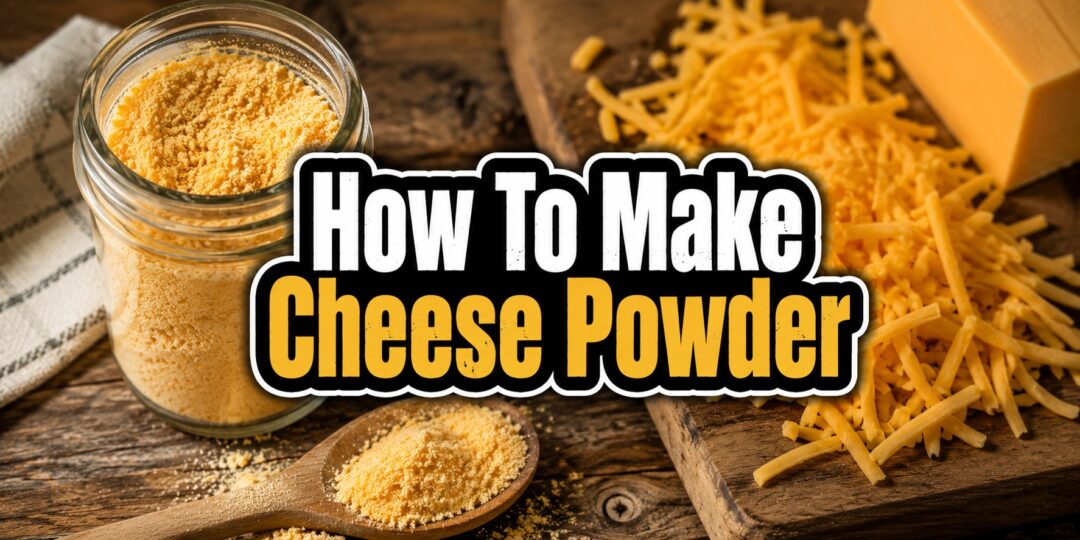
I go through a lot of cheese on this homestead, and like most of you, I’ve had blocks go dry at the edges or shred sitting in the fridge longer than I meant it to. Turning that cheese into powder is one of the best ways I’ve found to stretch it, and it’s a lot simpler than people assume once you understand the handful of rules that actually matter.
The trick with cheese powder isn’t the drying itself. It’s picking the right cheese and getting the grind right afterward. Get those two things wrong and you end up with a greasy, clumped mess instead of a shelf-stable seasoning you can shake onto popcorn or stir into a pot of mac and cheese.
Is It Safe to Make Cheese Powder at Home?
This is worth addressing head-on, because a lot of general food preservation advice tells you to leave dairy alone entirely. That caution exists for a reason. Soft, high-moisture cheeses like brie, chèvre, and fresh mozzarella can support bacterial growth during a slow home-drying process, and I don’t recommend trying to dry them.
Hard and semi-hard aged cheeses are a different story. When I asked a food safety specialist at Oregon State University’s Ask Extension service directly about this, the answer was clear: for cheeses like cheddar and Parmesan, the combination of low pH and low water activity does not support bacterial growth during drying.
That lines up with how these cheeses have always been handled for long-term storage. Penn State Extension notes that many hard cheeses are dry enough to prevent bacterial growth, which is exactly why they can be waxed and aged on a shelf for years without refrigeration. Soft cheeses, on the other hand, hold enough water to support the growth of Clostridium botulinum and should never be stored at room temperature.
The takeaway: stick to hard, well-aged, low-moisture cheeses for this project, and you’re working with a naturally low-risk food to begin with.
Choosing the Right Cheese
Sharp cheddar is my go-to. It’s widely available, cheap when it goes on sale, and its flavor actually gets more concentrated once it’s dried and mellowed slightly by the heat. Parmesan and other hard grating cheeses work well too, and they’re already low in moisture, which speeds up the whole process.
- Extra sharp cheddar: bold flavor holds up well after drying
- Parmesan or Romano: naturally low moisture, dries fast, very concentrated flavor
- Colby or mild cheddar: works, but the flavor will mellow more than sharp varieties
- Avoid: brie, chèvre, fresh mozzarella, cream cheese, and any other soft or high-moisture cheese
If you’re using cheese you made yourself, let it age properly first. A young, moist homemade cheese behaves more like a soft cheese and isn’t a good candidate for this method.
Equipment You’ll Need
- A food dehydrator with adjustable temperature, or an oven that holds a low, steady temperature
- A cheese grater or food processor with a shredding disc
- Parchment paper or unbleached paper towels to line the trays
- A high-powered blender, food processor, or dedicated spice grinder for the final grind
- A fine mesh sieve
- Airtight jars or containers for storage
Step-by-Step: How to Make Cheese Powder
Step 1: Shred the Cheese
Shred or finely grate your cheese rather than cutting it into cubes. More surface area means faster, more even drying, and it cuts your total drying time significantly.
Step 2: Dehydrate Low and Slow
Line your dehydrator trays with parchment paper or paper towels, since the fat that renders out during drying will otherwise seep straight through mesh trays. Spread the shredded cheese in a thin, even layer with space between pieces so air can circulate.
Set your dehydrator between 95 and 115 degrees Fahrenheit. This is low enough to avoid melting the cheese into a solid, greasy sheet, but warm enough to steadily pull out moisture. Expect anywhere from 6 to 12 hours depending on your dehydrator, the cheese variety, and how thick you shredded it.
No dehydrator? An oven set to its lowest temperature with the door propped open a crack can work, though it takes more babysitting to prevent melting. Check the cheese every hour or two and rotate the trays for even drying.
Step 3: Blot and Cool
Partway through drying, and again at the end, blot the cheese gently with a clean paper towel to lift away surface oil. Once the pieces are hard, brittle, and no longer tacky to the touch, pull the trays and let everything cool completely to room temperature before moving on. Grinding warm cheese turns it into a greasy paste instead of a powder.
Step 4: Grind Into Powder
Break the dried cheese into smaller pieces and pulse it in a food processor, blender, or spice grinder until it reaches a fine, even powder. Work in short bursts. Long, continuous grinding generates friction heat that melts the fat and turns your powder into clumps.
Run the powder through a fine mesh sieve afterward and re-grind anything that doesn’t pass through. This step makes a real difference in the final texture.
Step 5: Add an Anti-Caking Agent
Even properly dried cheese powder has enough residual fat to clump over time, especially in humid weather. Mixing in a small amount of cornstarch or powdered milk, roughly one tablespoon per cup of cheese powder, absorbs excess moisture and keeps the powder free-flowing in storage. This is the same trick commercial cheese powder producers rely on, just without the other additives.
How to Store Cheese Powder for Maximum Shelf Life
Shelf stability comes down to water activity, a measure of how much free moisture is left in a food for bacteria to use. According to Iowa State University Extension and Outreach, the FDA considers a water activity of 0.85 or below shelf stable, and properly dried, finely ground cheese powder falls well under that threshold.
That said, cheese powder still contains fat, and fat goes rancid over time regardless of how dry the product is. Store your finished powder in an airtight glass jar or a mylar bag with an oxygen absorber, kept in a cool, dark cupboard.
- Room temperature, airtight, cool and dark: 3 to 6 months for best flavor
- Refrigerated in an airtight container: 6 to 12 months
- Frozen in an airtight container: up to 2 years, though this reduces the shelf-stability benefit of drying it in the first place
If you notice an off, stale, or paint-like smell developing, that’s the fat oxidizing. Toss it and start a fresh batch rather than trying to salvage it.
How to Use Homemade Cheese Powder
- Stir into mac and cheese sauce for extra depth of flavor
- Sprinkle over popcorn, roasted vegetables, or scrambled eggs
- Whisk into a roux for a quick cheese sauce base
- Add to homemade cracker or biscuit dough
- Mix into soup or chowder for a cheesy finish without adding extra liquid
Cheese Powder vs. Freeze-Dried Cheese
It’s worth being clear about what cheese powder is and isn’t good for. It has no real cheese texture, so it won’t melt into gooey strings or hold up in a grilled cheese sandwich. For that, you want actual freeze-dried cheese, which preserves the true texture and structure of the cheese for recipes where that matters.
Cheese powder earns its place for sauces, seasoning blends, and snacks where flavor matters more than texture, and it’s far more accessible since it only requires a dehydrator or oven rather than a freeze dryer. If you want the full comparison and a look at long-term storage options, I cover that in detail in my guide to freeze dried cheese.
Troubleshooting Common Problems
My powder is clumping
This almost always means residual moisture or fat. Make sure the cheese was fully dry and brittle before grinding, add a bit more anti-caking agent, and store with a fresh oxygen absorber.
My cheese melted instead of drying
Your dehydrator or oven ran too hot. Drop the temperature, spread the shreds thinner, and keep the trays away from any direct heat source like an oven’s heating element.
The powder tastes greasy or off
This is early rancidity from the fat in the cheese breaking down. It’s more common with mild, higher-moisture cheeses. Switch to a sharper, drier cheese variety and store the finished powder in the refrigerator or freezer if your kitchen runs warm.
Cheese Powder Is Just One Skill Our Grandparents Knew
Turning a block of cheese into something you can store and use months later might seem unusual today. A few generations ago, however, making food last was simply part of knowing how to run a household.
People preserved what they grew, stretched what they had, repaired things instead of replacing them, and learned how to get through lean seasons without depending on a store for every necessity.
Most of us were never taught those skills.
And when the power goes out, grocery prices climb, supply chains stumble, or an unexpected emergency keeps you home, it becomes obvious just how valuable that old knowledge still is.
That’s why The Lost Skills of Independence was created.
It brings forgotten practical knowledge back into one place, helping you rediscover the kind of self-reliance that previous generations considered ordinary. It’s about learning how to preserve more, waste less, make better use of what you already have, and become less dependent on modern conveniences for everyday necessities.
Making your own cheese powder is a great place to start. But imagine having an entire collection of practical skills you can turn to when you need to make your food, supplies, and resources go further.
You don’t have to abandon modern life to become more self-reliant.
You just need to start relearning the skills modern life made us forget.
Frequently Asked Questions
Can I make cheese powder without a dehydrator?
Yes, using your oven’s lowest setting with the door cracked open. It takes more attention to prevent melting, but the result is the same.
Does homemade cheese powder taste like store-bought?
It tastes more like real cheese, actually, since store-bought versions often include fillers, food coloring, and preservatives. Homemade powder has a purer, more concentrated cheese flavor.
Can I use pre-shredded bagged cheese?
You can, though bagged shredded cheese is coated with anti-caking starch that can slightly affect texture. Freshly grated block cheese gives the cleanest result.
How much powder does one pound of cheese make?
Expect roughly 3 to 4 ounces of finished powder per pound of starting cheese, since you’re removing most of the moisture and all of the volume that moisture took up.
 You may also like:
No Cheesecloth? Try These 9 Household Alternatives
Cheap and Easy to Build Root Cellar in Your Own Backyard (Video)
Freeze Dried Cheese: The Complete Guide to Storing Cheese for 25+ Years
How to Make Homemade Cottage Cheese
Homemade Kefir – A Complete Beginner’s Guide