
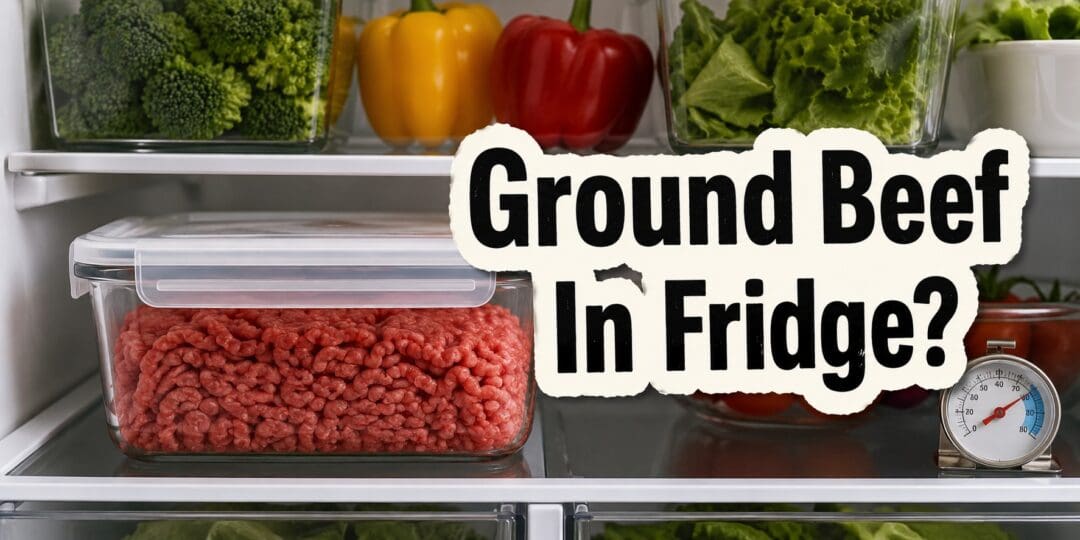
Raw ground beef holds up in the fridge for 1 to 2 days after purchase, according to the USDA Food Safety and Inspection Service. Cooked ground beef lasts longer, 3 to 4 days in the fridge, since cooking kills off most of the bacteria that raw meat is exposed to. That’s the short answer. The longer answer, including why ground beef spoils so much faster than a steak, how to actually tell when it’s gone bad, and how to store it to squeeze out every safe day you can, is below.
Why Ground Beef Spoils Faster Than Other Cuts
A whole steak or roast can safely sit in the fridge for 3 to 5 days, noticeably longer than ground beef’s 1 to 2 day window, and the reason comes down to surface area rather than the meat itself being lower quality. On a whole cut, bacteria live almost entirely on the exterior surface, where searing or thorough cooking on the outside destroys it. The interior of a solid cut of meat is essentially sterile. Grinding changes that completely. It mixes surface bacteria all the way through the meat and dramatically increases the total surface area exposed to oxygen, giving bacteria far more room and far more opportunity to multiply quickly.
This is also exactly why ground beef needs to be cooked to a higher internal temperature than a steak. A steak is safe at 145°F because any dangerous bacteria sitting on the surface gets killed by the sear. Ground beef needs to hit 160°F throughout, since grinding can distribute bacteria like E. coli into the center of the meat, not just the surface.
Raw Ground Beef: The 1 to 2 Day Rule
To keep bacterial growth in check, store raw ground beef at 40°F or below and use it within 2 days, or freeze it if you won’t get to it in time. This window starts from the day you bring it home, not from the sell-by date printed on the package. A sell-by date is a retailer inventory tool, not a home safety deadline, so don’t use it as your countdown.
- Refrigerate ground beef as soon as possible after buying it; don’t let it sit in a warm car or on the counter longer than necessary
- Keep your fridge at or below 40°F; many home fridges run warmer than owners realize, so a simple refrigerator thermometer is worth the few dollars it costs
- If you can’t commit to cooking it within that 1 to 2 day window, freeze it the same day you buy it rather than gambling on squeezing out one more day
- Never leave raw ground beef at room temperature for more than 2 hours, or just 1 hour if the room is above 90°F
Cooked Ground Beef: The 3 to 4 Day Rule
Once ground beef is fully cooked, most of the bacteria that made the raw window so short has been destroyed, which is why cooked ground beef gets a longer runway in the fridge.
- Let cooked ground beef cool before sealing it up, but don’t leave it out longer than the same 2-hour room temperature limit that applies to raw meat
- Store it in a shallow, airtight container rather than a deep one, so it cools faster and more evenly all the way through
- Label the container with the date you cooked it; it’s easy to lose track of leftovers by day three or four
- Reheat leftovers to an internal temperature of at least 165°F before eating
- If you won’t finish it within 3 to 4 days, freeze it instead of pushing the fridge window
Freezing Ground Beef: Your Real Long-Term Option
If 1 to 2 days isn’t a realistic timeline for your kitchen, freezing is the actual answer rather than trying to stretch the fridge window.
- Raw ground beef: safe indefinitely once frozen at 0°F, though quality is best if used within 3 to 4 months
- Cooked ground beef: keeps well in the freezer for 2 to 3 months
- Wrap tightly in freezer-safe packaging or vacuum-seal it; pressing out as much air as possible before sealing is what actually prevents freezer burn
- Flatten raw ground beef into a thin, even layer inside a freezer bag before sealing; it freezes faster, thaws faster, and stacks more efficiently than a lumpy round mass
- Label every package with the date it went into the freezer, since “I’ll remember” reliably fails after about the third package
How to Thaw Ground Beef Safely
Thawing method matters as much as freezing method, since this is one of the most common places people accidentally create a food safety problem.
- In the refrigerator: the safest method, typically taking about a day. Once thawed this way, you can keep it in the fridge and cook it within 1 to 2 days, or safely refreeze it raw if your plans change.
- In cold water: keep the beef in its original packaging or a leak-proof bag, submerge it, and change the water every 30 minutes; small packages can thaw in under an hour this way.
- In the microwave: works in a pinch, but cook the beef immediately afterward, since microwave thawing can partially cook the outer edges and push them into unsafe territory if left sitting.
- Never thaw ground beef on the counter at room temperature. The outside of the package can sit in the bacterial danger zone for hours before the center is even fully thawed.
- Cooking straight from frozen is also a legitimate option; just plan on roughly 50 percent more cooking time
How to Tell If Ground Beef Has Gone Bad
Color alone is a notoriously unreliable signal, since ground beef naturally shifts from bright red to a duller brown or gray in the middle of the package simply from lack of oxygen exposure, not spoilage. The US Food Safety and Inspection Service points to a different set of cues that actually indicate spoilage.
- Smell: fresh ground beef has a very mild, almost neutral smell. A sour, sulfurous, or distinctly “off” odor is one of the clearest signs it’s gone bad.
- Texture: sticky, tacky, or slimy beef, especially a film that doesn’t rinse off easily, is a spoilage sign, not something to wash away and cook anyway.
- Color, with context: gray or brown in the center of an unopened package is normal. Gray or greenish discoloration across the entire surface, especially paired with a bad smell, is not.
- Taste (only as a last check, on a tiny amount): a sour or off taste means it should be discarded immediately, not finished as a meal.
When in Doubt, Throw It Out
- Some bacteria produce toxins that survive cooking, meaning heating spoiled ground beef thoroughly does not make it safe to eat. If beef smells bad, feels slimy, or looks visibly spoiled, discard the whole package rather than trying to salvage it.
- Foodborne illness from contaminated ground beef can be serious, and young children, older adults, pregnant individuals, and anyone with a weakened immune system are at meaningfully higher risk for severe complications.
- Always use a food thermometer when cooking ground beef rather than judging doneness by color; ground beef can turn brown before it’s actually reached a safe internal temperature, and can occasionally stay slightly pink even after it has.
Smart Storage Habits That Buy You Extra Safety Margin
- Store raw ground beef on the bottom shelf of the fridge, in a leak-proof container or its sealed original packaging, so any juices can’t drip onto other food below it
- Keep raw meat separate from produce and ready-to-eat foods to avoid cross-contamination, and wash your hands, utensils, and surfaces thoroughly with hot soapy water after handling it
- Transfer beef out of loosely wrapped grocery packaging into an airtight container or tightly sealed bag if you’re not cooking it the same day, which limits air exposure and slows spoilage
- Divide large family-pack portions into smaller amounts before refrigerating or freezing, so you’re only thawing or exposing what you’ll actually use
Preserve Food the Way the Amish Have for Generations
Modern refrigerators are convenient—but they’re not the only way to keep food fresh and your family fed. For generations, the Amish have relied on time-tested methods like canning, curing, smoking, fermenting, root cellaring, and other practical food preservation techniques that reduce waste and extend the life of homegrown and store-bought foods.
Whether you’re building a more self-sufficient lifestyle, preparing for power outages, or simply looking to save money by making your groceries last longer, The Amish Ways Book is packed with proven, easy-to-follow knowledge that still works today. Learn traditional skills for preserving meat, fruits, vegetables, dairy, and pantry staples using methods that have stood the test of time.
If you want to waste less food, become more self-reliant, and preserve your harvest with confidence, get your copy of The Amish Ways Book today and start learning the timeless techniques that every prepared household should know.
Final Thoughts
Raw ground beef gets a short window, 1 to 2 days in the fridge, because grinding spreads bacteria throughout the meat and exposes far more surface area than a whole cut ever would. Cooked ground beef buys you more time, 3 to 4 days, since cooking knocks out most of that bacteria to begin with. If you can’t use it in time, freeze it rather than pushing your luck, and trust smell and texture over color when deciding whether something’s gone bad. None of this is complicated once you know the actual numbers, it just takes remembering them before the beef’s been sitting in the back of the fridge for a week.
You may also like:
 Join Our Homesteading Facebook Group For Valuable Advice You Won’t Find Anywhere Else!
What Happens When You Pour Honey Over Jalapenos? (Video)
What Is a Homestead? The Complete Guide to Starting and Living the Homesteading Life
12 Signs Your Canned Food Has Gone Bad
What We Learned After Our First Year of Total Self-Sufficiency