My first few years growing cucumbers, I just let the vines sprawl across the ground because building a trellis felt like an extra project I didn’t have time for. I got cucumbers, sure, but I also got a lot of yellow, misshapen fruit hiding under leaves, more than my share of rot, and a genuinely frustrating amount of crawling around on my knees at harvest time.
So do cucumbers actually need a trellis? Here’s the honest answer, along with everything I’ve learned growing them both ways.
The Short Answer: No, But It’s Almost Always Worth It
Cucumbers will grow just fine on the ground without any support at all. Some gardeners let vining cucumbers sprawl, and the plants will still flower, pollinate, and produce fruit. Nothing about a cucumber vine strictly requires vertical support to survive.
But “will grow” and “will grow well” are two different questions, and the gap between them is exactly why so many experienced gardeners trellis their cucumbers even though it’s optional. Once you’ve grown them both ways, the case for a trellis stops being theoretical.
What Actually Happens When You Let Cucumbers Sprawl on the Ground
Ground-grown cucumbers develop flat sides and yellow spots wherever they rest against soil, since that contact point doesn’t get even sun exposure or airflow. Fruit hidden under a dense mat of leaves is also easy to miss at harvest time, which means you end up with oversized, bitter, seedy cucumbers that went past their prime because you never spotted them.
There’s a real disease cost too. Cucumbers left to sprawl on the ground are more prone to disease, since leaves and fruit sitting in contact with damp soil create exactly the humid, stagnant conditions that fungal problems like powdery mildew and anthracnose thrive in.
The Real Benefits of Trellising
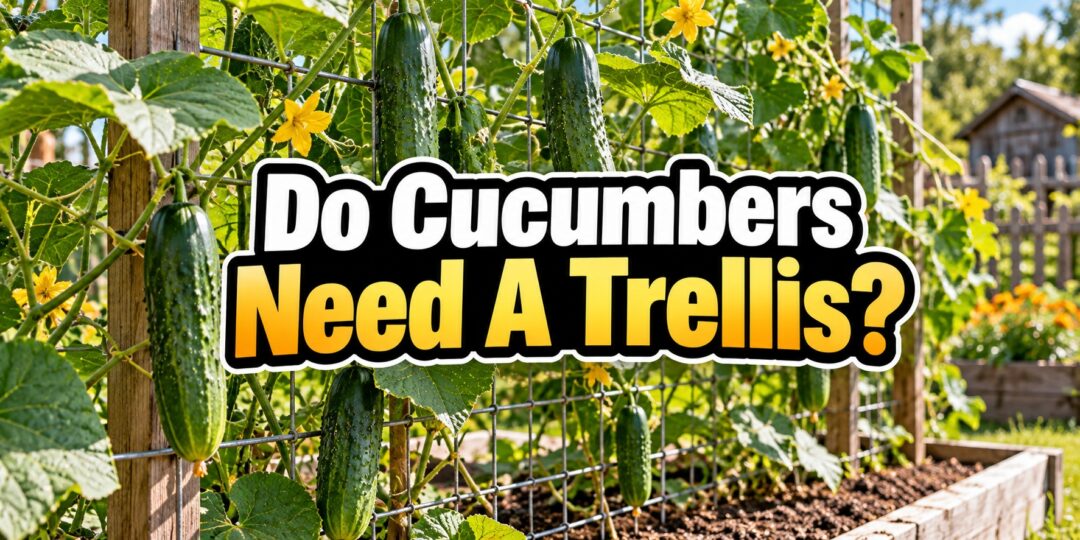
Training vines to climb a trellis, three to four feet tall, solves most of the problems that come with letting cucumbers sprawl, and it does it without much extra effort once the structure is up.
- Straighter, cleaner fruit, since nothing is pressing against the cucumber as it develops.
- Better airflow around the leaves, which genuinely reduces fungal disease pressure.
- Easier, faster harvesting, since fruit hangs visibly at eye level instead of hiding under a leaf canopy.
- A real space savings in the garden, covered in more detail below.
- Less contact with soil-dwelling pests and less opportunity for slugs to reach the fruit.
Bush Varieties: The Real Exception to the Rule
Not every cucumber variety is built to climb in the first place. Bush-type cucumbers are compact, short-vined varieties that fit better in a small garden and genuinely don’t need a trellis, since they were bred specifically to stay tidy without one.
If you’re growing in containers, a small raised bed, or you simply don’t want to build a structure, choosing a bush variety from the start is a smarter move than fighting a trellis question with a full-sized vining type. Check your seed packet, since this distinction is usually stated right on it.
How Much Space You Actually Save With a Trellis
This was the benefit that actually sold me. Vining types spread out and need two to three feet of space on either side of the row when left to sprawl, while trellised vines climb up instead of out, letting you space plants and rows dramatically closer together.
For anyone gardening in a small yard or raised beds, this space difference alone is often reason enough to trellis, completely separate from the disease and fruit-quality benefits. I reclaimed a genuinely useful chunk of my garden the year I switched over.
Disease Pressure: Why Airflow Matters More Than You’d Think
Several of the most common cucumber diseases home gardeners deal with, including powdery mildew, bacterial wilt, and anthracnose, spread faster in exactly the conditions a sprawling vine creates: leaves packed tightly together, poor air circulation, and prolonged moisture sitting on foliage after rain or watering.
A trellis doesn’t eliminate disease risk entirely, nothing does, but opening up the plant to more air and light genuinely slows down how fast a problem spreads once it shows up. I’ve had noticeably fewer disease issues since I started trellising, and it’s the single change I’d point to first.
Do Cucumbers Need Extra Support Like Slings?
If you’ve read about trellising melons, you may have come across advice to build fabric slings to support the fruit as it grows. Cucumbers and small squash don’t slip off the vine the way melons do, so they don’t need that kind of extra support. The main thing worth checking on regularly is making sure a developing fruit doesn’t wedge itself awkwardly between the mesh as it grows.
Watering Differences Between Trellised and Ground-Grown
One tradeoff worth knowing about before you commit to a trellis: trellised plants growing vertically may need watering more often than ground-grown ones, since more of the root zone and foliage is exposed to drying air and sun rather than shaded by a sprawling leaf canopy.
This isn’t a reason to skip trellising, just something to build into your routine. A drip line or soaker hose at the base of a trellis makes this easy to manage without needing to think about it daily.
Building a Simple, Effective Trellis
You don’t need anything elaborate. A basic trellis is just two vertical supports with mesh or netting strung between them, and cucumbers will climb it readily on their own tendrils with just a little early guidance from you.
- Use sturdy stakes, metal or wood, pounded deep enough that wind and the weight of a full vine won’t tip the structure over.
- Cattle panels, chicken wire, or purpose-made trellis netting all work well as the climbing surface.
- Set the trellis up before or right at planting time, not weeks later once vines are already sprawling.
- Gently weave young growing tips into the mesh every few days until the plant starts climbing on its own.
- An angled trellis, leaning slightly over the row, can make harvesting even easier since fruit hangs more freely on the underside.
When Ground-Growing Actually Makes Sense
There are genuinely reasonable situations where skipping the trellis makes sense. If you’ve chosen a bush variety, you don’t need one at all. If you have far more garden space than you know what to do with and don’t mind the extra maintenance, letting cucumbers sprawl costs you nothing but some space and a bit more careful harvesting.
Larger squash and pumpkin varieties are genuinely too heavy for a home trellis and are better left on the ground regardless, but that’s a different situation from cucumbers, which are light enough that this concern doesn’t really apply to them.
If you’re using a thick straw mulch under sprawling vines, you can offset some of the disease and rot risk, since the mulch keeps the fruit from sitting directly against bare, damp soil. It’s not as effective as trellising, but it’s a reasonable middle ground if a full trellis genuinely isn’t practical for your setup this season.
Trellising Cucumbers Alongside Other Crops
A trellis doesn’t just save space for the cucumbers themselves, it opens up the ground underneath for something else. I’ve had good luck tucking lettuce and other shade-tolerant greens beneath a cucumber trellis, since the vertical canopy above provides a bit of welcome afternoon shade during the hottest part of summer.
This kind of stacking only really works once you’ve committed to trellising, since sprawling vines take up the exact ground space you’d otherwise use for a second crop. It’s one more small advantage that adds up over a full season.
Choosing the Right Trellis Material for Your Climate
If you garden somewhere with strong summer storms, a lightweight plastic mesh trellis can take a real beating compared to something sturdier like cattle panel or galvanized fencing. I switched to cattle panel after losing a flimsier trellis to a windstorm mid-season, vines and all, and haven’t had a repeat of that particular disaster since.
In milder climates without much wind, a simpler and cheaper netting setup is perfectly fine and easier to take down and store over winter.
What I Wish I’d Known Before My First Trellis
I underestimated how quickly cucumber vines grow once they get going, and I put my first trellis up almost two weeks too late, after several vines had already started sprawling and rooting into the soil along their length. Get your structure in place before or right at planting time, not once the plants already have momentum in the wrong direction.
I also learned the hard way that a trellis needs to be anchored more securely than seems necessary early on. A trellis that looks plenty sturdy holding up a few small seedlings can struggle badly once it’s carrying a full season’s worth of mature, fruit-laden vines and catching wind like a sail.
My Honest Take After Growing Both Ways
I don’t think a trellis is strictly necessary, and I’d never tell someone they’re doing it wrong by letting cucumbers sprawl. But if you’ve got even a little time to put up a simple structure, the payoff in fruit quality, disease resistance, and how much space you get back is real enough that I haven’t gone back to ground-growing since I made the switch.
If you’re on the fence, my advice is to try a small trellis on just a couple of plants this season and compare them side by side with anything you let sprawl. That comparison convinced me faster than any amount of reading ever did.
Common Questions About Trellising Cucumbers
Can I Trellis Bush Cucumber Varieties?
You can give them a small cage or stake for light guidance if you want a tidier look, but bush varieties are naturally compact and won’t climb a full trellis efficiently the way vining types do. Save the full trellis structure for a genuinely vining variety.
How Tall Should My Cucumber Trellis Be?
A trellis three to four feet tall is generally enough for most vining cucumber varieties, though some particularly vigorous types can benefit from something closer to six feet if you have the space to build it.
Do I Need to Tie the Vines to the Trellis Myself?
Cucumbers climb using their own tendrils and generally attach themselves once they reach the mesh, but a little early guidance, gently weaving young growing tips through the openings, helps them get started climbing in the right direction rather than flopping back down.
Will a Trellis Increase My Cucumber Yield?
Many gardeners report better usable yields with trellising, not necessarily because the plant produces more fruit, but because less of what it does produce is lost to rot, pests, or fruit that went unnoticed and overripe under a leaf canopy. Straighter, cleaner fruit also just means less waste at harvest time.
Can I Add a Trellis Partway Through the Season?
It’s possible but genuinely harder than setting one up from the start, since you’ll need to carefully lift and redirect vines that have already sprawled and rooted themselves in places along their length. It’s doable for a young plant, but the longer you wait, the more disruptive it becomes to the plant.
Your Garden Can Teach You More Than How to Grow Cucumbers
Building a simple trellis is a small project, but it represents something much bigger: knowing how to solve everyday problems yourself instead of depending on something ready-made.
That kind of practical knowledge used to be commonplace. Previous generations knew how to grow and preserve food, build useful things from basic materials, maintain their homes, make supplies last longer, and provide for themselves with far fewer trips to the store.
Today, many of those skills have been forgotten.
Lost Skills of Independence was created to bring that practical knowledge back. It collects old-fashioned self-reliance skills and shows you how to put them to work in modern life.
Inside, you’ll discover practical knowledge for growing and preserving food, becoming more productive around the homestead, making useful things yourself, storing supplies, reducing waste, living with less dependence on modern conveniences, and handling everyday problems with your own hands.
Whether you’re tending a backyard garden, building a more self-sufficient homestead, preparing for shortages and power outages, or simply trying to depend less on expensive products and services, these are skills that can keep paying you back for years.
A cucumber trellis might save a few feet of garden space today. Learning how to become more independent can change the way you use your entire property.
You don’t need to abandon modern life to become more self-reliant. You just need to start rebuilding the skills that make independence possible.
Final Thoughts
Cucumbers don’t strictly need a trellis to grow, but for most vining varieties, the benefits, straighter fruit, less disease, easier harvest, and real space savings, make it worth the modest effort to put one up. If you’re growing a bush variety or simply have space to spare, skipping the trellis is a completely reasonable choice too. Either way, now you know exactly what you’re trading off.
You may also like: 
Fermented Pickles – The Complete Guide
The Ultimate Survival Tree That Grows On Every Street In The U.S. (Video)
Can You Plant a Grocery Store Cucumber?
What to Grow in a Greenhouse – A Complete Homesteader’s Guide to Year-Round Production
What Happens if You Bury Tea Bags in Your Garden
Never Plant These Vegetables in a Container or Bucket