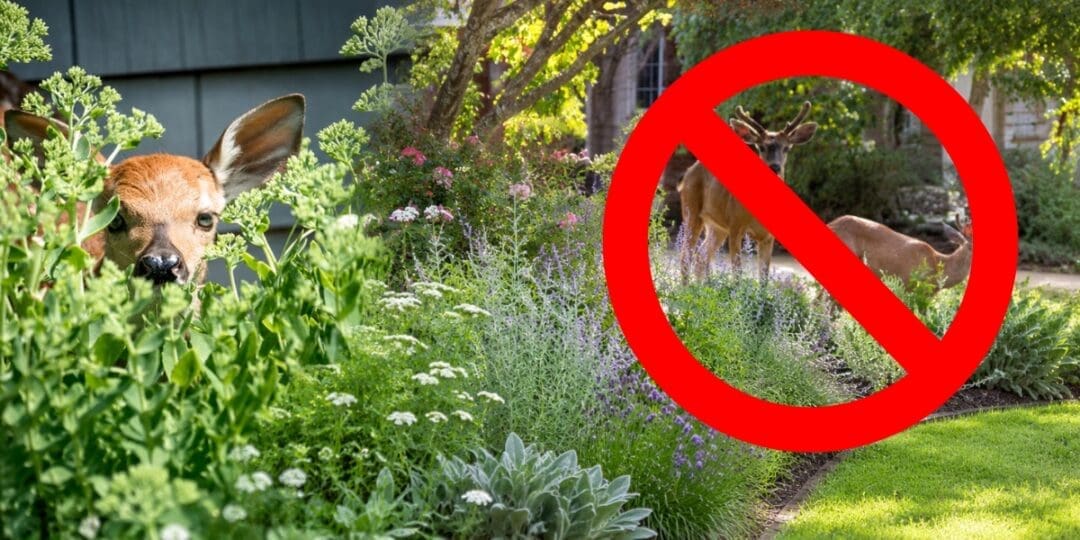
Yes, they’re cute and all, but deer are a huge problem all over the country. You might have encountered them in your garden eating your crops, and if not, I am sure you had to deal with the aftermath.
Deer are some of the most stubborn visitors a homesteader will ever deal with, and once they have decided your property is the perfect target, they will keep coming back night after night.
I know that the standard advice you get is to build an eight-foot fence around everything you want to protect. And yes, that works. But it is also expensive, ugly, and a lot of work if you are trying to protect more than a small patch of ground.
What no one tells you is that there are many other methods out there that work great, cost almost nothing to set up and don’t harm the deer in any way. Our goal is to make them think your garden is a disgusting place, and if you manage to do this, they will never come back to your property.
So, here are some things I have used on my own homestead so you can pick the ones that fit your land.
Why Deer Keep Coming Back to Your Land 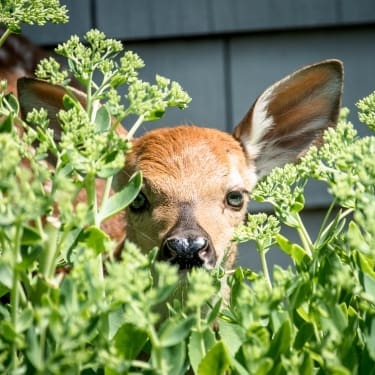
Before we get into the methods, it helps to understand why the deer are here at all. According to Penn State Extension, deer are most active in the early morning and evening hours, and they can have a home range of several square miles depending on the season. That means the deer wandering into your garden tonight has probably been working a circuit of food sources for weeks.
Once they figure out your property is part of that circuit, they keep coming back. Your job is to make your land the least appealing stop on their route. You do not have to make it impossible for them to get in. You just have to make it annoying enough that they go bother somebody else.
How to Build a Natural Deer Barrier
The first thing I want you to do is take a hard look at what you have growing along the edges of your property. Deer have favorites, and they have plants they will not touch unless they are starving.
If you can build a perimeter of plants deer dislike, you create a kind of scent and texture wall they have to push through to get to the good stuff. Deer hate strong smells, fuzzy leaves, and prickly textures. Here are some I have had real success with.
Lavender – This is my favorite for sunny spots. Deer won’t go near it, and you get a beautiful plant that smells wonderful and brings in the bees.
Russian sage – Tall, silvery, and aromatic.
Catmint – Hardy, easy to grow, and deer ignore it completely.
Yarrow – This one is tough and drought-tolerant, perfect for someone who’s not planning to take care of this layer of defense
Lamb’s ear – The fuzzy texture is something deer cannot stand.
Garlic, chives, and onions – I tuck these in everywhere. Around the rose bushes, along the edges of the vegetable beds, and in containers near the back door. The smell alone keeps deer at a distance.
If you want to make things easier, you can get this NON-GMO seeds pack. All of the seeds are packed here in the U.S. and the herbs you get are exactly the ones deer hate.
These are the seeds I buy all of the time and I always get beautiful results.
Another advantage is that all of these plants are medicinal herbs, so besides keeping deer away, you can use them around your homestead to make teas and remedies.
Get your own seed pack here and make all deer avoid your property once and for all.
The Egg Spray Method
I have tried just about every commercial deer repellent on the market, and most of them work fine. But you can make something just as effective in your kitchen for almost nothing, and this is what I rely on most of the time.
Here is the recipe I use, and it has saved my tomato plants more than once.
Recipe
You will need 2 eggs, 1 cup of milk, 1 tablespoon of dish soap, 1 tablespoon of cooking oil, and one gallon of water. Crack the eggs into a blender, add the milk, and run it until everything is smooth. Pour that into a gallon jug, add the dish soap and the cooking oil, top it off with water, and shake it well.
Let the mixture sit in a warm spot for about 24 hours before you use it. I know, I know, this part sounds gross. The eggs need to go a little funky for the spray to really do its job. The smell is what makes the deer turn around.
Pour it into a garden sprayer and coat the leaves of anything you want to protect. The soap helps it stick, and the oil keeps it on the leaves through morning dew. Reapply every week or two, and definitely after a heavy rain.
One thing I want to add. Do not spray this directly on the parts of vegetables you plan to eat, like the heads of broccoli or the fruits of your tomatoes. Spray the leaves and stems instead. The deer browse the foliage, so that is where the protection needs to be.
Four Scents Deer Cannot Stand 
Deer are cautious animals by nature. They are always sniffing the air for predators and for humans. You can use that against them.
Here are a few scent-based tricks that work well.
Bar soap – Hang strongly scented bars of soap, the cheap deodorant kind, from stakes or low branches around the perimeter of your garden. Irish Spring is the one most homesteaders swear by. Punch a hole through the bar, run twine through it, and tie it up about three feet off the ground.
Human hair – Next time you get a haircut, ask for the clippings. Sprinkle small handfuls around the base of plants and along the edges of beds. The smell of humans makes deer hesitate.
Used coffee grounds – I scatter these around the garden every morning when I empty the French press. They add nitrogen to the soil and the smell helps too.
Predator urine – You can buy bottles of coyote or fox urine at most farm supply stores. It is not glamorous, but it works. A few drops on rags hung around the property edge tell every deer that walks by that something dangerous lives here.
You will want to rotate these. Deer get used to a single scent after a week or two and start ignoring it. I switch between two or three methods every couple of weeks, and that keeps them guessing.
How to Use Your Dog to Keep Deer at a Distance
If you are serious about keeping deer off your land, the single most effective thing you can do is get a dog.
I am not talking about a tiny lap dog that lives indoors. I am talking about a real outdoor dog that patrols the property and barks at anything that moves. Even the smell of a dog around the perimeter is often enough to keep deer from coming in at all.
If you have other livestock to protect, a livestock guardian breed like a Great Pyrenees, Maremma, or Anatolian Shepherd is one of the best investments you will ever make. These dogs were bred to live outside, patrol large areas, and warn off anything that comes near their territory. Deer learn very quickly to avoid properties with a working dog on them.
Even if you do not have livestock, a regular farm dog that spends time outside will deter deer just by being there. My neighbors have an old hound that does almost nothing all day but lay on the porch, and yet the deer seem to avoid their place.
Also, your dog can protect your property from more than just deer. They are companions that also keep predators and intruders far away. If you want to see if your dog is prepared to protect your homestead and also learn more effective methods to keep your property safe, you can find more here.
Use the Sprinklers You Already Have in Your Garden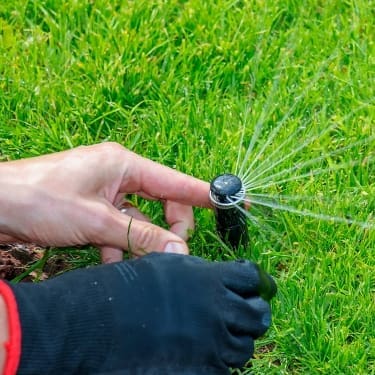
Motion-activated sprinklers can work well, but I want you to be careful with them.
A motion sprinkler senses movement, then shoots a burst of water at whatever set it off. For most deer, the surprise is enough to send them running.
The thing is that a panicked deer is not peaceful at all. I have heard of startled deer running straight into fences, windows, and even cars in their hurry to get away. So if you are going to use these, set them up where a deer that bolts has open space to run into, not toward a road or a glass patio door.
I keep one positioned to cover my front flower beds. It runs on a hose and a 9-volt battery, and it has saved those beds for summers in a row.
Block Their Path
The last trick I want to share is the easiest one, and I wish I had figured it out sooner.
Deer like clear sightlines and easy walking paths. So, try to create obstacles, because they will often pick a different route altogether.
I leave brushy areas along the back fence line instead of clearing them. I pile up small branches and prunings in places deer used to walk through. I plant prickly things like roses, holly, and barberry along the corners they liked to cut across.
Over time, the deer learn that getting onto my property is more trouble than it is worth, and they shift their nightly route to the neighbor’s overgrown pasture instead. Sorry, neighbor.
Final Thoughts
Keeping deer off your property without a fence is completely doable. You just have to nail the perfect strategy. Using more layers of defense, like the ones listed above, will keep deer away and your garden safe and thriving.
Now, you’ll probably still see deer now and then, but that’s part of living somewhere with trees and open land, and I have made my peace with it.
How to Protect Your Homestead From Predators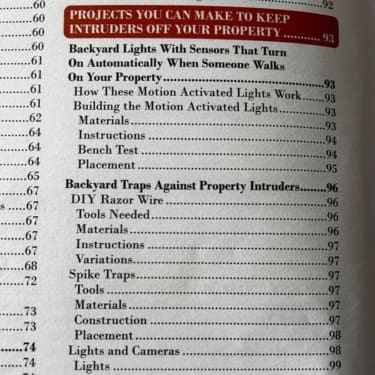
Both you and I know deer are not the only thing wandering onto your property at night.
There are coyotes that will pick off your chickens one by one. There are raccoons that figure out how to open coops. There are stray dogs, and yes, sometimes there are people who think a quiet rural property is an easy target. The further out you live, the longer it takes for help to arrive if you ever need it.
You cannot stand guard at three in the morning, and you should not have to. What you can do is set up a few simple defenses around your homestead that work whether you are awake or asleep, whether the power is on or off.
A few well-placed traps – Not the cruel kind, but the kind that catch a critter alive so you can decide what to do with it in the morning. Knowing how to set, bait, and rotate traps around your property is a skill that pays for itself the first time it saves a hen.
DIY razor wire along the back of your property – You do not need to buy the expensive commercial stuff. There is a way to build your own using materials you can pick up cheaply, and lay quietly along the back fence line or under brush; it stops anything trying to push through.
A trip wire alarm – This one I love. A simple, no-electricity setup that makes a loud noise the moment something crosses a line. You can run them along game trails, around the coop, or near the windows on the side of the house that nobody can see from the road.
Lights that turn on when someone walks onto your property – Motion-activated lights are one of the cheapest and most effective deterrents you can install. Most trouble does not happen in places where someone might be seen. A light snapping on in the dark keeps most threats from predators and intruders away.
The good news is you can build all of these yourself for very little money. You can find all the info here.
You may also like: 
10 Silent Predators You Should Be Warned About
Why The Amish Make Ash Circles Around Their Plants (Video)
The Most Overlooked Resource On Your Property
What Happens When You Let Chickens Free Range Full Time
Most Vicious Chicken Predators