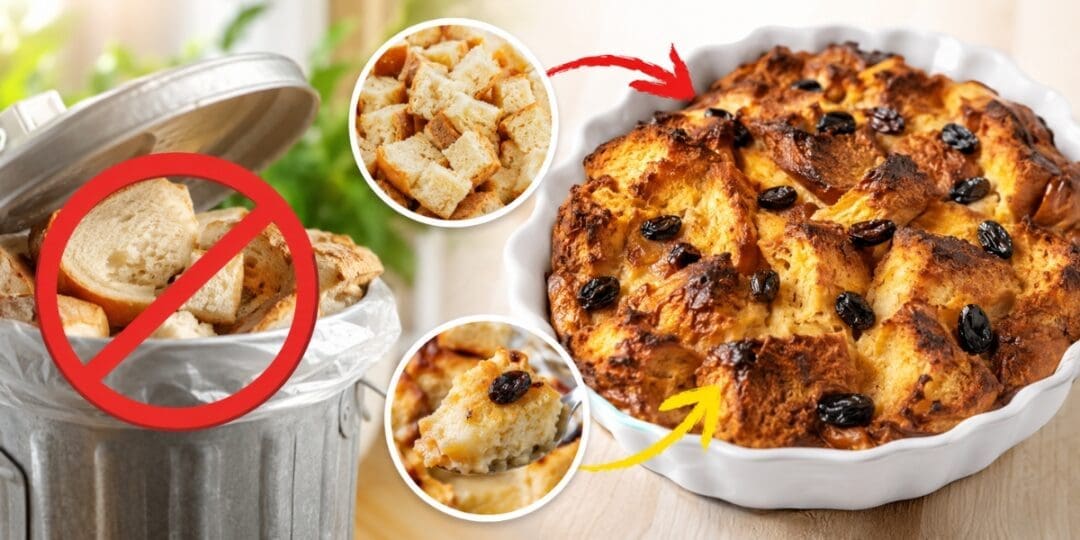
There is a high chance you have half a loaf of bread sitting on the counter right now. You might be thinking it’s already stale, so it’s only good for the chickens or the compost pile. I used to do the same until I started baking this dessert the way my grandmother did, and now I save every crust.
What I like most about this recipe is that it is so easy to make that it feels like cheating. You take bread nobody wants to eat, add some milk and eggs, and get a delicious dessert one hour later.
It got American families through the Great Depression because it cost almost nothing and it was practical. For the same reasons, I believe it’s still perfect even today for anyone who is all about self-sufficiency.
Below you’ll find three recipes worth keeping, plus a handful of tricks that make the whole process way easier than it already is.
Where bread pudding came from
This dessert goes back to medieval England, when poor families kept a wooden bowl on the counter and tossed in their crusts all week long. When Sunday came, they softened the bread with hot water, a drizzle of honey, and whatever spice they had around. They called it “poor man’s pudding,” and it stuck around for centuries because it’s still as good as it used to be.
Settlers carried the habit to America, and by the 1930s, every farm wife in the country had her own version. Cooks stretched what they had with whatever sat on the shelf: Karo syrup or molasses when sugar ran low, evaporated milk when the cows were not producing milk, and lard in place of butter. You’ve got eggs, milk, and stale loaves on hand most weeks, and bread pudding turns all three into the perfect dessert.
Related: How to Make Your Lard Last 20+ Years (The Amish Way)
But bread pudding is only one of the recipes that have kept American families alive when the grocery stores went empty. There were dozens more, and most of them are almost forgotten.
If hard times come back around, knowing how our grandparents fed their families on almost nothing is the kind of skill you want before you need it.
Yes, I want access to 126 more recipes
Recipe 1: The classic 9×13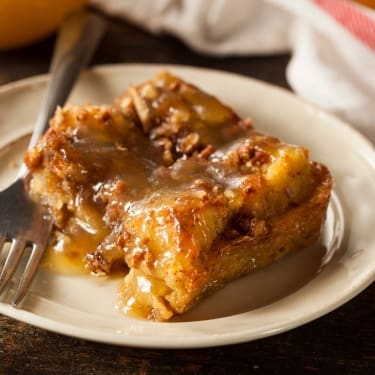
This is the one I bake most often. It feeds a crowd, freezes well, and works with whatever bread you have around. The texture lands somewhere between custard and warm cake, with a buttery, golden top.
Ingredients
• 10 cups stale bread, cut into 1-inch cubes
• 5 large eggs
• 2 cups whole milk
• 1½ cups heavy cream
• ¾ cup sugar (I use half white, half brown for depth)
• 1 tablespoon vanilla extract
• 1½ teaspoons cinnamon
• ¼ teaspoon fresh-grated nutmeg
• ¼ teaspoon salt
• 3 tablespoons melted butter
Instructions
Butter a 9×13 baking dish and pile in the bread cubes. In a large bowl, whisk the eggs, milk, cream, sugar, vanilla, cinnamon, nutmeg, and salt until smooth. Pour the custard over the bread and press the cubes down gently so every piece gets a soak. Let it rest on the counter for 30 minutes, or cover and refrigerate overnight if you want a deeper flavor and a softer texture.
When you’re ready, preheat the oven to 350°F. Drizzle the melted butter across the top of the pudding and bake for 45 to 55 minutes. You’ll know it’s done when the top turns deep golden and the center is set but still soft, kind of like firm jello when you tap the pan. The middle stays a little custardy on purpose, so don’t wait for it to feel like cake. Let it rest for 10 minutes before serving.
This Herb Will Make Your Chickens Lay 3x More Eggs
Quick vanilla butter sauce. Stir 1 stick butter, ½ cup sugar, ½ cup heavy cream, 1 tablespoon vanilla, and a pinch of salt over medium heat for about 5 minutes, until smooth and glossy. Pour it warm over each slice. The sauce keeps in a jar in the fridge for a week.
Recipe 2: New Orleans bread pudding with bourbon sauce
This one is a little fancier than the classic, and it’s the one I make when friends are coming over. New Orleans cooks took the same Depression-era basics and dressed them up with French bread, plenty of cream, and a warm bourbon sauce poured on top. You’ll still see it on most Mardi Gras tables down south.
Ingredients
For the pudding:
• 1 large loaf stale French bread, torn into chunks (about 8 cups)
•4 cups whole milk
• 4 large eggs
• 1¼ cups sugar
• 2 tablespoons vanilla
• 1½ teaspoons cinnamon
• ½ teaspoon nutmeg
• ¾ cup raisins (soak them in hot water for 15 minutes first)
• 3 tablespoons butter, cut into small pieces
For the bourbon sauce:
• ½ cup butter
• 1 cup sugar
• 1 large egg yolk, beaten
• ¼ cup bourbon
Instructions
Tear the bread into rough chunks and place them in a buttered 9×13 dish. Whisk the milk, eggs, sugar, vanilla, cinnamon, and nutmeg together, then pour over the bread. Sprinkle the drained raisins across the top and dot with butter. Let it soak for at least 30 minutes so the bread drinks up the custard properly.
Bake at 350°F for 50 to 60 minutes. The top should be deep golden and slightly puffed, and the center should feel firm but still tender when you press it.
While the pudding bakes, make the sauce. Melt the butter and sugar over low heat, stirring until the sugar dissolves completely. Pull the pan off the heat and whisk in the beaten egg yolk fast so it doesn’t scramble. Stir in the bourbon. Pour the warm sauce generously over each serving. If you’re serving kids, swap the bourbon for an extra teaspoon of vanilla.
Recipe 3: Apple cinnamon bread pudding for fall
This is the one I make when the apples come in and I’ve got more than I know what to do with. It uses what you already have around the homestead in fall, and it’s good with a scoop of vanilla ice cream or a splash of cream on top.
Ingredients
 • 8 cups stale bread cubes
• 3 medium apples, peeled and diced (Granny Smith or Honeycrisp work best)
• 2 tablespoons butter
• ¼ cup brown sugar (for sautéing the apples)
• 4 large eggs
• 2 cups whole milk
• 1 cup heavy cream
• ½ cup maple syrup (or honey)
• ¼ cup brown sugar
• 1 tablespoon vanilla
• 2 teaspoons cinnamon
• ½ teaspoon allspice
• ½ cup chopped pecans or walnuts (optional, but I always add them)
Instructions
Melt the butter in a skillet over medium heat. Toss in the diced apples and ¼ cup brown sugar, and cook for about 5 minutes until the apples soften and turn glossy. Set them aside to cool a bit.
Butter a 9×13 dish and layer in the bread cubes and the cooked apples, mixing them together so the fruit spreads evenly. Whisk the eggs, milk, cream, maple syrup, brown sugar, vanilla, cinnamon, and allspice in a bowl, then pour the custard over the bread and apples. Press everything down so the bread soaks evenly, and let it rest 30 minutes.
Sprinkle the nuts across the top and bake at 350°F for 45 to 50 minutes, until golden and just set in the middle. Serve warm with cream or ice cream. The maple syrup adds a deeper flavor than plain white sugar, which is why I prefer it for this one.
My favorite way to upgrade bread pudding
Once you’ve baked a few pans of bread pudding, you can start playing around, experimenting with new things. Different breads, different fruits, different sauces. The change that surprised me most was adding herbs from my own medicinal garden, and now I do it almost every time.
A pinch of dried lavender in the custard, a few chamomile flowers steeped in the warm milk, or a sprinkle of calendula petals on top before it goes in the oven. Three plants that go well with vanilla and cream, and three plants that do something good for you while you eat dessert.
Lavender calms your nerves and helps you sleep. Chamomile soothes your stomach, so the pudding sits easily after a heavy meal. Calendula is gently anti-inflammatory and brings a pretty golden color to the top of the pan. And the best thing is that none of them tastes like medicine. Adding them to this dessert makes things even better and enhances the flavor. 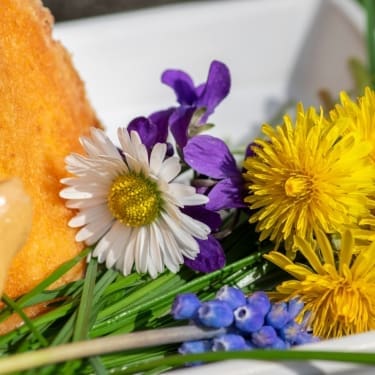
Now, where you get your seeds matters. Most store-bought herb seeds are old, sprayed, or not what the label says. I get mine from Nicole Apelian’s Medicinal Garden Kit, which comes with all three of these herbs plus seven more (chicory, yarrow, echinacea, calendula, evening primrose, marshmallow, California poppy, and feverfew).
Nicole is a biologist and herbalist who’s been managing her own MS with backyard plants for over twenty years, and she handpicks every seed in the kit. They’re non-GMO and packaged in the US.
The kit comes with 10 medicinal herbs in one package, which means you get a whole little backyard pharmacy when you plant it. Here’s what each one does:
- Lavender – for sleep, anxiety, and headaches
- Chamomile – for stomach trouble, sore eyes, and skin irritation
- Calendula – for cuts, burns, scrapes, and rashes
- Echinacea – for when a cold is coming on
- Yarrow – to stop bleeding fast and prevent infection
- Chicory – for joint pain and digestion
- Marshmallow – for heartburn, ulcers, and coughs
- California poppy – for deep sleep and insomnia
You stop running to the drugstore every time someone in the house gets a sniffle. You stop guessing whether the dried herbs on the spice aisle are even fresh. And you stop paying $30 for a bottle of echinacea tincture you could grow yourself for free.
Click here to see Nicole’s full Medicinal Garden Kit and start your own backyard pharmacy
Tricks that make bread pudding easier
Once you’ve baked one or two pans, you start to notice little ways to save yourself trouble. Here are the ones I rely on every time I make one of these recipes.
Bank your bread. Keep a labeled freezer bag in the door and toss in every heel, crust, and odd end as it goes stale. Mix bread types freely. Once you’ve got six to eight cups, you’ve got enough for a dessert. I’ve made bread pudding from sandwich bread, leftover dinner rolls, and the last few inches of a sourdough loaf all in one pan, and nobody could tell the difference.
Dry it on purpose when you’re in a hurry. If your bread is still soft and you want pudding tonight, cube it, spread it on a sheet pan, and bake at 250°F for 15 to 20 minutes. Let it cool before adding the custard. Stale bread soaks up liquid evenly, while fresh bread turns gummy and falls apart in the pan.
Use what your homestead gives you. Farm eggs run bigger and richer than store eggs, so 4 of yours can stand in for 5 of theirs. Goat milk works one for one and adds a soft tang that goes really well with honey. To swap honey for sugar, use ¾ cup of honey per 1 cup of sugar, reduce the milk by 3 tablespoons for every cup of honey, and drop the oven temperature to 325°F since honey browns faster.
Freeze a whole pan for later. Cool the baked pudding completely, wrap it tightly in plastic and then foil, and it keeps for two to three months. Thaw overnight in the fridge and reheat covered at 350°F for 15 minutes, then uncovered for 5 more to crisp the top back up. I always bake two pans in spring when the milk is coming in fast and tuck one in the freezer for a busy week.
Of course, a freezer full of pudding only helps you if the power stays on. You need food storage that doesn’t rely on electricity.
Here you can find projects that keep your homestead running no matter what happens.
Save the eggshells. Dry them on the counter, crush by hand, and work them into your compost or sprinkle around tomatoes and peppers. They feed the soil slowly and slow the slugs down at the same time.
Final thoughts
I’ll be honest, I didn’t grow up loving bread pudding. The store-bought version always tasted bland and a little sad to me. It wasn’t until I started baking my own, with farm eggs and real cream and the lavender from my garden, that I understood why my grandmother kept making it her whole life.
So, you can start by saving that stale bread and when you have enough, turn it into a delicious dessert the whole family will love.
You may also like:
Join Our Homesteading Facebook Group!
The 1 Project I Wish I’d Built Before the Last Blackout (Video)
The Best Old Fashioned Pickled Eggs Recipe
Homemade Amish Apple Butter Recipe With 12+ Months Shelf Life