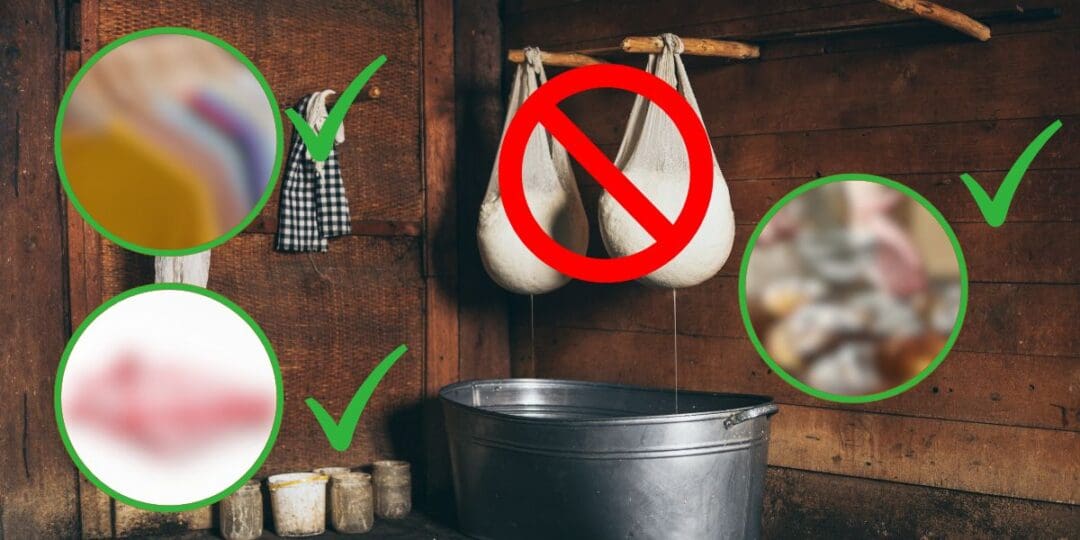
Cheesecloth has been the go-to for straining and pressing for a long time, and for a good reason. It works.
But it’s not the only option out there, and sometimes it’s so much easier to use what you already have at home. There are plenty of things already sitting around your house that can do the same job for free.
Some are pretty obvious, some might surprise you, and most importantly, all of them get the job done without a trip to the store. Here’s the full list and how to use each one the right way.
Muslin and Butter Muslin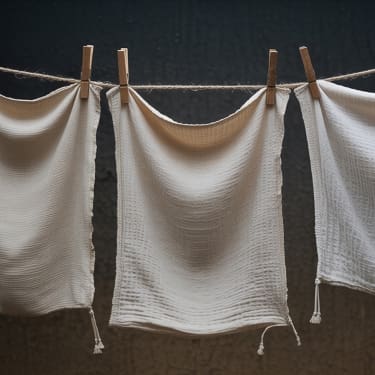
If you do any kind of cheesemaking or canning, muslin is your best friend. This tightly woven cotton fabric strains like a dream and holds up wash after wash. The University of California Master Food Preservers put muslin and butter muslin right up there with cheesecloth as go-to tools for draining curds.
Butter muslin has an even tighter weave than regular muslin, so it catches the finer stuff. That makes it perfect for soft cheeses and yogurt, where you want a really smooth finish.
If you want to use it, start by cutting a square big enough to line your colander with some hanging over the edges. Get it damp first so it sticks to the surface, then pour your liquid through nice and slow. When you’re done, rinse it in cold water right away, then wash and boil it so it’s ready for next time.
Flour Sack Towels and Cotton Flannel
You probably already have a couple flour sack towels stuffed in a drawer somewhere, and they’re honestly one of the best cheesecloth swaps you’ll find. Cotton flannel works great, too, because the tight weave gives you a nice, clear juice.
To strain yogurt or soft cheese, lay a clean towel over a strainer, pour in the good stuff, pull the corners up and tie them together to make a little pouch. Hang it over a bowl and let gravity do its job. For stock, just lay the towel in a sieve, get it damp, and pour the broth through slowly and steadily.
I use flour sack towels for just about everything in my kitchen. They’re dirt cheap, they last forever, and they get softer every time you wash them. One thing, though. When you wash them, skip the fabric softener since it coats the fibers and kills the straining power. Wash them plain and give them a good boil between uses to keep everything sanitary.
I still remember the first batch of Jack cheese that I made last spring. I bought some cheesecloth, but to my surprise, it wasn’t enough. While I was getting angrier because I had to drive 40 minutes to get more cheesecloth, Mark, my husband, was right next to me doing what he does best, improvising. He took a clean towel from a drawer and told me that we could try this before I hop into the car.
It worked like a charm and that was one amazing batch of cheese. Now, the towel helped big time, but it was not the one making our cheese so good and tasty. The recipe we use is one that I gladly recommend to any homesteader every time the topic appears in a conversation. This savory cheese is made following a traditional Amish recipe that comes straight from the Ohio Amish County.
Besides the amazing taste, what I like the most about Jack cheese is that it’s so easy to store in a root cellar. This is not a pretentious cheese and it stays fresh for a long time. Once cured, this cheese can be stored for months in a root cellar or any other cold place. This makes it the perfect survival food anyone can have in their homestead for emergencies.
If you want to get the exact recipe I use, click here and get it directly from an ex-Amish who was born and raised in the Ohio Amish community.

Medical Gauze
Medical gauze is cotton, the same as cheesecloth, but it’s thinner and rips more easily. The workaround is simple. Layer it up and it will be able to hold more weight. Fold four or five pieces together and you’ve got something thick enough to strain through without falling apart.
Grab sterile, plain gauze pads or rolls. Stay away from anything with ointment or sticky stuff on it. Get the layers damp, line a colander or funnel, and pour your liquid through slowly. If it clogs up or starts tearing, swap in a fresh batch.
This is really a one-and-done kind of deal. After you’re finished, toss the cotton gauze in the trash can and move on.
Coffee Filters and Paper Towels
These are your grab-and-go options when you need something fast and don’t feel like fussing around. Coffee filters are built to catch fine particles while letting liquid pass through, which is exactly what you want for clearing up broth, juice, or infused oils.
Flatten a filter into a sieve or funnel, wet it so it holds its shape, and pour slowly. If things start backing up, give it a light stir or pop a fresh one. Paper towels work the same way for small jobs. Fold them up, lay them in a mesh strainer, and ladle small amounts at a time so they don’t rip on you.
Fair warning, though. These tap out fast on big batches. They get soggy and can’t handle a lot of volume. Go with unbleached coffee filters when you can, and skip the printed or heavily bleached paper towels. You don’t want any of that getting into your food. Once you’re done, these go straight into the compost pile.
Nut-Milk Bags and Fine-Mesh Bags
If you make your own almond milk, oat milk, or any kind of plant-based milk at home, you’ve probably already got one of these kicking around. Nut-milk bags are made from nylon or food-grade mesh with a super fine weave that holds back all the pulp while letting the liquid run through clean. They work just as well for broth, cold-brew coffee, and herbal stuff.
I started using a nut-milk bag for bone broth a couple of years back and honestly haven’t touched cheesecloth since. It’s faster, it doesn’t fall apart in your hands, and the broth comes out crystal clear every single time. If you’re handy with a sewing machine, you can even make your own from unbleached muslin or nylon mesh. Just throw a drawstring on top and double up the seams so it can take the squeezing.
Fine-Mesh Strainers and French Presses
Sometimes a fine-mesh strainer with really tiny holes does a solid job catching seeds, pulp, and bits of sediment all on its own. If you want it even clearer, just line the strainer with a damp coffee filter or a single layer of muslin and you’re good to go.
A French press is another method most people don’t think of. Pour your blended sauce, juice, or broth into the carafe, push the plunger down nice and slow, and the mesh screen separates the solids from the liquid. Great for small batches and cleanup takes about a minute.
I used my French press to strain an herbal infusion I made for my herbal lozenges recipe last winter, when every single strainer and towel in my kitchen was dirty. Worked like a charm and took maybe two minutes. Just make sure you clean the plunger really well afterward so you don’t end up with herb-flavored coffee next morning.
I make these herbal lozenges almost every winter and spring during the flu season. They are one of the best home remedies you can make at home for a sore throat. I prefer to make mine with marshmallow root or licorice root, but you can add any herbs you find suitable. This is the best recipe I found, and it’s made by Dr. Nicole Apelian, who is an experienced herbalist, author, and wild foods expert. Click here to get the instructions and make your sore throat go away in hours!
Clothes
A clean cotton T-shirt has a weave tight enough to strain nut milk, broth, and juice just fine. The same goes for pillowcases and plain cotton socks. As long as the fabric is clean, free of dyes, and washed with unscented soap, it works just like muslin.
Cut a T-shirt or pillowcase into big squares, hem the edges so they don’t unravel, and get them damp before using.
This is homesteading at its best. You’re working with what you’ve got instead of running to the store. Just wash everything in hot water after every use and boil it if you want to be extra safe. Set aside a few dedicated pieces and mark them clearly so nobody throws them back in the regular laundry by mistake.
Jelly Bags
If you make jams, jellies, or homemade vinegar, a jelly bag is worth having in your toolkit. These are fine-mesh bags made from nylon or cotton, built to strain out pulp, seeds, and skin so you end up with perfectly clear juice. They hold about 4 pounds of crushed fruit and you can reuse them for years.
Wet the bag before you start so it doesn’t drink up all your juice. Run the fruit through a coarse sieve first to get rid of the big chunks, then pour the liquid into the jelly bag. Hang it over a bowl from a sturdy hook, a cabinet knob, or a stand you throw together from scrap wood. Let it drip for at least two hours, or leave it overnight if you’ve got the patience. And whatever you do, don’t squeeze it. Squeezing forces pulp through and clouds up the juice.
You can buy jelly bag sets that come with a stand, but you can easily rig your own. Cut the bottom out of a tall yogurt container, stretch the bag over the rim, hold it in place with a rubber band, and set it inside a bowl. Works just as well and costs you nothing.
Cloth Diapers, Tea Towels, and Linen Napkins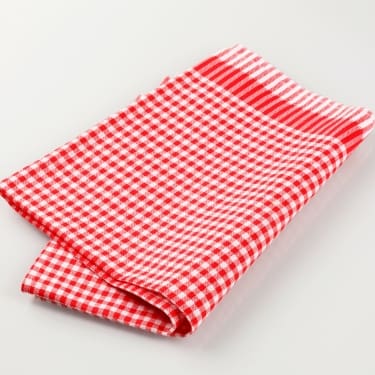
Flat cloth diapers are honestly one of the best-kept secrets in a homestead kitchen. They’re lint-free, super absorbent, tough as nails, and give you a big piece of fabric to work with. Clean tea towels and linen napkins do the same thing.
To strain yogurt, line a colander with a clean cloth diaper or tea towel. Pour in plain yogurt, pull the corners up and tie with twine, then hang the bundle over a bowl in the fridge. Leave it until it gets as thick as you want.
For jelly, fold the cloth into a few layers and hang it from a cabinet knob with a bowl underneath. Let the juice drip on its own. Don’t squeeze it. Squeezing pushes pulp through and makes the jelly cloudy.
Keep these separate from your regular kitchen towels. Skip the fabric softener, boil them between uses, and if you’ve got old linen napkins or bandanas lying around, hem the edges and put them to work. They’ll last you years.
Final Thoughts
Yes, cheesecloth is handy, but it’s nothing you can’t live without. You’ve already got plenty of stuff around the house that does the same job, and most of it holds up way longer.
The main thing with any of these is keeping it clean. Wash your improvised cheesecloths and bags after every use, boil them when you can, and keep the food-only stuff separate from everything else.
Try a couple of these next time you need to strain something and see which one clicks for you. Once you find your favorite, there’s a good chance you’ll stop reaching for cheesecloth altogether.
You may also like: 
Join Our Homesteading Facebook Community!
How to Build Your 6-Month Stockpile in 1 Month (Video)
7 Low-Maintenance Animals That Thrive on Small Homesteads
How To Wax Cheese For Long Term Storage
Ingenious Ways To Preserve Cheese At Home