
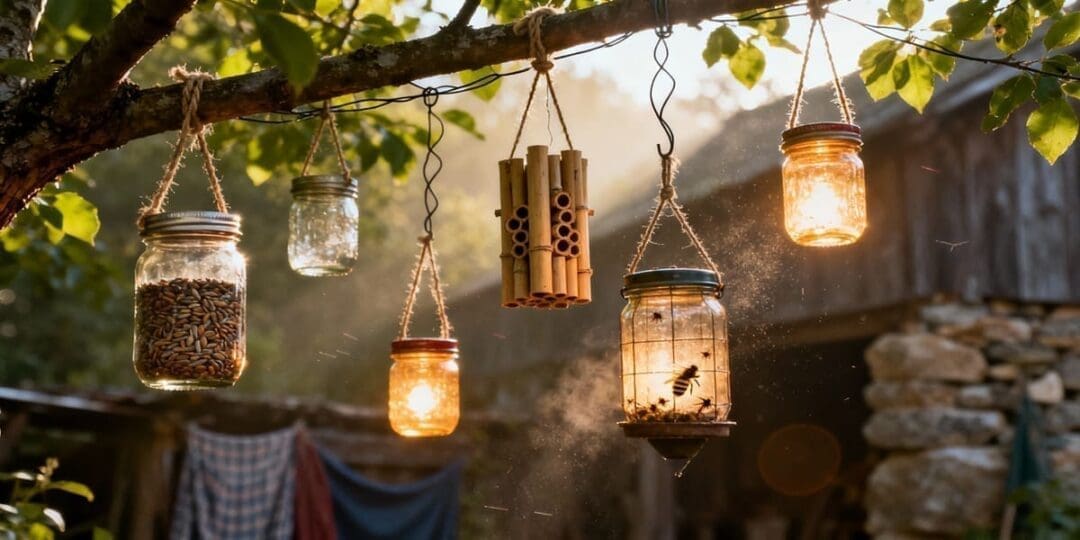
Homesteaders have been hanging jars in trees for centuries, Some of the traditions were based on superstition. It was the idea that evil spirits would be captured in the empty jars in the tree. What they did with the evil spirits in the jar after capture is a mystery but that’s the story.
But they’ve also been doing it for some very practical and logical reasons. With a little bit of creativity, they have been able to turn jars into bird feeders, insect traps, seed dryers, insect repellents and even bee hotels and lanterns.
It was a classic exploration of upcycling, and the jars not only provided a waterproof environment but lent themselves to a variety of new ideas. We’re going to explore 6 ideas for how to turn an empty jar into a functional addition to your homestead and where and why to hang them in your trees.
Why Trees?
The answer is simple. They’re an easy way to suspend a jar above the ground. No pole or fancy framework needed. Trees also tend to show up across a property. If there is a specific problem or need in an area just find your tree.
It’s also a good solution if a particular tree has a problem related to insects or other pests. Just hang your jar and you’ve brought your solution to the tree.
The best trees have low hanging branches that are easy to reach although a ladder can get you to higher branches if you need to. The jars were usually attached with twine looped around the top ridge or with bailing wire circling the trunk of the tree.
How high and how firmly you attach your jar depends on its function and how often it needs to be cleaned or refilled. It’s a lot easier to refill a bird feeder jar that’s in easy reach, but a bee hotel is a once a season installation.
There are still communities today who live much the same way these jar traditions were once used — carefully, deliberately, and with very little waste.
The Amish have preserved generations of practical knowledge by continuing to live without dependence on modern conveniences. Their homes, gardens, and food systems are built around patience and purpose, not speed.
The Amish Ways Book offers a rare look into how simple tools, reusable materials, and thoughtful routines can support daily life — even now.
Within its pages, you’ll learn:
- How food is preserved without electricity
- How small homesteads stay productive year-round
- Why reusing everyday items is central to Amish living
- How gardens, trees, and outbuildings are used intentionally
- The quiet systems that replace modern machines
Much like the hanging jars in this article, these practices remind us that living simply does not mean living without — it means living with intention.
If you’re curious how old traditions still thrive today, this book offers a gentle window into that world.
Constructing Functional Jars
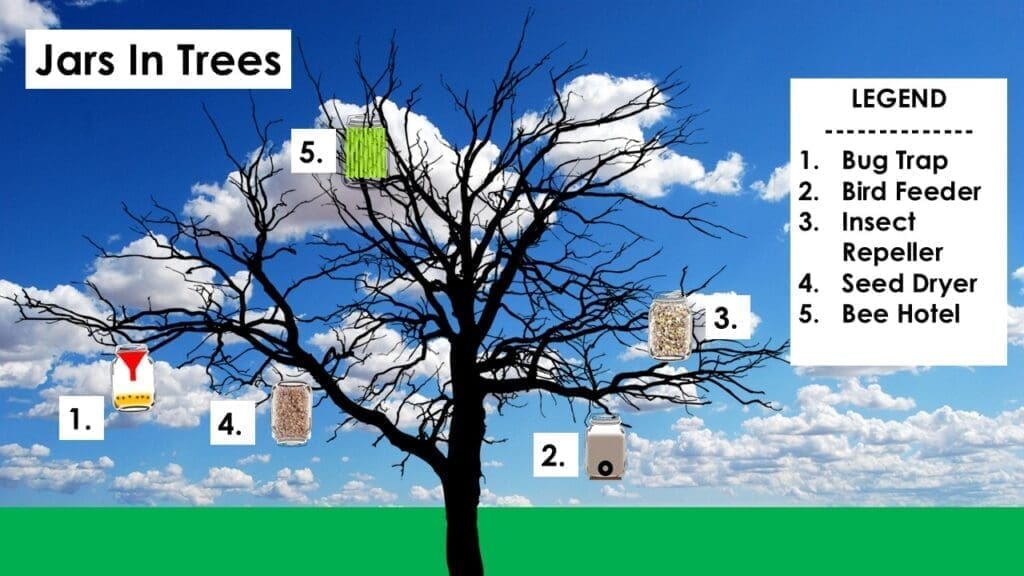
We’re going to cover 6 types of jar designs that you can hang from your trees. They’re identified and numbered in the infographic above. Which ones you choose to put together depends on your needs. If you have a particular problem or opportunity you can make more than one of each design and spread them around.
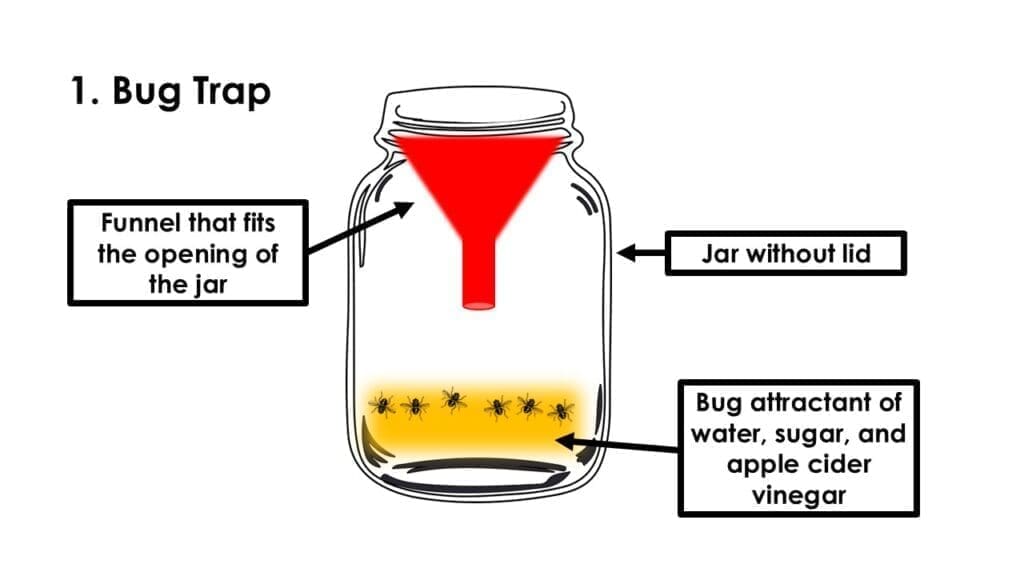
The design feature that makes this an effective bug trap is the use of a funnel in the top. The bugs crawl in but can’t figure out how to crawl back out. Apple cider vinegar, water and a little sugar will attract most bugs and entice them to crawl down the funnel.
You obviously don’t want to put the lid on the jar. You can just let the funnel rest on the top or tape it down. When it’s full of bugs, dump it and refill and start over. Make as many as you need, especially on trees that have a problem with bugs.
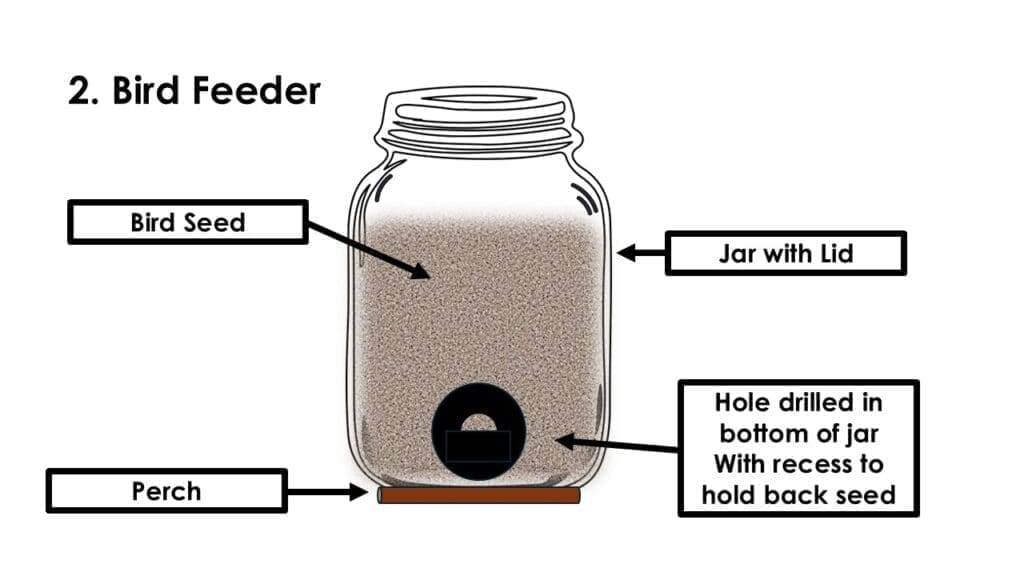
Most bird feeders hang from trees and it’s easy to make one from a jar. The trick is cutting a circular hole at the bottom with a glass cutter. One way to do that is to glue a large metal washer to the jar at the bottom and once the glue is dry, work the wheel of the glass cutter around the rim of the washer.
Once the glass is etched, tap on the washer and the circle should fall into the jar. Discard it and apply a piece of plastic with a half-moon opening. Glue a perch on the bottom and fill the jar with birdseed and attach the lid and hang in your tree.
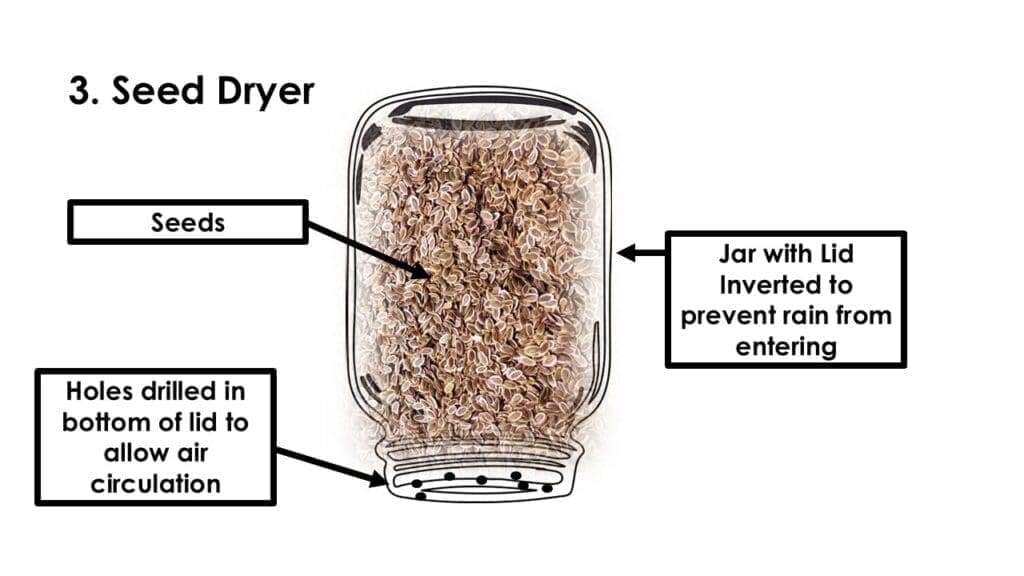
Harvesting seeds from the garden makes a lot of sense but they have to be dried before being stored. You can make a seed dryer from a jar by drilling holes in the lid and insert your seed pods, flower tops or seeds into the jar. Suspend the seed jar upside down so water doesn’t enter the jar at the top. Hang in your tree in an area with sunny exposure.
Drying seeds is a beautiful first step.
Keeping them viable for years is the next.
Once seeds are fully dried, proper storage becomes what protects all that future growth. Temperature, moisture, and air exposure matter more than most gardeners realize.
Easy Cellar gently walks through how to store garden harvests and seeds so they last — not just for one season, but for many to come.
It’s a wonderful companion for anyone who wants their garden efforts to truly carry forward.
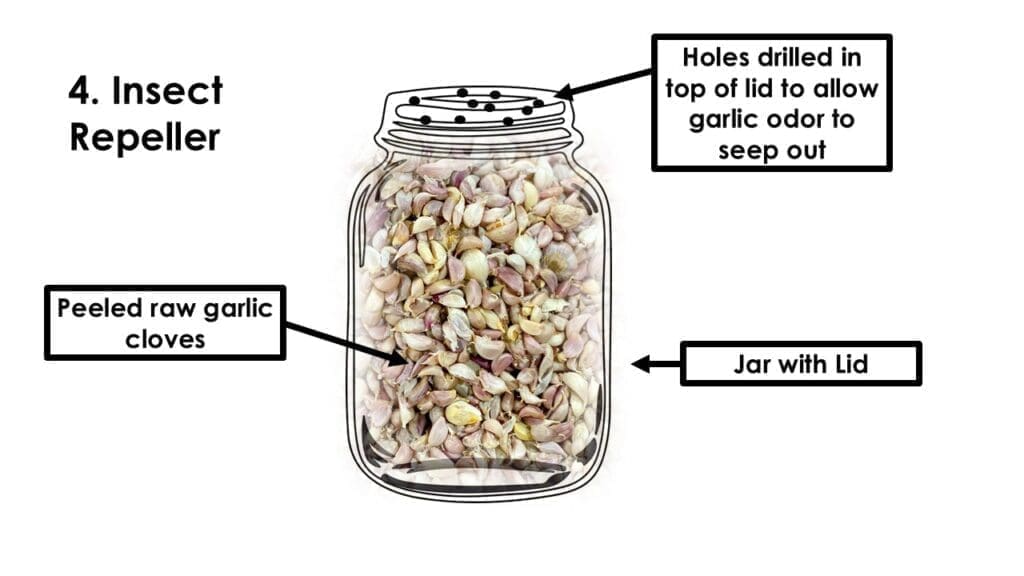
There are plants in gardens that repel bugs and this takes that idea to the trees. A jar insect repeller is nothing more than a jar filled with peeled whole garlic cloves. Holes are drilled in the top of the lid, and the jar is hung in the tree. Over time the garlic cloves will ferment release a significant aroma of garlic effectively repelling most insects. This is a great idea for a tree suffering an insect infestation from aphids to ants to caterpillars.
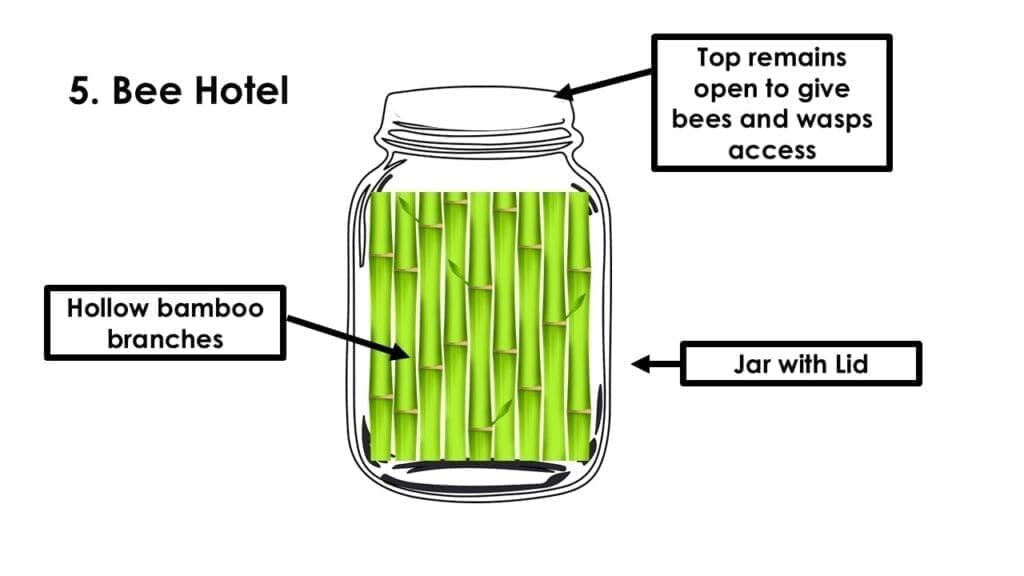
A common assumption is that all bees live in hives as a community. That’s not true. Many bees are solitary survivors particular some species of bumblebees and others. They make their own nests and live independently. In spite of their lone existence, they are still highly effective pollinators and attracting them to a fruit tree is really good idea.
The best way to do that is with a bee hotel. It’s easy to make one from a jar. Just drop some hollow bamboo branches into a jar and they’ll make themselves right at home. Leave the top open to give them access. Place in a shady spot on the tree and you’re good to go.
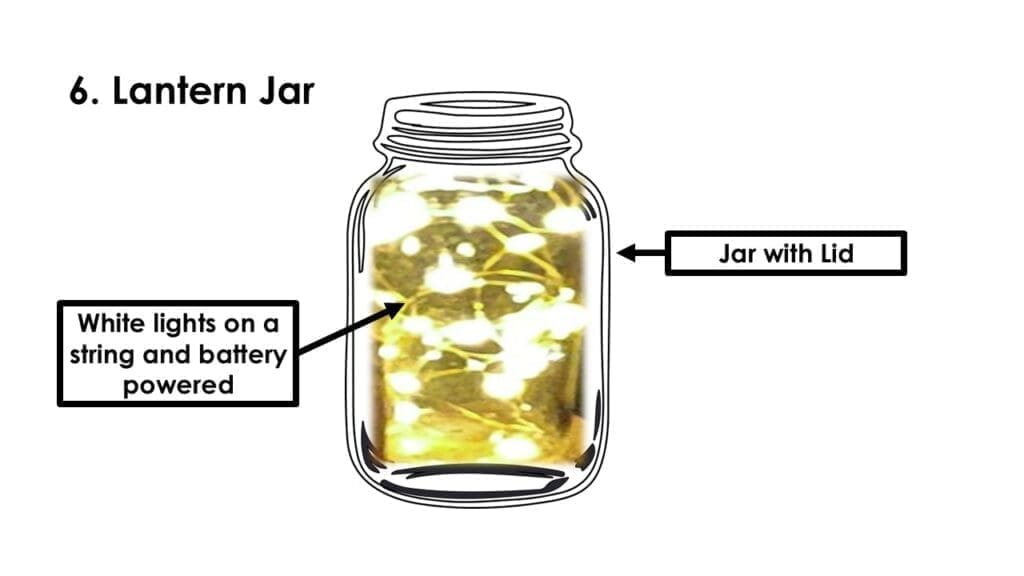
Put a string of white or colored lights that are powered by a battery pack in a jar and seal it. Hang it in your tree of choice. You can make more than one for a tree or spread them around. It’s a great way to light up the night across your homestead.
Save Those Jars
Mason jars can work but even pickle jars, relish and jelly jars, any jar can be multi-purposed and hung in your trees. If they’ve been used just make sure you wash and rinse and dry them well before using them in your trees. If you can think of another use, have at it. It’s just a matter of figuring out the problem or the opportunity and adapting the jar to fulfill the task.
Many of the ideas shared here were not inventions.
They were remembered.
For generations, families solved everyday problems with observation, patience, and simple materials they already had. They didn’t call it “upcycling.” They called it living wisely.
If these jar traditions spoke to you, there is a much deeper well of forgotten knowledge waiting to be rediscovered.
The Lost Ways brings together old homesteading skills that once helped families live independently, without relying on modern systems or constant replacement.
Inside, you’ll discover:
- Traditional methods for preserving food without electricity
- Old-time techniques for drying, storing, and protecting seeds
- Natural ways to manage pests without chemicals
- Forgotten tools and practices nearly erased from memory
- Self-reliant skills passed quietly from one generation to the next
These are not survival tricks.
They are life skills – gentle, practical, and time-tested.
If you feel drawn to simpler solutions like the ones in this article, The Lost Ways may feel less like a book… and more like coming home. See exactly what is included in the book HERE!
You may also like:

10 Off-Grid Water Systems You Should Have On Your Property
75+ DIY Projects That Help You Survive Without Electricity (Video)
Big Mason Jars: The Self-Sufficient Kitchen’s Best Friend
How To Store Your Dried Plants (For Years)



















I have a question about the Bee hotel ,what prevents the jar from filling with water if you leave the top open?