
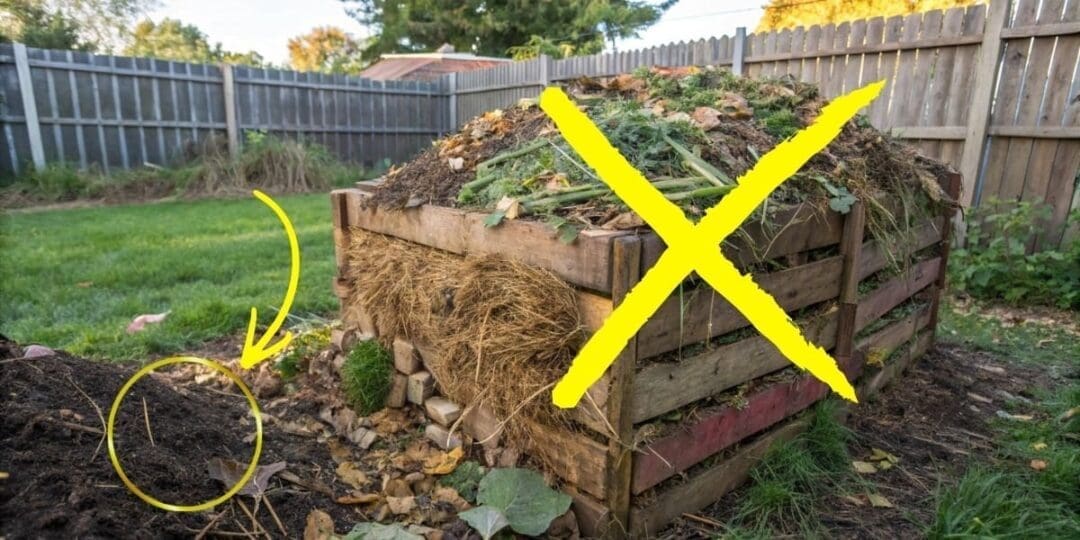
Most avid gardeners have a compost heap. It’s an ideal way to add rich nutrients to garden soil. But there’s more to composting than just piling on a bunch of grass clippings, kitchen scraps and pulled weeds.
The fact of the matter is that a successful compost heap is all about balancing the chemistry and physics of organic decomposition. If it gets out of balance the results are inconsistent and even undesirable.
Here’s the telegram: All compost heaps should start with a deep layer of “browns” at the bottom of the heap. Browns are dried, crispy leaves, shredded cardboard, straw or hay, wood shavings, sawdust and even paper scraps.
These “browns” are in contrast to the greens including grass clippings, weeds, fresh plant material, and kitchen scraps. The greens are important and add significant nitrogen to the compost, but without carbon-rich material like you find in the browns the compost heap can smell, get soggy and slimy, attract flies and slow down overall decomposition.
As your compost heap grows, the brown layers will act as a carbon barrier both encouraging decomposition and preventing odors, prevent attracting flies and becoming slimy.
This is the type of information you need to pass down to your children and grandchildren so that they can take full advantage of what nature has to offer us.
Related: Teach Your Children And Grandchildren About The Chocolate Tree!
Building the Perfect Compost Heap
The perfect compost heap starts with a base layer of browns about 6 inches deep.
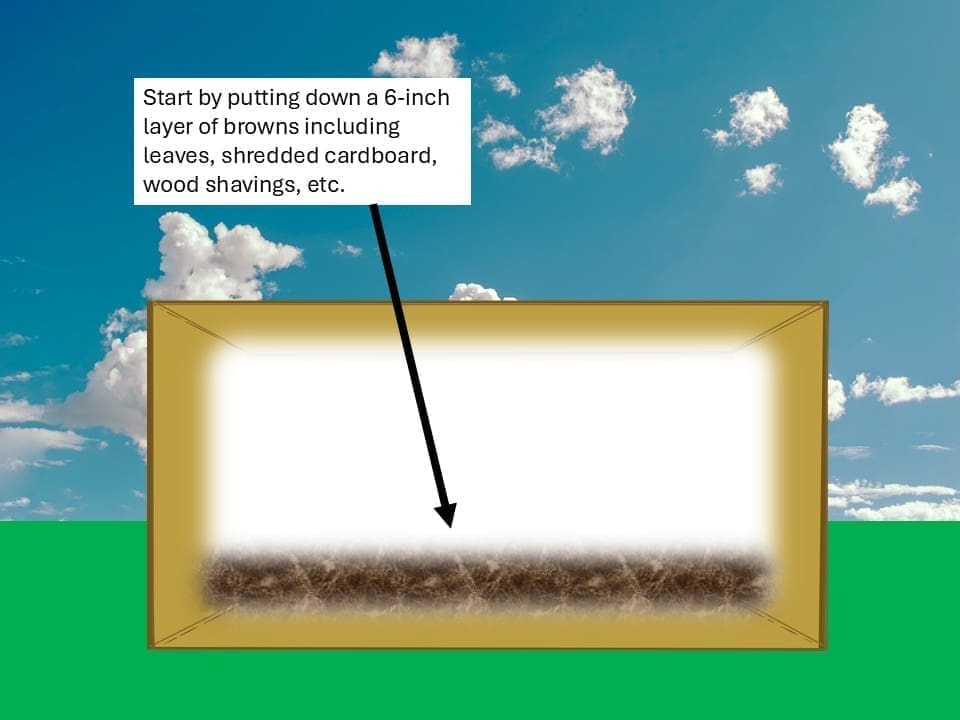
Shredding the browns can accelerate the decomposition but it’s not absolutely necessary. You can also combine various browns into a hybrid, carbon layer.
The next layer is a 6 inch layer of greens.
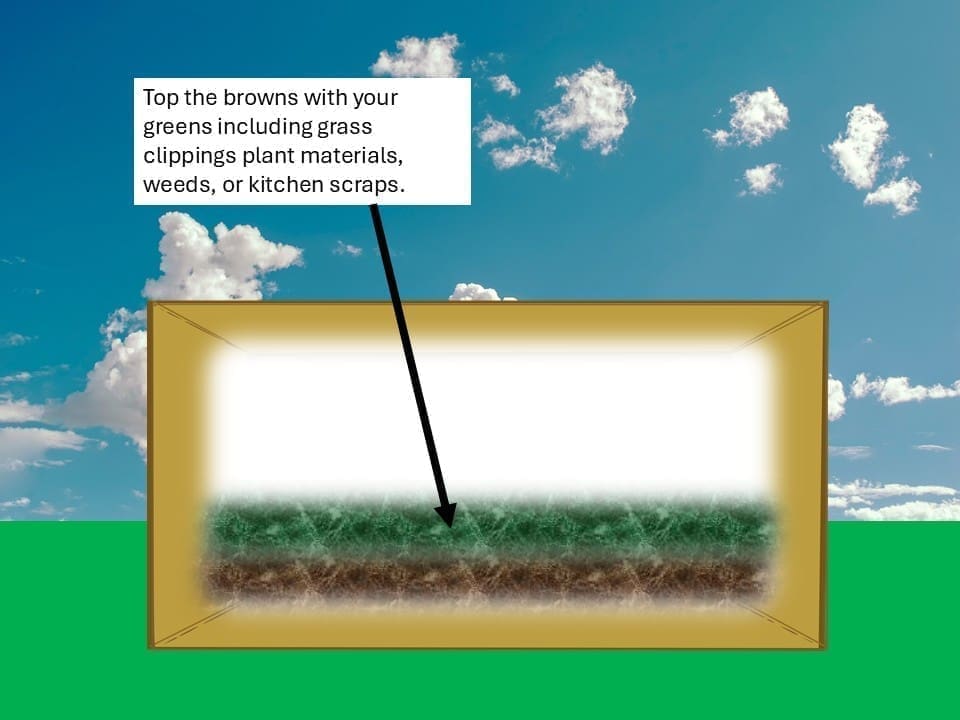
Think of grass clippings, pulled weeds, plant material, and kitchen scraps.
The green layer is then topped with another layer of browns. These successive brown layers act as a carbon layer accelerating decomposition and preventing the formation of off-odors or slimy compost.
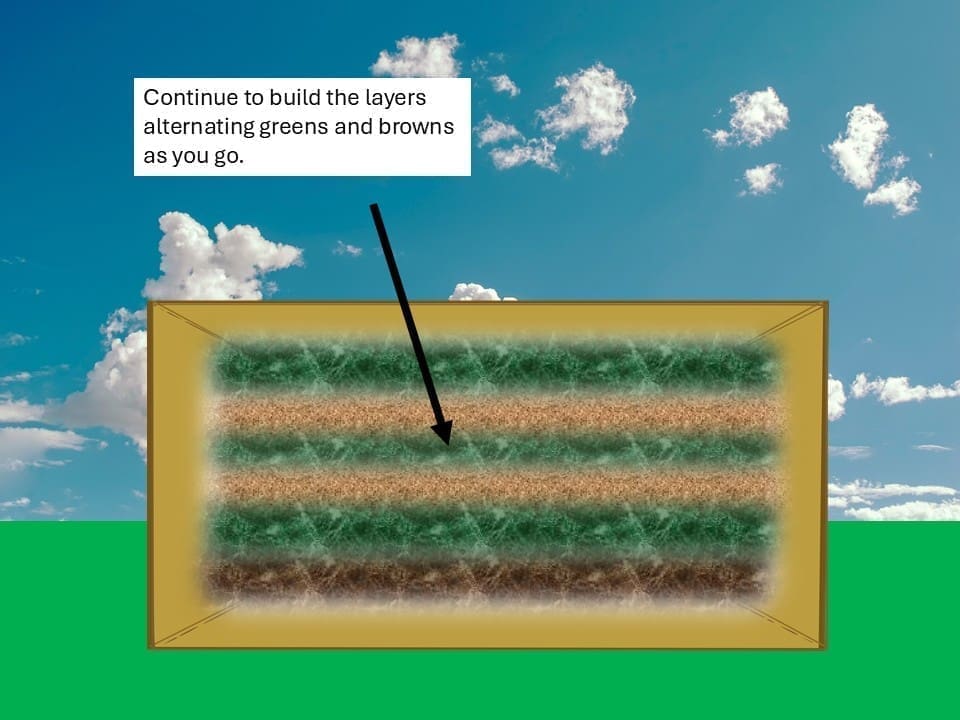
Continue to alternate layers in this way. I learned this trick from here. You may need to reserve some grass clippings or brown leaves to keep the layers thick for your next addition.
The brown carbon layer will create better airflow throughout the heap and results in a faster and cleaner decomposition.
And There’s More…
A compost heap is not a set and forget it proposition. It requires some care and attention beyond layering browns and greens.
- Toss and turn the heap. A forked spade can make short work of tossing and mixing your compost heap. Figure on doing this once every two weeks.
- Water your compost heap. If a compost heap dries out, decomposition can stop. Water your heap twice a week and especially after tossing and turning it.
- Put some worms to work. There’s a composting trick known as vermiculture. It’s the addition of worms to the compost heap. The worms of choice are usually red wigglers. They’ll accelerate decomposition and leave behind droppings or tailings that are super-charged fertilizer.
- Never totally empty the heap. Leave some compost in your heap for your next round of layers. The compost will boost decomposition with microbes that have grown in the compost.
Save the Browns
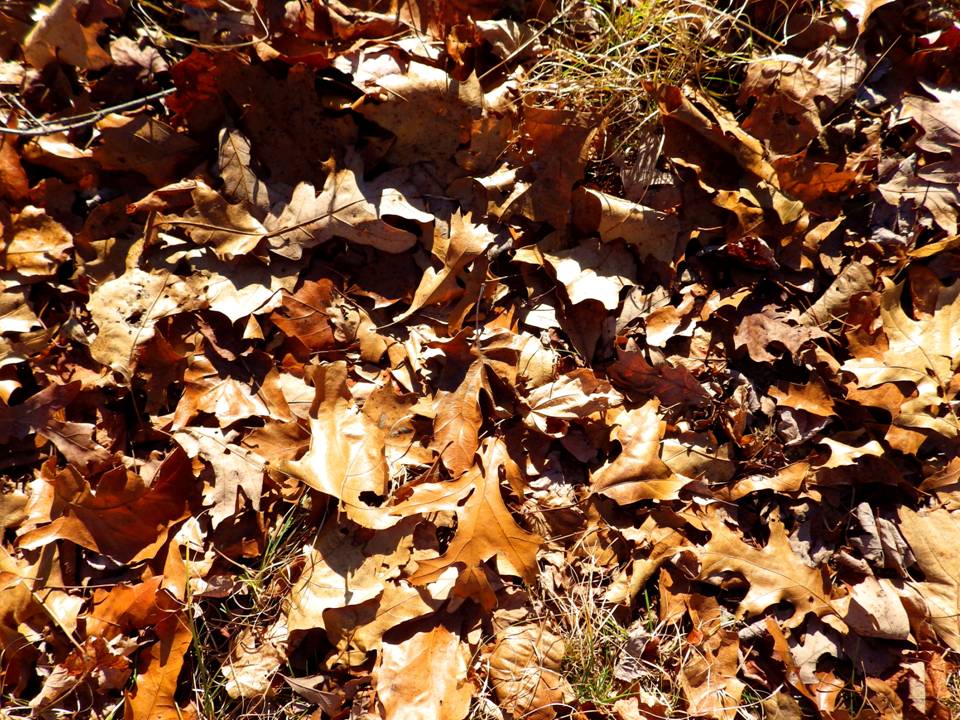
The biggest challenge, especially in the spring, is a shortage of brown leaves. That’s why you should think about a dedicated pile of leaves next to the compost heap to ensure you have a ready supply. Failing that, you could always use shredded cardboard, shredded paper or wood shavings but the leaves provide the best bulk and are worth saving for when it’s time to build next season’s compost heap.
Learn How the Amish Build Soil That Lasts
What you’ve just learned about composting isn’t new. These principles were practiced long before modern fertilizers, soil amendments, or commercial compost accelerators ever existed.
The Amish have relied on these same natural systems for generations, not just to build compost, but to maintain fertile soil year after year without chemicals, waste, or dependency.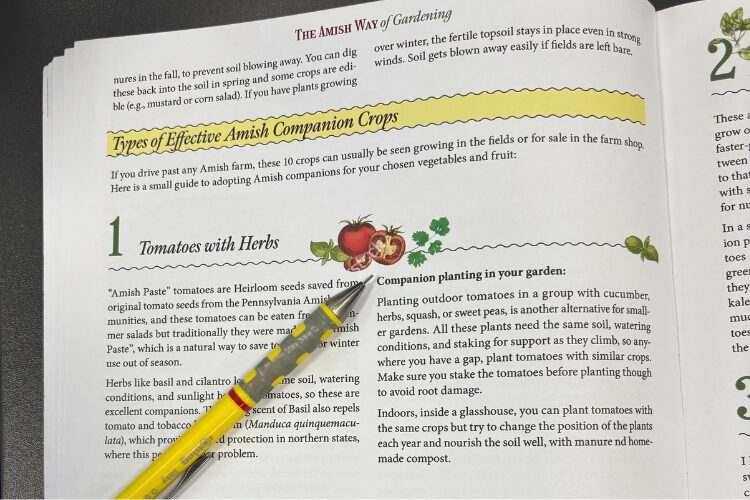 The Amish Ways Book goes far beyond compost heaps. It reveals how traditional households managed land, gardens, and soil so effectively that fertility improved over time instead of declining.
Inside the book, you’ll discover:
- How the Amish manage compost, manure, and organic waste for maximum soil health
- Simple routines that prevent soil exhaustion and nutrient loss
- Natural methods for improving poor soil without store-bought inputs
- Old-world gardening habits that reduce weeds and improve yields naturally
- How small, repeatable actions replace constant fixes and corrections
- Land-care practices that work even when resources are limited
This is not theory. It’s practical knowledge that has kept families fed, land productive, and gardens thriving through hard seasons and changing conditions.
If you want your compost, soil, and garden to work together as a system, not a struggle, this wisdom matters.
👉 Click here to get your copy of The Amish Ways Book and start applying time-tested land practices that build soil strength naturally, season after season.
This is the kind of knowledge that doesn’t expire. It compounds, just like good compost.
Final Thoughts
A compost heap is more than a pile of waste. It’s a living system, and like any living system, it thrives on balance, rhythm, and consistency. When browns and greens are layered correctly, when air and moisture are managed, and when time is respected, compost becomes one of the most powerful tools a gardener can use.
Good compost doesn’t just feed plants. It builds soil structure, supports beneficial microbes, improves water retention so you do not have to rely on off-grid watering solutions like the backpack-sized water generator, and reduces the need for external inputs year after year. The difference between poor compost and rich compost isn’t effort. It’s understanding.
When you work with decomposition instead of rushing it, the garden rewards you quietly and reliably.
You may also like:
Vermicomposting: A Simple Way to Turn Scraps Into Black Gold
If You See These Eggs In Your Backyard, Burn Them Immediately (Video)
How Do You Speed Up Composting
67 Methods to Get Rid Of Weeds Naturally
Is Rabbit Manure a Good Fertilizer?

















If I’m layering and mixing it up twice a week, am I not destroying my layering.