
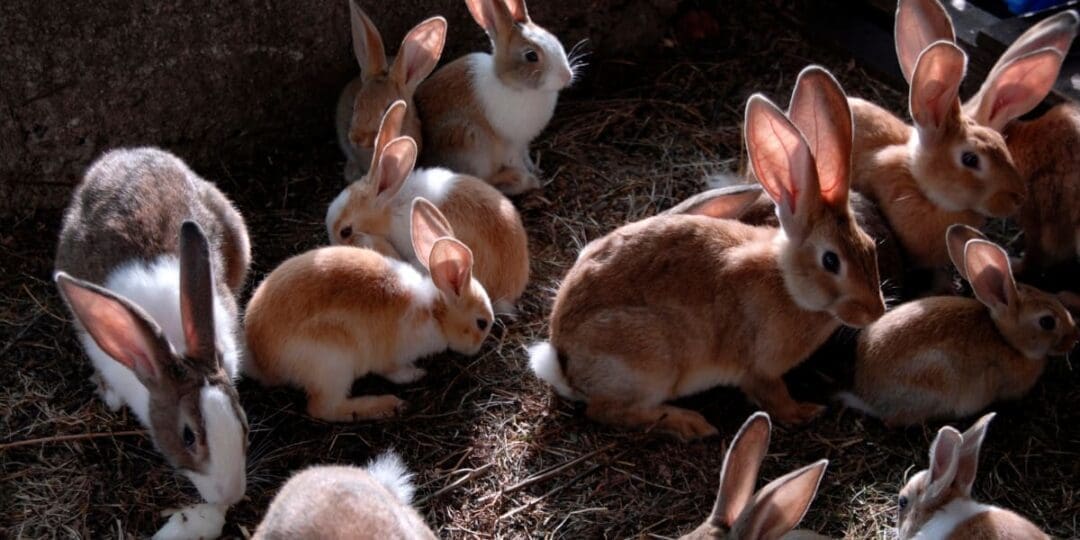
Everything costs more than it used to, and you feel it every time you open your wallet. Groceries, utilities, gas, and the prescription refills that somehow cost more every single time. If you’re running a homestead right now, you know it very well. I felt it too, and it’s what pushed me to take a serious look at what was actually giving me the best return for my time and money.
The answer surprised me. It wasn’t my chickens. It wasn’t my garden. It was the rabbits. Three cages, one buck, two does, and within a year, they paid for themselves several times over. If you’re looking for one thing that can stretch your homestead income in 2026, this is it.
Why Rabbits Are the Smartest Homestead Investment Right Now
Let me be honest with you. I didn’t start with rabbits because I had some master plan. I started because I was tired of watching my feed costs go up while my freezer stayed half empty. Chicken feed had jumped, hay prices weren’t getting any friendlier, and every time I ran the numbers on goats or pigs, the startup costs made me put it off another year.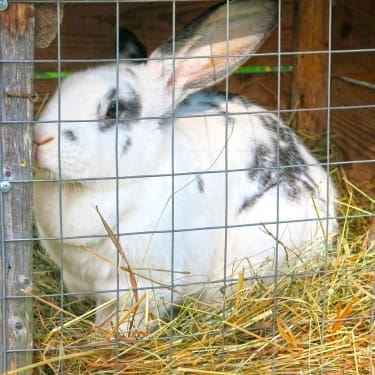
The initial rabbit setup was less than $300 total! That covered cages, feeders, waterers, and my first trio of New Zealand White rabbits. Within about four months, I had my first litter in the grow-out cages, and by the end of the first year, I’d pulled more usable meat from those three rabbits than I got from my entire flock of laying hens.
While everything gets more and more expensive, the costs of keeping rabbits remained almost the same as two years ago. In a year when every homesteader I know is trying to figure out how to do more with less, rabbits are the answer that actually makes sense.
More Meat Per Dollar Than Any Other Livestock
A healthy doe on a reasonable breeding schedule of about 4 to 5 litters a year can produce somewhere between 50 and 70 pounds of dressed meat annually. That’s from one rabbit. I run three does right now and between them, my family gets roughly 150 to 180 pounds of lean, high-quality meat a year.
It takes roughly 4 pounds of feed to produce 1 pound of rabbit meat. Chickens run about 2:1 for meat birds, which is good, but they take longer to reach butcher weight. Pigs are closer to 7:1 and cattle can hit 8:1 or higher. Pound for pound, dollar for dollar, rabbits turn feed into meat more efficiently than just about anything else you can raise in your homestead.
Related: The Viking Superfood They Stockpiled On Their Longboats Because It Didn’t Spoil For Over 3 Years
I keep a simple notebook where I track what I spend on feed each month versus what comes out of the freezer. Last year, my cost per pound of rabbit meat came in around $2 to $3. Try finding anything close to that at the grocery store right now. You won’t. That gap between what it costs me to raise a pound of meat and what it would cost to buy it is what truly makes a difference, and it’s real money staying in my pocket every single month.
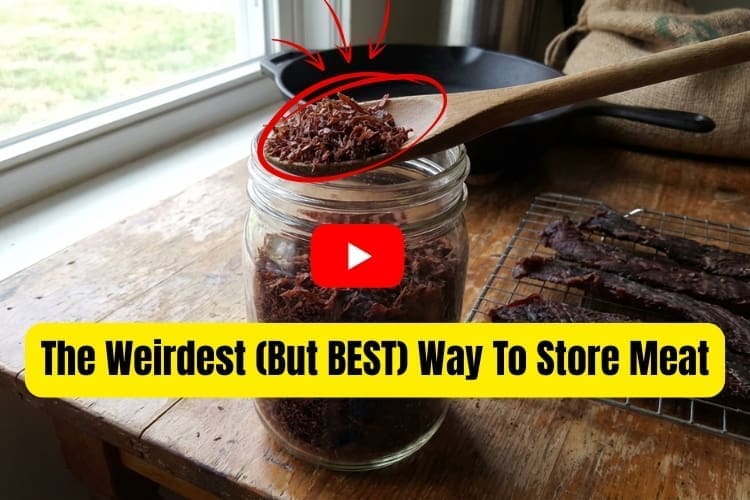
Once your freezer starts filling up, and trust me, it will, you’re going to need new ways to preserve the meat. I started making jerky powder a while back, and honestly, I wish I’d learned about it sooner.
You dry your meat, grind it down, and you’ve got a high-protein powder that lasts months without refrigeration. I toss it into soups, stews, and sauces, or just eat it straight when I don’t have time to cook. No preservatives, no fillers, no additives. Just clean meat you raised yourself, preserved on your own terms.
See how to turn any meat into jerky powder in the video below.
Free Garden Fuel Year-Round
This is something I wasn’t expecting, but it was extremely rewarding in the end. The manure alone that my rabbits have produced has been worth almost as much to me as the meat. Rabbit droppings are one of the only animal manures you can apply directly to your garden beds without composting first. Chicken, horse, cow, and goat manure will all burn your plants if you don’t let it break down. Rabbit manure won’t. You can scoop it from under the cages and put it straight on your soil the same day.
Before I had rabbits, I was spending somewhere between $50 and $80 a year on bagged organic fertilizer and compost. That expense is gone now.
I collect the droppings in trays under the wire cages, dump them into a bucket, and spread them around my beds once a week during the growing season. The whole process takes maybe ten minutes. If you’re already gardening, and I know most of you are, adding rabbits creates a closed loop where the animals feed the garden and the garden feeds the animals. This is how a real homestead is supposed to work.
How to Make Extra Money Using Rabbits
Meat and manure are where the personal savings add up, but rabbits can also bring in actual cash if you set it up right. I sell breeding stock a few times a year, mostly to other homesteaders who are just getting started. A good quality doe goes for $40 to $75 in my area, a solid buck fetches a similar price. I don’t run a big operation, but even selling a handful of breeders a year brings in a few hundred dollars that more than covers my annual feed costs.
You can sell the manure, too. This is something most people don’t think about, but if you have extra droppings, you can sell them to organic gardeners. I’ve had people message me from local gardening groups asking if I have any available. It’s not a fortune, but it’s money from something that would otherwise just pile up.
If you are into basic tanning, pelts are another good option to get some cash. Generally, there’s a small but steady market for them. Check out Facebook groups and Craigslist to find potential buyers.
Rabbits Don’t Take Up Space (They Are Great for Small Homesteads)
Another thing I truly appreciate about rabbits is how little room they actually need. My entire setup of three does, one buck, and a set of grow-out cages for young ones, fits along one wall of my barn. The whole footprint is roughly 4 by 10 feet. That’s it. And from that space, I’m pulling over 150 pounds of meat a year, plus all the manure my garden can handle.
Related: The Modular Self-Sustaining Greenhouse
This is what makes them such a practical option for homesteaders who are working with limited property. I know plenty of folks on half-acre lots who’ve been told they can’t raise real meat animals because of space. Rabbits prove that wrong. If you’ve got room for a shelving unit, you’ve got room for a rabbitry.
And the fact that many municipalities don’t regulate rabbits the way they do poultry or larger livestock means you can often raise them in suburban areas without any permits or zoning headaches.
Less Daily Work Than Almost Any Other Livestock
I’ve raised chickens, kept a garden going year-round, and helped friends with goats and pigs. I can confidently tell you that rabbits take the least amount of daily time out of all of them. My morning routine is about 15 minutes: fill waterers, check feed levels, glance over each animal to make sure everyone looks healthy, and collect the manure trays. That’s it. Some mornings it’s closer to 10 minutes.
Rabbits are quiet, contained, and low-drama compared to just about any other livestock. The bigger tasks like cage cleaning, breeding, and butchering come in waves, not every day. I can plan those around the rest of my homestead schedule without feeling stretched thin.
But one thing to always keep in mind is that even if rabbits are low-maintenance, they’re not zero-maintenance. At some point, I walked in to check on my female rabbits and noticed one of them scratching nonstop. Her ears were crusty, she was restless, and I could tell something was off. Turned out it was ear mites. Within a week, they had spread to two more rabbits. I won’t sugarcoat it; I was scared.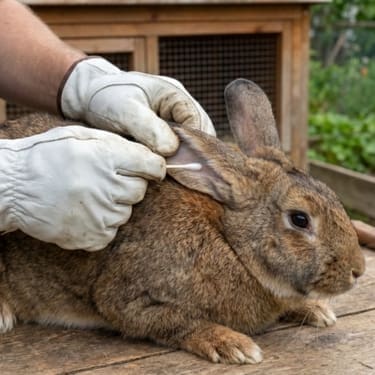
I tried the sprays. I tried the powders from the feed store. Some helped a little, most didn’t last, and I wasn’t crazy about dousing my animals in chemicals when the whole point of raising them was clean, homegrown meat.
That’s when someone from the meat market advised me to start looking into how the Amish handle these same problems. They’ve been raising rabbits for generations without any commercial products, just simple methods using things you probably already have around your homestead. I figured it was worth a shot since nothing else was really working. I tried a few of their techniques and the difference was almost immediate.
If you want to learn exactly how these methods work, there’s a book that covers all of it. It’s called the Amish Ways, and it tells you more about how the Amish handle pests, care for their animals, and run their homesteads without relying on store-bought chemicals or modern products.
The pest control methods alone are worth it, and they work just as well on chickens, goats, and most other homestead animals.
I got my copy a while back and it’s one of the few homesteading books I actually keep going back to. If you want to see what’s inside and get your own book, click here.
What Makes 2026 the Right Year to Start
Rabbits have always been a strong option, but the timing right now makes it even better. Grocery store meat prices have been rising steadily, and there’s no sign of that slowing down. The USDA has tracked consistent increases in retail meat costs over the past several years, and consumers are paying more for less every day.
At the same time, interest in locally raised, sustainable meat is growing fast. More people want to know where their food comes from, and they’re willing to pay for it. If you’re already on a homestead, you’re sitting in the perfect position to meet that demand, and rabbits let you do it with less risk and less startup money than any other livestock option.
Feed costs for rabbits have stayed relatively stable compared to poultry and larger animals. A 50-pound bag of quality rabbit pellets still runs between $15 and $25 in most areas, and it lasts a long time when you’re only feeding a small herd.
Final Thoughts
I’ve tried a lot of things on my homestead over the years, and I’m not the type to oversell anything. But when I look at what my rabbits give me compared to what they cost me in money, time, and space, nothing else comes close. They fill my freezer, they feed my garden, they bring in side income, and they do it all from a setup that fits in a corner of my barn.
If you’ve been on the fence about adding rabbits, or if you tried them years ago and didn’t stick with it, I’d say 2026 is the year to give it a real shot. Give it one season and let the numbers speak for themselves. I think you’ll be glad you did.
You may also like: 
What Do Pigs Eat? A Practical Guide for Healthy, Happy Animals
The Only Plant That Will Make Your Poultry Lay More Eggs Than Usual (Video)
How Long Are Cows Pregnant? A Complete Guide for Animal Owners
Your Chicken Coop Could Be a Death Trap
I Fed Stinging Nettles to My Chickens, and This Happened

















I mostly agree, just remember that Rabbit meat is missing a number of essential dietary necessities. You can not live only on rabbit meat. I also raise rabbits, but I have a garden, rabbits, goats and cattle as well. Happy rabbiting.
PS, I live where it is hot, so the bucks are infertile a lot of the year. I get 2 or sometimes 3 litters a year, but they are big ilitters, as I keep my rabbits on the earth in large yards. 6 to 12 babies per batch.