The first spring I planted lettuce in raised beds, I lost an entire row overnight. There were no deer tracks and no rabbit droppings, just ragged holes, stubs where seedlings used to be, and silver slime trails glinting across the soil in the morning light.
Somebody at the feed store told me to set out a beer trap for slugs, and I’ll admit I laughed. It sounded like one of those garden tricks that gets passed around because it’s fun to talk about, not because it works.
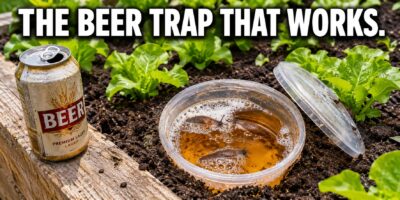
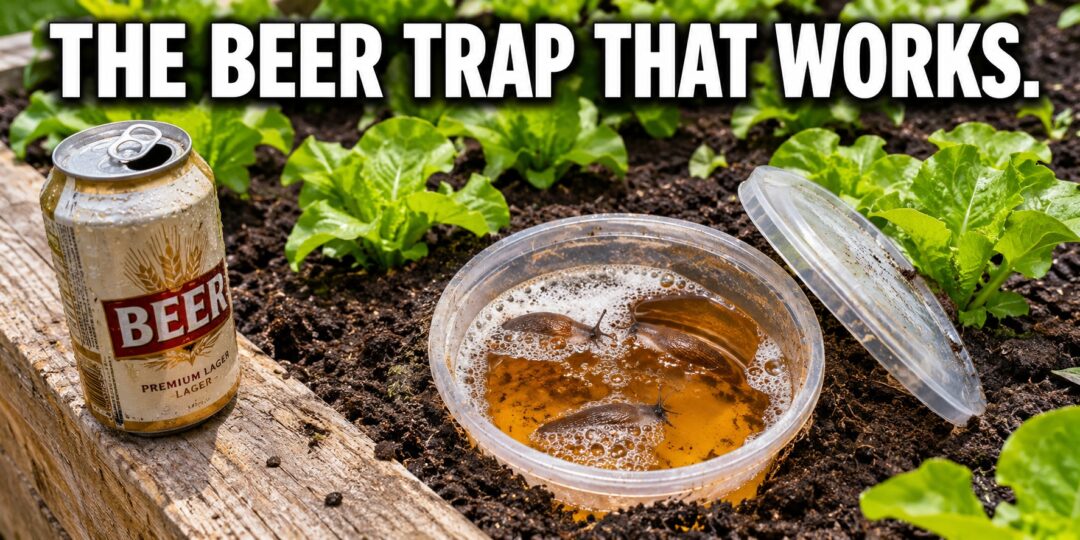
Then I tried it, and the next morning I counted more slugs floating in a margarine tub than I’d seen in a week of looking. Since then I’ve learned a lot about how to make these traps work better, and also where they fall short, so let me walk you through all of it.
Why Slugs Can’t Resist Beer
Slugs aren’t after the alcohol. They’re drawn to the smell of fermentation, the same yeasty, fruity aromas that rise off rotting fruit and decaying plant matter, which is part of their natural diet.
A two-year field study published in 2025 in the journal Agriculture put that to the test. Researchers compared five commercial beers against water and a 10% ethanol solution, and the traps with plain ethanol or water caught no slugs at all, while the beer traps caught thousands.
Their chemical analysis pointed to fermentation compounds like isoamyl acetate, ethyl esters, and limonene as the real attractants. That’s good news for us, because it means you don’t need anything fancy, just something that’s actively fermented.
What You’ll Need
You can build a working beer trap from things already in your kitchen and shed. Here’s what I gather before I head out to the garden:
A container with straight, deep sides, like a yogurt cup, margarine tub, or a cut-down plastic bottle. A lid or cover to keep rain out and pets from drinking the beer. A trowel to dig the hole, a can of cheap beer, and a pair of disposable garden gloves for emptying the trap.
If you’d rather not cut up containers, reusable slug traps are inexpensive and come with a built-in rain cover. I keep a few of those for the beds where I want something tidier.
How to Make a Beer Trap for Slugs, Step by Step
Step 1: Prepare the Container
Oregon State University Extension recommends a simple setup that I’ve copied for years. In its guide to controlling slugs, it suggests cutting a hole about 2 inches across in the upper third of a margarine or yogurt container, then burying it so the hole sits slightly above ground.
The side-hole design does two jobs at once. The lid stays on to keep rain from diluting the beer, and slugs crawl in through the hole and drop into the liquid.
Step 2: Bury It at the Right Height
This is where most people go wrong. If the rim sits perfectly flush with the soil, beneficial ground beetles can tumble in and drown right along with the slugs.
Seattle Public Utilities’ slug management fact sheet advises keeping the opening about half an inch above the soil surface to discourage beetles from falling in. Slugs climb that small lip easily, but many of the beetles you want to keep simply walk around it.
Step 3: Pour in the Beer
Fill the trap with 2 to 3 inches of beer, as Oregon State suggests. The liquid needs to be deep enough that slugs can’t crawl back out once they slide in.
The University of California’s Integrated Pest Management program stresses that traps need deep vertical sides and a top to cut down on evaporation. A shallow saucer will attract slugs, but many of them will drink and leave.
Step 4: Cover It
Put the lid back on or set a flat stone or board over the trap with a gap for slugs to enter. Rain will dilute the beer, and dogs, cats, and raccoons will happily drink it if you leave it open.
Step 5: Check It Every Morning
Slugs feed at night, so the morning is when your trap tells you what’s going on. Empty the dead slugs, top up the beer, and make a note of how many you caught in each spot.
As for disposal, UC IPM suggests sealing collected slugs in a plastic bag and putting them in the trash. I dump the trap contents into a bag, tie it off, and rinse the container with the hose before refilling it, so the smell of old beer and dead slugs doesn’t drive fresh slugs away.
Which Beer Works Best?
I used to grab whatever was cheapest, and honestly that still works. But the 2025 field study gave us some real data on which styles pull in the most slugs.
Across two growing seasons, a German wheat beer and a standard lager were the most attractive. A stout and a strong Belgian ale came next, and a hop-heavy IPA was the least effective of the five.
The researchers linked the difference to fermentation aromas rather than alcohol content or bitterness. In plain terms, a yeasty wheat beer or a basic lager is a better bet than a hoppy craft IPA, which is fine by me because the cheap stuff is going in the trap anyway.
One more tip from the study: the researchers poured fresh beer into the traps each evening because the attractive compounds break down quickly outdoors. You don’t have to be that strict, but beer that’s been sitting in a trap for a week has lost most of its pull.
No Beer? Try These Fermented Baits Instead
Sugar, Yeast, and Water
Because it’s the fermented part of the beer that does the work, UC IPM notes that a sugar-water and yeast mixture can stand in for beer. Oregon State Extension recommends the same swap if you don’t want to waste beer.
I mix about a tablespoon of sugar and a half teaspoon of dry yeast into a cup of warm water, let it get foamy, and pour it into the trap. It’s cheap enough that I never feel bad about refreshing it.
Fermenting Bread Dough
This one surprised me. A 2021 study published in the journal Insects found that a simple fermenting bread dough made of flour, water, and yeast attracted pest slugs and snails in laboratory and field trials in Hawaii, Oregon, and Montana.
The dough stayed attractive for at least 8 days and drew in more pests than a common metaldehyde slug bait. I set a spoonful of dough in a small cup inside a covered trap, and it holds up longer than liquid baits between refills.
Where and When to Place Your Traps
Think Small Radius
Here’s something most articles leave out. According to UC IPM, beer and yeast traps only attract slugs within a few feet, so one trap in the middle of the garden won’t protect the whole thing.
I set one trap for every few feet of bed where I’m seeing damage, focusing on the plants slugs love most. Lettuce, beans, cabbage, strawberries, and seedlings of almost anything are at the top of their list.
Seattle Public Utilities recommends placing traps selectively near the areas of highest damage, and that’s been my experience too. Watch for fresh slime trails and new holes in leaves, then move your traps to wherever the slugs are actually feeding.
Time It With the Seasons
Oregon State Extension points out that slugs lay eggs in fall when the rains start, so September and October are your first chance to knock back next year’s population. Early spring, before slugs start feeding hard on new growth, is your second chance.
Slugs are most active on mild, damp nights, and Oregon State notes they feed when temperatures are above 50°F. The 2025 study also found that warmer nights produced bigger catches, so I make sure my traps are fresh going into a mild, humid stretch.
What a Beer Trap Can’t Do
I want to be straight with you here, because I wasted a season expecting too much. Beer traps are very good at catching slugs, but catching slugs isn’t the same as solving a slug problem.
UC IPM notes that the traps only work over a few feet and that you have to replenish the bait every few days to keep it deep enough to drown slugs. That’s a lot of upkeep if you’re relying on traps alone across a big garden.
Where they really shine is as a monitoring tool. A morning count tells you whether slugs are the culprit behind your chewed leaves, which beds are hit hardest, and whether your other control methods are working.
Pair Beer Traps With These Methods
UC IPM recommends combining several approaches rather than counting on any single one, and that matches my experience. Here’s what I use alongside my traps.
Water in the Morning
This one change made a bigger difference than any trap. Seattle Public Utilities cites research showing that switching to morning irrigation cut slug feeding on lettuce fivefold, because the garden dries out before slugs come out at night.
Board Traps
Lay a few boards, shingles, or flat stones on the soil near damaged plants. Slugs crawl under them to hide during the day, and every morning I flip them over and collect what’s hiding underneath.
Hand-Picking at Night
Oregon State suggests checking plants about two hours after sunset with a light. A good rechargeable headlamp, a pair of gloves, and a bucket of soapy water will clear out a surprising number of slugs in fifteen minutes.
Copper Barriers
For raised beds and containers, copper slug tape is one of the more reliable barriers. UC IPM notes copper reacts with slug slime and repels them, but you need to clear any slugs out of the bed before you install it, or you’ve just fenced them in.
Encourage Natural Predators
Ground beetles, birds, toads, garter snakes, and ducks all eat slugs. I’ve written before about the creepy crawlers you should welcome in your garden, and adding plants that attract birds brings in more slug hunters for free.
If you keep ducks, UC IPM notes that penned ducks or geese can significantly reduce slug problems. Just keep them away from your tender seedlings, because they’ll eat those too.
Choose the Safest Bait if You Need One
When slug pressure gets out of hand, an iron phosphate bait like Sluggo is my fallback. UC IPM describes iron phosphate as safer around children, pets, and wildlife, and some formulations are approved for organic gardens.
I steer clear of metaldehyde baits entirely. UC IPM warns they’re particularly poisonous to dogs and cats, and the pellets can actually attract dogs.
Safety Tips for Handling Slugs
Slugs aren’t just a garden nuisance. They can carry rat lungworm, a parasite that can cause serious illness in people.
The CDC’s rat lungworm prevention guidance advises removing slugs and snails from around your home and garden, washing your hands after handling them, and thoroughly washing any vegetables you plan to eat raw. I always wear gloves when emptying traps, and I wash leafy greens leaf by leaf, especially lettuce.
Keep your traps covered so pets and children can’t get into the beer or the dead slugs. And never use salt to kill slugs in the garden, since UC IPM warns it raises soil salinity and can damage your plants.
Common Beer Trap Mistakes
Setting the rim flush with the soil is the biggest one, since it drowns the ground beetles that hunt slugs for you. Keep that half-inch lip.
Using a shallow dish is the second mistake, because slugs drink and wander off. You want deep, straight sides and at least a couple of inches of liquid.
Leaving traps uncovered is the third, because rain dilutes the beer and animals drink it. Forgetting to empty them is the last one, and if you’ve ever opened a week-old slug trap on a warm day, you know why it matters.
The Forgotten Skills That Can Make Your Homestead More Self-Sufficient
A simple beer trap can protect your lettuce without expensive chemicals. But that’s just one example of how old-fashioned knowledge can solve modern problems without draining your wallet.
For generations, our grandparents knew how to grow food, protect their gardens, preserve harvests, repair everyday essentials, and make the most of whatever they had available. They didn’t depend on expensive products or complicated equipment for every little problem. They relied on practical skills, resourcefulness, and knowledge passed down through generations.
What if you could bring those forgotten skills back into your own home?
That’s exactly what you’ll discover in The Lost Skills of Independence.
This practical guide explores traditional self-reliance skills that can help you:
- Grow more of your own food using time-tested gardening techniques and practical homesteading knowledge.
- Make better use of what you already have instead of constantly buying expensive products and supplies.
- Preserve food and reduce waste by rediscovering traditional methods of making your harvest last.
- Become less dependent on modern conveniences by learning useful skills that previous generations considered essential.
- Save money through resourcefulness with practical approaches to everyday household and homestead challenges.
- Build a more resilient household that’s better prepared for unexpected disruptions and shortages.
The beer trap you just learned about is proof that effective solutions don’t always need to be complicated or expensive. Sometimes, the best answers are hiding in knowledge we’ve nearly forgotten.
The Lost Skills of Independence is about rediscovering that mindset and putting practical, traditional know-how back to work in your daily life.
You don’t need a huge farm, expensive equipment, or years of experience to begin. You just need the willingness to learn skills that can make a real difference.
Don’t wait until you need these skills to wish you’d learned them sooner.
Discover The Lost Skills of Independence Today
Take the next step toward a more resourceful, capable, and self-sufficient life.
CLICK HERE TO DISCOVER THE LOST SKILLS OF INDEPENDENCE
Final Thoughts
A beer trap for slugs costs almost nothing, takes ten minutes to set up, and gives you a clear picture of what’s happening in your beds at night. Used on its own, it won’t wipe out a slug problem, but as part of a bigger plan it earns its place in every garden I’ve grown.
Start with a few traps in your worst beds, switch to morning watering, and flip some boards each morning. Within a couple of weeks, you’ll know exactly how many slugs you’re dealing with and whether you’re winning.
You may also like: 
Add This to Your Pantry to Keep Pests Away This Winter
How To Build A Small Root Cellar In Your Backyard With Only $400 (Video)
Deterring Unwanted Pests with Lemon and Baking Soda
9 Best Plants That Naturally Repel Pests from Your Homestead
How to Turn Your Backyard Into a Nature Discovery Area for Kids
Why Homesteaders Are Hanging Garlic in Their Chicken Coops