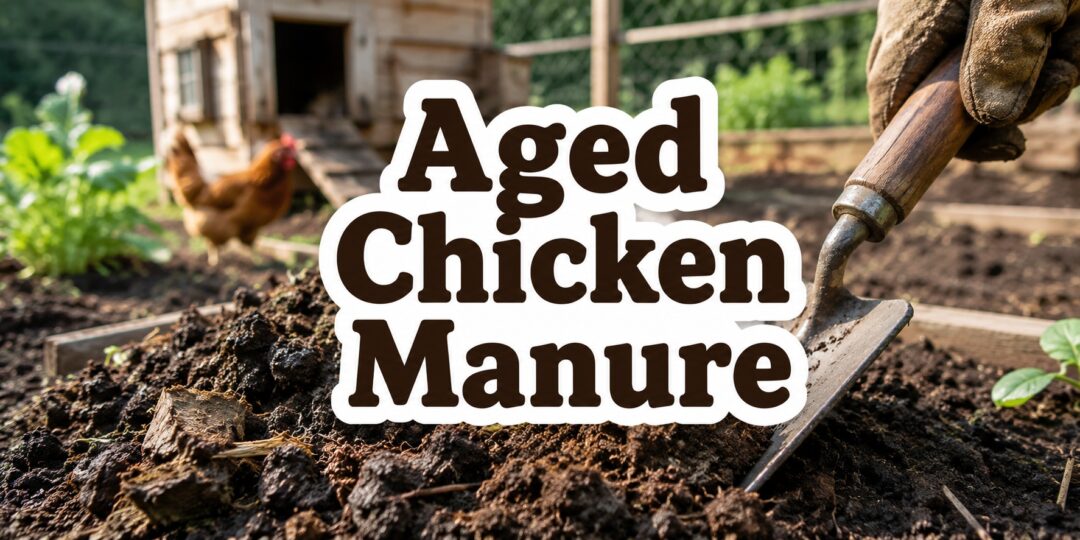
If you keep even a handful of hens, you already have a steady supply of what old-timers used to call brown gold. Chicken manure is genuinely one of the best natural fertilizers available, richer in nitrogen, phosphorus, and potassium than almost any other common animal manure. It’s also the manure most likely to hurt your plants, and potentially your health, if you use it before it’s ready.
This guide covers exactly what aging chicken manure means, how it differs from composting it, how long the process actually takes, and the specific safety rules that matter most if any of that manure is going anywhere near food you plan to eat.
What Does “Aged” Actually Mean?
Aging and composting get used interchangeably online, but they are genuinely different processes with different safety guarantees. According to University of Nevada, Reno Extension, composting is an active process that generates temperatures of 140 to 160 degrees Fahrenheit, hot enough to directly kill most pathogens like E. coli and Salmonella. Aging, by contrast, is passive. It doesn’t actively kill pathogens at all. It simply creates unfavorable conditions, through changes in moisture, temperature, and nutrient availability, that cause pathogen populations to decline gradually over time.
This distinction matters more than most manure guides let on. Aged manure can still be perfectly safe for garden use when given enough time, but it gets there through slow die-off rather than a heat kill step, which means the clock matters more with aging than with true hot composting.
Why Fresh Chicken Manure Can’t Go Straight in the Garden
Chicken manure is unusually concentrated compared to manure from larger livestock, partly because birds excrete urine and feces through a single opening rather than separately, which raises the ammonia content considerably. That concentrated ammonia is exactly what burns and can kill plants when fresh manure is applied directly, especially young seedlings and tender new growth.
On top of the burn risk, fresh manure can carry E. coli, Salmonella, Cryptosporidium, and other pathogens capable of making people and pets genuinely sick. Both problems, the chemical burn risk and the pathogen risk, are solved by the same fix: time.
Chicken Manure’s Nutrient Content
According to the same UNR Extension fact sheet, chicken manure and the litter that comes with it (bedding, feathers, spilled feed) are higher in nitrogen, potassium, phosphorus, and calcium than most other common livestock manures, and they’re rich in organic matter as well. That organic matter does real work beyond feeding plants directly, improving a soil’s water-holding capacity, aeration, drainage, and overall structure over time.
If you’re used to reading synthetic fertilizer bags, chicken manure won’t give you the same precise, guaranteed NPK numbers, since actual nutrient content varies with the chickens’ diet and how much bedding is mixed in. For a deeper look at how NPK ratios work and how to calculate application rates precisely, our guide to 10-10-10 fertilizer covers that math in more depth.
How to Age Chicken Manure Properly
- Each time you clean the coop, spread the fresh manure thinly across a tarp or another impermeable surface in full sun
- Let it dry completely before adding it to a storage pile, since removing moisture is what inhibits microbial growth and prevents the sewage-like smell of a wet, anaerobic pile
- Protect the drying manure from rain, since reintroducing moisture restarts decomposition and the odor that comes with it
- Store the aged material in a pile or bin isolated from children, pets, and livestock, on ground that drains well so runoff doesn’t pool nearby
- Keep track of when each batch was set aside, since the required waiting period is measured from that point, not from when you decide to use it
Aging vs. Composting: Which Should You Choose?
Neither approach is wrong, but they suit different situations.
- Choose aging if you don’t have the volume of material, time, or inclination to actively manage a hot compost pile, since aging asks for patience rather than weekly turning
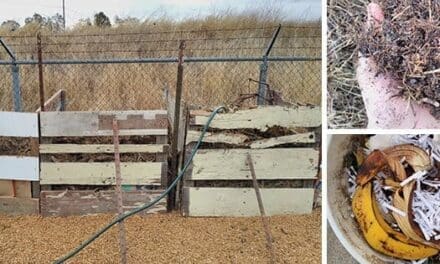
- Choose composting if you want a faster turnaround and you’re willing to turn the pile weekly to maintain oxygen flow and heat, since a properly managed hot compost pile is ready in about five to six weeks
- Composting also reduces pile volume and weight more efficiently and stabilizes nutrients for a slower, multi-year release, while aging mostly just neutralizes the immediate burn and pathogen risk
A well-run compost pile should smell earthy, like good potting soil. If your pile smells like sewage, it’s telling you there isn’t enough oxygen getting to the material, usually solved by turning it more often.
How Long Does Aging Actually Take?
This is where a lot of impatience gets people into trouble. Since aging relies on gradual die-off rather than a heat kill step, it generally needs more time than active composting to reach the same level of safety, and most guidance suggests planning for several months of aging at minimum before treating the material as safe for garden use, longer if the material has stayed damp or hasn’t been turned or dried consistently.
The 90/120 Day Rule for Food Gardens
If any of this manure is going anywhere near vegetables you plan to eat, this is the rule that actually matters, and it comes straight from federal food safety regulation, not just garden folklore. Under the FDA’s FSMA Produce Safety Rule, the agency directs farmers to the USDA National Organic Program’s standard: raw manure must be applied at least 120 days before harvest for crops that contact the soil, and at least 90 days before harvest for crops that don’t.
UNR Extension applies this directly to a home garden context: manure should be applied no later than 90 days before harvest for non-ground-contact crops like trellised tomatoes, cucumbers, and peppers, and no later than 120 days before harvest for ground-contact crops like lettuce, strawberries, and carrots.
- Ground-contact crops needing the full 120-day buffer: lettuce, carrots, strawberries, and other low-growing or root vegetables
- Crops needing the shorter 90-day buffer: trellised tomatoes, cucumbers, peppers, and other produce that hangs above the soil surface
- The safest approach for a home vegetable garden is applying aged or composted manure in fall for a spring planting, which comfortably clears either interval without close calculation
How to Use Aged Chicken Manure in the Garden
- Work aged manure into the top several inches of soil rather than leaving it sitting on the surface, which helps it break down further and reduces odor
- Use it as a soil-building amendment ahead of planting season rather than a quick-release feed mid-season
- Combine it with other organic matter like straw or shredded leaves when building new garden beds, since chicken manure alone can still run hot in concentrated pockets even after aging
- If you also keep other backyard animals, our guide to raising small livestock covers how manure output and quality varies across species, including why rabbit manure can be used far more directly than chicken manure
Storage Best Practices
A single laying hen produces roughly a cubic foot of manure and litter every six months. For a flock of ten hens, that works out to about three-quarters of a cubic yard a year, which aging or composting will reduce by roughly half over time. Plan your storage area with that volume in mind, and keep it away from anywhere runoff could reach a vegetable garden, play area, or water source.
Who Should Be Extra Careful
Even properly aged manure carries more residual risk than a bag of synthetic fertilizer, and certain groups should be more cautious around manure-amended gardens specifically: pregnant women, young children, and anyone with a weakened immune system from cancer treatment, kidney failure, liver disease, diabetes, or another condition that lowers the body’s ability to fight off a foodborne illness. Thoroughly washing all produce grown in manure-amended soil applies to everyone, but it matters even more for these groups.
Common Mistakes
- Applying manure straight from the coop without any aging period at all, risking both plant burn and pathogen exposure
- Assuming aged and composted mean the same level of pathogen safety, when aging relies on slower, less certain die-off
- Losing track of when a batch was set aside, making it impossible to calculate the 90 or 120-day buffer accurately
- Letting the drying manure get rained on repeatedly, which restarts decomposition and extends the timeline
- Piling aged manure directly against the base of plants rather than working it into the surrounding soil
Turn What You Already Have Into What You Need
Knowing how to transform chicken manure from a messy byproduct into valuable garden fertilizer is more than a gardening trick. It’s an example of something earlier generations understood instinctively: very little needs to go to waste when you have the skills to use it properly.
That same practical mindset is at the heart of The Lost Skills of Independence.
Long before everything could be ordered online or replaced with a trip to the store, ordinary people knew how to grow, preserve, repair, build, reuse, and provide for themselves with the resources they had around them. Much of that knowledge has disappeared as we’ve become increasingly dependent on products, utilities, and services supplied by someone else.
The Lost Skills of Independence brings those practical skills back.
Inside, you’ll discover forgotten methods and hands-on knowledge designed to help you become more capable and self-reliant—from producing and preserving food to making useful household necessities, putting overlooked resources to work, and handling everyday problems without immediately depending on the store.
And you don’t need a huge homestead or an off-grid cabin to start.
Whether you have acreage, a backyard garden, a few chickens, or simply want your household to become less dependent on outside systems, these are skills you can begin learning and using today.
Because independence isn’t about owning everything you might someday need.
It’s about knowing what to do with what you already have.
Frequently Asked Questions
Can I use aged chicken manure on flowers and ornamentals right away?
The 90/120-day rule specifically addresses food safety for edible crops. For purely ornamental plants, the bigger concern is simply avoiding nitrogen burn, so well-aged manure that no longer smells strongly of ammonia is generally fine sooner, though a longer aging period never hurts.
How do I know when chicken manure is fully aged?
It should no longer have a strong ammonia smell, should look dry and crumbly rather than wet, and should have been set aside for the length of time you’re relying on for pathogen die-off, generally several months at minimum.
Is aged manure as good a fertilizer as fresh manure?
It’s a safer fertilizer, though some nitrogen is lost to the air during aging. This is a reasonable tradeoff, since the nitrogen that would burn your plants or wash away quickly is exactly the portion you’re not sorry to lose.
Can I speed up the aging process?
Turning the material periodically and keeping it dry helps somewhat, but true acceleration comes from switching to active hot composting instead, which uses heat rather than time as the primary safety mechanism.
You may also like: 
Join Our Homesteading Facebook Group!
This Secret Amish Recipe Will Keep Your Chickens Healthy All Year Long (Video)
Is Rabbit Manure a Good Fertilizer?
8 Unusual Uses for Manure Around Your Homestead
10-10-10 Fertilizer – The Complete Guide
Vermicomposting: A Simple Way to Turn Scraps Into Black Gold