If you’ve been homesteading for a while, you already know how tempting it is to buy things you don’t actually need. And if you’re just getting started, all that marketing out there is aimed right at you. Cute little coops, miracle seeds, gadgets that promise to solve every chicken problem, tools that look wonderful in the ad and fall apart on you by the end of the season.
I’ve fallen for some of these scams and I want to help you not do the same. Some cost me just a few bucks. Others cost me a lot more, plus the frustration of realizing I’d been sold a story. So I want to save you some money today and share the 12 items I really wish someone had warned me about before I clicked “buy.”
Temu or Amazon Prefab Chicken Coops
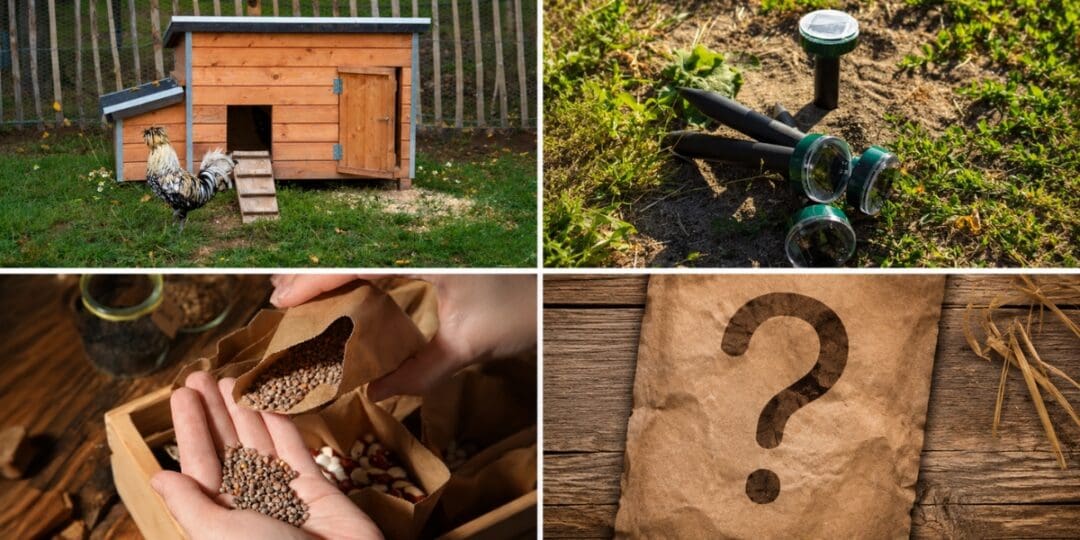
You’ve seen these all over the internet: the little painted ones that look like a fancy dollhouse for hens. They claim to house four or five chickens comfortably, and depending on how you look at the ad, you might really believe it. But once the box shows up, the actual hen space inside is usually just 24 by 24 inches, which is cramped for two birds, let alone four.
The wood is so soft it splits when you drive in a screw, and the wire that comes on them is just basic chicken wire. A raccoon can rip through that in about 30 seconds.
I bought one of these years back when I was first getting my flock going, and within a year the roof was warping and one of the doors wouldn’t latch.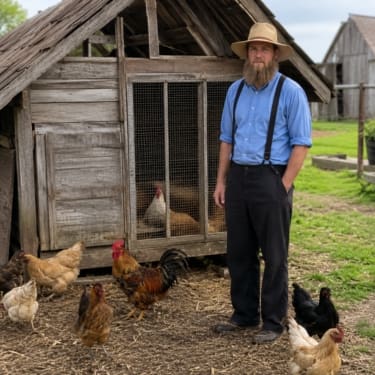
If you really want a small coop, I’d suggest you simply start an easy DIY project. Maybe it will take a little bit more time to build, but in the end it’s something you made with your own hands and know won’t fall apart during the first storm.
After the “Temu coop” let me down, the method I used was simple: I wanted to try to build a coop I can rely on. This is how I decided to build the Amish chicken coop. This is a simple but durable design; I built it 4 years ago, and I still use it for my flock. All I did was repaint it. That’s all.
The thing is that since the Amish like to be efficient, they applied the same principle for this coop. This build does its job and, more importantly, compared to the “Temu coops,” gives your chickens what they really need.
While still being small, the Amish coop is made to help your hens produce more eggs. This means it has enough space, ventilation, and proper protection. And when I say protection, I am not only talking about the rain; I am also talking about predators. These three- space, ventilation, and protection are the pillars that help your hens produce more eggs.
The best part is that if you want to expand your flock, you can also expand the coop along with it. This Amish design is made with that in mind and since you are the one building it, you can modify it however you want.
👉 Click here if you want to see how to make the Amish coop step-by-step
Rainbow Strawberry and Blue Watermelon Seeds
These pop up all over Temu, Wish, eBay, and Amazon Marketplace, with photos of jet-black tomatoes, rainbow roses, and blue strawberries. But here’s the thing: none of those plants actually exist. The photos are made with AI or heavily edited, and what shows up in your mailbox is usually weed seeds, grass, or nothing at all.
Depending on how many packets you buy, this can add up fast. My rule of thumb is that if a seed listing doesn’t include the Latin name of the plant and looks too colorful to be real, it isn’t. So, try to stick with reputable American seed companies that name the actual variety.
Ultrasonic Pest and Predator Repellers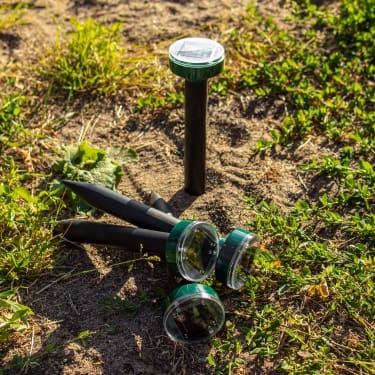
These little plug-in devices claim to drive away mice, deer, raccoons, and just about every other critter using a sound you can’t hear. Sounds like a dream, right?
But it turns out they don’t really do the job. The FTC has actually sent warning letters to dozens of manufacturers of these products, because the companies can’t back up their claims with any real evidence. And any critter that does react to the sound at first tends to get used to it within a couple of weeks.
I’d save your money on these. Hardware cloth, a good fence, and a coop you lock at night do so much more than any device you plug into the wall.
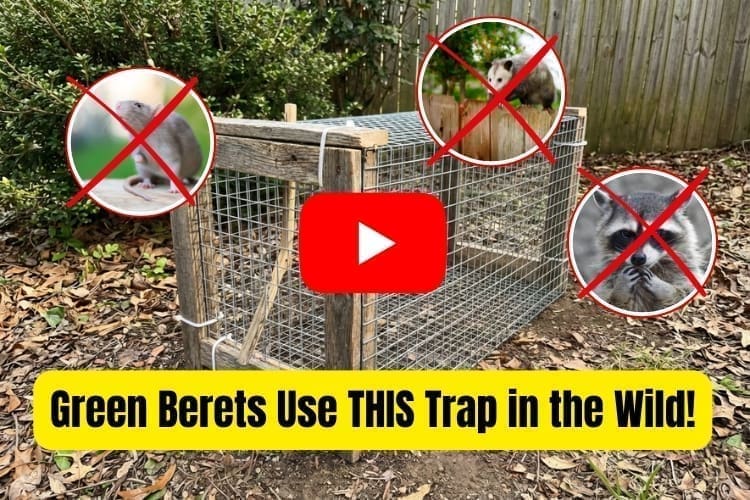
If you still want some extra protection, you can always use some traps. These things really work and you don’t even need to pay money for them. Once you know how to make them yourself, you’re set for life.
See how to make some basic traps such as:
- DIY wire snare;
- Rat and mice traps;
- Wasp and hornet traps;
- Fly trap.
You can find all the info you need in this guide and besides the traps, you can also find more homesteading projects meant to make your life easier and more off-grid.
Stop spending money on things you can make yourself →
The Instant Pot as a Pressure Canner
Get this one wrong and you might end up in a hospital bed or worse. And I’m not saying this to scare you; it’s all backed up by facts.
You’ll see all kinds of blog posts and even some product ads claiming you can pressure can meat and vegetables in an Instant Pot. I want you to know that this is impossible to do if you want to be safe.
Utah State University Extension ran a whole study on this and found that electric pressure cookers do not consistently reach or hold the 240 degrees needed to kill botulism spores in low-acid foods.
Your Instant Pot is wonderful for cooking, but for pressure canning meat, beans, and vegetables, you need an actual pressure canner. Botulism is deadly and completely tasteless, so this is one place I really wouldn’t cut corners.
Even the Amish use pressure canners. They are expert canners and they know the risks. But what they do differently is how they prep those cans before the actual canning process.
If you ever tasted canned meat from the Amish market, you know very well that it tastes flawless. So you might ask: how is that possible? How do they make canned meat that tastes like steak?
Since they’re not preserving food using the methods we use, the Amish rely a lot on their cans. These can keep their meat good for years in a row. Considering this, they wanted it to taste good and that’s how they created a secret herb mix that they use for most of their canned meat.
👉 Click here and see how to make the famous “Amish Poor Man’s Stake”
Landscape Fabric
I get why this looks like a good idea. You lay it down, cover it with mulch, and the weeds are supposed to stay away forever.
What actually happens is that the mulch breaks down into a nice little layer of soil right on top of the fabric, weeds root into that layer, and two years later you’re peeling shredded plastic out of your garden.
A thick layer of wood chips or straw does the same job, breaks down into something your soil actually wants, and doesn’t leave you with a mess to clean up later on.
Peat Pots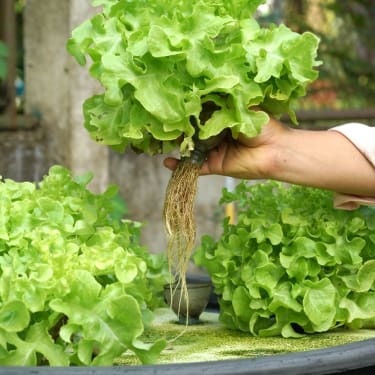
The idea behind these is lovely. You start your seeds in these little brown pots and plant the whole thing right in the ground, no transplant shock at all. In practice, though, they don’t break down the way the package promises.
Roots have a hard time pushing through the walls; they dry out unevenly, and I’ve dug up plants a full year later to find the peat pot still sitting there almost whole.
I’d suggest cheap plastic cell trays you can wash and reuse for years, or soil blocks if you want to go really old-school.
Or you can use a method that does not use soil at all. This revolutionary trick uses only water and helps you start those seeds in no time and even grow your whole garden in a big container.
The thing with it is that you no longer get your hands dirty and since the plants grow in water, you don’t need to babysit them.
You can let them get to the right size and then simply transplant them into your garden. Or you can let them in this system and see how they flourish. This project is made to help your plants produce more harvest than ever and is all based on one simple thing: fish and plants working together in the same water.
Depending on what you want to do, you can build the system just for creating seedlings, and in this case you won’t need the fish, or create the whole thing and let it take care of your whole garden
I want you to know that this is a real project you can make, backed up by strong evidence. Also, you don’t need to do research or read complicated instructions because you can get a full guide from here.
This exact system has been built and tested by its creator, John Fay, who has been doing aquaponics for a couple of decades.
So, if this sounds like something you would try, click here and get the main manual, video walkthroughs, and a handful of bonus books on organic gardening, herbs, and composting
Budget Grow Lights and Cheap Seed-Starting Kits
If you’re starting seeds indoors, this is the spot where you can easily end up buying everything twice. The $20 grow light and the $5 heat mat sound like a bargain, but they give you leggy, weak seedlings that just fall over when you put them outside. And that’s how you end up spending the money on the good version anyway.
I’d suggest getting a decent LED grow light with the right spectrum from the start, or just buying healthy transplants from a local nursery your first year. You’ll spend less overall.
Standard Tomato Cages for Big Tomato Varieties
Those little three-ring wire cages you see at every garden center are made for small, determinate tomatoes that top out at three or four feet.
If you’re growing heirlooms or any indeterminate variety, your plant will be six feet tall by August and that cage will be flat on the ground with the vines sprawled all over it.
Sturdy wooden stakes, cattle panels bent into arches, or the Florida weave method using T-posts and twine all work so much better and last for years.
A Fancy Grain Mill
I know a few homesteaders who spent $400 to $700 on a hand-crank grain mill because it seemed like the ultimate self-sufficient purchase. And then, well, it sat in the closet.
Grinding two cups of flour by hand is a real workout, and unless you’re baking bread every single week, you’ll fall back on store-bought flour faster than you think.
If you really want to mill your own flour, I’d suggest you start with a KitchenAid attachment or a smaller electric mill and see if you actually stick with it before spending the big money.
Overpriced “Survival Seed Vaults”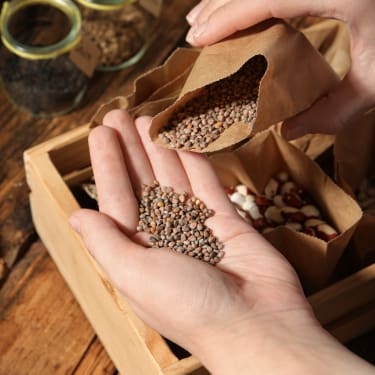
You’ll see these marketed hard, especially in preparedness circles. Big shiny boxes promising 50 or 100 varieties for $150 or more. The catch is that many of them are padded with tiny lettuce and radish seeds to inflate the seed count, and the “packed for” dates aren’t always as fresh as you’d hope.
A much better move is to buy the actual varieties you want from a reputable seed company or someone who has good real reviews. You’ll get fresher seed for less money, and the varieties will actually grow well where you live.
And this also applies to herbs. Many underestimate the importance of an herb garden on their homestead. I was in the same boat, but once I started planting my own herbs, I realized that they can help me be more frugal.
Now, I make my own salves, teas, and sometimes even tinctures. I no longer spend money on these things. And the salves particularly come in handy each time I get scraped while working in the garden.
But what I just told you about fake seeds that are sold online is also true for herbs. Buying online bundles from shady websites is not a good idea. The safest bet would be to buy your seeds from Home Depot, but the only problem with those seeds is that most of them are GMO.
I used to get mine from Home Depot until I discovered this medicinal herbs kit. This entire kit is made in the USA, and all of the seeds are GMO-free.
Also, the kit has only those seeds that are useful for someone who wants to have a practical herb garden. So, no more useless plants in your garden. Every plant included can be used for making salves, teas, and tinctures.
👉 Click here and get your own GMO-Free medicinal garden kit
Matching Mason Jar Sets and Aesthetic Canning Gear
I love a pretty pantry too, but I refuse to pay three times the price for canning jars just because they came in a curated set with cute labels. Plain Ball or Kerr jars from the grocery store, feed store, or a garage sale hold the same amount of food and seal the same way.
Same goes for those expensive “starter kits” packed with tools you’ll never touch. All you really need is a jar lifter, a funnel, and a headspace tool. The rest of it, you probably already have sitting in a drawer somewhere.
Final Thoughts
Slowing down before I buy has saved me more money than anything on this list. Every one of these items looked useful when I brought it home. Most ended up in a corner of the barn. So if something catches your eye online, give it a week. If you still want it after that, you probably do need it. If you’ve forgotten about it by Friday, there’s your answer.
You may also like: 
NEVER Throw Away These Items! (Do This Instead)
Survival Items You Need but Never Heard About (Video)
Bury These 8 Items Before The Next Crisis
10 Powerless Items You Need Before the Next Big Blackout
Common Household Items You’ve Been Using Wrong