Calendula is one of the first things I planted when I started my homestead garden, and it’s never left. It reseeds itself, it keeps blooming from late spring straight through the first frost, and the bees love it almost as much as I do. Somewhere around my second summer growing it, I finally got around to doing something with all those flowers besides admiring them, and that’s how calendula oil became one of the most-used jars on my shelf. This is everything I’ve learned about making it, what it’s actually good for, and where I keep my expectations realistic.
What Calendula Oil Actually Is
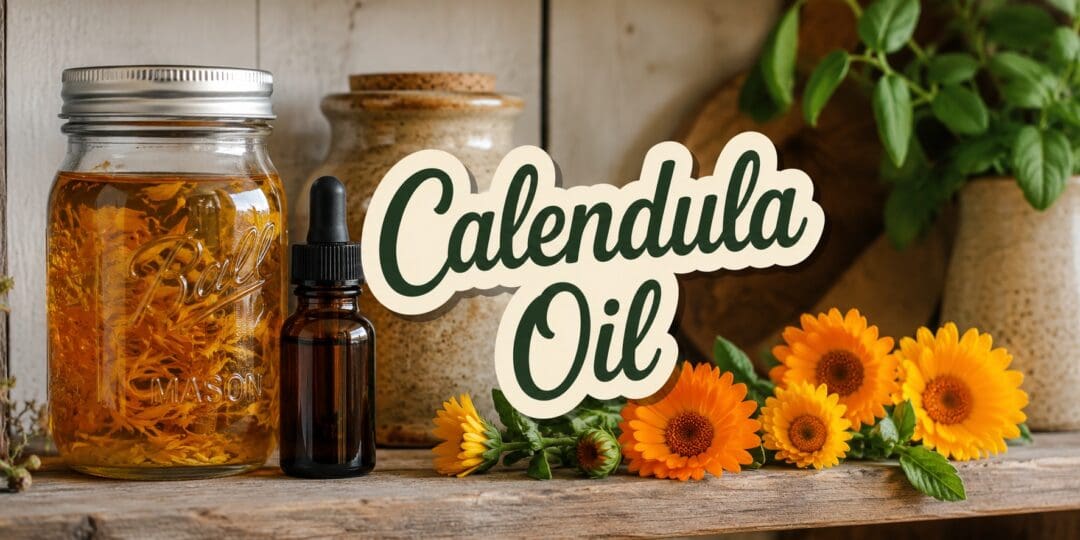
Calendula oil is simply a carrier oil, usually olive, sunflower, or sweet almond, that’s been infused with the dried petals of Calendula officinalis, also called pot marigold. The infusion pulls the plant’s beneficial compounds, mainly flavonoids and carotenoids, out of the flower and into the oil, so you end up with a golden, faintly herbal oil you can use directly on skin or as the base for salves, lotion bars, and balms.
Growing Calendula for Oil Making
If you want a steady supply of flowers for oil, growing your own is worth it and genuinely easy. NC State Extension notes that calendula does best in average, well-drained soil with full sun, and seeds can go straight into the garden a few weeks before your last frost. Utah State University Extension adds that it’s easily grown from seed sown about a quarter inch deep, and the plants will keep blooming steadily through the season as long as you deadhead spent flowers.
On my homestead, I let a section of the garden go a little wild with calendula since it self-seeds so readily. I harvest the flower heads in the morning after the dew has dried, right when they’re fully open, and I try to pick every few days through the season so the plant keeps producing instead of going to seed too early.
How to Make Calendula Oil
Here’s the method I use every year. It’s simple enough that there’s no excuse not to have a jar of this on hand.
What You’ll Need
- Fresh calendula flower heads, enough to loosely fill a clean glass jar
- A carrier oil (I use olive oil most often, but sunflower or sweet almond oil both work well)
- A clean glass jar with a lid
- Cheesecloth or a fine mesh strainer
- A dark glass storage bottle
Step-by-Step
- Spread the fresh flower heads out on a screen or towel in a warm, dry spot out of direct sun for 2 to 3 days, until they feel dry and papery. Skipping this step and infusing fresh flowers introduces water into your oil, which can lead to mold.
- Pack the dried flowers loosely into your jar, filling it about two-thirds full. Don’t pack them down tight, the oil needs room to move around the petals.
- Pour your carrier oil over the flowers until they’re completely submerged, with about an inch of oil above the plant material.
- Seal the jar and set it in a warm, sunny windowsill for 3 to 4 weeks, giving it a gentle shake every day or two. This is the solar infusion method, and it’s the one I use most because it requires no equipment.
- If you want it faster, use a double boiler instead. Combine the dried flowers and oil in the top of a double boiler and warm gently on the lowest possible heat for 2 to 3 hours, never letting the oil get hot enough to fry the petals.
- Strain the finished oil through cheesecloth, squeezing out as much liquid as you can, then pour it into a clean, dark glass bottle.
Either method gets you a beautiful golden orange oil with a mild, earthy scent. The solar method takes patience, the double boiler method takes attention, and both give you a good finished product.
What the Research Actually Says About Calendula Oil
I like to know that what I’m putting on my family’s skin has more behind it than tradition, so here’s the honest research picture. Calendula’s wound-healing reputation has real clinical backing. In a Phase III randomized trial published in the Journal of Clinical Oncology, 254 breast cancer patients undergoing radiation therapy were randomly assigned to apply either calendula ointment or trolamine, a standard skin-care agent, after each treatment session. Only 41 percent of the calendula group developed significant skin dermatitis, compared to 63 percent in the trolamine group, a meaningful difference for a topical plant preparation going up against a conventional product.
Calendula has also been studied for one of the most common homestead and household skin complaints: diaper rash. A randomized comparative trial published on PubMed compared topical calendula to aloe vera for diaper dermatitis in children and found both provided meaningful improvement. A broader review of Calendula officinalis research summarizes decades of laboratory and clinical work pointing to genuine anti-inflammatory, antimicrobial, and tissue-repairing effects, though the authors are clear that much of the underlying mechanism research is still done in cell and animal studies rather than large human trials.
None of this makes calendula oil a cure-all, and I’m not going to pretend it is. But between the radiation dermatitis trial and the diaper rash research, there’s real, peer-reviewed evidence that calendula helps skin heal and calms irritation, which lines up with exactly how homesteaders have used it for generations.
Ways I Use Calendula Oil Around My Homestead
This is the part where I tell you what actually happens to the oil once it’s strained and bottled. In no particular order, here’s where it ends up in my house:
- Minor cuts and scrapes: A dab on a clean, healed-over scrape or a scratch from garden work. I don’t use it on anything deep or actively bleeding.
- Garden hands: After a long day outside, my hands are dry and a little beat up. A little calendula oil rubbed in before bed makes a noticeable difference by morning.
- Diaper rash: I’ve used it on my own kids for mild diaper rash, applied at changes, and it’s one of the milder options I feel comfortable reaching for.
- Salve and balm base: I melt beeswax into calendula oil to make an all-purpose healing salve that lives in my kitchen drawer and my first aid kit.
- Chapped lips: A small batch of calendula oil and beeswax makes a lip balm that actually holds up through a Midwest winter.
- Dry, flaky skin patches: Elbows, heels, knuckles, anywhere winter weather or hot sun leaves skin feeling rough.
Safety and Who Should Skip Calendula Oil
Calendula is gentle by herbal standards, but gentle isn’t the same as risk-free for everyone. Memorial Sloan Kettering Cancer Center’s herb database notes that calendula is known to cause allergic reactions and should be avoided during pregnancy and lactation, since safety data for those situations is lacking.
- Calendula is part of the Asteraceae, or daisy, family. If you’re allergic to ragweed, chrysanthemums, daisies, or related plants, patch test before using calendula oil anywhere on your skin, or skip it altogether.
- Avoid it during pregnancy and while breastfeeding. Calendula has a traditional use as a uterine stimulant, and there isn’t enough safety data to say it’s fine during pregnancy.
- Don’t use it on deep cuts, puncture wounds, or anything that looks infected. Calendula oil is for minor, superficial skin support, not a substitute for proper wound care or a trip to the doctor when a wound needs it.
- Always patch test a new batch on a small area of skin first and wait 24 hours before using it more broadly, especially on kids.
Storing Your Calendula Oil
Keep your finished oil in a dark glass bottle, out of direct sunlight, in a cool cupboard rather than a warm spot near the stove. Stored this way, a batch of calendula oil should hold up for about a year. If it ever smells off, rancid, or different from when you made it, toss it and start a fresh batch. Trust your nose here the same way you would with any homemade pantry good.
Bring More Traditional Homestead Wisdom Into Your Home
If you enjoyed learning how to make calendula oil from scratch, you’ll love the timeless knowledge found in Amish Ways. Inspired by generations of Amish self-reliance, this practical guide is filled with simple, proven methods for natural living, preserving food, gardening, homemade remedies, and everyday homestead skills that are just as useful today as they were decades ago.
Whether you’re building a more self-sufficient lifestyle or simply appreciate old-fashioned know-how, Amish Ways is packed with practical tips you can start using right away. From herbal preparations and pantry staples to traditional home and farm wisdom, it’s the kind of resource you’ll reach for season after season.
🌿 Discover the Wisdom of Simpler Living!
Ready to learn the practical skills that helped Amish families thrive for generations? Get your copy of Amish Ways today and discover timeless homesteading techniques, natural remedies, and self-reliance tips that belong in every country home.
Final Thoughts
Calendula oil is one of those homestead projects that costs almost nothing if you’re already growing the flowers, takes very little hands-on effort, and earns its keep in the medicine cabinet all year long. Between the real research behind its skin-healing reputation and my own years of using it for garden hands, minor scrapes, and dry winter skin, it’s stayed a permanent fixture on my shelf, and I think it’s worth a spot on yours too.
You may also like: 
Why You Should Add Calendula To Your Garden
The ONLY 39 Foods You Need in Your Stockpile (Video)
7 Seeds You Should Never Buy From a Big Box Store
This Great Depression Dessert Turned Stale Bread Into Gold
The Vinegar Weed Killer Recipe Every Homesteader Should Know
Homemade Window Cleaner: Simple Recipes That Actually Work
Homemade Dish Soap – Recipes, Ingredients, and Everything You Need to Know