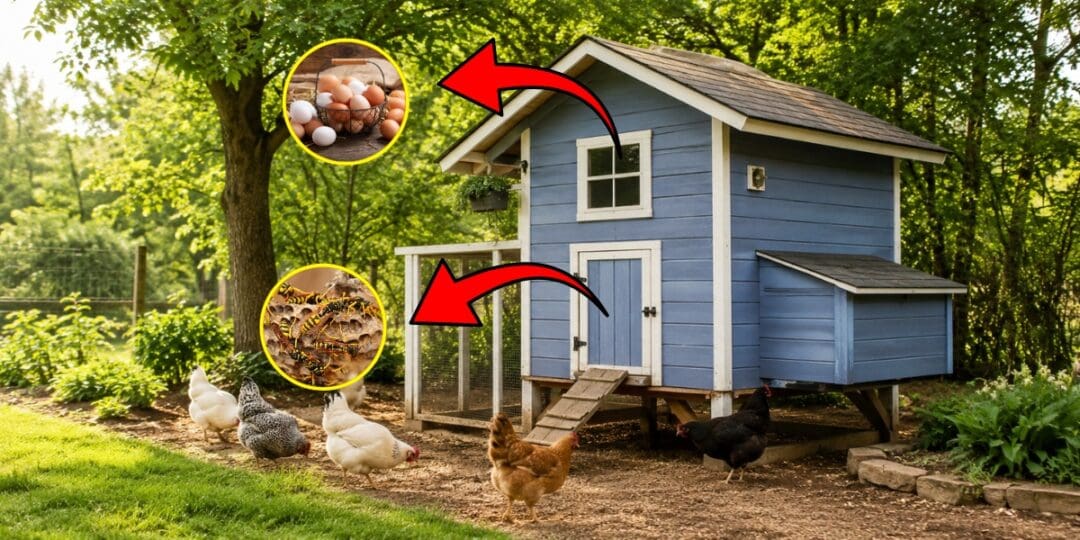
Maybe you’ve seen it on a homesteading page or heard it from a neighbor. Paint your coop blue and the wasps stay away. The spiders won’t build in the corners. Some folks even say it keeps the flies down and calms the birds. This piece of advice gets passed around so often that it started to feel like a fact.
And I understood the appeal! I too thought about painting my chicken’s coop blue. But before I bought the paint, I decided to see if all of these claims match real life.
So is this whole story true? Can a can of paint solve your pest problems and make your hens produce more eggs? Let’s see!
Where the Blue Idea Comes From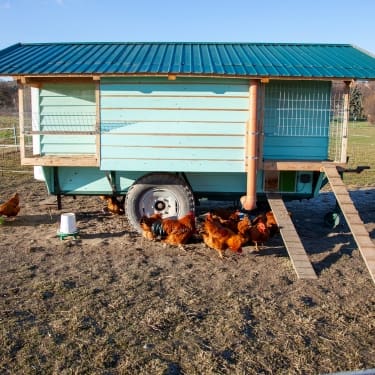
The blue paint trick didn’t start with chicken coops at all. It started with porch ceilings down South.
If you’ve ever driven through the Lowcountry in South Carolina or Georgia, you’ve seen those soft blue-green porch ceilings. That color has a name. It’s called “haint blue,” and it comes from the Gullah Geechee culture. The word haint is an old variation of haunt, and the belief was that the blue color looked like water. Spirits, or “haints,” couldn’t cross water, so a blue ceiling was said to keep them out of the house.
Somewhere along the way, the story picked up a second half. People started saying the blue also kept insects away, because wasps and spiders mistook the ceiling for open sky and wouldn’t build there.
That’s the part I want you to look at closely.
Also, besides blue, another well-known color that people claim helps on a homestead is red. If you’ve ever seen red barns while driving on the highway, those were Amish barns. Most of them are bright red and there is a good reason behind this.
The Amish noticed something about red paint and this made them use it for a lot of the structures they have on their properties, especially for barns.
But what surprised me the most was when I heard that the Amish mix red paint with raw milk and linseed oil. They say doing this makes the properties of the paint even more powerful.
👉 See the reason the Amish mix their paint with milk here.
The Part That Was Actually True
Here’s the thing that makes this so interesting. There really was something in that old blue paint that bothered bugs. But it wasn’t the color.
Back when haint blue got started, people weren’t using the latex paint you buy today. They mixed their own paint right on the property, and one of the ingredients was lime. Lime is a natural irritant that upsets a lot of insects, and it very likely did discourage wasps and other pests from settling in.
So the old-timers weren’t wrong that a freshly painted blue ceiling had fewer bugs on it. But the credit goes to the lime and not the color blue.
And that’s where the whole trick falls apart for us today. Modern paint doesn’t have lime in it. When you paint your coop with a can from the hardware store, you get the pretty blue color and none of the ingredients that keep pests away.
Why Blue Paint Might Be Dangerous
Unfortunately, a lot of insects are drawn to blue, not repelled by it. Scientists have known this for a long time, and it’s the whole reason blue sticky traps exist. Growers hang them in greenhouses to catch thrips and other pests, because those bugs fly straight toward that color. The same goes for many flying insects and the short-wavelength blue and ultraviolet light they can see that we can’t.
So the idea that a wasp looks at your blue coop and decides not to build a nest here doesn’t hold up. Wasps pick a nesting spot based on shelter, not paint color. They want somewhere dry and protected from wind and weather and your coop might be the perfect place.
But here’s something that helped me get rid of some stubborn wasps last summer. This has nothing to do with the color of your coop. This is an easy-to-build and effective trap. The kind of hands-on solution you might need.
This trap was designed to make wasps and hornets disappear and is incredibly useful on a homestead. Most wasps are looking for food and a place to stay and our gardens are a haven for them. Fallen fruits and tight spots are what they’re looking for.
Another thing I need to mention about this trap is that it also works for mosquitoes, so keep this in mind.
Now, building one trap takes about 15 minutes and you’ll probably need a couple of them because you’ll place them in key spots where the insects are the most active. Also, what I like the most about this trap is that you probably already have all the materials in your trash can and in your kitchen.
👉 See how to build the perfect wasp and mosquito trap, step by step.
The Other Claims Worth Clearing Up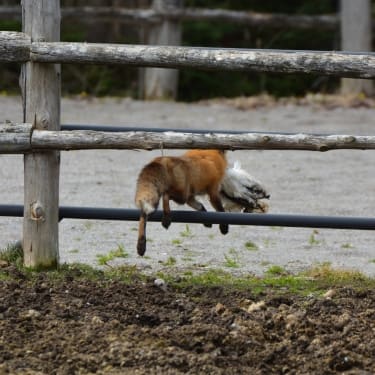
While we’re at it, let me knock down a few other things people say about blue coops.
It calms the chickens – There’s a grain of truth buried here, but it’s been stretched. Real research on poultry looks at colored lighting, not wall paint. Certain light colors can affect how birds grow and behave in a barn setting. That’s lighting, though, shining on the birds all day, not the color of the boards behind them. Your hens are not going to mellow out because you rolled on a coat of powder blue.
Chickens don’t even see color the way you do. This surprises people. Chickens actually see color better than we do. They have four types of color receptors to our three, and they can pick up ultraviolet light on top of everything else. So the calming-blue idea is a bit of a mismatch. Your bird sees a far richer, stranger palette than you ever will, and a can of blue paint means nothing special to her.
It keeps predators away – NO! A raccoon or a fox works by smell and by testing for weak points, and it hunts at night when they can barely see any color. Paint color does nothing to a determined predator, but one thing that keeps them away and prevents them from coming back is well-placed traps.
Unfortunately, there are not many things you can do against predators such as foxes and raccoons. You can try to fortify as much as possible, but as you’ve probably already heard, they somehow manage to sneak inside your backyard and kill your chickens.
So what can you do when this happens? For now, the most efficient known method is using traps. But now it depends on what type of traps you want to choose. There are lethal traps and also traps that don’t hurt the animal. This choice varies from person to person, but both work and will keep pests away.
👉 Click here to see more about how to make both types of DIY traps.
How to Make the Coop Better for Your Hens
First of all, you need to keep the coop clean. This is the best defense against most pests. The worst of them are mites, and they hide better than you’d think. The folks at the Alabama Cooperative Extension System point out that poultry red mites tuck themselves into the cracks and crevices of a wooden coop during the day and only come out at night to feed on your birds. So, you should go after the hiding spots.
Seal the wood. This is where paint earns its keep for real. A painted, sealed surface is smooth, which means fewer cracks for mites to hide in and a much easier surface to wipe down and scrub. So paint your coop by all means. Just do it for the sealing and the protection from weather, not because you think a color will scare off bugs.
Keep it dry and clean out the manure. Flies breed in wet droppings and damp bedding. Stay on top of the litter, keep the coop dry, and you cut the fly problem off before it starts.
Give your birds a dust bath. Chickens keep their own feathers clean when you give them a dry spot to bathe in. A mix of dry soil and sand works, and extension folks note that adding food-grade diatomaceous earth helps against mites and lice. Keep it under cover so the rain stays out.
Ventilate. Good airflow keeps moisture down, and moisture is what pests and mold love.
Close the gaps. Seal the spots where rodents and wild birds sneak in, since they bring mites and lice along with them.
Do these things and you’ll have a healthier coop than any paint color could ever give you.
Final Thoughts
Paint your coop blue if you love the way it looks. I won’t talk you out of a color that makes you smile every time you walk out to collect eggs. Just go in knowing the blue is for you, not for the bugs.
You may also like: 
How to Build a Predator-Proof Automatic Chicken Coop Door
This Amish Chicken Coop Makes Your Hens Lay x2 More Eggs (Video)
Best Automatic Chicken Coop Door Opener: Stress-Free Flock Keeping
Your Chicken Coop Could Be a Death Trap
Build a Self-Cleaning Chicken Coop