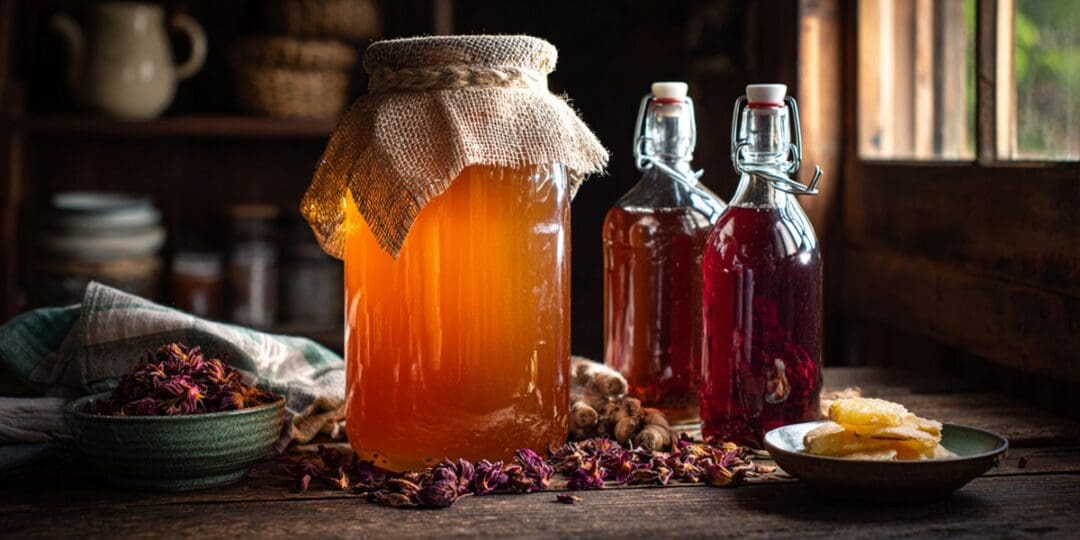
Long before probiotic supplements existed, people were fermenting tea. Ancient cultures across East Asia, Eastern Europe, and Central Asia discovered independently that letting sweetened tea ferment produced a tart, fizzy, living drink that seemed to settle the gut, sharpen the mind, and keep the body well through the seasons.
Today fermented tea has made a full comeback, and for good reason. In a world of overprocessed food, sky-high supplement costs, and growing interest in gut health, making your own fermented tea at home puts you back in control of one of the most powerful and affordable wellness tools available.
This guide covers the full picture: what fermented tea actually is, how the fermentation process works, the different types you can make at home, step-by-step brewing instructions, how to flavor and carbonate it, how to store it safely, and the health evidence behind drinking it regularly.
Whether you are a complete beginner or looking to level up a brewing practice you already have, this is your complete homestead reference for fermented tea.
What Is Fermented Tea?
Fermented tea is any tea that has been transformed through controlled microbial fermentation. The most widely known example is kombucha, a lightly effervescent, tangy drink made by fermenting sweetened black or green tea with a live culture. But fermented tea is a much broader category that includes jun tea (made with green tea and honey), kvass-style fermented teas, pu-erh (a traditionally fermented Chinese tea), and various homebrewed herbal tea ferments.
In every case, the process is the same at its core: a microbial culture, typically a combination of bacteria and wild yeasts, consumes the sugar in sweetened tea and produces a range of beneficial compounds including organic acids, B vitamins, enzymes, and carbon dioxide.
The end result is a drink that is very low in residual sugar (most has been consumed by the culture), mildly acidic, often naturally carbonated, and rich in the kinds of organic acids and live cultures that support gut health.
Types of Fermented Tea
Kombucha
The most popular fermented tea in the Western world. Made with sweetened black or green tea and a SCOBY (Symbiotic Culture of Bacteria and Yeast). Produces a tangy, lightly effervescent drink with a clean acidic flavor. A single SCOBY can produce indefinite batches if cared for properly, making kombucha one of the most sustainable and cost-effective homemade ferments you can maintain.
Jun Tea
Often called the “champagne of kombucha,” jun tea is made with green tea and raw honey rather than black tea and refined sugar. It uses a distinct jun culture rather than a standard kombucha SCOBY, though the two look similar. The result is lighter, more delicate, and slightly sweeter than kombucha, with a flavor profile many people find more approachable.
Pu-erh Tea
A traditionally fermented tea from Yunnan province in China. Unlike kombucha, pu-erh fermentation happens in the tea leaf itself, either naturally over many years (sheng/raw pu-erh) or via accelerated microbial processing (shou/ripe pu-erh). It has an earthy, rich, deeply complex flavor that is unlike any other tea. You cannot make true pu-erh at home, but you can purchase aged cakes and brew them as part of a traditional fermented tea practice.
Fermented Herbal Tea
A growing area of home fermentation practice. Using a kombucha SCOBY or wild fermentation methods, homesteaders are fermenting everything from elderflower tea to nettle, hibiscus, chamomile, and tulsi. Each herb brings its own flavor and medicinal compounds into the ferment, producing functional fermented drinks with unique character.
How Fermentation Works in Tea
Understanding the fermentation process helps you brew better tea and troubleshoot problems when they arise.
When you add a SCOBY to sweetened tea, the microorganisms in the culture get to work immediately. The yeasts break down sucrose into glucose and fructose, which both the yeasts and bacteria then consume. As they feed, they produce:
- Acetic acid (the main acid in vinegar, responsible for kombucha’s tang)
- Gluconic acid (a mild organic acid with its own health benefits)
- Lactic acid (the same acid produced in yogurt and sauerkraut)
- B vitamins, including B1, B6, and B12
- Carbon dioxide (what creates the natural carbonation)
- Small amounts of ethanol (typically under 0.5% in finished kombucha)
- Enzymes and various beneficial metabolites
The SCOBY itself grows a new cellulose layer with every batch, which is why it gradually gets thicker over time. This growth is a sign of a healthy, active culture.
The USDA Agricultural Research Service has studied the microbial composition of kombucha and documented the presence of beneficial bacteria from the genera Acetobacter, Gluconobacter, and Komagataeibacter, alongside several wild yeast species.
Health Benefits of Fermented Tea
The research on fermented tea, particularly kombucha, is growing steadily. Here is what the current evidence shows.
Gut Health Support
The organic acids in fermented tea, primarily acetic and gluconic acid, create an environment in the digestive tract that supports the growth of beneficial bacteria and discourages harmful microbes. Kombucha also contains live probiotic cultures that may contribute to microbiome diversity.
A review published in the Journal of Food Science noted that kombucha’s combination of organic acids, polyphenols, and live cultures makes it a functionally interesting food for gut health support, though large-scale human clinical trials are still limited.
Antioxidant Activity
Fermented tea inherits the polyphenol antioxidants from its base tea, and some research suggests fermentation may enhance the bioavailability of these compounds. The NIH National Center for Biotechnology Information has published several studies examining the antioxidant properties of kombucha, with results suggesting meaningful free-radical scavenging activity.
Liver Support
Animal studies have shown that kombucha may offer protective effects against liver toxicity. While human data is limited, the glucuronic acid content of kombucha is of particular interest, as it is involved in the liver’s natural detoxification pathways.
Antimicrobial Properties
The acetic acid content of fermented tea gives it natural antimicrobial activity. Research has demonstrated that kombucha shows inhibitory effects against several pathogenic bacteria including E. coli and Salmonella, which is part of why it has historically been used as a functional food rather than just a beverage.
Blood Sugar Regulation
Early research, including studies cited by the NIH, suggests that fermented tea may have a moderating effect on blood glucose response. The acetic acid content, similar to apple cider vinegar, may slow the digestion of carbohydrates and reduce post-meal blood sugar spikes.
What You Need to Get Started
To brew your first batch of kombucha, you will need:
- A SCOBY with starter liquid (the liquid from a previous batch or a reliable source; this acidifies your new batch and protects against contamination)
- A wide-mouth glass jar (1-gallon minimum; glass only, never metal)
- Black or green tea (unflavored, no oils, no bergamot; plain caffeinated tea)
- White cane sugar (for the culture to feed on; do not substitute honey in standard kombucha)
- Filtered water (chlorinated tap water can inhibit your culture)
- A breathable cloth cover (cheesecloth, coffee filter, or a clean cotton cloth secured with a rubber band)
- Bottles for second fermentation (swing-top glass bottles or recycled kombucha bottles)
That is genuinely all you need to get started. A 1-gallon jar and a SCOBY can produce roughly 14 servings of finished kombucha per batch, at a cost of pennies per serving compared to $3-5 per bottle at retail.
How to Make Kombucha: Step-by-Step
First Fermentation (F1)
What you need:
- 1 gallon filtered water
- 8 bags (or 2 tablespoons loose leaf) plain black or green tea
- 1 cup white cane sugar
- 1-2 cups starter liquid (from a previous batch or store-bought raw kombucha)
- 1 SCOBY
- 1-gallon glass jar
- Breathable cover and rubber band
Instructions:
- Bring 4 cups of filtered water to a boil. Remove from heat, add tea bags, and steep for 10-15 minutes. Remove tea bags without squeezing.
- Add sugar to the hot tea and stir until fully dissolved.
- Pour in the remaining 4 cups of cold filtered water. This brings the temperature down to room temperature faster. The tea must be completely cool before adding your SCOBY. Hot liquid will kill the culture.
- Once the tea is at room temperature (below 85°F / 29°C), pour it into your clean glass jar.
- Add your starter liquid and gently place your SCOBY on top. It may sink, float, or tilt. All of these are normal.
- Cover the jar with your breathable cloth and secure with a rubber band. Do not use an airtight lid during first fermentation. The culture needs airflow and needs to off-gas carbon dioxide.
- Place the jar in a warm location (68-78°F / 20-26°C) away from direct sunlight. A kitchen counter away from the stove works well for most households.
- Ferment for 7-14 days. Begin tasting at day 7 by inserting a clean straw beneath the SCOBY and tasting a small amount. The kombucha is ready when it reaches your preferred balance of sweet and tart. Cooler temperatures produce slower fermentation; warmer temperatures speed it up.
- When ready, remove the SCOBY and reserve 1-2 cups of the finished liquid as your starter for the next batch. Bottle the rest.
According to the USDA Food Safety and Inspection Service, fermented foods brewed in properly maintained acidic conditions (pH below 4.0) are generally safe from pathogenic contamination. Finished kombucha typically sits between pH 2.5 and 3.5.
Second Fermentation: How to Carbonate and Flavor Your Brew
Second fermentation (F2) is where kombucha goes from flat and functional to fizzy and exciting. It is also where you add flavors.
How it works: When you bottle kombucha with a small amount of sugar (from fruit, juice, or added sugar) in a sealed bottle and leave it at room temperature for 1-3 days, the residual yeast consumes the sugar and produces carbon dioxide. Because the bottle is sealed, the CO2 has nowhere to go and dissolves into the liquid, creating natural carbonation.
Basic F2 method:
- Fill swing-top or screw-cap glass bottles to about 1 inch from the top, leaving minimal headspace (less air means more pressure and more carbonation).
- Add your flavoring. Good options include: 1-2 tablespoons of fruit juice per 16oz bottle, a few slices of fresh ginger, 2-3 fresh or frozen berries, a strip of lemon or orange peel, or 1 teaspoon of fruit puree.
- Seal the bottles and leave at room temperature for 1-3 days. Check pressure daily by gently opening a bottle slightly. When it hisses with good pressure, it is ready.
- Move bottles to the refrigerator to halt fermentation and preserve carbonation. Chill thoroughly before opening to reduce the risk of overflow.
Caution: Over-carbonated kombucha bottles can build significant pressure. Always open bottles slowly over a sink and never leave them fermenting at room temperature beyond 3 days without checking pressure.
How to Make Jun Tea
Jun tea follows the same basic process as kombucha but uses a jun culture, green tea, and raw honey.
Key differences from kombucha:
- Use green tea instead of black tea (4-6 bags per gallon)
- Use raw honey instead of white sugar (3/4 cup per gallon, added when the tea has cooled below 100°F to preserve honey’s beneficial compounds)
- Use a jun culture rather than a standard SCOBY (available from specialty fermentation suppliers)
- Fermentation time is typically 7-10 days at 68-75°F
The flavor is noticeably lighter and more floral than standard kombucha. Jun is an excellent entry point for people who find kombucha too sharp.
How to Make Fermented Herbal Tea
You can use a kombucha SCOBY to ferment almost any herbal tea, with a few guidelines:
- Use herbal teas that do not contain essential oils (avoid bergamot, flavored teas, or herb blends with added oils, which can damage the SCOBY)
- Always include at least 20-30% plain black or green tea in your blend to provide the nutrients the SCOBY needs to stay healthy
- Antibacterial herbs used in high concentrations (oregano, thyme, sage) can inhibit the culture; use them sparingly or only in second fermentation as flavorings
Good herbal tea ferment base blends:
- Black tea with dried hibiscus flowers (2:1 ratio)
- Green tea with dried chamomile (3:1 ratio)
- Black tea with dried elderflower (2:1 ratio)
- Green tea with dried nettle leaf (2:1 ratio)
Follow the standard kombucha F1 method using your herbal blend as the base tea. The result is a fermented drink that carries both the probiotic benefits of kombucha and the functional compounds of your chosen herbs.
Troubleshooting Common Problems
- Brown stringy strands hanging below the SCOBY: Normal. These are yeast strands. They are harmless and a sign of an active culture.
- New SCOBY forming on the surface: Normal and expected. A new cellulose layer grows with every batch. You can separate the new layer from the old one and share it, compost it, or use it to start a second brewing vessel.
- My kombucha smells like vinegar: It has fermented too long or at too warm a temperature. It is still safe but very tart. Use it as a starter liquid or as a cleaning vinegar and start a fresh batch, checking it earlier.
- My SCOBY has black or dark green fuzzy spots: This is mold and means the batch is contaminated. Do not drink it. Discard everything including the SCOBY and start fresh with a new culture and thoroughly cleaned equipment. This is rare when proper sanitation and starter liquid ratios are maintained.
- My kombucha is not carbonating: Either the bottles are not sealed well, the temperature is too cold, or there is not enough residual sugar for the yeast to work with. Try adding a small pinch of sugar to each bottle at the start of F2 and ferment in a slightly warmer location.
How to Store Fermented Tea
Finished, bottled kombucha keeps well in the refrigerator for 1-3 months. The flavor continues to develop slowly even when cold, becoming more tart over time.
For longer-term homestead storage:
- Keep bottles in a cool, dark root cellar or basement if refrigerator space is limited (fermentation will continue slowly at cellar temperatures)
- Finished kombucha can be dehydrated into kombucha powder using a dehydrator at very low temperatures (below 95°F to preserve live cultures), though this is more advanced
- Maintaining a continuous brew vessel means you always have finished kombucha on hand without needing large refrigerator space; simply draw off a portion each day and replace with fresh sweet tea
How Much to Drink and When
For general gut health and wellness, 4-8 oz (120-240ml) of fermented tea once or twice daily is a reasonable starting point. People new to fermented foods sometimes experience mild digestive adjustment in the first week (bloating or changes in bowel habits) as their gut microbiome responds to the new inputs. Starting with a smaller amount and building up over 1-2 weeks is the sensible approach.
The Harvard T.H. Chan School of Public Health notes that fermented foods including kombucha are part of a growing body of evidence linking dietary fermentation with gut microbiome diversity and overall health outcomes, while also noting that research is still developing in this area.
Drink it chilled, at room temperature, or added to smoothies. Many homesteaders drink a small glass first thing in the morning before breakfast to support digestive function throughout the day.
Safety: What to Watch For
Homemade fermented tea is safe for the vast majority of healthy adults when brewed with proper sanitation. A few situations warrant extra caution:
- Pregnancy: The small alcohol content (typically under 0.5%) and live cultures make fermented tea a topic to discuss with your midwife or healthcare provider during pregnancy.
- Immunocompromised individuals: People with compromised immune systems should exercise caution with any unpasteurized fermented food. Consult a healthcare provider before adding fermented tea to the diet.
- Dental health: The acidity of kombucha is comparable to other acidic drinks. Drinking through a straw and rinsing with water afterward reduces enamel exposure.
- Overconsumption: Drinking large quantities (more than 12-16 oz per day) of fermented tea, particularly when first starting, can cause digestive discomfort. More is not always better with fermented foods.
FAQ
- How is fermented tea different from regular tea? Regular tea is brewed and drunk immediately. Fermented tea undergoes a microbial transformation over days or weeks that fundamentally changes its chemistry, creating organic acids, live cultures, and natural carbonation that are absent from freshly brewed tea.
- Does fermented tea contain alcohol? Finished kombucha typically contains between 0.2% and 0.5% alcohol, well below the legal threshold for alcoholic beverages. Second fermentation can push this slightly higher. Commercial kombucha is regulated in the U.S. to stay below 0.5% ABV.
- Can I make fermented tea without a SCOBY? You can start a SCOBY from a bottle of raw, unflavored, unpasteurized store-bought kombucha in about 1-4 weeks. Place the entire bottle in a clean jar, cover with breathable cloth, and leave at room temperature. A thin SCOBY layer will gradually form on the surface and can then be used to start your first full batch.
- How long does a SCOBY last? Indefinitely, if cared for. A healthy SCOBY kept in a “hotel” (a jar of starter liquid in the refrigerator) can last for years and produce hundreds of batches. It is one of the most durable and self-replenishing fermentation cultures available to home brewers.
- Is fermented tea the same as kombucha? Kombucha is the most well-known type of fermented tea, but the category also includes jun tea, pu-erh, fermented herbal teas, and other regional fermented tea traditions. Kombucha is the easiest and most accessible to make at home.
- Can I use flavored or herbal tea bags for my base brew? For your main SCOBY culture, always use plain unflavored black or green tea with no added oils or flavorings. Flavored teas can contain compounds that stress or damage the culture over time. Save herbs and flavors for second fermentation, where they add character without risking your culture.
- Is homemade fermented tea cheaper than store-bought? Significantly. A gallon batch of homemade kombucha (roughly 8-10 bottles) costs approximately $1-2 in ingredients once you have your SCOBY. The same volume of commercial kombucha would cost $24-50 at retail.
The Bottom Line
Making fermented tea at home is one of the most practical, affordable, and genuinely rewarding fermentation projects a homesteader can take on. The startup cost is minimal, the ongoing cost is nearly nothing, the skill compounds with every batch, and the result is a living drink with real functional value that you made entirely from scratch.
A SCOBY is not just an ingredient. It is a living culture you maintain, share, and pass on. Some homesteaders have kept the same culture running for decades, passing daughter SCOBYs to neighbors and friends. That kind of continuity, of a living ferment maintained through the seasons and the years, is exactly what self-sufficient living looks like in practice.
Start with one gallon. Taste it at day seven. Bottle it, flavor it, and drink it cold on a hot afternoon. Then start the next batch the same day.
Within a few months you will wonder how you ever spent money on probiotic supplements.
Discover the Forgotten Foods That Kept People Healthy for Centuries
If fermenting tea fascinates you, you’re already tapping into one of the oldest traditions of self-reliance: preserving nutrition through simple, natural processes.
But kombucha and fermented tea are only a small piece of a much larger story.
For thousands of years, cultures around the world relied on forgotten preservation techniques and survival foods that allowed families to stay nourished even when harvests failed, supply chains collapsed, or winter stretched longer than expected. Many of these foods were not just preserved for convenience — they were prized for their probiotic benefits, nutrient density, and long shelf life, much like fermented tea.
The problem is that most of these foods have quietly disappeared from modern kitchens.
That’s why the guide Lost Super Foods has become such a valuable resource for homesteaders and preparedness-minded families.
Inside, you’ll discover over 120 traditional foods and preservation methods that helped people survive harsh winters, economic hardship, and times when grocery stores simply didn’t exist.
These include:
- Hardtack survival bread that can last decades when stored properly
- Pemmican, the legendary high-energy survival food used by Native American tribes and Arctic explorers
- The 100-year-old “canning without electricity” method that preserves meat and vegetables naturally
- Root cellar foods and fermentation techniques that keep nutrients intact for months
- Ancient herbal drinks and tonics that complement ferments like kombucha and jun tea
- Foods specifically designed to last through long emergencies
Just like fermented tea, many of these foods rely on natural microbial processes, traditional knowledge, and simple ingredients — no modern industrial processing required.
In other words, they’re exactly the kinds of foods that belong in a self-sufficient kitchen.
Thousands of people have already started rediscovering these techniques, and many are surprised by how easy and affordable they are to make at home.
If you enjoy learning skills like brewing kombucha, fermenting herbal teas, or preserving food naturally, Lost Super Foods will open the door to dozens of other forgotten practices that can dramatically expand your homestead pantry.
👉 You can explore the full Lost Super Foods guide here!
It’s one of the most practical resources available today for anyone interested in:
- traditional food preservation
- long-term food security
- homesteading skills
- nutrient-dense survival foods
Fermented tea is a fantastic place to start.
But once you begin exploring the world of traditional foods, you’ll quickly realize there’s an entire library of forgotten knowledge waiting to be rediscovered.
You may also like:

The Plant Doctors Are Begging People To Grow (Video)
Fermented Foods for Gut Health: A Prepper’s Guide to Building Immunity and Self-Sufficiency
Fermented Fish: A Self-Sufficient Food Tradition Worth Reviving
I Fermented My Entire Garden, Now What?