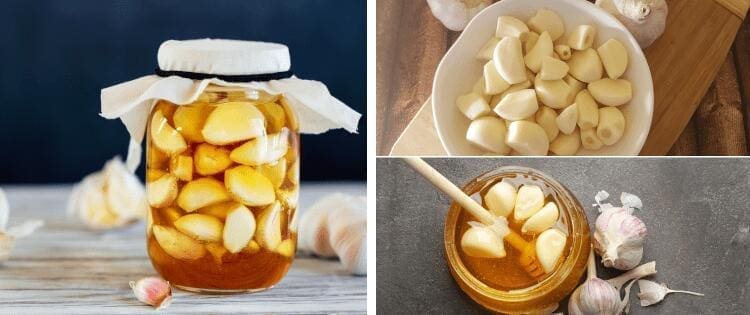
Garlic honey! Or Honey with garlic. Or, as many of my older relatives would have called it, “smear that on some toast, and that kid will make it back to school in no time”. Fermenting honey and garlic together makes a simple syrup that will kick a cold out very quickly or add a nice, rustic flavor to a number of dishes. Sadly, this long-time favorite seems to be dying a slow death. We admit that fermenting is a little bit scary for the first-time fermenter, but never fear: that’s why we’re here. We’ll take you through fermenting garlic in honey step by step and remember, it’s all the better if you have your own bees and your own garlic to do the work with. Let’s get started.
What Type of Ingredients Do I Need?
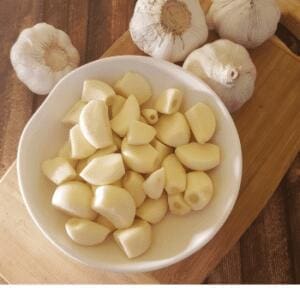 The freshest garlic you can get, ideally from your own garden. Not sure how to grow garlic? We have tons of articles on just that subject. No matter whether you want to try a square bale garden, a square foot garden, potted garlic, or dozens of other options, we can get you started growing on one of our favorite plants. If you can’t guess how old the garlic is at your grocery store, put out a request for locals with fresh garlic. There’s probably someone in your area growing it right now. The Amish have some ingenious methods you’ll find interesting, including one that will help you grow twice as much food on the same piece of land. And everything is explained in great detail here.
You’ll also need unpasteurized honey. This isn’t some woo hack or raw milk-adjacent kind of thing; you need the bacteria in raw honey for this project. The microbes are killed in pasteurized honey, meaning that there will be nothing to help your fermentation process happen. We do recommend that you follow your doctor’s instructions about raw honey for your family’s safety; we can’t possibly make those recommendations ourselves because we don’t know your family’s medical history nor the needs of your family’s health as it stands now or in the future. You’ll also need jars. Whether they be the type of jars with a locking seal (not screw-on lids) or the type that burp themselves is up to you; both work equally well and are easy to use for garlic honey.
Why Fermented Garlic in Honey Is So Helpful
Fermented garlic in honey has been used in home kitchens for generations because it brings together two of nature’s most supportive ingredients. Raw garlic is known for its natural protective qualities while honey helps soothe and preserve.
As the garlic rests in the honey, its strength softens and becomes easier on the stomach. At the same time the honey absorbs many of the garlic’s beneficial compounds. The result is a remedy that feels warming, comforting, and supportive when the body feels run down. Many people keep a small jar nearby during colder months as a simple way to support overall wellness.
How Long Should I Ferment?
We recommend a minimum of two weeks, though a month or two is even better. The garlic is likely to change colors and the honey will probably darken over time. Keep in mind that this is perfectly normal. Humans stored things in honey for thousands of years to prevent rot prior to refrigeration being an option. Honey works to maintain freshness, or in this case fermentation, for a very long time. We’re talking about years, here. If you want to start a jar of garlic honey in June for use in December, you are absolutely welcome to do that.
Okay, But How Do I Do This?
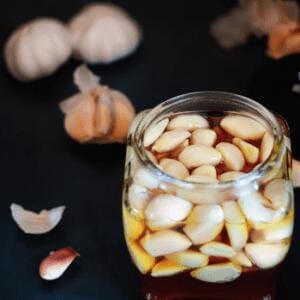 Rinse, peel, and toss your garlic gloves in your jar. Add honey until the garlic is fully covered while leaving a very small headspace for the gases that will escape your garlic as they ferment. Tighten the lid, turn it upside down, and burp once daily for at least two weeks. If storing longer than this, we recommend burping each jar about once a week once the initial fermenting phase has taken place. If using self-burping jars, don’t worry about this step.
Recommended: Fermented Fish: A Self-Sufficient Food Tradition Worth Reviving
We also recommend shaking up your jar prior to turning it upside down for storage purposes. It re-coats the garlic and makes sure that it sinks all the way down into the honey, keeping a protective layer on the honey the whole time it is in the jar.
Gentle Flavor Variations You Can Try
Once you are comfortable with the basic recipe, you may enjoy experimenting a little.
Some people like to add a small sprig of rosemary or thyme for a deeper herbal aroma. Others prefer using darker raw honey for a richer flavor or lighter honey for a milder taste.
These small variations can make each jar feel personal and allow you to tailor the remedy to your own preferences.
Important Safety Notes to Keep in Mind
It is normal to feel cautious when working with fermented foods, especially when garlic is involved. The good news is that garlic fermented in raw honey is different from garlic stored in oil.
Honey naturally draws moisture out of the garlic, creating an environment that supports safe fermentation when prepared correctly.
Always use clean jars and utensils and make sure the garlic remains fully covered by honey. If you ever notice mold, an unpleasant odor, or anything that feels off, it is best to discard the batch and begin again.
Trust your senses and keep the process simple.
How Much to Use and How Often
Fermented garlic in honey is usually taken in small amounts. Many people choose one clove per day or a teaspoon of the honey when they feel they need extra support.
It can be taken on its own or stirred gently into warm tea once the tea has cooled slightly. Using small amounts consistently is often more helpful than taking large doses.
As with all herbal preparations, listening to your body is important.
The Last Bits and Pieces
Jars that are not regularly burped can explode, as can any jar with building gases inside of it. Our main concern here is that you check for bulging, “tight” feeling glass, and so on and so forth prior to popping the lid off of a jar. Whether you’re burping the jar or simply fishing out a wonderful piece of garlic, it’s always best to be careful. The last thing that we want is for anyone to accidentally explode their jar: that is how people get hurt.
Related: Never Buy Garlic Again!
If you notice that your garlic has floated to the top of the honey and is not coated and/or is fuzzy or covered with mold, we recommend throwing that jar away. Garlic that changes color, even to blue or green, is perfectly normal. Fuzzy garlic or garlic that appears to be molding, is not and is not safe for consumption. If possible, we recommend throwing away both the honey-garlic mixture and the jar this happens in; it is very common for jars that have molded to continue to mold in the future, no matter how well-cleaned they are.
How to Use
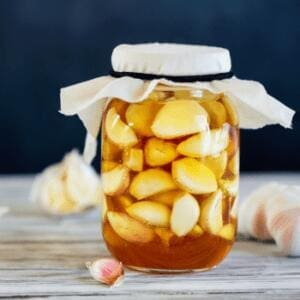 We recommend using garlic honey on almost everything. Eat a clove if you’re feeling a little sluggish or if you think you may be coming down with a cold. Enjoy a drizzle of honey on your morning bagel or biscuit for a little extra added boost. Something else you can do with honey is a herbal parasite flush that does, well, exactly what the name says, and you only need two other ingredients to make it. You can find the complete recipe inside this guide, along with more than 249 natural remedies you can make at home.
One of our favorite ways to use garlic honey is in pizza. A white pizza with both the honey drizzled over the cheese and the garlic as a topping is an amazing double-hitter that will boost your immune system and help you fight back against seasonal allergies, colds, flu, and all those terrible things that keep you suffering indoors all winter long.
Related: Fermented Foods for Gut Health: A Prepper’s Guide to Building Immunity and Self-Sufficiency
Have you used honey garlic or garlic honey in the past? How did it work out for you and would you make it again? Remember: this isn’t elderberry, and you aren’t likely to find it in most stories these days.
You’re stuck making it the old-fashioned way: at home, with your own supplies. Tell us in the comments below about your experience with this neat recipe, whether you’ve used it before or you’re a first-timer. We’d love to hear from you. And, as always, happy fermenting.
We’re sure to see you gaining confidence and interest in fermenting foods once you realize how very simple the process is!
Common Questions People Often Ask
- How long does it last?
When stored in a cool dark place, fermented garlic in honey can last many months and often longer.
- Why did my garlic turn darker?
Color changes are normal and part of the fermentation process.
- Does it need refrigeration?
It does not have to be refrigerated, but some people prefer to store it there once fermentation slows.
- Is bubbling normal?
Yes gentle bubbling is a natural sign that fermentation is active.
Fermentation is a living process and small changes are part of its nature.
You may also like:

Gardening Myths That Are Actually True
The Plant Doctors Are Begging People To Grow (Video)
How to Prepare Your Soil For Your Spring Garden
These Animals Are Stealing Your Chicken Eggs