If you’ve ever bitten into a bowl of popcorn and thought something was missing compared to the fluffy, flavorless stuff from the microwave bag, you’re not imagining it. Amish popcorn — and particularly Amish Country Popcorn — is a completely different experience. It pops bigger, tastes richer, and carries the kind of old-world quality that commercial producers long ago traded away for convenience and shelf life.
For homesteaders and self-sufficient gardeners, Amish popcorn is also one of the most rewarding crops you can grow. It stores beautifully, produces abundantly, and gives you a pantry staple that your family will actually get excited about. Here’s everything you need to know.
What Is Amish Popcorn?
Amish popcorn refers to heirloom popcorn varieties that have been grown and preserved by Amish farming communities — particularly in Ohio, Indiana, and Pennsylvania — for generations. Unlike the hybrid corn varieties engineered for mass commercial production, Amish popcorn is open-pollinated, meaning you can save the seeds each year and replant them without any loss of quality or yield.
These varieties were selected over decades — sometimes centuries — for traits that matter to people who actually eat their food rather than just sell it: full flavor, reliable popping, and large kernels that burst into satisfying, tender pieces.
The term “Amish popcorn” is sometimes used loosely to describe any heirloom-style popcorn associated with traditional farming, but it most often refers to specific varieties like Ladyfinger, Baby Rice, and Medium White that have deep roots in Amish agricultural tradition.
What Is Amish Country Popcorn?
Amish Country Popcorn is also a specific brand based in Berne, Indiana, that has been growing and selling heirloom popcorn varieties since 1988. The brand has become almost synonymous with the concept of Amish popcorn itself, largely because it popularized many of the heirloom varieties that most people had never encountered before.
Their farm grows over a dozen distinct varieties, each with its own flavor profile, kernel size, and popping characteristics. Some of their most popular varieties include:
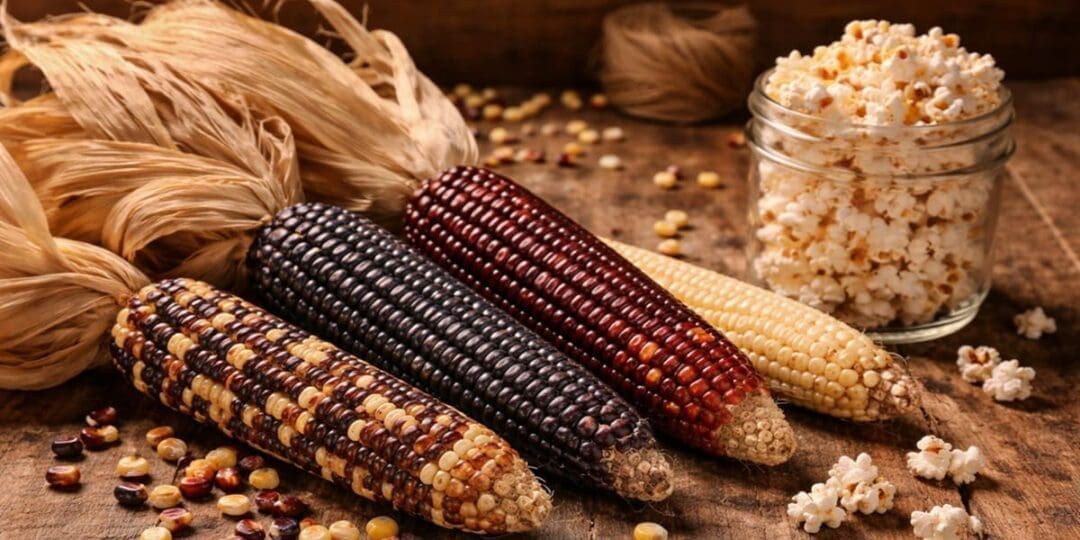
- Midnight Blue – A striking deep indigo kernel that pops into large white and blue-speckled pieces with a slightly nutty flavor. One of the most visually dramatic varieties available.
- Ladyfinger – A small, elongated yellow kernel that pops into tender, hull-free pieces. Often called the best-tasting popcorn variety for snacking because you barely notice the hulls.
- Baby Rice – A petite white kernel with a delicate, slightly sweet flavor. Pops into small, round, crunchy pieces.
- Medium White – The workhorse of the Amish popcorn world. Large kernels, massive pop volume, and a clean, neutral flavor that works beautifully with both butter and seasoning.
- Vintage Red – A deep burgundy kernel with a bold, slightly earthy flavor that pops into cream-colored pieces with a satisfying crunch.
- Calico – A multicolored decorative variety with red, purple, and cream kernels that pops into fluffy white pieces with rich flavor.
Whether you’re buying from the Amish Country Popcorn brand or sourcing heirloom seeds from another supplier, the defining characteristic of all these varieties is the same: they are grown the old way, and they taste like it.
Why Amish Popcorn Tastes Better
The flavor difference between Amish heirloom popcorn and commercial microwave popcorn comes down to three things: genetics, growing practices, and processing.
Heirloom Genetics
Commercial popcorn is almost exclusively grown from hybrid varieties optimized for yield and uniformity. These hybrids produce consistent kernels that pop reliably on an industrial scale, but they’ve sacrificed a great deal of flavor complexity in the process. Heirloom varieties like those grown in Amish communities were selected specifically for taste over many generations. The genetic diversity in these older varieties produces a depth of flavor that modern hybrids simply don’t have.
Natural Growing Practices
Amish farmers traditionally rely on crop rotation, composting, and minimal chemical inputs. Healthy soil produces nutrient-dense crops, and that difference shows up in flavor. Corn grown in well-amended, biologically active soil develops a richer flavor profile than corn grown in depleted, chemically dependent ground.
Proper Drying and Storage
Commercial popcorn is often processed quickly and stored in conditions that prioritize shelf stability over quality. Traditionally grown Amish popcorn is dried slowly on the cob, then shelled and stored at proper moisture levels — typically around 13 to 14 percent moisture content. This slow, careful drying process is a big reason why Amish popcorn pops so much better. Kernels with the right moisture content pop larger and more completely, with fewer unpopped kernels left at the bottom of the pot.
Nutritional Value of Popcorn
Popcorn often gets dismissed as junk food, but air-popped heirloom popcorn is actually a whole grain with real nutritional merit. A three-cup serving of air-popped popcorn contains roughly:
- 110–120 calories
- 4 grams of fiber — about 14% of the daily recommended value
- 3–4 grams of protein
- Polyphenol antioxidants — popcorn is actually one of the higher antioxidant whole grains, with hull pieces containing concentrated levels of polyphenols linked to reduced inflammation
The key is how you prepare it. Air-popped or stovetop-popped with quality fats like butter, lard, or coconut oil, heirloom popcorn is a genuinely nutritious snack. The microwave bag version loaded with artificial butter flavoring and preservatives is a different product entirely.
How to Grow Amish Popcorn at Home
Growing your own popcorn is one of the most satisfying homestead projects you can take on. Popcorn requires the same growing conditions as sweet corn but with a few important differences in harvest and curing.
Choosing Your Variety
For beginners, Medium White and Baby Rice are the most forgiving varieties. Ladyfinger is worth growing if you want hull-free eating. If you want something visually stunning for gifts or decoration, Midnight Blue and Calico are hard to beat.
Source your seeds from a reputable heirloom supplier. Look for certified open-pollinated seed so you can save and replant each year. Seed Savers Exchange and Baker Creek Heirloom Seeds are both excellent sources for heirloom popcorn varieties.
Planting
Popcorn needs warm soil — at least 60°F at planting depth — and full sun. Plant seeds 1 inch deep, 8 to 10 inches apart, in rows spaced 30 to 36 inches apart. Corn is wind-pollinated, so plant in blocks of at least four rows rather than single long rows to ensure good pollination.
Important: If you’re growing multiple corn varieties, keep your popcorn at least 250 to 400 feet away from sweet corn, field corn, or other popcorn varieties. Cross-pollination between varieties will affect both the flavor and the popping performance of your harvest.
Direct sow after your last frost date. Popcorn has a long growing season — most heirloom varieties require 100 to 115 days to maturity, which is longer than sweet corn.
Care and Maintenance
Popcorn is a heavy feeder, particularly for nitrogen. Amend your soil with compost before planting and consider a side-dressing of compost or a balanced organic fertilizer when plants reach knee height. Water consistently, aiming for about 1 inch per week, and keep weeds managed in the early weeks before the corn canopy shades them out.
Harvesting
This is where popcorn diverges significantly from sweet corn. You do not harvest popcorn young. Leave the ears on the stalk until the husks are completely brown and dry and the kernels have hardened to a glassy surface. In most climates, this means leaving corn in the field well into fall — often after the first light frost.
Once harvested, pull back the husks and hang or rack the ears in a dry, well-ventilated space for an additional four to eight weeks. The goal is to bring the kernel moisture content down to that ideal 13 to 14 percent range. Rushing this step is the number one reason homegrown popcorn fails to pop well.
Testing for Readiness
To test whether your popcorn is ready, pop a small handful. If kernels pop large and fluffy with few duds, the moisture level is right. If you get a lot of unpopped kernels, the corn needs more drying time. If the popped corn seems dense or chewy, the kernels may be too dry — a brief exposure to slightly humid air can help rehydrate them slightly.
Shelling and Storage
Once fully dried, shell the kernels from the cob by hand or by rubbing two cobs together. Store in glass jars with tight-fitting lids in a cool, dark location. Properly dried and stored heirloom popcorn will stay at peak popping quality for two to three years, and remains viable for much longer.
How to Pop Amish Popcorn
The stovetop method brings out the best in heirloom popcorn varieties. Here’s the classic approach:
- Heat a heavy-bottomed pot or Dutch oven over medium-high heat.
- Add 2 to 3 tablespoons of a high-smoke-point fat — lard, coconut oil, or avocado oil all work beautifully.
- Add two or three test kernels and cover the pot.
- When the test kernels pop, the oil is at the right temperature. Add a single layer of popcorn kernels — about ½ cup for a large pot.
- Cover, reduce heat slightly, and shake the pot gently every 30 seconds.
- Remove from heat when popping slows to two to three seconds between pops.
- Season immediately with real butter and sea salt.
The difference in flavor between a stovetop-popped bowl of Ladyfinger or Medium White and anything from a microwave bag is not subtle. It’s the kind of difference that makes you wonder why you ever accepted the alternative.
Saving Seeds for Next Year
One of the great advantages of growing heirloom popcorn is seed saving. Select your best-looking, most fully-formed ears from each harvest and set them aside before shelling. Allow these to dry an additional few weeks beyond your regular harvest, then shell them into labeled paper envelopes or glass jars.
Store saved seeds in a cool, dry location. When stored properly, heirloom popcorn seed remains viable for three to five years, though germination rates are best in the first two years after harvest. By saving seed each year, you’re participating in the same tradition of preservation that kept these varieties alive through generations of Amish farming — and you’re building a seed supply that costs you nothing year after year.
Amish Popcorn as a Long-Term Storage Food
Popcorn is an underappreciated pantry staple for preppers and homesteaders focused on long-term food storage. Whole kernel corn stored at ideal conditions — cool temperatures, low humidity, sealed containers — can last five or more years while retaining both nutritional value and popping quality. It’s calorie-dense, shelf-stable, and requires nothing more than heat and fat to prepare.
For those building a serious food storage pantry, a few gallons of heirloom popcorn kernels represent a meaningful caloric reserve that also doubles as a morale food — something that feels like a treat even in a difficult situation.
Learn the Skills That Made Foods Like This Possible
Amish popcorn isn’t just about better flavor — it’s the product of an entire way of life built on self-reliance, patience, and practical knowledge passed down for generations.
And that’s exactly what most people are missing today.
While modern life trains us to depend on fragile systems, the Amish have quietly preserved techniques that still work without supermarkets, complicated equipment, or endless spending. Food storage. Seed saving. Soil building. Preservation. Low-tech solutions that simply get the job done.
The Amish Ways Book pulls back the curtain on these time-tested skills.
Inside, you’ll discover:
✔ How to produce more food with fewer resources
✔ Old-world preservation methods that outperform modern gimmicks
✔ Practical self-sufficiency techniques anyone can apply
✔ The mindset that turns a homestead into a resilient system
This isn’t nostalgia. It’s survival logic.
If you appreciated the lessons behind Amish popcorn — the patience, the quality, the independence — you’ll find the same principles applied to dozens of essential homestead skills.
👉 Grab your copy of The Amish Ways Book here!
Because knowing how to live well without modern dependency is no longer a lifestyle choice.
It’s a strategic advantage.
Final Thoughts
Amish popcorn and Amish Country Popcorn represent something that’s increasingly rare in modern food culture: a product grown the way it was always meant to be grown, tasting the way it was always meant to taste. Whether you’re buying from a trusted heirloom brand, growing your own from open-pollinated seed, or both, making the switch from commercial to heirloom popcorn is one of the simplest and most satisfying upgrades you can make to your pantry.
For the homesteader, it’s also a crop worth taking seriously. Easy to grow, easy to store, beloved by everyone in the family, and endlessly renewable through seed saving — Amish popcorn earns its place in any self-sufficient garden.
You may also like:
This Is The First Thing You Should Do With The Food In Your Fridge During A Blackout (Video)
Do Amish People Use Electricity?
I Just Completed The Amish Academy… And You Won’t Believe What I Found
Homemade Amish Apple Butter Recipe With 12+ Months Shelf Life