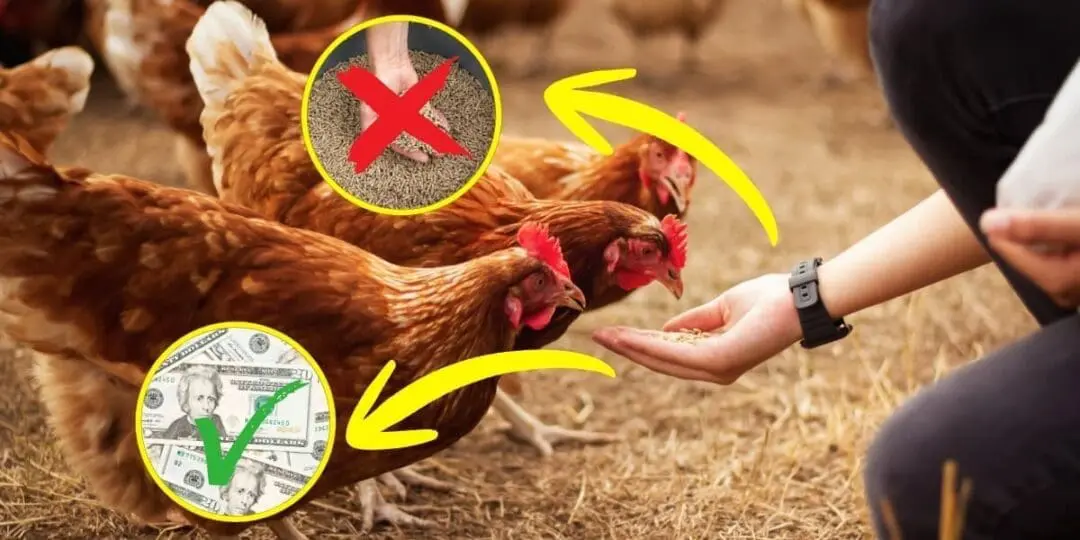
You just dropped another $40 on a bag of layer feed last week, and now someone’s telling you $20 can feed your entire coop of chickens for a whole season? If you think this sounds like clickbait, I wouldn’t blame you
I was in the exact same situation a few years ago when a more experienced homesteader told me about this. It sounded too good to be true. I believed he was either lying or starving his birds.
He wasn’t doing any of those things. What he figured out, and what I’m about to show you, is that spring opens a window when chickens can almost entirely feed themselves if you set up some very specific systems.
You will never replace the feed forever, but you can take advantage of spring and reduce your dependence on feed for a while. During the season of renewal, nature actually cooperates, and that $20 is not for the feed itself. It’s for access to what’s already waiting right there in your backyard.
Why This May Sound Impossible (and Why It Really Isn’t)
I want to make things clear from the start. This article is not about letting your chickens free-range and hoping they will manage. Even more, this is not about cutting feed cold turkey and destroying your egg production.
This method is actually smart. It relies on a strategic reduction in purchased feed during the 8-12 weeks of spring when your land is more fertile and there is an explosion of greens and protein that chickens have naturally evolved to exploit.
From early April through June, in most of the US states, insects come out, and plants start to grow. The soil is literally full of bugs, worms, and chickenweed. Even a small backyard is able to produce this abundance of chicken food.
Personally, I still keep commercial feed available. My birds still have access to it. But after I used this method, I’ve watched my hens go from eating about 1.5 bags per month down to less than half a bag during spring. This is much healthier for them and also significantly reduces my costs.
How Commercial Feed Tricks You
Commercial layer feed is formulated to be nutritionally complete because it assumes your chickens are confined year-round with zero access to natural forage. That’s the industrial model, and it makes sense if you’re running 10,000 birds in a barn.
But this doesn’t apply to me and it probably doesn’t apply to you either. We’ve been taught to think chickens need a specific protein percentage, a precise calcium ratio, and a “balanced” diet every single day.
Once the chickens are not raised in an industrial setting, the possibilities of them getting the nutrients they need from the “wild” increase. They scratch for seeds and grains when available. They load up on greens when there is a growth flush in the spring. They eat worms for protein. These birds are adapted to live like this.
The commercial feed has many advantages, and I recommend using it, but when that’s all you give them year-round, you’re training your chickens to be passive. You should give them the chance to feed themselves the way Nature intended. And for this, they will need a little help.
The Wisest Way to Use $20
Your role here is to create a system that will keep generating food continuously. These one-time purchases will create ongoing food sources that your chickens will harvest.
I spent $8 on a 5-pound bag of black oil sunflower seeds for sprouting. Then I bought a $6 on a cheap plastic tote for a worm composting bin that now processes my kitchen scraps into constant chicken protein. And the last $6 I spent was on a small container to start black soldier fly larvae production using scraps I was already throwing away.
👉 Perfect for Spring: DIY Wall-Hanging Herb Garden
These are the tools that I used to create closed-loop systems that are able to transform waste into chicken food. That’s all! This is the $20 investment I was talking about.
How to make these things yourself
Now, I want to show you step by step how I built these in my backyard so you can replicate them in yours.
Black Soldier Fly Larvae Without Expensive Kits
One of the first things you need to know is that there is no need to spend a $200 kit to raise black soldier fly larvae. I use a 5-gallon bucket with holes drilled in the bottom, filled with kitchen scraps, and covered with window screen. This is where the magic happens. Adult flies find it naturally, lay eggs, and the larvae develop in about two weeks. In spring and summer, when flies are active, this works like a charm.
The bucket sits outside near the coop. When larvae are ready to pupate, they crawl out through the drainage holes looking for dry soil. I position a collection container underneath.
Total setup cost: $0 if you have an old bucket and a window screen.
Worm Bins as Waste Processors 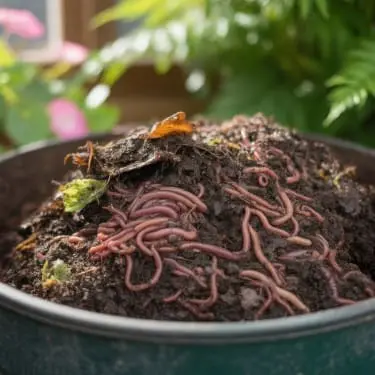
Once again, nothing fancy. Just a plastic tote with bedding. I got the worms from my compost pile, but if you don’t have one yet, you can get them from your yard. All you have to do is dig them after the rain.
This setup works exactly like a compost bin. I add scraps every week to feed the worms, and they keep multiplying. And believe me, these red wigglers multiply incredibly fast. I don’t “harvest” them carefully as vermiculture guides suggest. When the population gets high, I dump a few handfuls directly into the chicken run.
I prefer these worms instead of dried insects you can get from the store because they contain moisture, gut contents, and haven’t been heat-processed. My egg yolks got noticeably darker orange within two weeks of adding live worms to my bird’s diet.
Sprouted Grains: The Lazy Way
When I want to just use this method to create feed for my chickens, I’m not a fan of elaborate sprouting systems with multiple trays and precise schedules. I prefer to do things my way. The easiest way.
I dump wheat or sunflower seeds in a shallow container, cover with water overnight, drain in the morning, and let them sit. In 2-3 days, you’ll have sprouts. There is no error you can make through this process.
Another thing I learned is to keep three containers going in rotation. I fill one every three days. Each container produces enough sprouts for one day of feeding. If you find this suitable for you, I encourage you to try it, as it saves a lot of time.
My birds love these sprouts and since I started feeding them like this, I’ve noticed they consume less commercial feed on days when sprouts are available.
The Amish Trick Most Homesteaders Miss
My fascination with the sustainable practice the Amish use led me to discover more about how they manage their chickens. They don’t keep chickens in fixed runs year-round. They practice controlled scavenging, giving birds access to specific areas at specific times based on what’s available. This works incredibly well in the spring.
One thing that really stood out to me regarding this Amish trick was what they grow in those areas.
The Amish don’t just let random weeds take over. Many of the plants in their rotation are medicinal herbs that support animal health just as much as human health. This is why I planted herbs that are known to support digestion, parasite resistance, and overall vitality in poultry. Chicory, marshmallow, and chamomile, I planted all of them in the areas where I let my chickens free.
To get started quickly, I used THIS medicinal seed kit packed with time-tested plants that thrive with minimal care. Instead of buying supplements or additives, I let the chickens self-select what they need, straight from the ground. If you want to get the Medicinal Garden Kit for your backyard, CLICK HERE.
Here’s how I adapted this setup for my small backyard: I divided my yard into three zones. Each week during spring, the chickens get access to one zone while the other two rest and regrow. Moveable fencing helped me a lot in this process. In the active zone, birds tear through the soil looking for insects, eat weeds and medicinal herbs, scratch through mulch, and devour bug populations.
Early morning is the peak foraging time when insects are slow and easy to catch. This is when you should free your chickens. Late afternoon is the secondary peak. I open their run access for 2-3 hours in the morning, then again before dusk.
Never Forget About These if You Want a Steady Egg Production
I don’t want to be lying to you, and this is why I will not pretend you can eliminate all purchases. For example, calcium still needs supplementation. Spring foraging doesn’t provide enough calcium for consistent egg laying.
I keep free-choice calcium available year-round. The most popular choice is oyster shell or crushed eggshells. If you have the time, you can still get the crushed eggshells for free. Just make sure you keep all the produced eggshells solely for this purpose. Even then, it might not be enough.
Grit is non-negotiable if your chickens are eating whole grains, seeds, or tough forage. Their digestive system needs it to grind food. I buy a bag of granite grit once a year for about $8.
👉 Do THIS and your chickens will be healthy all year long!
The goal is not just to reduce your expenses. Keeping your chickens healthy is even more important. There are some things, like the ones I highlighted above, that are a must when it comes to chicken nutrition.
Your Chickens Are a System, Not Just an Expense
As you can see, chickens are so much more than an expense you need to manage. They are a part of the biological system of your homestead, but you have to allow them to take this role.
I see my chickens as little composters that turn kitchen scraps into fertilizer. Right now, I’m buying less compost because their manure builds soil faster. They’re pest control that eliminates tick populations in areas where they forage. Just let Nature do its job.
Start this spring. Pick one system from this article. Set up rotational access if possible. Track your feed costs week by week. You’ll see that these methods are the most efficient at cutting feed costs.
You may also like:
The Best Homemade Chicken Coop Deodorizer
What Happens When You Keep Your Meat in Salt For 1 Month (Video)
The Best Old Fashioned Pickled Eggs Recipe
Your Chicken Coop Could Be a Death Trap
Why You Should Keep Guinea Fowl on Your Homestead