The first time I hauled a feed sack of storm-tossed kelp up from the tideline, my neighbor asked if I’d lost my mind. Two months later, when my tomatoes were noticeably darker and heavier with fruit than hers, she asked for the recipe instead. Seaweed fertilizer is one of those old homestead tricks that sounds like folklore until you actually try it in your own beds.
Whether you live close enough to the coast to gather your own or you’re buying kelp meal from the feed store, this guide covers what seaweed fertilizer actually does for your soil and plants, how to make it yourself, how much research really backs up the claims, and how to use it without wasting your time or your seaweed.
What Is Seaweed Fertilizer, Exactly?
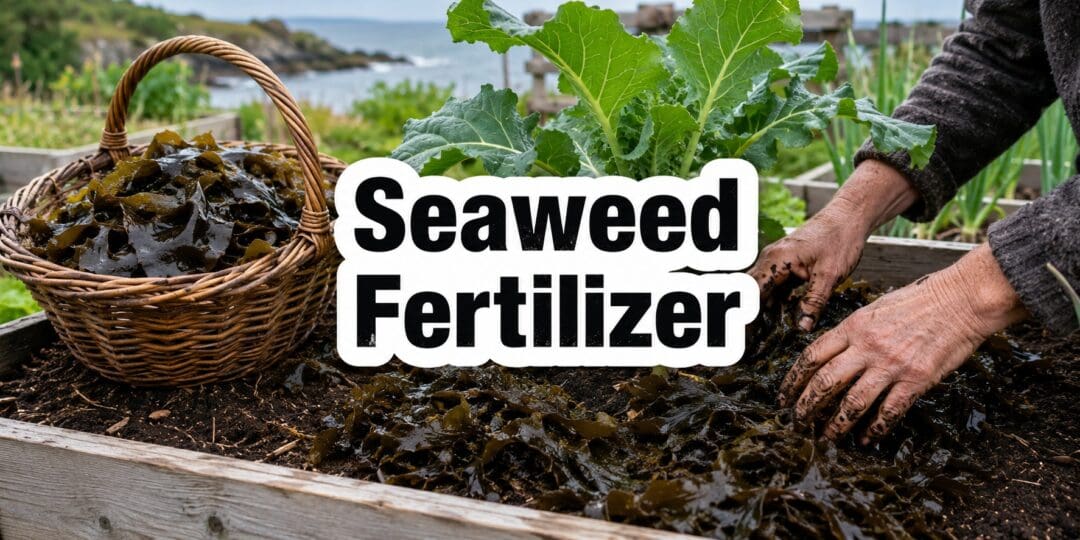
Seaweed fertilizer is any soil amendment or plant feed made from marine algae, most commonly brown seaweeds like kelp (Ascophyllum nodosum, Laminaria species, or giant kelp), though rockweed, bladderwrack, and various red and green seaweeds are also used. It comes in a few basic forms: fresh seaweed used as mulch or worked directly into soil, dried and ground kelp meal, and liquid concentrate or extract, which is the most common form sold in garden centers.
People have been doing this for a very long time. Coastal farmers in Ireland, Scotland, and the Channel Islands were hauling seaweed onto their fields centuries before anyone knew what an amino acid was, simply because it worked. Today, university research programs are catching up to that old practical knowledge. The University of Connecticut’s Sea Grant program has invested significant research into seaweed cultivation and its agricultural applications, and similar work is underway at land-grant universities from Maine to Alaska.
What Seaweed Fertilizer Actually Does for Plants
Here’s the part that surprises a lot of new gardeners: seaweed is not a strong source of nitrogen, phosphorus, or potassium. Its NPK numbers are low compared to something like fish emulsion or composted manure. What seaweed brings to the table instead is a dense mix of trace minerals, natural plant hormones (auxins, cytokinins, and gibberellins), amino acids, and complex carbohydrates like alginates that improve soil texture and water retention.
A 2019 review published in Frontiers in Plant Science on Ascophyllum nodosum-based biostimulants found that these compounds can improve plant tolerance to drought, cold, and other stress, support beneficial root and microbe interactions, and improve how efficiently plants use the nutrients already in the soil. That last point is the real value of seaweed in my own garden. I don’t treat it as a replacement for compost or a balanced fertilizer. I treat it as the thing that helps my plants make better use of everything else I’m already feeding them.
An Honest Look at the Research
I want to be straight with you here instead of just repeating the marketing copy you’ll find on every seaweed fertilizer bottle. The research is genuinely mixed on how much benefit you’ll see, and it depends heavily on which crop, which seaweed species, and which growth stage you’re talking about.
Washington State University Extension horticulturist Linda Chalker-Scott has reviewed the seaweed extract literature and found that while there is solid evidence for benefits in turf grass, particularly improved rooting and drought tolerance in Kentucky bluegrass, the broader claims made for vegetable and ornamental gardens are not as consistently backed by controlled research. Her review also raises a fair point about sustainability, since large-scale kelp harvesting removes biomass from marine ecosystems to apply somewhere else, which is worth thinking about if you are gathering seaweed regularly rather than buying a byproduct-based commercial product.
Closer to my own experience, NC State Extension’s New Crops and Organics program ran a study soaking pepper and tomato seeds in seaweed and fish emulsion before planting, on the popular claim that this boosts germination rates. They found no measurable difference in germination between soaked and unsoaked seeds. So if you’ve heard that seed-soaking trick, it’s worth trying if you enjoy the ritual, but don’t count on it to save a weak batch of seed.
None of this means seaweed fertilizer is snake oil. It means the honest answer is that it works best as a supporting player rather than a miracle cure, and the strength of the evidence varies by use case. Current research out of the University of Alaska Fairbanks Cooperative Extension Service on kelp as a soil amendment is looking specifically at improved nutrient availability, soil pH, and seed germination in northern soils, which should give a clearer regional picture in the next few years.
Making Your Own Seaweed Fertilizer
If you live within reach of a coastline, making your own is nearly free and it’s how I get most of mine.
- Gather storm-cast seaweed, meaning seaweed that has already washed up loose on the sand rather than pulling live seaweed off rocks. This is both more sustainable and usually easier to collect in quantity.
- Rinse it thoroughly with fresh water to knock off excess salt and any sand, especially if you plan to use it directly around salt-sensitive plants.
- Use it fresh as mulch, laid 2 to 4 inches deep around the base of plants, keeping it an inch or two away from stems to avoid rot.
- Work it into a compost pile in alternating layers with browns like straw or dry leaves. It breaks down quickly and adds a good boost of trace minerals to the finished compost.
- Brew a seaweed tea by soaking fresh or dried seaweed in a bucket of water for two to three weeks, stirring occasionally, then straining and diluting the liquid roughly one part concentrate to ten parts water before using it as a soil drench.
If you’re inland, kelp meal is the practical substitute. It’s shelf-stable, easy to store, and simple to mix into a watering can at roughly one-quarter cup per gallon of water, left to steep for a couple of days before use.
How to Apply Seaweed Fertilizer in the Garden
How you apply it matters almost as much as what form you’re using.
- Soil drench: water diluted liquid seaweed or kelp tea directly at the base of plants every two to three weeks during the growing season.
- Foliar spray: mist a diluted solution directly on leaves in the early morning or evening, never in the heat of the day, for faster uptake during periods of transplant shock or stress.
- Mulch layer: apply fresh seaweed as a 2 to 4 inch mulch layer around established plants, replenishing it as it breaks down over the season.
- Dry meal: sprinkle kelp meal around the base of plants at planting time and work it lightly into the top few inches of soil, where it will release nutrients slowly as it decomposes.
Because seaweed is a poor standalone source of nitrogen, phosphorus, and potassium, I always pair it with a real nutrient source, usually fish emulsion or finished compost, and let the seaweed do what it does best: support root growth, improve stress tolerance, and feed the soil biology.
Which Plants Benefit Most
In my own beds, I see the clearest response in tomatoes, peppers, brassicas like broccoli and kale, potatoes, and roses. Brassicas and alliums in particular seem to appreciate the sulfur compounds seaweed provides. Potatoes mulched with seaweed also tend to produce well, and the salt content of fresh seaweed appears to help keep slugs off the foliage as an added bonus.
Succulents and cacti are the one group I’d skip seaweed fertilizer on entirely. They’re adapted to lean, well-drained conditions, and the added moisture retention and nutrient load from seaweed amendments does them no favors.
Precautions Worth Knowing
- Rinse seaweed harvested from any body of water you’re not confident is clean, since seaweed can take up heavy metals and industrial contaminants from polluted water.
- Don’t rely on seaweed as your only fertilizer. It’s a supplement to a balanced feeding program, not a replacement for compost or a complete organic fertilizer.
- Fresh seaweed left in a sealed bag for more than a day or two turns into a slimy, foul-smelling mess. Spread it or process it soon after collecting.
- If you’re gathering from public beaches, check local regulations first. Some coastal areas restrict or require permits for seaweed harvesting to protect the ecosystem.
Turn Simple Homestead Ideas Into Everyday Self-Reliance
Using seaweed to feed your garden is just one of the many time-tested techniques our grandparents relied on long before modern gardening products filled store shelves. If you enjoy practical, low-cost, and proven homesteading wisdom, you’ll love The Amish Ways Book.
Inside, you’ll discover hundreds of traditional tips for growing food, preserving harvests, caring for your home, and living a more self-sufficient life using simple methods that still work today.
Final Thoughts
Seaweed fertilizer earns its keep on my homestead not because it’s a miracle fix, but because it’s a low-cost, sustainable way to add trace minerals and stress resilience to a garden that’s already getting the basics right from compost and good soil management. If you have easy beach access, it costs you nothing but time and a bucket. If you don’t, a bag of kelp meal will get you most of the same benefits for the price of a bag of feed. Either way, go in with realistic expectations rather than miracle-cure hype, and you’ll get a garden that’s a little tougher and a little more productive for the effort.
You may also like:
Amish Survival Hacks that Can Help You Thrive in a Long-Term Blackout (Video)
Is Rabbit Manure a Good Fertilizer?
Bone Meal Fertilizer: The Secret Soil Booster Hiding in Your Kitchen
13 Homemade Fertilizers For Your Plants
Weed Tea – Turning Unwanted Plants Into Fertilizer