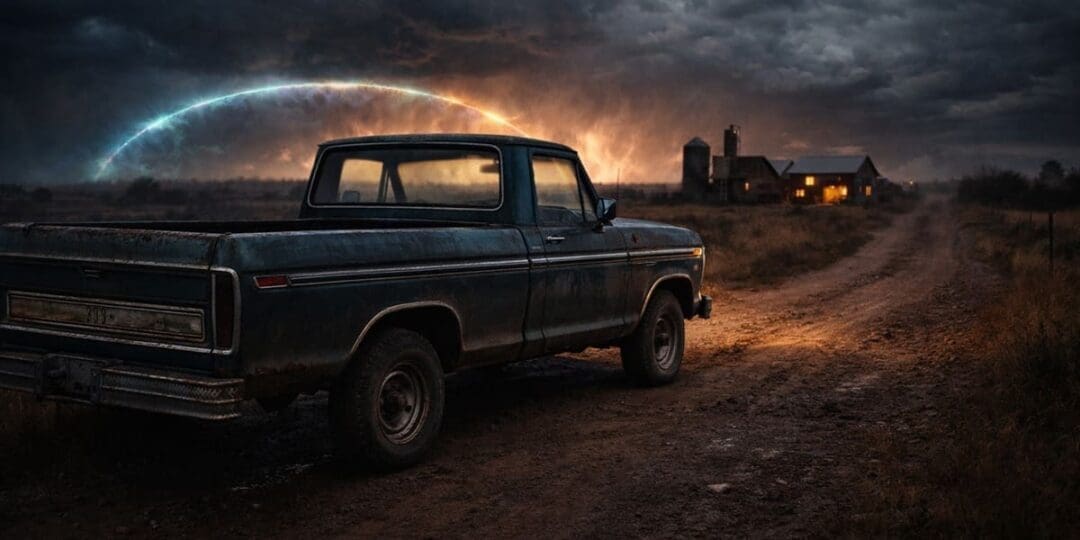
If you live on a homestead, your vehicle isn’t just transportation — it’s a lifeline. It hauls feed, pulls equipment, gets you to town for supplies, and in a worst-case scenario, gets your family out of danger. Now imagine that vehicle sitting dead in your driveway, completely useless, because of an electromagnetic pulse event.
That’s not a far-fetched scenario. It’s one of the most discussed grid-down threats among preparedness communities, and for good reason. A large-scale EMP — whether from a nuclear detonation at high altitude or an extreme solar weather event — has the potential to disable the vast majority of modern vehicles instantly and permanently.
For homesteaders, this risk demands a practical, no-nonsense response. In this article, we’ll break down exactly what an EMP does to vehicles, which vehicles are naturally resistant, and what the best options are for homesteaders who want reliable transportation no matter what happens.
What Is an EMP and How Does It Affect Vehicles?
An electromagnetic pulse is a short burst of electromagnetic energy that can disrupt, damage, or destroy electronic systems. There are two primary sources that concern preppers and homesteaders:
- Nuclear EMP (HEMP): A nuclear weapon detonated at high altitude — above 30 kilometers — produces a massive electromagnetic shockwave that can blanket an entire continent. The 1962 U.S. test known as “Starfish Prime” detonated a nuclear warhead 400 kilometers above the Pacific Ocean and knocked out streetlights and electronics in Hawaii, nearly 1,400 kilometers away. A modern, optimized HEMP attack could be far more devastating.
- Solar EMP (Geomagnetic Storm): The sun periodically releases massive bursts of charged particles called coronal mass ejections (CMEs). A powerful CME striking Earth directly — like the 1859 Carrington Event — would induce massive surges in electrical infrastructure and connected electronic systems. A Carrington-level event today could disable power grids for months or years.
How Vehicles Are Affected
Modern vehicles are, unfortunately, extremely vulnerable to EMP events. Since the 1980s, automobiles have become increasingly dependent on electronic control units (ECUs) — microprocessors that manage everything from fuel injection and ignition timing to braking systems and transmission control.
A strong EMP induces electrical surges in the wiring and circuitry of these systems, frying the microprocessors beyond repair. According to a 2008 report by the EMP Commission to Congress, vehicle tests showed that even relatively moderate EMP fields caused stalls, loss of power steering, brake failures, and permanent damage to electronic components in modern cars.
Vehicles manufactured after roughly 1980–1985 are at significant risk. The more electronics a vehicle contains, the more vulnerable it is. A brand-new truck loaded with computerized driver-assist features, a digital dashboard, and a start-stop system is essentially a very expensive paperweight after a serious EMP event.
Older vehicles — particularly those built before the widespread adoption of electronic ignition systems and ECUs — are far more resilient. They simply don’t have the vulnerable electronics to destroy.
What Makes a Vehicle EMP-Resistant?
Before diving into specific recommendations, it helps to understand what characteristics make a vehicle naturally resistant to EMP damage:
- Older ignition systems. Pre-electronic vehicles use points-based or basic mechanical ignition systems with minimal or no solid-state electronics. There’s nothing for an EMP to fry.
- Carbureted engines. Fuel injection systems rely on electronic sensors and solenoids. Carbureted engines mix fuel mechanically, with no electronics involved in the process.
- No ECU or minimal electronics. The fewer microprocessors in a vehicle, the less there is to damage. A simple alternator and a basic 12-volt electrical system are far more survivable than a network of interconnected ECUs.
- Diesel engines (older mechanical injection). Older diesel engines — particularly those with mechanical injection pumps rather than electronic common-rail systems — have very few electronics. Many will run without any electricity at all once started.
Best EMP-Proof Vehicles for Homesteaders
1. Pre-1980 Gasoline Trucks and Tractors
The single best category of EMP-resistant vehicles for homesteaders is pre-1980 gasoline-powered trucks and farm tractors. These machines were built before electronic ignition became standard, using points-based distributors, carbureted fuel systems, and simple electrical setups.
Top picks:
- Ford F-100/F-250 (1948–1979): Rugged, widely available, with parts that are easy to source and repair without specialized tools. The straight-six and early V8 variants are particularly simple.
- Chevrolet C/K Series (1967–1972): The “Action Line” trucks from this era are among the most beloved and mechanically simple American trucks ever built. Enormous parts availability.
- International Harvester Scouts and Travelalls (1961–1980): Boxy, tough, and fully mechanical. The Scout II in particular has a devoted following among off-grid enthusiasts.
For farm use specifically, pre-1980 gasoline tractors like the Ford 8N, Ford 9N, Ferguson TO-20, or early Farmall models are essentially EMP-proof. They were designed to run indefinitely with minimal maintenance, and many are still working on homesteads today after 60+ years of service.
2. Older Diesel Vehicles with Mechanical Injection
Older diesel engines with mechanical injection pumps — rather than modern electronic common-rail systems — are among the most EMP-resistant powerplants available. Many will run without any electrical input at all, as the injection pump is driven purely mechanically off the engine.
Top picks:
- Ford F-250/F-350 with 6.9L or 7.3L IDI Diesel (1983–1994): The Integrated Direct Injection (IDI) diesel predates the electronic common-rail era. It has minimal electronics and is highly regarded for durability and EMP resistance.
- Dodge Ram with Cummins 12-Valve (1989–1998): The first-generation 12-valve Cummins is legendary in prepper and homesteader circles. It has a mechanical injection pump (the Bosch P7100), no ECU controlling fueling, and will theoretically run without a battery once started. It’s also extraordinarily reliable and easy to work on.
- Mercedes-Benz 300D/300TD (1976–1985): The OM617 five-cylinder turbodiesel is one of the most durable engines ever made. These vehicles are fully mechanical, sip fuel, and can run on waste vegetable oil with minor modifications — a major advantage for off-grid homesteaders.
3. Military Surplus Vehicles
Military vehicles — particularly older ones — were often designed and built to survive EMP environments, since battlefield electronics have always been a target. Many have shielded electronics or are simple enough mechanically that shielding isn’t necessary.
Top picks:
- M35 “Deuce and a Half” (1950s–1980s): A 2.5-ton military cargo truck powered by a Continental LDS-465 multifuel engine. It will run on diesel, gasoline, jet fuel, or heating oil. Fully mechanical, nearly indestructible, and capable of hauling massive loads. Not practical as a daily driver but exceptional as a homestead workhorse.
- Humvee (pre-1990s variants): Earlier HMMWV models have far less electronics than modern variants and were built for rugged, off-road use. Parts and mechanical knowledge are widely available.
- Jeep M151 (1959–1982): The military Jeep of the Vietnam era. Fully mechanical, lightweight, and capable of serious off-road work.
4. Classic Motorcycles and ATVs
Don’t overlook two-wheeled options. A pre-1980s carbureted motorcycle — a Honda CB series, Yamaha XS650, or Kawasaki KZ series — is essentially EMP-proof, fuel-efficient, and capable of navigating roads that larger vehicles cannot. For a homesteader who needs to scout property, check fences, or travel light and fast, an older motorcycle is an underrated asset.
Similarly, older carbureted ATVs from the early-to-mid 1980s (Honda ATC, early Yamaha Moto-4) have minimal electronics and can handle the demands of farm work and property patrol.
Practical Tips for Homesteaders
- Buy a dedicated EMP vehicle, not just your daily driver. You don’t necessarily need to drive an old truck every day. Consider keeping a dedicated, well-maintained pre-1980 vehicle stored and ready — ideally in a metal building that provides some natural Faraday shielding.
- Learn to maintain it yourself. The entire point of an EMP-resistant vehicle is self-sufficiency. Make sure you know how to tune the carburetor, set the timing, replace the points, and keep it running without a mechanic or parts store. Stock spare points, condensers, rotors, fuel filters, and belts.
- Store spare parts in a Faraday cage. Even if your vehicle survives an EMP, components like voltage regulators and ignition modules can be damaged. Storing spares in a metal ammo can or Faraday bag costs almost nothing and ensures you can handle any post-event repairs.
- Consider fuel storage. An EMP-proof vehicle is useless without fuel. Rotate a supply of stabilized diesel or gasoline, and if you run a diesel, consider learning about waste vegetable oil conversions for true long-term fuel independence.
Frequently Asked Questions
Will my modern truck survive an EMP? Almost certainly not if the EMP is strong enough. Modern trucks built after the mid-1980s rely on ECUs for virtually every major system. Even a moderate EMP field can cause permanent damage to these components. Some vehicles may survive a weaker pulse, but there are no guarantees.
Is a diesel truck more EMP-resistant than a gasoline truck? It depends entirely on the year and injection system. A modern diesel with electronic common-rail injection is just as vulnerable as a modern gasoline truck. An older diesel with a mechanical injection pump (like the 12-valve Cummins or 6.9L IDI) is significantly more resistant.
Can I EMP-harden my modern vehicle? To a limited degree. Wrapping sensitive ECUs in Faraday shielding and adding surge protection to wiring can reduce vulnerability, but it’s extremely difficult to fully harden a modern vehicle — there are simply too many electronic components interconnected throughout the system. For true EMP resilience, an older mechanical vehicle is the only reliable solution.
How old does a vehicle need to be to be EMP-resistant? As a general rule, vehicles manufactured before 1980 are the safest bet. Vehicles from 1980–1986 occupy a gray zone — some are mostly mechanical with limited electronics, others began incorporating early ECUs. Anything after 1987 should be considered vulnerable.
What’s the best single vehicle for a homesteader concerned about EMP? For most homesteaders, the Dodge Ram with a 12-valve Cummins diesel (1989–1998) or a pre-1980 gasoline farm truck like a Ford F-250 offers the best combination of capability, parts availability, fuel efficiency, and EMP resistance. Pair either with a mechanical tractor from the same era and you’ve covered nearly every homestead need.
Final Thoughts
An EMP event — whether from a hostile nation or a solar superstorm — is one of the few scenarios that could render virtually all modern infrastructure useless overnight. For homesteaders who depend on their land and their equipment, being caught with a fleet of dead modern vehicles could be catastrophic.
The good news is that the solution isn’t complicated or expensive. The vehicles that will keep running after an EMP are the same tough, reliable, repairable machines that homesteaders have always valued: old trucks, mechanical diesels, and simple farm equipment. They were built to last, they were built to be fixed in a field, and they’ll keep running long after the grid goes dark.
Invest in one. Learn it inside and out. Stock parts for it. It just might be the most important piece of equipment on your homestead.
Trusted Sources & Further Reading
- EMP Commission Report to Congress (2008) — The definitive U.S. government assessment of EMP threats, including vehicle vulnerability testing results.
- FEMA – Electromagnetic Pulse Protection — Federal guidance on EMP preparedness for civilians and infrastructure.
- NASA – Solar Storm and Space Weather — NASA’s resource on coronal mass ejections and geomagnetic storm risks.
You may also like: 
Items You Need to EMP-Proof Before It’s Too Late
10 Things That Will Become Extremely Valuable After an EMP (Video)
How You Should Actually Prepare for an EMP
10 Things To Have Ready Before An EMP
7 Powerless Items You’ll Need After An EMP