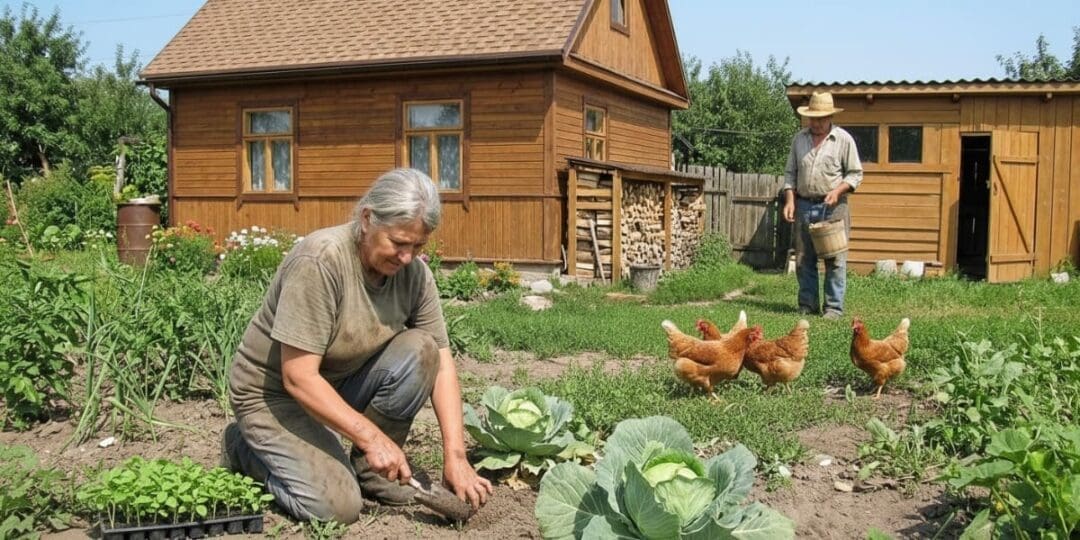
The first winter morning I couldn’t leave our homestead, I knew something was terribly wrong. Not with the weather, but with what we had built. Mark was flat on his back with pneumonia, our automatic chicken waterer had frozen and cracked, and Ben was texting from Maryland, asking if we’d come meet our newborn granddaughter. The answer, heartbreakingly, was no. We couldn’t leave. Everything we had designed for “total self-sufficiency” had actually created a prison.
My name is Olivia. A year ago, my husband, Mark retired from store management and I left teaching biology. We sold our McCall place and moved to Canyon County near Nampa for better soil and longer growing seasons. We had spreadsheets, plans, and twenty years of small-scale gardening experience. We thought we knew how to become self-sufficient. Turns out, we were optimizing for all the wrong things. Here’s what actually mattered, so you don’t make the same mistakes.
If You Can’t Leave for a Week, You’re Not Self-Sufficient
The pneumonia incident was a real eye-opener and taught us our first brutal lesson about homesteading: never build a homestead that requires constant presence and work.
We both had some amazing ideas and nothing could stop us. Mark had designed an incredible rainwater collection system with automated irrigation timers. I had established a greenhouse full of temperamental seedlings that needed daily monitoring.
In terms of livestock, we had chosen dairy goats because the milk production was impressive. We wanted to optimize everything for maximum output and this was a huge mistake. Nothing could run itself for more than 48 hours.
When Mark got sick, I was doing the job of two people and failing at both. The goats still needed milking. The greenhouse couldn’t function on its own. After three weeks of barely holding it together, our neighbor Rita said something that changed everything: “If you can’t leave for a week, you’re not self-sufficient.”
The only good thing was that we managed to get the right treatment from a doctor living in our neighborhood. Since it was a serious infection, Mark needed antibiotics. But the doctor also taught me how to make a homemade Amish cough syrup. This thing truly busted that stubborn mucus and helped Mark breathe freely again. I was surprised by how effective it was. Now I always have a bottle in my cabinet just in case. If you want to learn more about this no-effort recipe, click here.
Change soon followed. The daily-milking goats were traded for small beef cattle that could handle irregular schedules. We chose hardier plant varieties over maximum producers. And Mark redesigned the watering system, which now had buffer periods.
Practical takeaway: Before adding any system, ask, “Can this pause for five days without catastrophic failure?” If not, redesign it or don’t build it. The most productive homestead is worthless if you can’t step away when life demands it.
We Stopped Growing Food. We Started Growing Leverage

By month six, our root cellar was overflowing with potatoes. And don’t make me start yapping about the pickles. We had pickle jars everywhere! Our freezer was packed with green beans. We had a lot of food, for sure.
And you know what? So did everyone else in Canyon County. This was a pretty common mistake. Turns out, producing massive amounts of common staples doesn’t make you valuable.
Luckily, Mark, with his engineering brain, figured it out. We should be complementing, not competing with our neighbours. This was not about who had the most cucumbers or green beans.
So, we naturally decided to specialize in something. We wanted to have what others did not. This would make bartering easier when we needed things we didn’t have or the help of someone with a very specific skill, like the doctor who treated my husband’s pneumonia.
I focused on starting a separate rare heritage plants greenhouse. It was little, but it was full of things other gardeners wanted but didn’t want to fuss with: certain heirloom peppers, rare medicinal herbs, and native plants for restoration projects.
Mark found his niche in properly seasoned firewood. Sounds simple, but most people around here cut wood and burn it too green, or they don’t have the space or equipment to process and store it correctly. Mark built a system: cut in winter, split in spring, stack with perfect airflow, sell in fall. He became the guy you called when you wanted wood that would actually burn hot and clean.
This was a mentality shift we truly needed. We were no longer trying to feed ourselves entirely. Instead, we learned how much a small and dedicated community can help you. Leverage, we learned, is more valuable than volume.
The Slaughter Problem (And How We Solved It)
Here’s something nobody talks about honestly: slaughtering your own meat is legal, practical, and deeply unpleasant for most people. By month eight, we had four chickens ready for processing. I had processed chickens before in my twenties. Mark hadn’t. For our first steer, we brought it to a USDA facility since we realized how inexperienced we were. This was not an easy process.
But getting back to our chickens, we spent six hours on four birds, made a mess of it, and both agreed we’d rather pay someone else.
Unfortunately, paying someone else meant finding someone else. In Idaho, you can’t just hire anyone; meat processing has regulations. USDA facilities were booked months out and were expensive as hell. We needed a quick solution, so we started asking around. This is how we found another five families in our area that were raising meat birds and, just like us, none of them wanted to do their own processing.
👉 This Method Will Preserve Your Meat for Years!
Together, we decided to take care of meat processing once per season as a group. Processing everyone’s birds in one long day was so much more effective than doing it separately. Everybody helps, everybody learns, nobody does it alone
This solved multiple problems: legal compliance (processing your own meat is fine as long as you don’t sell it), efficiency (assembly line is faster), knowledge transfer (experienced people teaching), and social benefit (nobody does it alone).
Choose Systems That Fail Loud and Slow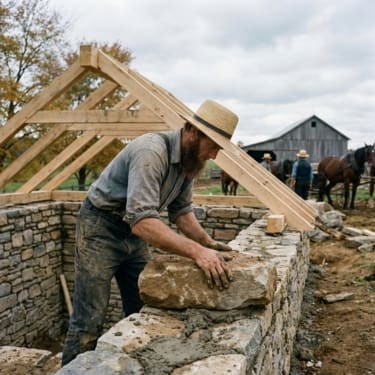
Mark learned this lesson the hard way, and it involved a freezer full of meat and an unexpected power failure. We were processing our first steer, about 300 pounds of beef. We stored it in our chest freezer in the barn. The freezer ran on our solar system with battery backup. It was very modern and efficient, but maybe a little too quiet.
Unfortunately, a connection corroded and the system failed. We were not aware of this for three days. By then, we had lost everything. All of our work had been in vain.
We hadn’t checked because the system was supposed to be automated and reliable. There was no smell, no alarm, and no warning. Mark blamed himself of course. But the real problem wasn’t the equipment. It was that we’d chosen a system that failed in silence.
We redesigned with a new principle: systems that fail slowly and obviously. We rebuilt our root cellar. It’s indeed old techology but for us it was more reliable. The freezer was still a part of our setup, but we wanted the root cellar as a backup.
If you don’t want to make the same mistake as us, building your own root cellar might be an excellent idea. This is one of the main pieces of advice I want to give you. Mark and I truly admire how the Amish do their projects, and if you want to learn how to make a root cellar the good old Amish way, you can check out this guide we also used. It is from the book The Amish Ways. Many of our homesteading projects are based on what we found in this book. It’s perfect for anyone who is just starting, but also for more experienced folks, especially the gardening advice.
I really like it, and if you want to get a copy, use this link today for a 75% discount coupon. You will also receive 3 FREE survival gifts.
Besides the root cellar, we also installed a simple gravity-fed water backup that works even without power. When the pump fails, you notice immediately because you manually fill the tank. We diversified food storage: some frozen, some canned, some dried, some in the root cellar.
Our homestead became less efficient by some measures but far more resilient by the ones that matter. Now, when things go wrong, we see it coming.
The 60/40 Rule for Food Production
When you are just starting, thinking that the goal is to produce 100% of your food is a common trap people fall into. We tried to do the same in the first year, and guess what? It was a disaster. We produced a bunch of almost useless vegetables, and we were incredibly tired from all the extra work.
After tracking our time for a full year, we found that getting from 60% food self-sufficiency to 80% required triple the labor. Getting to 100% would have been impossible for just the two of us.
We had to make choices. Some foods are incredibly efficient to grow, such as tomatoes, squash, potatoes, and greens. We grow these in abundance. Some are technically possible but time-intensive, with low yields. Growing our own grain for flour was not as rewarding as we expected it to be. One small plot produced about 30 pounds of wheat after months of work. Not to mention the costs of the flour production. We can buy a year’s worth of local, organic flour for $200 and we decided that this is the best course of action for us.
👉 See How to Store Food Without Electricity That Can Last Up to a Year!
We settled on what I call the 60/40 rule: produce 60% of our food, purchase 40% strategically. That 40% focuses on staples that are either labor-intensive (grains, dried beans), require specialized equipment, or have legal barriers (certain meat processing). We buy these from local producers when possible
Winter Is Your Design Review Period
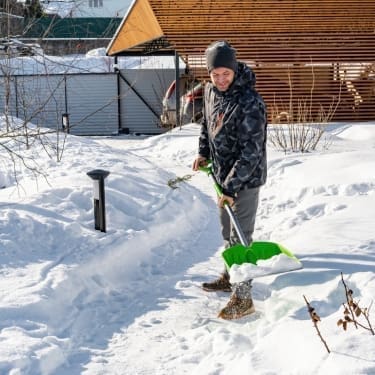
Our first winter exposed every flaw in our setup. The systems that worked in summer failed or became incredibly inefficient when temperatures dropped. Our water lines weren’t buried deep enough. Not frozen, but cold enough to slow flow significantly. Our chicken coop was adequately insulated, but the door placement meant we were walking through snow drifts every morning.
Mark’s background in retail management came through here: he treated winter like an annual inventory review. Every problem was documented with specifics: how much extra time it cost, what failed, and what was really annoying. We didn’t fix things immediately, since winter’s the wrong time for construction, but we built a prioritized re-do list for spring.
The water lines got reburied at 4 feet with proper insulation and the chicken coop got a second door on the south side. This cut winter morning chores by 10 minutes. The second winter ran about 40% smoother. Not perfect, but manageable. We’re still documenting issues for next year’s improvements.
👉 See How to Build the Most Reliable Backyard Off-Grid Projects!
Practical takeaway: Keep a winter problems list with time estimates. In spring, fix whatever costs you the most time first.
Be practical from the start
Looking back at our move-in day, we arrived with a lot of dreams about self-sufficiency and a lot of practicalities were left for “we’ll figure it out later.” Learning all of the things we presented here was a nice experience, but it hindered the evolution of our homestead.
One year later, we’d tell anyone starting: design your systems first, then come live with them. The homesteading content online shows the harvest baskets and the baby goats. Not so many folks show you the winter morning when everything breaks simultaneously, or the spreadsheet that proves you spent 40 hours growing $30 worth of wheat.
Once we stopped chasing an impossible ideal and started investing in practical projects, our homestead started working exactly how we wanted it. Yes, we had some daring project ideas but just look at how inefficient some of them were.
Our advice is to spend your first season observing everything. Track all of the things you produce: time, costs, yields, what broke, and what you still bought. Then use all this information to build the systems you truly need. This is how you create a true self-sufficient homestead.
You should also read: 
Vertical Gardening for Self-Sufficient Living
How To Prepare the Most Powerful Remedies You Should Always Have in Your House (Video)
Big Mason Jars: The Self-Sufficient Kitchen’s Best Friend
The Best Cordless Lawn Mowers for Self-Sufficient Living
How Much Land Do You Need To Be Self-Sufficient?