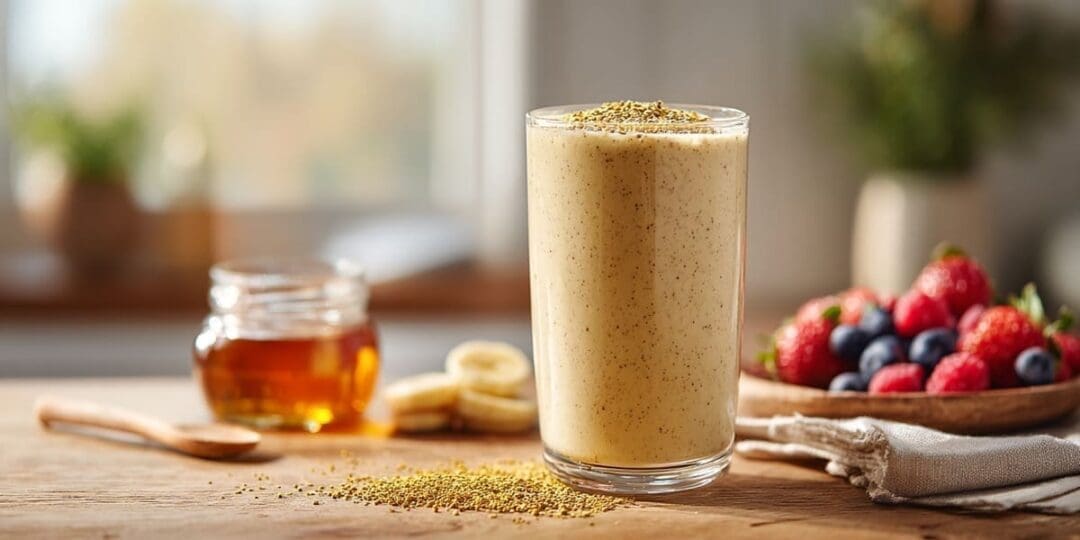
Bee pollen has earned its reputation as one of nature’s most concentrated foods. Collected by bees from flowering plants, it contains a unique mix of carbohydrates, amino acids, enzymes, vitamins, minerals, and antioxidants. When used correctly, it can be an excellent addition to a daily smoothie, offering gentle energy support and nutritional depth without relying on artificial boosters.
What makes bee pollen particularly interesting is its role as a whole-food ingredient rather than an isolated supplement. Unlike synthetic powders, it arrives in a form shaped by natural processes, making it appealing to those who value traditional nutrition and food-based wellness.
What You Need to Know Before Using Bee Pollen
Bee pollen has a naturally floral, slightly sweet, and mildly earthy taste. It blends best with fruits that have natural sweetness and a bit of acidity. Because it is potent, more is not better. Starting small allows your body to adapt and helps avoid digestive discomfort.
It is also important to remember that bee pollen is seasonal by nature. Its composition can vary depending on the plants available to bees, which is why sourcing matters. This natural variability is not a flaw, but a reminder that bee pollen is a living food, shaped by land, climate, and time.
Core Ingredients for a Balanced Bee Pollen Smoothie
A reliable base keeps the smoothie smooth, nourishing, and easy to digest. The goal is to support absorption while keeping flavors clean.
A simple and effective ingredient combination includes:
- One ripe banana for natural sweetness and creaminess
- One cup of fresh or frozen berries for antioxidants and balance
- One cup of liquid such as almond milk, coconut milk, or clean water
- One teaspoon of raw honey, optional but complementary
- One teaspoon of bee pollen granules (beginner-friendly amount)
This ingredient list mirrors the way traditional diets were built: simple, seasonal, and functional. Each component serves a purpose, whether it’s energy, flavor balance, or nutrient support, without unnecessary additions.
Step-by-Step Preparation
Add the liquid to your blender first. This helps prevent ingredients from sticking to the bottom. Next, add the fruit and honey if using. Sprinkle the bee pollen granules on top last.
Blend on low for several seconds, then increase to high until smooth. If the texture feels too thick, add a small amount of liquid and blend again. The finished smoothie should be creamy, evenly blended, and free of grit.
Taking an extra moment to blend gently rather than aggressively helps preserve texture and reduces oxidation. The goal is a smooth drink that feels light and fresh, not over-processed.
How to Improve Absorption and Effectiveness
Bee pollen nutrients are best absorbed when paired with healthy fats and consumed on an empty or lightly fed stomach. If desired, you can add a small slice of avocado or a teaspoon of coconut oil to improve nutrient uptake without overpowering the flavor.
Chewing the smoothie slowly rather than drinking it quickly can also aid digestion. This allows enzymes in the mouth to begin breaking down nutrients, a small but often overlooked detail in traditional food practices.
Common Mistakes to Avoid
Overheating is one of the most common mistakes. Never add bee pollen to hot liquids, as heat can damage sensitive compounds. Another issue is using too many strong ingredients like protein powders or artificial sweeteners, which can overwhelm the subtle profile of bee pollen and reduce its appeal.
Another frequent mistake is inconsistency. Using bee pollen sporadically while expecting noticeable results often leads to disappointment. Like many natural foods, its value comes from steady, moderate use rather than quick fixes.
When and How Often to Drink It
Morning is ideal for a bee pollen smoothie, especially before a busy or physically demanding day. It can also be used as a light midday refresher. For most people, three to five times per week is sufficient to notice benefits without excess.
Listening to your body matters here. Some people prefer smaller servings more often, while others benefit from spacing it out. Traditional food wisdom always emphasized observation over rigid schedules.
Final Thoughts
A perfect bee pollen smoothie is simple, intentional, and respectful of the ingredient. With the right balance of fruit, liquid, and timing, bee pollen can become a practical part of a nutrient-focused routine. The key is moderation, quality sourcing, and preparation that preserves what nature already perfected.
This approach reflects a broader philosophy of food as support, not stimulation. When used thoughtfully, bee pollen fits naturally into a lifestyle centered on balance and long-term well-being.
Learn Why the Amish Always Kept Bees
Bee pollen isn’t a modern discovery. Amish communities have long understood that keeping bees meant more than honey — it meant resilience, nutrition, and independence from outside systems. The Amish Ways Book explains why bees were considered essential on Amish homesteads and how their presence supported food security, health, and self-sufficiency year after year. Inside, you’ll discover:
- Why bees were central to Amish nutrition, crop yields, and long-term sustainability
- How natural foods like honey and bee pollen fit into a balanced, hardworking lifestyle
- Practical old-world principles for living with less reliance on stores and supplements
- Simple habits that supported steady energy and nourishment without modern shortcuts
- A deeper understanding of how traditional communities built health through land stewardship
If you want to understand the timeless thinking behind foods like bee pollen — and how those principles still apply today — The Amish Ways Book offers grounded, practical insight rooted in generations of lived experience. Learn more about it here.
You may also like:
 Why Growing Bees Is Easier Than You Think
Easy to Build Root Cellar in Your Own Backyard (Video)
Have You Been Using Fake Honey?
10 Long-Lasting Foods You Can Make From Honey