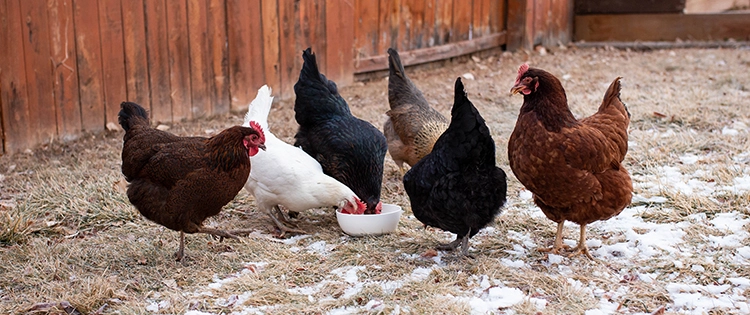
Many first-time chicken keepers find themselves swooning over baby chicks during the spring, enjoying fresh eggs throughout the summer and fall, but may find themselves at a loss when the leaves fall and the snow sneaks in. So how do I feed my chickens in winter and keep them healthy? Should they stay on layer feed or switch to something else?
Today I’ll walk you through exactly what your chickens need during the coldest part of the year, based on the region you live in and the type of birds you keep. Let’s get started.
What Should I Feed My Chickens In Winter – Far North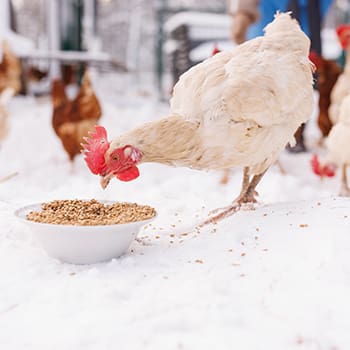
If you’re way up north and your birds are trotting through snowy drifts looking for a bug or a bit of grain, you have the toughest job ahead of you. Poultry handles cold weather pretty well as long as you give them plenty of bedding.
I recommend the deep litter method, started months ago and topped with fresh straw once a week to keep things clean but toasty. You can add a light if you like, but remember that heat lamps and coop lights are a fire hazard when all is said and done.
Feeding is the real challenge. You can keep your birds on layer feed, but it won’t help them put on the body condition they need to stay warm, and some of your birds will draw down on their reserves while that weather sticks around.
So I recommend a high-fat, high-protein diet. Much like people used to eat when homes weren’t so thoroughly heated, these birds need extra calories, and dense ones, to help them carry a little more weight.
Bluntly? Dried mealworms, black soldier fly larvae, and suet blocks are wonderful additions to their usual layer feed. You can also hang a scratch grain feeder or toss a handful on the litter in the late afternoon so they go into the night with a full crop.
One thing matters more than what you feed, though, and that’s when you start. Make the change slowly, over two or three weeks in the fall, before the hard cold arrives. Chickens have touchy digestive systems, and swapping their ration overnight gives you loose droppings and stressed birds right when you need them steady.
Kitchen scraps like vegetable trimmings, cooked rice, and leftover fruit add nutrition and variety too. Just don’t feed them anything that causes trouble. Avocado skins and pits are genuinely toxic, and onions in any real quantity can damage a bird’s red blood cells, so keep those out of the scrap bucket.
What Should I Feed My Chickens In Winter – Southerly States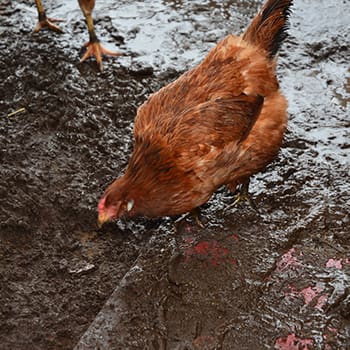
Rain, rain, and more rain. You’ll see some chilly weather down here, but it’s usually not snow drifts and frozen lakes. That doesn’t mean your birds get by on plain layer feed, though.
I usually recommend a flock raiser or feather conditioner feed running 18 to 22% protein with only a small bump in fat. Your birds don’t need a thick layer of fat to get through a southern winter, but a little extra weight never hurts.
A feather conditioner feed also helps them grow a better winter coat. That beats letting them molt and then limp through the cold season patchy.
If you’re very far south, you may even keep getting eggs through this stretch. Go ahead and keep the oyster shell out for your girls. It won’t hurt them in the slightest, even if they do stop laying.
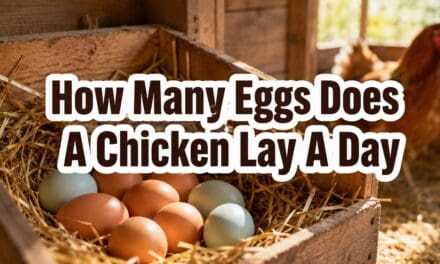
But there’s a thing that no one mentions. We all want great egg production, but no one talks about what you do with all of those eggs.
Let’s say you manage to keep your hens in top condition and they lay eggs all winter long. Now you have more eggs than you ever imagined.
What’s next?
Keep them in the fridge? For how long? Most eggs stay fresh in the fridge for 1 month, 1 month and a half at best…
But it’s not like hens lay for one month and then they take a pause. You’ll have a constant stream of eggs.
I’ve had to deal with this problem, and as great as it might sound, having too many eggs is not fun.
This is how I got into eggs preservations method. The internet is full of them. But do you know which ones are working and which ones are just another scam?
Most recipes you’ll find are about picking eggs. And, yes, this is great. You can do that. But the only problem is that picked eggs don’t last that long and you also have to cook them in order to pickle them. This is just another extra step for you.
The most interesting method I found is also the most effective one. And you don’t even need to cook the eggs.
This method has long been used in the United States during the mid to late 1800s. The secret ingredient, isinglass, is actually sourced from a fish organ. But don’t worry. You can get it from Amazon for $12.
Then all you need is a pot, some boiling water, and a jar for your eggs.
If you want to see how to keep eggs fresh for 6+ months, check out this method here →
Don’t Forget the Grit
Here’s the piece that slips past a lot of keepers. Chickens don’t have teeth. They grind their food in the gizzard using small stones they pick up off the ground while they forage, and that’s what lets them break down whole grains at all.
All summer your birds handle that on their own. Then snow covers the yard, or the mud freezes solid, and the supply stops right when you’ve started feeding more scratch, more oats, and more kitchen scraps.
So put out insoluble grit free choice and keep it available all winter. A small hanging feeder or a plastic tub in a dry corner of the coop works fine. Your birds take what they need and ignore the rest.
One note so you don’t mix these up. Oyster shell is calcium for eggshells, and grit is granite for digestion. They do different jobs, and your birds need both containers out there.
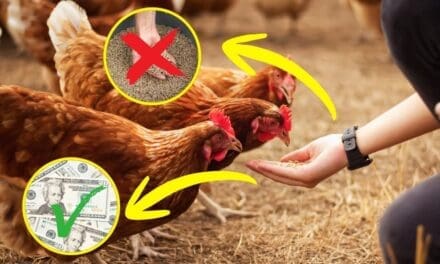
Now, I want to tell you about a frugal trick I’ve learned from an older guy: You don’t need to spend money on oyster shell. You can feed your hens their own eggshells and this is the cheapest and mosst efficient way to offer them calcium.
The only thing is that you can’t just give them the shells as they are. You can’t just crack an egg to make an omelette and then throw the shell into the chicken feed. You can find the full instructions on how to do this correctly here. Plus some more surprising uses for eggshells around the homestead.
The One Mistake I See Every Winter
Somebody hands you a bag of cracked corn and tells you it’s a warming food, so you start dumping it in the run every afternoon and calling it dinner.
Corn burns warm while a bird digests it, and that part is true enough. The trouble is what it does to the rest of the ration. Corn runs around 8% protein. Your layer feed runs 16 to 18%. So every scoop of corn you add pulls the whole day’s protein down, and you end up short on protein in the exact season your birds need it to hold feather condition and body weight.
I still feed corn. I just feed it as a supplement, not as the meal. A small handful per bird late in the afternoon, tossed out an hour before roosting time, gives them something to work on overnight without wrecking the numbers.
So keep the good feed in the feeder all day, and let the corn be the last thing they eat before dark.
Fluffy, Not Feathery Breeds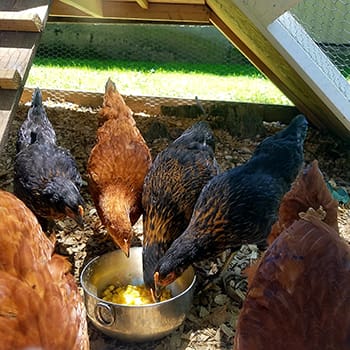
For breeds like Silkies, you’ll want to feed them the northern way no matter where you live.
Grown Silkies and other powder puff breeds often shrug off the cold. Frizzles and young Silkies are a different story, and they get sensitive once temperatures drop below 40°F.
Some Silkies seem to enjoy the cold, but they curl up in a ball to do it. You’ll find them tucked at the back of the nesting box, shivering.
Plan ahead and you can keep them from getting that cold. I don’t suggest bringing full grown chickens into the house just because the thermometer dropped. But if nights are running below 20°F, keep a close eye on them. Silkies may need a warming station regardless of what you feed.
The same goes for any breed with skin that broad, flat feathers don’t fully cover. Turkeys run into frostbite and shivering problems too, thanks to that bare patch on the neck.
Preparing for Sudden Cold Snaps
Maybe you’re in Florida or another state where winter is mild or barely shows up at all. Then the weatherman tells you ice and snow are coming this weekend. What does that mean for your flock? You don’t have weeks to build up fat or improve feathers. Well, I live in this kind of climate, so here’s how I handle it.
The whiplash is the hard part. As I write this, it was 9°F on Sunday morning. By Thursday it’ll be 77°F. Swings like that, in either direction, wreak havoc on sensitive chickens. They’re birds, after all, and birds get cold fast when they’re used to warmer weather.
So I work on two fronts: housing and feeding. On the feed side, this is where the advice above flips. You don’t have the two or three weeks you’d need to transition them safely, so leave their ration alone. A sudden switch now causes diarrhea, and diarrhea leads to dehydration, and a dehydrated bird gets cold even faster.
Instead, I add warmth and bulk to what they already eat. A heated water bowl or heated base under the waterer keeps their water from freezing over, and that matters more than anything else on this list. A chicken that can’t drink stops eating, and a bird that stops eating can’t generate heat. Check your waterers twice a day in a cold snap.
I also offer a hot mash twice a day. Plain rolled oats boiled in water and served sloppy in a pan works fine. The heat itself fades in a few minutes, so don’t expect it to warm them from the inside for long. What it really does is pack in easy calories and get every bird eating at a time when they’d rather sit puffed up on the roost.
The most important thing is keeping their routine as normal and comfortable as you can. Stress comes from unfamiliar situations, and winter isn’t the time for drastic shifts, even well-intentioned ones.
The Chicken Guide I Wish I Had From the Start
If you’ve kept chickens for any length of time, you already know how annoying it can be to find a straight answer.
One question about feed turns into five different articles. Then you’re on a forum trying to figure out why your hens stopped laying, whether the coop needs more ventilation, or what that strange behavior actually means.
That’s why I like The First-Time Chicken Keeper’s Checklist.
It puts the important stuff in one place. Breeds, feeding, coop setup, egg production, health, predators, seasonal care, common mistakes, and the little things that usually take months or years to learn on your own.
What makes it useful is that it also covers the small things people usually learn only after keeping chickens for a while. The kind of stuff that saves you from making avoidable mistakes and helps you understand your flock better.
I wouldn’t call any chicken book perfect, but for $27, this one gives you a lot without making you dig through a hundred websites to find it. I really liked it and that’s why I am confident in recommending it.
If you want one place to turn when you’re not sure what your chickens need, take a look here.
You may also like:
The Only Plant That Will Make Your Poultry Lay More Eggs Than Usual (Video)
Livestock In Winter: Mistakes Even The Most Advanced Homesteaders Make
Top 6 Best Egg-Laying Chicken Breeds
How To Keep Eggs Fresh For 12+ Months