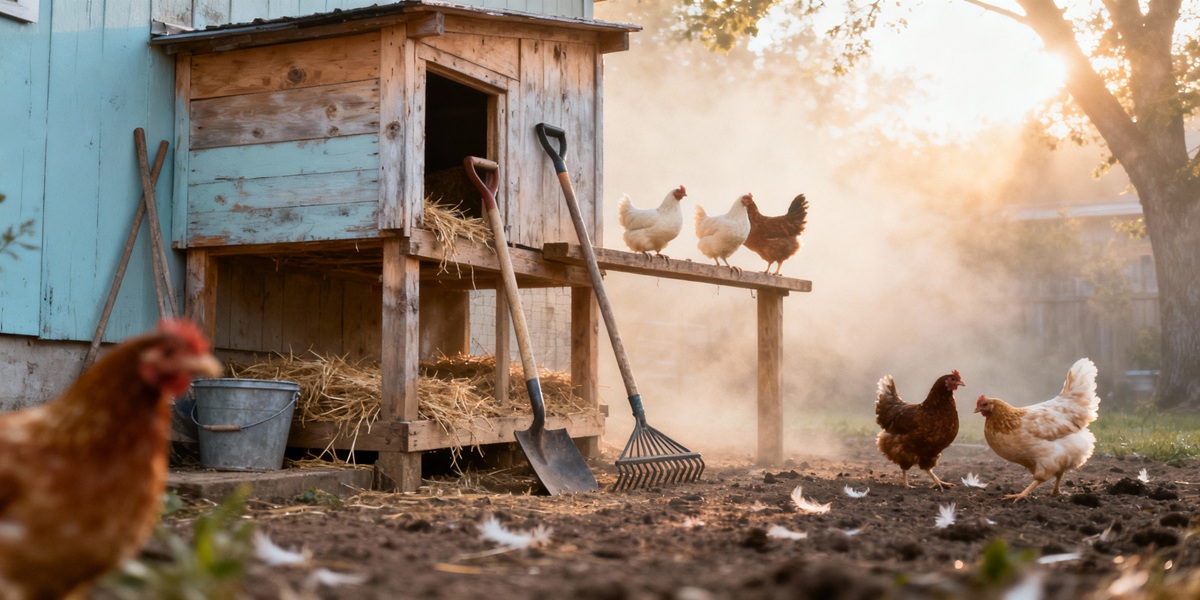
The recent spike in the cost of eggs has led a lot of people to construct a chicken coop and raise chickens for the first time. There’s plenty of information on the Internet about how to build a coop or buy one, and how to raise chickens. What some people don’t realize is that raising chickens is not a “set it and forget it” proposition.
Chicken coop maintenance is a daily, weekly, monthly and even a seasonal set of chores. Depending on the size of your flock, it can be a lot of work -especially when it comes to cleaning the coop.
Why a Clean Chicken Coop is So Important
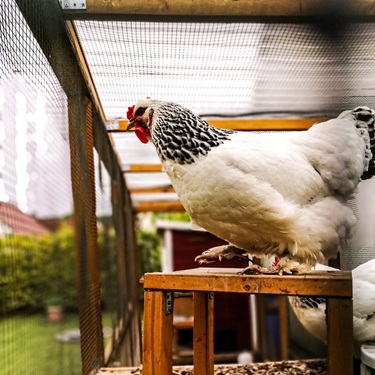 In a word it’s all about disease. Chicken droppings make an excellent fertilizer but as the droppings build up in a coop so does the risk of disease. Here’s a short list of some of the diseases that can wipe out your flock because of a dirty coop:
How a Dirty Chicken Coop Leads to Disease
- Coccidiosis
- Caused by protozoan parasites found in chicken droppings
- Symptoms include diarrhea (sometimes bloody), weight loss, and lethargy
- Dirty, moist bedding allows parasites to multiply rapidly
- Salmonella and E. coli
- Bacteria spread through contaminated water, feed, and droppings
- Causes diarrhea, muscle weakness, and in severe cases, sudden death
- Dirty waterers and spoiled feed create constant reinfection risk
Dirty water is one of the fastest ways disease spreads — not just among chickens, but to everyone handling feeders, waterers, and bedding.
The Water Freedom System provides a way to secure clean, reliable water without relying on chemicals, electricity, or fragile supply chains. It’s designed for real-world conditions, making it especially valuable for homesteads, small farms, and anyone caring for animals daily.
Clean water supports healthy birds, safer cleaning, and peace of mind for your household.
👉 Learn how the Water Freedom System works here!
- Respiratory Infections (Bronchitis, Mycoplasma)
- Bacteria and viruses thrive in dusty coops with ammonia buildup
- Symptoms include coughing, sneezing, nasal discharge, and reduced egg production
- Poor ventilation and droppings release ammonia that irritates the lungs
- Aspergillosis (Fungal Infection)
- Caused by inhaling mold spores from damp bedding
- Leads to respiratory distress, gasping, and high chick mortality
- Wet litter and poor airflow encourage mold growth
- Parasitic Infections (Lice, Mites, Worms)
- Dirty bedding and manure support parasite life cycles
- Signs include anemia, pale combs, feather loss, and poor growth
- Damp litter and droppings provide ideal hiding and breeding conditions
- Botulism
- Results from toxins produced by rotting organic material
- Symptoms include weakness, paralysis, and sudden death
- Decaying food, carcasses, or wet waste inside the coop release toxins
- Avian Pox
- Viral disease spread by flies and mosquitoes
- Causes scabs and wart-like lesions on combs and wattles
- Dirty coops attract insects that transmit the virus
- Bird Flu
- Highly contagious viral infection
- Symptoms include respiratory distress, diarrhea, neurological signs, reduced egg production, and sudden death
- Spread through droppings, infected birds, rotting bedding, and contact with wild birds
It’s Not Just About the Chickens
 Many of these diseases can wipe out a flock. Worse, some of these diseases have spread to humans. That’s a good reason to take a cautious approach to a chicken coop and why regular cleaning is so important. A self-cleaning coop can reduce your exposure to potential diseases and make it easier to perform consistent maintenance.
When diseases spread inside a coop, they don’t always stay there. Many common poultry illnesses can affect people too, especially when cleaning droppings, handling bedding, or caring for sick birds.
The Home Doctor Guide was created for moments like these — when professional help may be delayed, unavailable, or simply out of reach. It walks you through how to recognize warning signs, respond calmly to infections, manage exposure, and care for your family using practical, easy-to-understand guidance.
If you’re raising animals, learning how to care for human health at home is just as important as keeping the coop clean.
👉 Learn more about the Home Doctor Guide here!
A Standard Cleaning Schedule for a Chicken Coop
In a perfect world, here are the tasks you should routinely perform to maintain your chicken coop and when. As we go through the list you’ll see why taking steps to make cleaning easier can help:
Daily Coop Maintenance
- Refresh drinking water to prevent bacterial growth
- Check feeders and refill or replace feed as needed
- Spot-clean droppings, especially in nesting boxes and under roosts
- Check ventilation to ensure steady airflow and prevent ammonia buildup
Weekly Coop Maintenance
- Replace bedding in nesting boxes
- Rake or stir litter to reduce moisture and odor buildup
- Inspect birds and bedding for pests such as mites, lice, or worms
- Wipe down roosts, perches, and ledges with a mild, poultry-safe disinfectant
Monthly Coop Maintenance
- Perform a full bedding change by removing all litter and scrubbing floors
- Disinfect the entire coop, including floors, walls, and nesting boxes
- Inspect the structure and seal cracks or gaps where rodents or pests could enter
- Clean the outdoor run: rake droppings, remove food scraps, and refresh soil or sand
Seasonal Deep Cleaning
- Completely empty the coop and remove all bedding, feeders, and waterers
- Power wash and scrub floors, walls, and roosts, then disinfect thoroughly
- Allow the coop to sun-dry when possible—UV light helps kill bacteria and parasites
- Dust cracks, corners, and nesting areas for lice and mites using diatomaceous earth or a poultry-safe product
Important Reminders
- Always wear gloves and a face mask when cleaning the coop
- Rotate bedding types, such as straw, sand, or pine shavings, to reduce pest buildup
- Keep bedding dry at all times—moisture encourages mold, bacteria, and parasites
If that sounds like a lot of work, it is. That’s why we’re going to explore some ways to at least make some of these tasks easier.
Before commercial disinfectants and antibiotics were common, people relied on plants to prevent infection, support immunity, and keep both humans and animals healthy.
The Forgotten Home Apothecary brings together that old-world herbal knowledge in one place — including natural antiseptics, respiratory-supporting plants, and remedies traditionally used around livestock and homesteads.
If you’re already rotating bedding, improving ventilation, and staying on a cleaning schedule, herbal knowledge adds another gentle layer of protection to your routine.
👉 Explore the Forgotten Home Apothecary here!
3 Ways to Have a Self-Cleaning Chicken Coop
We’re going to explore 3 ways to construct a self-cleaning coop. As you would suspect the options range from easy to complex. A lot depends on your skills and your budget. You can also purchase some of these options so if DIY projects are a challenge there are some commercial solutions.
The Portable Self-Cleaning Chicken Coop
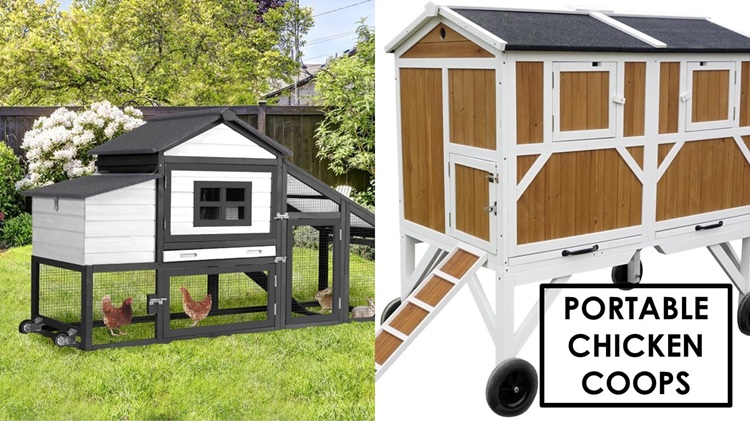
This is the easiest solution to a self-cleaning coop. It’s designed for a smaller flock of 6 to 10 chickens. It’s nothing more than a coop on wheels. The bottom of the coop is on the ground and when it’s time to clean the coop you simply lift up one side and wheel it to another location. The remaining droppings fertilize the previous location, and as you continue to move your coop you are continuing to fertilize various areas.
Based on the schedule we covered you should move your portable coop once a week. You’ll still have to perform the other tasks, but it simplifies cleaning while you fertilize at the same time. Ideally, you’re moving your coop around in areas where children and pets don’t play. And you can easily find one online if you do not want to build it. If your yard is small or your kids and pets roam far and wide you might want to consider the next solution.
A Self-Cleaning Chicken Coop Drawer
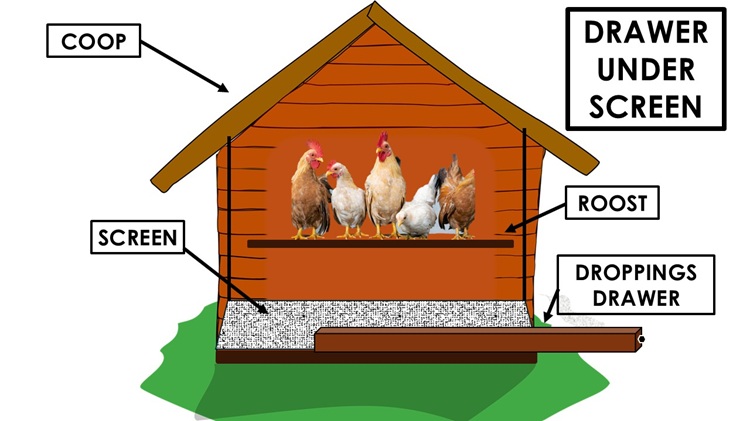
This is exactly what it says. It’s a chicken coop with a large drawer underneath that catches the droppings. To clean the coop, you pull out the drawer and either dump it in a compost heap or bury it.
A critical design feature is a coarse screen on the floor above the drawer.
That allows the droppings to drop into the drawer. You should still power wash or hose down the screen at least on a monthly basis, but most of the dropping will end up in your drawer for easy cleaning. And now we get to the most ambitious approach.
Using a Conveyor Belt for a Self-Cleaning Chicken Coop
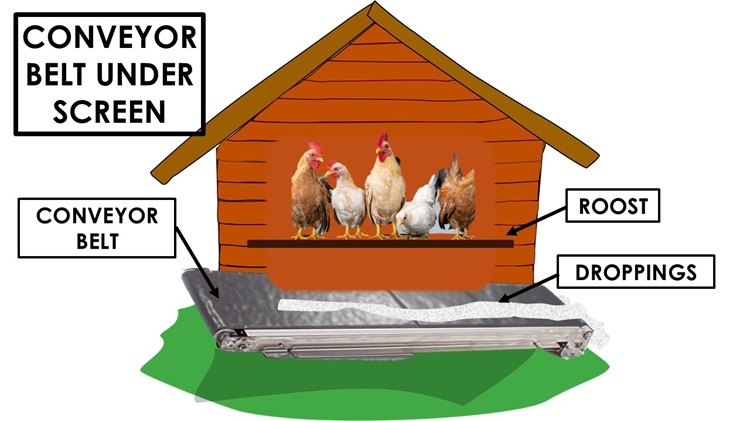
This is a bit ambitious, but you can buy a conveyor belt online for $100 to $350 USD. The idea is to install the conveyor belt under the roosts. This will catch the droppings on the belt and a scraper on the end of the belt, outside the coop scrapes off any dried droppings into a collection box or pile.
Ideally, the conveyor belt is angled down slightly towards the collection box or pile and runs at a slow speed. You can use a limiter to adjust the speed although most conveyor belts have adjustable speeds. Whether or not you install a screen between the coop and the conveyor belt depends on how often you run the conveyor and the speed.
You should always use a very slow speed so you don’t harm the chickens and a screen over the belt will still allow the droppings to fall through while protecting, or at least not alarming the chickens when the floor starts to move.
You don’t need to run it constantly. The best bet is a timer that runs it at slow speed automatically every night and only for a few minutes or at least one cycle of the belt. In the morning or the next day when you do other routine maintenance on the coop (checking water levels and feed etc.) you simply empty the droppings in the box in the compost heap.
Other Automatic Maintenance Options
There’s more to maintaining a chicken coop than keeping it clean.
- Consider solar powered fans to encourage ventilation in screened vents to improve airflow and prevent ammonia buildup.
- Buy a large waterer that holds gallons of water and requires fewer refills.
- Buy automatic feeders that also allow you to load up more feed, but make sure you clean out any old feed.
- A solar powered heater can help maintain a reasonable temperature in winter.
Stay on Schedule
Raising your own chickens can save you a lot of money. If your chickens are healthy they can lay up to one egg a day, every day. That alone can be worth a little extra effort, and building in some automatic maintenance option can make everything a whole lot easier.
Raising chickens isn’t about shortcuts — it’s about steady habits that work year after year. Few communities understand that better than the Amish.
The Amish Ways Book shares time-tested practices for caring for animals, maintaining clean living spaces, and building systems that reduce disease through simplicity and routine rather than chemicals or constant intervention.
If you’re drawn to practical schedules, dry bedding, good airflow, and quiet consistency, this book offers a deeper look at the mindset behind healthy, resilient homesteads.
👉 Discover The Amish Ways here!
A clean coop protects your flock — but knowledge, water security, and traditional wisdom protect your entire homestead.
You may also like:
I Fed Stinging Nettles to My Chickens, and This Happened
The Only Plant That Will Make Your Poultry Lay More Eggs Than Usual (Video)
Best Automatic Chicken Coop Door Opener: Stress-Free Flock Keeping
The Best Homemade Chicken Coop Deodorizer