Watering seems simple enough until we watch healthy seedlings turn yellow, soil grow moldy, or leaves crisp under the sun even when the watering can was used “on time.” The truth is, plants don’t benefit just from being watered — they benefit from being watered at the right moment, when moisture can nourish the roots without being lost to heat, disease, or evaporation.
Just as we wouldn’t drink water while asleep, plants don’t want hydration during their most vulnerable moments. This is what makes timing such an essential part of gardening: it allows us to work with nature rather than against it.
🌅 Water Plants in the Early Morning
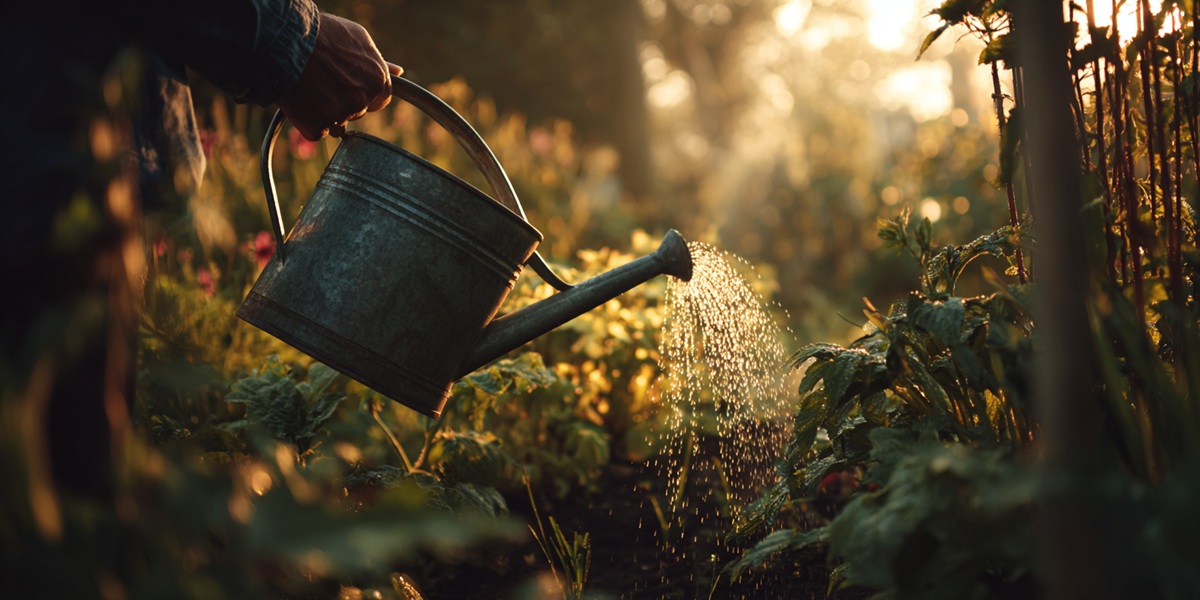
The best time to water almost every plant is early morning, ideally between sunrise and 9 a.m. During this window, roots have a chance to drink before the sun heats the soil. Moisture moves downward slowly, feeding the plant where it needs water most — below the surface.
Morning watering also prepares the plant for the day ahead. Leaves have time to dry, stems stay sturdy, and roots stay cool as temperatures rise. This routine mirrors natural dew cycles, supporting natural growth and stronger drought resistance. Plants that are watered in the morning consistently show greener foliage, stronger roots, and better blooms compared to those watered later.
🌇 Can You Water in the Evening?
Watering after sunset or late afternoon is the next best option when mornings aren’t possible. The soil is cooler, and less water is lost to evaporation. Many gardeners choose this time during summer heat waves simply to avoid rapid drying.
However, evening watering does carry one risk: lingering moisture on leaves overnight encourages fungal disease. Plants that stay wet through long, cool hours become susceptible to mildew, mold, and root rot. If evening water is necessary, direct it strictly at the soil and avoid wetting the foliage. Think of it as watering the roots, not the plant itself.
🌞 Avoid Watering in the Midday Sun
Midday watering wastes more than water — it drains soil nutrients and stresses the plant. Under strong sunlight, water evaporates before roots can absorb it, forcing the gardener to use more water for less value. Sun-heated water can also shock tender roots when added too quickly.
Even worse, sudden midday watering encourages shallow root development. Plants adapt to quick bursts of surface moisture by growing more roots near the topsoil, making them fragile in drought. Watering at the right time trains roots to grow deep, forming the strong base every self-sufficient garden needs.
🌱 How to Water Wisely (Technique Matters)
Just choosing morning isn’t enough — how we water affects soil health and long-term resilience.
✔ Water deeply, not frequently
A slow soak encourages roots to grow downward, where moisture lasts longer. Shallow watering creates weak plants dependent on daily care.
✔ Aim at the soil, not the leaves
Leaves can’t absorb water. Roots can. Keep foliage dry to prevent disease and wasted water.
✔ Use mulch to hold moisture
Leaves, straw, grass clippings, or wood chips slow evaporation and protect soil life.
✔ Water according to the soil, not the calendar
Press your finger 2 inches into the soil. If it’s dry at that depth, it’s time to water. If not, wait — even if the calendar says otherwise.
💧 Morning Watering Benefits at a Glance
| Benefit | Why It Matters |
| Less evaporation | Water reaches roots instead of heating the air |
| Stronger roots | Moisture goes deeper, forming resilient growth |
| Healthier leaves | Foliage dries naturally, reducing disease |
| Better growth | Nutrition uptake improves with steady hydration |
| More drought resistance | Plants adapt to soil, not frequent surface watering |
🌾 Final Thoughts
Nature gives us patterns to follow. Dew appears at dawn, dries through sunlight, and gives plants the moisture they need to begin their day. When we water at the same time nature does, plants respond with vigor. Stronger stems, deeper roots, richer soil — these aren’t the results of more water, but of better-timed water.
Gardening becomes easier when we stop fighting nature’s rhythms and begin to mimic them.
Water early. Water deeply. And let the sun do the rest.
You may also like:

How to Make Sun Dried Tomatoes
50+ Items You Should Stockpile Before The Next Great Depression (Video)
11 Medicinal Plants You Should Save Before the Frost
How To Make Natural Glue from Backyard Plants
10 Plants to Keep the Wasps and Hornets Away