
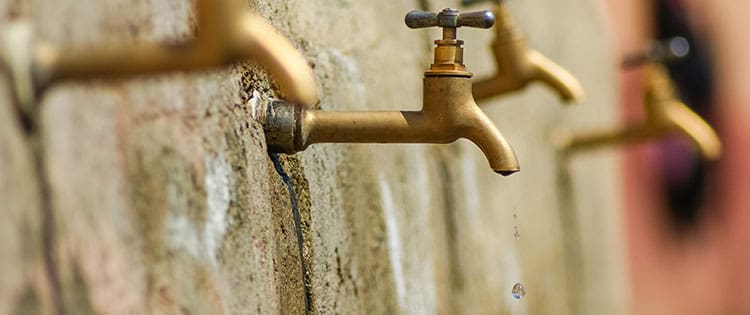
For most of us, water is something we simply take for granted. We turn on a faucet in the sink; flush a toilet fill a bathtub or turn on the shower. It’s always there. But what happens when the water stops working? How can you survive in a world without water?
In the event of a power outage, people dependent on well pumps for water know the drill. The water is off. Even city water supplies are affected by power outages. The pumps that refill big water tanks stop working when the power goes out.
Complicating everything is both climate change and poor water management policies. The Colorado River is shrinking as agriculture continues to divert water to fields. Wells continues to run dry across the world as droughts and agriculture continue to drain aquifers.
Any combination of events could turn the water off from droughts to poor water management policies to something as basic as a total power-grid failure.
Why It Matters to Survive in a World Without Water
The average person cannot survive for 3 days without water. Some of us can actually survive weeks if not months without food, but after 3 days most of us die without water. But it’s not just about drinking water.
We depend on water for cooking, bathing, cleaning, and watering our vegetable gardens. When water is scarce or unavailable, everything is at risk from general hygiene to life itself.
Before planning any water strategy, you need to know what you are actually planning for. The commonly cited figure of one gallon per person per day is a rough emergency planning baseline, not a precise target, and it conceals significant variation based on conditions, activity level, and household composition.
- Drinking water alone: A sedentary adult in a cool environment requires a minimum of roughly half a liter to one liter of water per day to avoid dehydration. That figure rises sharply with heat and physical activity. A person doing moderate physical labor in hot weather can require four to six liters of drinking water per day just to maintain basic function. The one-gallon planning figure assumes moderate conditions and covers drinking only.
- Cooking: Basic food preparation including rehydrating dried foods, cooking grains and legumes, and making hot beverages requires an additional one to two liters per person per day at minimum. Cooking methods that use less water, such as steaming over a small amount of water rather than boiling in a large pot, become important conservation strategies when supply is limited.
- Hygiene: Effective minimal hygiene, meaning a full sponge bath, hand washing after toilet use and before food preparation, and basic oral hygiene, can be accomplished with as little as two to three liters per person per day with deliberate conservation technique. This is not comfortable by modern standards but it is sufficient to prevent the skin breakdown and infection risk that comes with complete hygiene failure over days and weeks.
- Toilet flushing: A standard toilet uses between one and a half and three gallons per flush. In a water-limited scenario this becomes one of the first things to address through reduced flushing frequency, composting toilet alternatives, or grey water reuse for flushing. Eliminating toilet flushing from your potable water budget and substituting grey water or collected water that does not need to meet drinking standards is one of the highest-impact water conservation moves available.
- Garden irrigation: A small survival garden sufficient to supplement food for one person requires roughly one to two gallons per square foot per week in moderate conditions, more in heat or drought. A 200-square-foot garden needs 200 to 400 gallons per week. This number alone illustrates why garden water cannot realistically come from the same purified drinking water supply and why separate harvesting for irrigation is a critical planning consideration.
- Practical planning targets: For a household in a moderate climate doing light to moderate activity, plan for a minimum of two gallons per person per day for drinking and cooking combined, plus separate water for hygiene and flushing that does not need to meet drinking water standards. For hot conditions or physical labor, revise the drinking and cooking figure upward to three to four gallons per person per day. For a household with infants, pregnant or breastfeeding women, elderly members, or anyone ill with fever or gastrointestinal illness, increase the estimate further. These groups have higher water requirements and lower tolerance for even mild dehydration.
Threats to Our Water Supply
A drought seems like an obvious threat, but we’ve survived droughts in the past. A bigger threat is pollution and contamination of local water supplies. Droughts make the threat of contamination even worse, and if a power outage limits the ability to pump or replenish water supplies it all gets worse.
Modern agricultural practices represent another threat. Agribusiness often takes what it needs to support its ventures. There is usually little law to control or manage their water use from rivers, streams, and aquifers. Many people have experienced the mysterious and sudden loss of water from their wells because some distant and unknown agribusiness has simply drained it all away.
Climate change is an ongoing threat that could cause droughts in parts of the world that have never seen a lack of rainfall. Without the rain, the lakes, rivers, and aquifers are never refilled and the world devolves into a vast desert.
How to Survive in a World Without Water: Extreme Water Solutions
Surviving in a world without water requires mastering four essential steps. First, you need to know where and how to harvest water from natural sources. Second, it’s crucial to understand how to filter and purify any water you collect. Third, learning how to store water safely for both short-term and long-term use is vital.
Finally, you must know how to test water for purity and safety to ensure it’s suitable for consumption.
Harvesting Water
There are numerous water sources that could still be available. Some might be contaminated or otherwise polluted.
Not all water sources carry the same contamination risk, and when you have access to more than one source, choosing the lowest-risk option reduces the burden on your filtration and purification system and lowers the chance that a purification failure results in illness. Here is a practical ranking from generally lowest to highest contamination risk, along with what drives the risk at each level.
- Lowest risk: properly developed springs and groundwater accessed through a clean well. Water that has traveled through substantial layers of rock and soil has been naturally filtered of most biological pathogens by the time it reaches an aquifer. A well drawing from a deep, confined aquifer in an area without industrial activity or intensive agriculture is among the most reliably clean natural water sources available. Its primary risks are chemical contamination from naturally occurring minerals like arsenic or from distant agricultural or industrial inputs, which filtration and boiling do not address. Test groundwater chemically before relying on it.
- Low to moderate risk: collected rainwater from a clean roof surface. Fresh rainwater is microbiologically clean when it falls. Contamination is introduced through contact with roof surfaces, gutters, and storage containers. Risks include bird and rodent droppings on roof surfaces, chemical leaching from certain roofing materials, and biological growth in storage containers. First-flush diversion, covered storage, and regular container cleaning manage these risks effectively. Urban rainwater also absorbs atmospheric pollutants during its fall, which is a minor additional consideration.
- Moderate risk: high-elevation springs and spring-fed streams in undisturbed watersheds. Water emerging from an undisturbed spring in an area without upstream human activity or intensive wildlife pressure is generally low in chemical contamination but carries biological risk from wildlife fecal contamination. Giardia and Cryptosporidium are the primary concerns in most North American wilderness water sources, and both require filtration or specific purification methods to address, as boiling is effective but standard chemical tablets require extended contact time against Cryptosporidium.
- Moderate to high risk: lakes, ponds, and slow-moving water. Slower water accumulates biological contamination from surrounding land, wildlife, and any upstream human activity. Algal blooms in warm weather produce cyanotoxins that standard purification methods do not neutralize. Blue-green algae in particular produce toxins that are not destroyed by boiling and require activated carbon filtration or avoidance of the source entirely during bloom conditions. Large deep lakes with limited surrounding human activity are significantly lower risk than small shallow ponds.
- High risk: rivers and streams with upstream human activity or agriculture. Rivers accumulate everything from their entire watershed. Agricultural runoff introduces nitrates, pesticides, and animal waste. Urban runoff introduces petroleum products, heavy metals, and pharmaceutical compounds. Livestock operations near waterways introduce fecal coliforms at levels that strain even aggressive purification. Rivers are a legitimate emergency water source but require the most aggressive treatment of any naturally flowing source and chemical contamination from agricultural inputs cannot be fully addressed by field purification methods.
- Highest risk: standing water near human activity, floodwater, and water from unknown sources after a disaster. Floodwater in particular is a combination of sewage, agricultural runoff, industrial contamination, and surface debris that can contain virtually any pathogen or chemical contaminant. Treat it as a last-resort source requiring maximum treatment effort and accept that field purification methods may not make it fully safe.
Here are some options to consider:
Rainwater 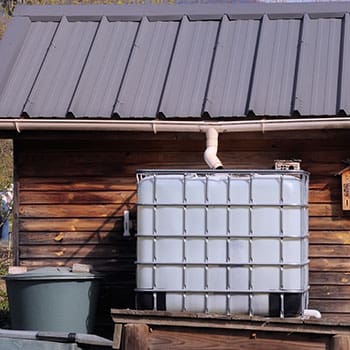
Even in deserts it eventually rains. That’s the time to make the best of it and harvest as much as you can. Rooftops are a primary catchpoint but even a tarp suspended on poles can capture the rain.
The best catch point is a rain barrel but even a 5-gallon bucket or wash tub will do. But it’s only the first step and the water will need to be filtered and purified before drinking or storing.
If taking care of your water stockpile sounds like too much work, you can always try this DIY backpack-sized water generator.
Lakes and Ponds
If you live in the vicinity of a lake or pond you have a natural water source. Lakes tend to be a better source because ponds often become stagnant or choked with weeds and algae. The larger the lake the better.
Even then, make no assumptions. Even if the water looks crystal clear it’s most likely contaminated to some degree by bacteria or worse.
How To Survive In A World Without Water With Springs, Creeks, and Rivers
Flowing water snakes and meanders across the territory. A spring creek is possibly the best natural water source. As the springs meander and thread across the territory, they join to form creeks that eventually lead to rivers.
Rivers may be the most contaminated. Runoff from the surrounding ground and into the feeder springs and creeks eventually accumulate. You can and should harvest the water if it’s available, but aggressive filtering and purification are critical.
Another way to survive without a steady water supply is by collecting clean, drinkable water from plants. This video explains exactly how to do it.
Snow and Ice 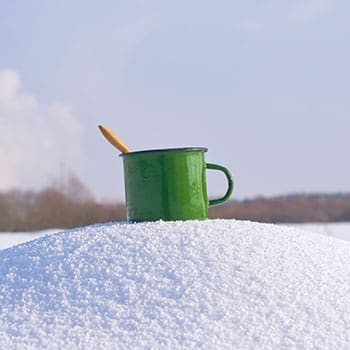
Ice and particularly snow are excellent water sources. Then freezing temperatures tend to moderate or limit bacterial growth, but once again make no assumptions.
The simplest way to harvest snow and ice is to collect it in 5-gallon buckets bring it into a warm area and allow it to thaw. You then can filter and/or purify it for use or storage.
Evaporation
There’s a concept known as a solar still. It’s a tarp stretched over a big hole in the ground. This setup lets moisture in the soil evaporate and collect on the tarp. A bucket or pot is placed beneath the tarp and a rock in the middle of the tarp angles it down towards the collection bucket.
Look for low-lying areas or the bottom of hills or ridges to locate your solar still. Those are areas where water tends to collect in the ground.
How To Survive In A World Without Water With Grey Water
Grey water is water that has been used for previous purposes like laundry or washing dishes. It can and should be reused.
Examples include watering a garden, flushing the toilet, washing floors or machinery. If you need water for use other than cooking or drinking, grey water can add to your available water supply.
Related: How To Collect Gray Water
Water Conservation: Getting More From Less
When water supply is severely constrained, how you use the water you have becomes as important as how you find and purify it. Deliberate conservation techniques can reduce per-person daily water consumption significantly without sacrificing the hygiene and nutrition that protect health.
- Effective hygiene with minimal water: A full-body sponge bath using a basin of less than two liters of warm water is sufficient to remove sweat, bacteria, and odor from all body surfaces including armpits, groin, feet, and face when done methodically. Heat the water first, work from the face downward, use a small cloth or sponge wrung almost dry for each body area, and dry with a towel. Done daily, this prevents the skin breakdown and fungal infections that develop with prolonged hygiene neglect. Dry shampoo made from cornstarch or baking powder applied to the roots and brushed through manages scalp hygiene between water-based hair washing sessions.
Hand washing for disease prevention can be accomplished with as little as 100 to 200 milliliters of water per wash when technique is prioritized over volume. Wet hands briefly, apply soap, scrub all surfaces including between fingers and under nails for at least 20 seconds, then rinse with the minimum water needed to remove soap. Hand washing before food preparation and after toilet use are the two most disease-preventing hygiene behaviors and should be maintained even under severe water restriction.
- Cooking with minimal water: Choose foods and cooking methods that require less water. Steaming uses a fraction of the water required for boiling and preserves more nutrients. One-pot meals that use cooking water as part of the dish, such as soups, stews, and porridges, waste no water. Soak dried legumes overnight before cooking to reduce the cooking time and therefore the evaporation loss during cooking. Wipe cookware clean with a dry cloth or paper before washing to reduce the amount of water needed to clean them.
- The two-basin dishwashing method: Fill one small basin with hot soapy water and a second with clean rinse water. Wash dishes in the soap basin, rinse briefly in the rinse basin. The rinse water can be reused multiple times before replacement. This method uses a fraction of the water consumed by running tap dishwashing and produces grey water that can be reused for toilet flushing or garden irrigation.
- Grey water management: Grey water from dishwashing, laundry, and bathing can replace potable water for toilet flushing, floor cleaning, and garden irrigation of non-food-contact plant surfaces. Use a separate collection basin when washing to capture grey water rather than allowing it to drain away. Pour grey water into the toilet bowl directly to trigger a flush rather than using the tank, which uses the same water volume with less mess. Do not use grey water containing harsh chemicals, bleach, or strong detergents on food garden soil, as these compounds can affect soil biology and plant health.
- Reducing toilet water use: In a water-limited scenario, apply the “if it’s yellow let it mellow” principle and flush only for solid waste. Direct grey water collected from other uses to toilet flushing. If the situation is extended and water is critically scarce, composting toilet alternatives including a bucket with a tight-fitting lid, cat litter or sawdust as a covering material, and a dedicated outdoor composting area eliminate toilet flushing water use entirely and produce compostable material that can eventually return nutrients to the soil.
Water and Medical Needs: The Higher Requirements You Need to Plan For
Standard water planning figures apply to healthy adults under moderate conditions. Several situations significantly increase water requirements or vulnerability to dehydration and need to be planned for specifically.
- Recognizing dehydration: Dehydration progresses in stages and is worth recognizing early because the judgment impairment it causes makes people less likely to address it. Mild dehydration at one to two percent of body weight lost as fluid produces thirst, slight reduction in urine output, and urine that is darker than pale yellow. At three to five percent loss, significant thirst, headache, reduced urine output, dry mouth, fatigue, and reduced physical and cognitive performance are all present. At six to eight percent loss, extreme thirst, very dark or absent urine, dizziness, confusion, rapid heartbeat, and sunken eyes indicate severe dehydration requiring immediate fluid replacement. At ten percent and above, dehydration is a medical emergency. Thirst is a delayed indicator, appearing after dehydration has already begun. Use urine color as a more reliable ongoing gauge: pale straw yellow indicates adequate hydration, dark amber indicates dehydration.
- Oral rehydration for illness: Vomiting and diarrhea cause fluid and electrolyte loss that plain water alone cannot fully replace. The WHO standard oral rehydration solution is one liter of clean water, six level teaspoons of sugar, and half a teaspoon of salt, mixed until dissolved. Give it in small frequent sips rather than large amounts at once to reduce vomiting. This formula works because the glucose in the sugar activates a sodium-glucose cotransport mechanism in the intestinal wall that dramatically improves water and electrolyte absorption even during active diarrhea. Commercial oral rehydration salts packets are worth including in any emergency medical kit and last years in sealed packaging.
- Fever: A person with a fever loses additional fluid through increased sweating and elevated respiratory rate. For every degree Celsius of fever above normal, fluid requirements increase by approximately 10 percent. A person with a 39 degree Celsius fever needs roughly 20 percent more fluid than baseline. Monitor anyone with fever for dehydration and increase fluid intake accordingly.
- Infants and young children: Infants and young children dehydrate faster than adults relative to body weight because of their higher surface area to volume ratio and higher metabolic rate. An infant with vomiting or diarrhea can reach dangerous dehydration within hours. Signs in infants include sunken fontanelle (the soft spot on the skull), no tears when crying, very dry mouth, and no wet diapers for eight hours or more. Oral rehydration solution is appropriate for infants but formula preparation and any water given to infants under six months must use purified water free of nitrates, as nitrate levels safe for adults can cause methemoglobinemia in infants, a potentially fatal condition. Plan water needs for infants separately and prioritize the cleanest available water for their use.
- Pregnant and breastfeeding women: Pregnant women require approximately 300 milliliters per day of additional fluid beyond normal adult requirements. Breastfeeding women require substantially more, approximately 700 milliliters per day of additional fluid to support milk production. Dehydration in breastfeeding women reduces milk supply, which then affects infant hydration as well. In a water-limited scenario, breastfeeding women need to be explicitly prioritized in water allocation rather than planning for them at the standard adult rate.
- Elderly adults: Age-related reduction in kidney function reduces the ability to concentrate urine, meaning elderly adults excrete more water relative to intake than younger adults. Diminished thirst sensation means they may not drink adequately even when dehydrated. Many medications taken commonly by older adults including diuretics, blood pressure medications, and antihistamines increase fluid loss or reduce thirst. Plan water requirements for elderly household members at the upper end of estimated ranges and actively encourage fluid intake rather than waiting for them to request it.
Desalination
96.5% of all of the water on Earth is salt water. There are desalination units that can remove the salts and minerals, or you could use the solar still concept to capture fresh water through evaporation. Anyone living in close proximity to an ocean should understand how to distill fresh water from salt water.
How To Survive In A World Without Water: Water Purification 101 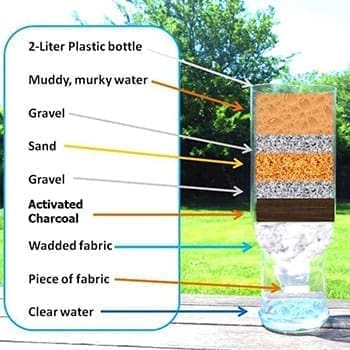
Depending on the source, water often needs to be filtered to remove particulate matter, and all water harvested from natural resources should be purified.
How to Build and Use a Field Water Filter
Filtration removes particulate matter, sediment, and some biological material from water, and improves taste and odor. It is the first step in water treatment, not the last. A filtered water that has not been purified still contains pathogens and is not safe to drink. Always follow filtration with purification.
- Building a layered bottle filter: Take a clean plastic bottle of at least one liter capacity and remove the cap. Cut off the base of the bottle so water can be poured in from the cut end. Place a piece of tightly woven fabric, a coffee filter, or a piece of clean clothing over the mouth of the bottle and secure it with a rubber band or tie. This is your output filter that catches the finest particles as they exit.
Layer your filter media inside the bottle in this order from the mouth upward: a two-inch layer of activated charcoal or crushed hardwood charcoal directly above the fabric, then a three to four inch layer of fine clean sand, then a two to three inch layer of coarser sand or fine gravel, then a two inch layer of coarse gravel at the top nearest the cut opening. Water poured in through the cut base travels down through the layers in sequence, with coarse material removing large particles first, fine sand removing smaller particles, and activated charcoal reducing taste, odor, and some chemical contaminants before the water exits through the fabric and bottle mouth into your collection container.
This layer order is the reverse of what is often described in casual sources, and getting it right matters: coarse media must encounter the water before fine media to prevent rapid clogging. A filter built with fine sand at the top will clog within a few uses.
- What this filter does and does not do: A properly built layered filter removes sediment, large particulates, some heavy metals through the charcoal layer, and significantly improves taste and clarity. It does not reliably remove bacteria, viruses, or protozoa such as Giardia and Cryptosporidium. Do not drink the output of this filter without following it with a purification step.
- Commercial filters: If your situation allows for advance preparation, a quality commercial water filter such as a Sawyer Squeeze, Katadyn Pocket, or Berkey system significantly outperforms a field-built filter. These systems are tested to specific removal standards for bacteria and protozoa and many include activated carbon stages for chemical reduction. A Sawyer Squeeze filter rated to 0.1 micron removes Giardia and Cryptosporidium reliably and weighs a few ounces. Including one in your emergency supplies costs less than most other preparedness investments and is worth it.
- Filter maintenance: Any filter, improvised or commercial, loses effectiveness as it loads with particulate matter. A field-built filter should be rebuilt or the media replaced when flow rate drops significantly or when output water remains turbid despite multiple passes. Rinse commercial filter elements by backflushing according to manufacturer instructions.
Water Purification: Methods, Limitations, and When to Use Each
Purification kills or inactivates biological pathogens including bacteria, viruses, and protozoa. It is a separate step from filtration and must follow it. Understanding what each purification method does and does not address allows you to choose the right method for your specific water source and situation.
- Boiling: Boiling is the most reliable field purification method for biological contamination and requires no supplies beyond a heat source and a container. Bring water to a full rolling boil, defined as vigorous bubbling that cannot be stirred down. At elevations below 6,500 feet, one minute of full boiling kills all biological pathogens of concern including Giardia, Cryptosporidium, bacteria, and viruses. At elevations above 6,500 feet, boil for three minutes to compensate for the lower boiling point at altitude. Allow water to cool naturally in a covered container and store covered to prevent recontamination.
Boiling does not remove chemical contaminants, heavy metals, nitrates, or dissolved minerals. If your source water may contain these, boiling is not sufficient on its own. Boiling also concentrates dissolved solids slightly as steam escapes, which is a minor consideration for most sources but relevant for water that is already minerally heavy.
Related: Easy DIY Water Purification System For Under $20
Do not assume that simmering during cooking purifies water added to a pot. Simmering typically reaches temperatures between 180 and 200 degrees Fahrenheit, which is below boiling and insufficient to reliably kill all pathogens within the short time most cooking steps involve. Boil water separately for the full required time before using it in any food preparation where it will not itself reach a sustained full boil.
- Chemical purification with chlorine: Unscented household liquid chlorine bleach containing 6 to 8.25 percent sodium hypochlorite can be used to purify clear water. Use 8 drops per gallon for 6 percent bleach or 6 drops per gallon for 8.25 percent bleach. Stir and allow to stand for 30 minutes in water at room temperature or above before drinking. If the water is cold, below 40 degrees Fahrenheit, double the dose and extend the contact time to 60 minutes. If the water remains cloudy after treatment, filter it first and then retreat. Chlorine is effective against bacteria and most viruses but has limited effectiveness against Cryptosporidium, which requires a longer contact time at higher concentrations than practical field use allows. Do not use scented bleach, color-safe bleach, or bleach with added cleaners.
- Chemical purification with iodine: Iodine tablets or 2 percent tincture of iodine purify water effectively against bacteria and most viruses but, like chlorine, have limited effectiveness against Cryptosporidium. The standard dose is 5 to 10 drops of 2 percent iodine per liter of clear water with 30 minutes of contact time at room temperature. In cold water below 40 degrees Fahrenheit, increase contact time to 60 minutes or more. Iodine should not be used for more than a few weeks continuously due to thyroid effects. It is not appropriate for pregnant women or people with thyroid conditions. It imparts a taste to water that can be partially addressed by adding a small amount of vitamin C powder after the contact time has elapsed.
- UV purification: Handheld UV purification devices such as a SteriPen expose water to ultraviolet light that damages pathogen DNA, preventing reproduction and rendering them unable to cause infection. UV purification is effective against bacteria, viruses, and protozoa including Cryptosporidium when used correctly in clear water. It requires batteries or charging, works only in clear water since turbidity blocks UV penetration, and leaves no residual protection against recontamination. Filter turbid water before using UV treatment. UV devices are fast, effective, and produce no taste change, making them an excellent primary purification method for a prepared household with the ability to charge batteries.
- What no field purification method addresses: None of the methods above removes dissolved chemical contaminants including nitrates from agricultural runoff, pesticides, petroleum products, heavy metals, or pharmaceutical compounds. If your source water may contain these contaminants based on your location and local land use, field purification alone is not sufficient. Activated carbon filtration reduces some organic chemical contaminants but is not a complete solution for heavily contaminated industrial or agricultural water. In situations where chemical contamination is likely, prioritizing rainwater collection and groundwater from tested sources over surface water is the more practical protective strategy.
Did you know that there is an ingenious way to filter water using a sandwich bag?
Water Storage 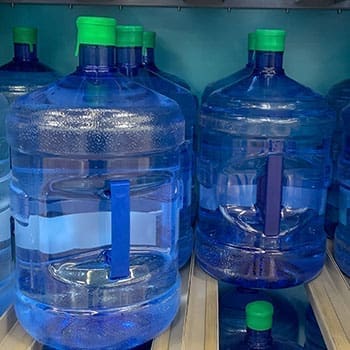
Large 5-gallon plastic bottles and even 5-gallon buckets with lids make for excellent water storage containers. A gallon of water weighs 7.5 pounds so a 5-gallon bottle or bucket of water will total 37.5 pounds. That’s a bit heavy but still portable so you can deliver water to wherever it’s needed.
Many people upgrade to 40-gallon or 55-gallon storage barrels, or even larger tanks, for water storage. Always ensure that any plastic bucket, bottle, or barrel you use is labeled “BPA-free.”
Manufacturers often add BPA (bisphenol A) to plastics, a chemical used in production since the 1950s. Studies show BPA can leach into food or drinks from containers made with it.
Water Shelf-Life?
The statement that purified water lasts for years is technically accurate in the narrow sense that water does not expire the way food does, but it is incomplete in ways that matter for practical storage management.
- What actually degrades in stored water: Water itself does not spoil. What changes over time in stored water is the residual disinfectant that prevents biological growth. Chlorine added during treatment off-gases gradually from stored water, particularly in containers that are not fully sealed or that are stored in warm or light-exposed locations. Once the residual chlorine is gone, biological contamination from microorganisms introduced during filling, present in the container, or entering through imperfect seals can begin to grow. Water stored in clean, sealed, food-grade containers in cool dark conditions takes significantly longer to reach this point than water stored in warm, light-exposed, or partially open containers.
- Commercially sealed water: Water commercially sealed in food-grade containers carries a two-year best-before date that reflects taste and packaging integrity rather than microbiological safety. Commercially purified water in an undamaged sealed container is generally microbiologically safe beyond that date, though taste may be flat. Rotate it by the best-before date for quality.
- Home-stored treated water: Water you purify and store yourself should be treated with residual disinfectant before sealing and rotated every six to twelve months. To add residual chlorine to home-stored water, add two drops of unscented 6 percent household bleach per liter of already-purified water before sealing. This leaves a residual that slows biological growth during storage. At the six to twelve month rotation interval, pour stored water into use for non-drinking purposes such as garden irrigation or toilet flushing, sanitize the storage container with a dilute bleach solution, and refill with freshly purified water.
- Storage conditions: Store water in a cool location away from direct sunlight and away from chemical products including petroleum products, cleaning supplies, and pesticides. Plastic containers are mildly permeable to volatile organic compounds, and water stored near gasoline, solvents, or pesticides can absorb odors and trace compounds through the container walls over time. A basement away from the furnace and away from stored chemicals is generally ideal. Ground contact with soil helps maintain stable cool temperatures. Avoid attic or vehicle storage where temperatures cycle widely between hot and cold.
- Container selection: Use only containers specifically manufactured for water or food storage. Food-grade polyethylene or polypropylene containers labeled with a recycling symbol 1, 2, or 7 marked HDPE or food-safe are appropriate. Glass containers are excellent but heavy and breakable. Avoid repurposing containers that held non-food products, milk jugs which are biodegradable and break down over time allowing contamination, or containers made from unknown plastics. Ensure all containers have tight-fitting lids that can be sealed completely. Label all stored water containers with the fill date and the treatment applied.
- Signs that stored water has been compromised: Discard stored water that has visible cloudiness, unusual color, sliminess on container walls, or any odor beyond a faint chlorine smell. A strong musty, sulfurous, or chemical odor indicates biological growth or chemical contamination. When in doubt, run it through your purification process again before use or divert it to non-drinking applications.
Water Testing – What to Test For and What the Results Tell You
Testing water before drinking it tells you what treatment it needs and confirms that your treatment has worked. It also reveals contamination you cannot detect by sight, smell, or taste, including nitrates, heavy metals, and some pathogens.
- Biological testing: Basic biological water test kits available from hardware stores and online suppliers test for total coliform bacteria and E. coli, both of which are indicators of fecal contamination. A positive result for either means the water requires treatment before use. These kits do not test for viruses or protozoa directly, but coliform presence indicates conditions under which other pathogens are also likely present. Test any new water source for biological contamination before relying on it, and retest stored water every two to three months, or immediately if the storage container has been disturbed or opened in a way that may have introduced contamination.
- Chemical testing: Comprehensive home test kits test for nitrates and nitrites, which are common in water near agricultural land and are particularly dangerous to infants under six months old where they cause a condition called methemoglobinemia; lead and copper, which leach from older pipes and plumbing fittings; pH, which affects the effectiveness of chemical purification methods with highly alkaline or acidic water reducing chlorine and iodine effectiveness; hardness, arsenic, fluoride, and chlorine residual. Match the test kit to the likely contaminants in your area. If you are in an agricultural region, nitrate testing is a priority. If you are in an older building with original plumbing, lead testing matters.
- What home test kits cannot tell you: Standard consumer test kits do not test for pesticides, pharmaceutical compounds, petroleum products, or most industrial chemicals. They also do not test for specific viruses or identify pathogen species. For comprehensive chemical analysis, water samples can be submitted to a certified laboratory for professional testing. State health departments often maintain lists of certified water testing laboratories and some offer low-cost testing for households on private wells. If you are developing a new water source that will be used long-term, professional laboratory testing is worth the investment before committing to it.
- Testing stored water: Stored water can become contaminated through container degradation, introduction of contaminants during refilling, biological growth if treatment is inadequate, or physical breaches of the storage container. Test stored water with a biological test kit every two to three months. Visually inspect storage containers for biofilm growth, discoloration, or unusual odor before each use. If stored water tests positive for bacterial contamination, discard it, sanitize the storage container with a dilute bleach solution of one tablespoon of bleach per gallon of water allowed to contact all interior surfaces for two minutes before rinsing, and refill with freshly purified water.
- Interpreting test results to guide treatment: A water source that tests negative for biological contamination but has elevated nitrates still requires addressing the chemical contamination before it is safe to drink. A source that tests positive for biological contamination but has no chemical contaminants can be made safe with boiling, chemical treatment, or UV purification. A source with both biological and chemical contamination requires the most aggressive treatment approach and may not be fully addressable with available field methods. Use test results to guide which treatment method or combination of methods is appropriate rather than applying a single standard treatment to every source regardless of what it actually contains.
Building a Long-Term Water System – Beyond Emergency Improvisation
The strategies above address surviving a water supply disruption. What follows addresses something more ambitious and more resilient: building a property-level water system that can function independently of the municipal supply or grid power for months or years.
- Hand pump installation on an existing well: If your property has a drilled well currently served by an electric submersible pump, installing a manual hand pump capable of reaching the static water level in that well gives you grid-independent water access at any time. Deep-cylinder hand pumps such as the Simple Pump or Bison Pump are designed to be installed alongside existing electric well pumps in the same casing and can draw water from depths of 200 feet or more with reasonable human effort. A hand pump installation on an existing well is one of the highest-value water security investments a rural property owner can make. It requires professional assessment of the well depth and static water level to select the right pump, and professional installation in most cases, but once installed it requires no power and minimal maintenance.
- Spring development: A property with a surface spring or seep has access to gravity-fed water that can be developed into a reliable system with modest infrastructure. Spring development involves excavating to expose the point where water emerges from the ground, installing a spring box, which is a sealed concrete or stone collection chamber that captures the flow before it can be surface-contaminated, and running a pipe from the spring box by gravity to a storage tank or directly to the point of use. A properly developed spring with a sealed spring box and covered storage provides water that requires minimal treatment and delivers itself to the use point without any pump or power. Spring development should include a water test before relying on the source for drinking, as not all springs are free of chemical contamination.
- Gravity-fed cistern systems: A cistern is a large sealed storage tank, typically buried underground or located downhill from a filling source, from which water is delivered to the use point by gravity. A cistern can be filled from a spring, from rainwater harvesting infrastructure, from a well via a pump during periods when power is available, or from a combination of sources. Once full, a cistern delivers water without power for as long as supply lasts. Sizing depends on household needs and the reliability of the filling source. For a household using 50 gallons per day for all purposes, a 3,000-gallon cistern provides roughly 60 days of supply between filling cycles. Underground cisterns maintain stable cool temperatures that slow biological growth in stored water.
- Rainwater harvesting at meaningful scale: A household-scale rainwater harvesting system captures rain from a roof area, passes it through a first-flush diverter that discards the most contaminated initial flow, and delivers the remainder to covered storage tanks. In a region receiving 35 inches of annual rainfall, a 1,000-square-foot roof can theoretically capture roughly 20,000 gallons per year, though losses from evaporation, first-flush diversion, and overflow reduce the practical yield. A 2,500 to 5,000 gallon storage capacity captures rainfall from wet seasons for use during dry periods. Rainwater harvesting systems need appropriate roofing materials, gutters maintained free of debris and bird accumulation, sealed storage tanks, and a filtration and purification step before the water is consumed. In some states rainwater harvesting is regulated or restricted, so check local rules before investing in infrastructure.
- Integrating multiple sources: The most resilient long-term water system combines two or more independent sources. A property with a hand-pumped well as primary supply, a rainwater harvesting system feeding a cistern for garden irrigation and secondary household use, and a developed spring as an emergency backup has redundancy that no single-source system can match. Designing for redundancy means that the failure of any one source, whether drought affecting the well, a dry season reducing rainwater yield, or a contamination event at the spring, does not leave the household without water. This is the water resilience standard that serious long-term preparedness planning should aim for.
Water is critical to life, yet it can also pose risks if mishandled. To survive in a world without water, it’s vital to treat it with respect and learn how to find, purify, and store this essential resource.
You may also like: 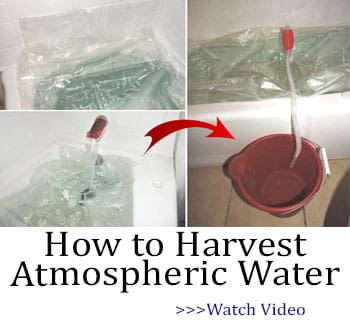
This Water Source Will Disappear in a Crisis
DIY Pressurized Rainwater Harvesting and Purification System (Video)
How to Get Running Water When the Next Hurricane Hits
FEMA Will Never Take Your Stockpile If You Hide It Here
DIY Ingenious Rainwater Harvesting Systems
DIY UV Water Sterilizer That Kills Every Pathogen
















Water weighs about 8.34 lbs per US gallon. While it’s trivial sounding, that’s almost a lb more than the 7.5 lbs that you stated. It might make little difference in gallon or 5 gallon containers but, when you are talking about bulk storage of 55 gallons or more, it becomes a much more significant matter. Imagine the difference if you have 1000 gallons of storage or more. If I’m hauling water on a trailer, or raising a storage container to take advantage of gravity to make pressure, this is absolutely important.