
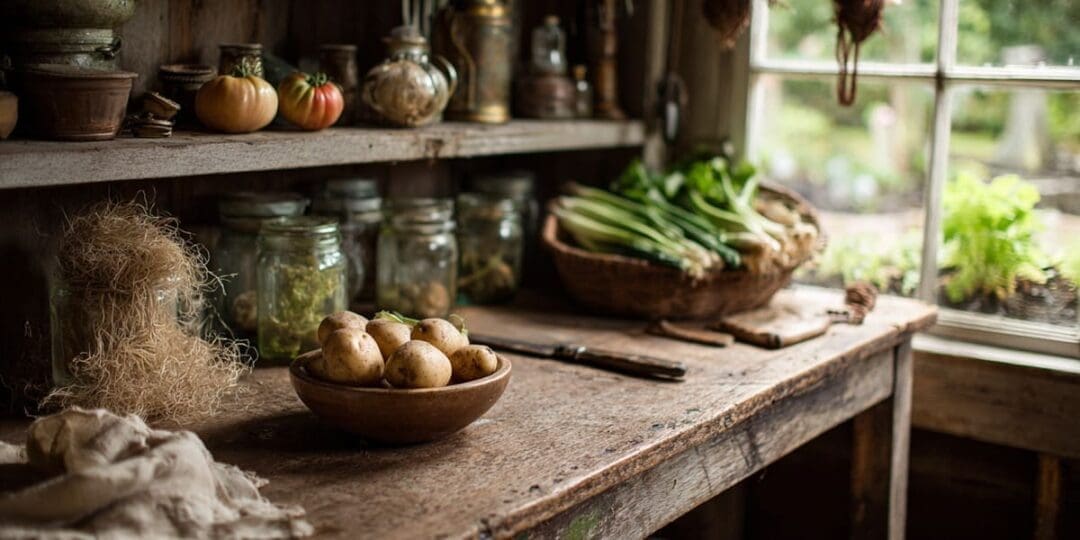
You reach into the back of the pantry.
And your fingers close around a tomato that has gone past its prime.
Your first instinct?
Walk it straight to the compost pile.
That reflex is a good one.
But what if I told you that automatic trip might be wasting a hidden resource?
Spoiled veggies don’t always have to mean the end of the road. In fact, many of them still have something useful left to give.
I’ve got a list of truly useful second acts for your spoiled vegetables.
So forget the compost pile for a minute—let’s get creative!
Garden and Homestead Applications
 You might be surprised to learn that some of the most effective slug traps aren’t bought—they’re grown. It’s a method that’s wonderfully simple.
Just take a zucchini or cucumber that’s gone completely soft, the kind that practically melts in your hand. Slice it in half lengthwise, scoop out a little to form a shallow bowl, and bury the halves cut-side down in your garden beds, leaving about an inch exposed. Slugs can’t resist the moisture and the scent of decay.
They’ll congregate underneath, hiding and feeding. Each morning, just lift the traps and dispose of your gathered pests. It’s a clever way to concentrate the problem, saving you from a frustrating garden-wide hunt. When the vegetable pieces dry out or are eaten away—usually in about a week—just replace them.
Don’t pour that potato water down the drain. Instead, turn it into a free, nutrient-rich drink for your plants. This is perfect for those sprouted or softened potatoes that are no longer good for eating. Chop them, boil them in unsalted water until they completely fall apart, and let the broth cool.
Once strained, you’re left with a cloudy liquid packed with starch, potassium, phosphorus, and minerals that cooked out of the potatoes. Give this cooled tonic to the base of heavy-feeding plants like tomatoes and peppers.
Just be sure to use it within a day or two to avoid fermentation, and feel free to dilute it with equal parts water for younger seedlings. It’s a effortless way to feed your garden.
Sometimes, the best tool is one you were about to throw away. Take the tough, fibrous base of a celery bunch. Once rinsed and thoroughly dried in the sun or near a warm spot, it transforms into a stiff, natural scrubber—perfect for tackling stuck-on food in a cast-iron skillet or cleaning dirt off garden harvests.
A dried corn cob works on the same principle; its rough surface scrubs pots and tools without causing scratches. While most know a loofah gourd is a great scrubber, few think of these everyday scraps as their humble, effective cousins.
And the best part? Once these natural brushes wear out, they can complete their journey right into your compost, returning to the earth just as intended.
Many of the uses you’ve explored — feeding gardens, cleaning tools, fermenting foods, caring for animals — quietly depend on one thing we often take for granted: clean water.
The Water Freedom System offers a way to secure reliable, drinkable water without electricity, chemicals, or complicated maintenance. It’s designed for real homes and real homesteads, where water serves many purposes beyond the tap.
When you start thinking in terms of reuse and self-reliance, water security naturally becomes part of the picture.
👉 Learn how the Water Freedom System works here!
Crafty Uses for Spoiled Vegetables
 Natural dyes. These hide in the scraps and skins you’d normally throw away, and you don’t need perfect vegetables to extract vibrant colors.
Onion skins produce rich golds and browns that work beautifully on cotton, wool, and linen. You’ll want to collect the papery outer layers from both yellow and red onions over time—store them in a paper bag until you have enough to fill a large pot.
When you’re ready to dye, simmer the skins in water for about an hour, strain out the solids, and add your pre-wetted fabric or yarn. The longer you leave your material in the dye bath, the deeper the color becomes. Red onion skins lean toward rusty oranges and terra cottas, while yellow onions give you everything from pale champagne to deep amber depending on the concentration.
Beet tops and wilted beet greens create pink and mauve shades that range from soft blush to deeper rose tones. Chop up those limp greens, add them to a pot of water, and simmer for 45 minutes to an hour. The resulting dye won’t be as intense as what you’d get from the beet roots themselves, but that makes it perfect for subtle, natural-looking colors on yarn or lightweight fabrics.
Old spinach, chard, or kale moves toward muted olives and sage greens. For stronger results, match the weight of veggies to fabric, and try a mordant like alum to set the hue.
If papermaking intrigues you, mushy kale, collards, or lettuce can blend right in. Pulp them with water, combine with recycled paper pulp, and you’ll create rustic sheets flecked with green. The result is textured, decorative paper—perfect for cards or art, bearing an organic quality no store-bought sheet can match. Spread the mixture on a screen, press out the water, and let it dry. What emerges is something uniquely yours.
Kitchen and Pantry Rescues
A high amount of flavor lives in vegetable parts often considered past use: the shriveled carrot peel, the wilted celery leaf, the woody asparagus end, and the dried-out leek top.
Each contains concentrated flavors that transfer efficiently into a broth. Maintain a dedicated container in your freezer, accumulating these scraps over time. Once full, transfer them to a large pot, cover completely with water, and simmer for two to three hours.
Consider the overripe cabbage as a potential starter culture for fermentation, an application most overlook. A cabbage that has softened without developing mold can accelerate a new sauerkraut batch.
Finely chop approximately a quarter cup of this soft cabbage and mix it thoroughly with your fresh cabbage and salt. The established bacterial colonies from the older cabbage will actively jump-start the lactic acid fermentation process, frequently reducing the initial fermentation period by several days.
For vegetable parts with intense flavor but poor texture, infused vinegars offer a practical preservation method. Carrot tops, which become bitter and tough, can be steeped in white vinegar to create a potent cleaning agent.
The process is precise: fill a jar halfway with carrot tops, submerge them completely in vinegar, seal, and infuse for two weeks in a cool, dark location. After straining, transfer the liquid to a spray bottle. The resulting solution effectively cuts grease on surfaces like countertops and windows, with a fresher aroma than plain vinegar.
What you’re doing here — saving scraps, repurposing wilted plants, turning “almost wasted” into something useful — is exactly how households functioned for centuries.

The Forgotten Home Apothecary preserves that quiet knowledge. It teaches how to use common plants, leftovers, and simple preparations to support health, cleanliness, and resilience at home.
Inside, you’ll learn how to:
- Turn kitchen plants and scraps into gentle remedies
- Make natural cleaners, infusions, and ferments
- Support digestion, immunity, and respiratory health with herbs
- Rely less on store-bought solutions and more on what you already have
If this article made you see spoiled vegetables differently, this book helps you see your entire kitchen and garden with new eyes.
👉 Explore the Forgotten Home Apothecary here!
The Final, Truly Unusual, Uses
Animal treats extend the useful life of spoiled vegetables, but you need to know exactly which animals can safely eat what before you start handing out scraps.
Chickens handle soft tomatoes exceptionally well—those overripe fruits that have split open or turned mushy make a nutritious supplement to their regular feed.
The birds peck out the flesh and seeds, getting vitamins A and C along with lycopene. Soft cucumbers, zucchini, and squash also work for chickens, though you should cut larger vegetables into smaller pieces to prevent choking.
Wilted greens like lettuce, kale, and cabbage provide entertainment as much as nutrition since chickens enjoy tearing apart leafy material. Pigs eat an even wider range of spoiled vegetables, including soft potatoes (cooked only), overripe melons, and mushy root vegetables like carrots and beets.
But here’s the vital rule: never feed moldy vegetables to any animal. The toxins that make them dangerous for us are just as harmful—if not more so—to livestock, and animals can’t tell the difference. Also, some vegetables are off-limits altogether.
Onions and garlic can cause anemia in chickens. Green potatoes and their plants contain solanine, which is toxic to both chickens and pigs. Avoid avocado skins and pits for birds, and never give chickens raw beans.
Assessing Your Veggies
Before getting creative, inspect your produce carefully—safety comes first. Learn to tell surface damage from deeper spoilage. Mold is the clearest red flag: fuzzy blue-green or white growth, especially on moist vegetables, means discard the entire item.
If there’s no mold but only soft or bruised spots, cut well around the damaged area. If the remaining flesh is firm, fresh-smelling, and normal in color and texture, it’s safe to use. A pepper with one rotten side, for example, often has a good half left.
Always trust your senses. If a sour or foul smell remains after trimming, throw it out—bacteria isn’t worth the risk.
Knowing what to do with aging food is helpful. Knowing why waste was never tolerated in the first place is even more powerful.
The Amish Ways shares the mindset behind a culture that treats food as a cycle — not a convenience. Nothing is rushed. Nothing is discarded without thought.
This book offers insight into:
- Time-tested food habits that minimize waste naturally
- Simple kitchen routines that stretch ingredients further
- Practical homestead rhythms that reduce reliance on stores
- A slower, steadier way of feeding a household year-round
If you’re drawn to making the most of what you already have, this book helps anchor that habit into everyday life.
👉 Discover The Amish Ways here!
You may also like:
The Only Food That Grows Almost Faster Than You Can Eat It (Video)
Do Amish People Use Electricity?
Vertical Gardening for Self-Sufficient Living
The Best Time to Water Plants: A Natural Grower’s Guide

















COMMENT
COMMENT
COMMENT
COMMENT
COMMENT
COMMENT
COMMENT
COMMENT
COMMENT
COMMENT
COMMENT
COMMENT
COMMENT
COMMENT
COMMENT
COMMENT
COMMENT
COMMENT
COMMENT
COMMENT
COMMENT
COMMENT
COMMENT
COMMENT
COMMENT
COMMENT
COMMENT
COMMENT
COMMENT