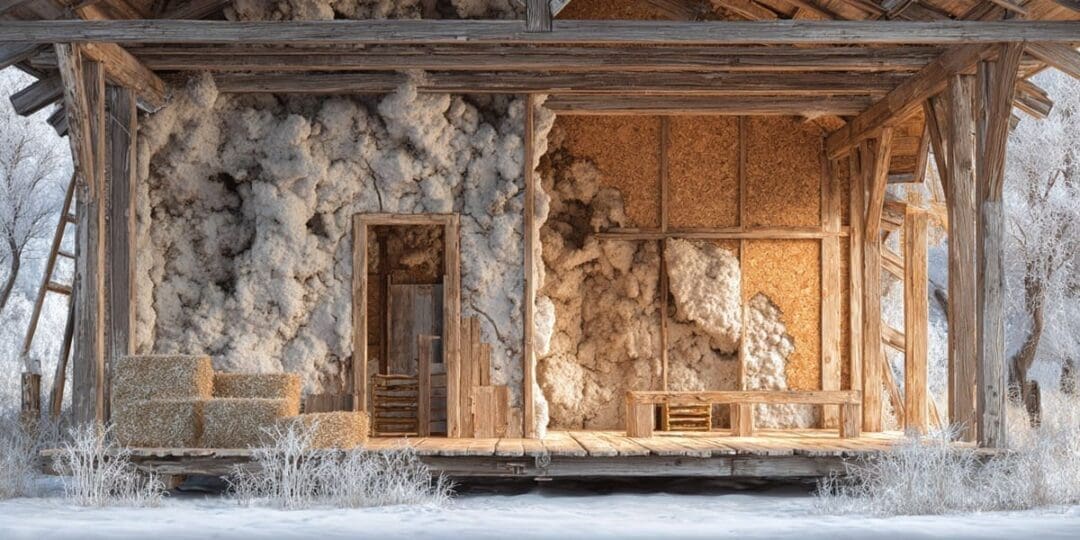
You’ve probably installed foam insulation because every building supply store pushes it first. I did the same thing on my barn renovation five years ago.
The R-value charts convinced me, and the installation went fast. Then problems started showing up. The foam separated from my rafters during temperature swings, creating air gaps that killed its insulating value.
When I needed to add ventilation fans, carving through that rigid foam took four times longer than expected. I pulled samples out and noticed they’d absorbed moisture despite being “closed-cell.”
That failure sent me looking for materials that actually work in real winter conditions, not just laboratory tests.
Sheep’s Wool Insulation
For a material that genuinely regulates temperature and manages moisture, you should look at sheep’s wool insulation. Unlike foam, whose performance can dip in severe cold, wool maintains a consistent thermal resistance, or R-value, because its insulating power comes from its natural fiber structure, not from gases that can change state.
Each wool fiber contains keratin, the same protein found in your hair, which creates a coating that repels liquid water while still allowing vapor to pass. This means wool can absorb up to 35% of its own weight in atmospheric moisture without feeling wet or losing its ability to trap heat, a critical advantage during winter’s wet freeze-thaw cycles when indoor humidity seeks escape.
Many of the materials you will read about in this article were not “rediscovered” — they were never forgotten by communities who built for generations, not product cycles.
In The Amish Ways, you’ll find practical wisdom passed down through real experience: how to build, store, preserve, and live in ways that naturally align with climate, seasons, and available resources.
If you’re drawn to insulation methods that breathe, regulate moisture, and quietly endure winter after winter, this book offers a deeper understanding of the mindset behind them.
👉 Explore The Amish Ways Book here!
Cellulose Insulation
When you need to stop icy drafts dead in their tracks, dense-packed cellulose insulation delivers a practical, effective defense. This material, primarily made from recycled newspaper treated with simple mineral salts like borax and boric acid, fills wall cavities and attic spaces with a dense, fibrous mat that leaves minimal room for air movement. It is the density that gives cellulose its superior performance as a winter insulator; by packing it tightly at about 3.5 pounds per cubic foot, you create a barrier that dramatically reduces convective heat loss—the process where cold air infiltrates and warm air escapes through tiny gaps and seams. In an old homestead house with irregular stud bays and countless penetrations, this dense-packing method seals those legacy leaks that rigid foam boards can never fully address.
Cork Panels
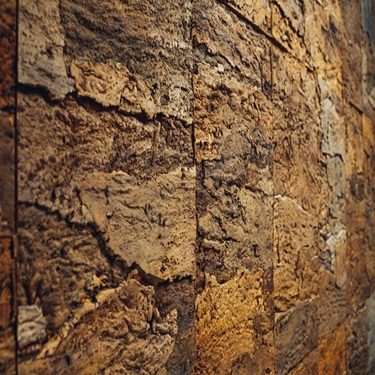 If you seek a rigid panel insulation that behaves nothing like foam, cork provides a remarkable natural alternative. Harvested from the renewable bark of the cork oak tree, this material contains a closed-cell structure filled with air, but it achieves this through suberin—a waxy, complex substance naturally present in the bark—rather than petroleum-based chemicals.
This natural composition grants cork a consistent R-value and a unique resilience to moisture you won’t find in foam. Because of suberin, cork is inherently resistant to rot, mold, and mildew, meaning it can interface with damp foundation walls or a humid crawlspace without deteriorating or losing its insulating capacity.
Straw Bale Walls
A wall built from straw bales, typically 18 to 24 inches thick, creates a fortress of still air that this weather cannot penetrate. The insulation principle here is simple volume: thousands of hollow straw tubes, each trapping air, are compressed into a massive, monolithic block.
When sealed with a breathable lime or earthen plaster, this assembly achieves exceptional thermal performance, often reaching an R-value between R-30 and R-50. But the real winter advantage is thermal mass.
The thick plaster skin absorbs heat from the sun or your wood stove, stores it, and radiates it back inward over hours as temperatures fall, smoothing out the day-night temperature swing far more effectively than a thin, lightweight foam wall ever could.
Hempcrete
Hempcrete, a mix of the woody core of the industrial hemp plant (hurd) with a lime-based binder, works as an insulator in a way that fundamentally differs from both foam and fluffy batts. Instead of just having high resistance to heat flow (R-value), it provides significant thermal mass, which is its key advantage for winter stability.
This means it absorbs heat slowly and releases it even more slowly, creating a thermal lag that can last 8 to 12 hours. When the sun hits a south-facing hempcrete wall or your wood stove heats the interior, the wall absorbs that energy. Then, as night falls and temperatures plunge, the wall radiates the stored warmth back into your home, naturally balancing extremes and reducing your active heating load. You can learn how to use hempcrete with this book.
Choosing the right insulation is part of a larger decision: staying put and staying safe when conditions outside deteriorate.
The Bug-In Guide focuses on turning your existing home into a place of stability — addressing heat, water, food, medical readiness, and resilience without panic or extreme measures.
If your goal is to remain warm, secure, and calm during long winters or unexpected disruptions, this guide helps you think through the whole system, not just one component.
👉 See how to prepare your home as a perfect shelter!
Wood Fiber Board Insulation
For a rigid board insulation that finally allows your walls to breathe, wood fiber board is a transformative option. Manufactured from forest thinnings or wood waste compressed with a natural binding agent like lignin or a small amount of synthetic resin, these boards provide continuous insulation on the exterior of your sheathing.
Their primary winter benefit is breathability paired with wind-blocking capability. When you install them as an exterior insulating layer, they create a protective shell that stops wind-washing—the process where cold air blows through siding and batt insulation, stripping heat away—while still allowing water vapor from inside your wall cavity to diffuse outward and dry.
Clay–Sawdust Composite
 For an insulator you can source almost entirely from your own land and workshop, the clay-sawdust composite stands out as a testament to practical, low-cost ingenuity. This mix uses three simple components: the subsoil under your feet, sawdust from your milling or woodworking, and a natural fiber like chopped straw for tensile strength.
Its winter strength lies in its exceptional thermal buffering capacity. While its pure R-value per inch is moderate, the composite’s true function is as a thermal mass regulator, absorbing heat during the day or from your heating source and releasing it slowly throughout the long, cold night. This stabilizes indoor temperatures, preventing the sharp drops that strain your heating system.
Recycled Denim Insulation
Imagine cutting and fitting insulation with nothing more than a utility knife and your bare hands, without any need for gloves, a mask, or special clothing. This is the practical reality of working with recycled denim insulation, a material made from post-consumer blue jeans processed back into a dense, fibrous batt.
Its winter performance stems from this density; the tightly packed cotton fibers create an effective barrier against convective heat loss and wind infiltration, similar to high-quality cellulose but in a pre-formed batt that is easy to handle.
The inherent structure of the fabric fibers gives it a consistent R-value that isn’t diminished by cold, providing reliable thermal resistance throughout the season.
Living Roof Soil Layers
You might not think of a roof as an active insulating system, but a properly designed living roof in a cold climate uses the earth itself, along with a blanket of snow, to create a highly effective thermal buffer.
The principle is one of mass and added insulation: a layer of growing medium—soil specifically engineered to be lightweight yet moisture-retentive—acts as a thermal mass on top of your roof deck. In winter, this soil layer, especially when dry, provides a steady R-value (roughly R-20 per foot for dry soil).
Then, a layer of fresh, dry snow atop the soil adds a superb natural insulator, with an R-value of about R-1 per inch. Together, they create a dynamic, seasonally-enhanced insulating system that stabilizes the temperature inside the structure below.
Choosing the Right Winter Insulator for Your Homestead
 The right insulation comes down to three things: climate, budget, and skill. This isn’t ideology—it’s practicality. Start with your winter conditions. In deep, dry cold, materials with thermal mass like hempcrete, straw bale, or clay-sawdust help stabilize temperatures. In wet, freeze-thaw climates, choose moisture-smart options such as sheep’s wool or wood fiber boards that can buffer humidity and dry safely.
Next, weigh cash against labor. Denim or cork cost more but install quickly. Straw bale and clay mixes are inexpensive but demand time and physical work. Always consider the full wall system, not just the insulation—details like overhangs, plasters, or air sealing matter as much as R-value.
Finally, be honest about your skills and local supply. Some systems are simple carpentry; others are hands-on, craft-based builds. The best insulator fits your climate, your resources, and your ability to maintain it—resulting in a warm, dry, resilient homestead you understand.
A warm home is essential — but so is the ability to care for yourself and your family when help is delayed or unavailable.
The Home Doctor Guide offers clear, grounded guidance for handling common injuries, illnesses, and emergencies using what you already have on hand. It’s written for ordinary people, not medical professionals, and focuses on calm, practical action.
For those building a resilient homestead, knowing how to insulate walls and tend to health creates true peace of mind.
👉 Learn more about caring for your family’s health at home at this link!
Remember
When you begin building smarter walls and warmer shelters, water quietly becomes the next concern. Insulation protects you from cold — but clean, reliable water protects everything else.
The Water Freedom System is designed for people who want independence from fragile supply lines. It works without chemicals, electricity, or constant maintenance, and can turn uncertain water sources into something you can trust daily.
If your homestead is meant to endure winter, storms, and long disruptions, water security deserves the same thoughtful planning as your insulation.
👉 Learn how to secure clean water for your home here!
You may also like:
Ingenious Solar-Powered Projects Inspired By the Amish
You Probably Won’t Survive An EMP Without This (Video)
Why Are You Still Throwing THIS Away?
How to Heat a Greenhouse Without Electricity
16 Ingenious Uses for Mylar Blankets on Your Homestead