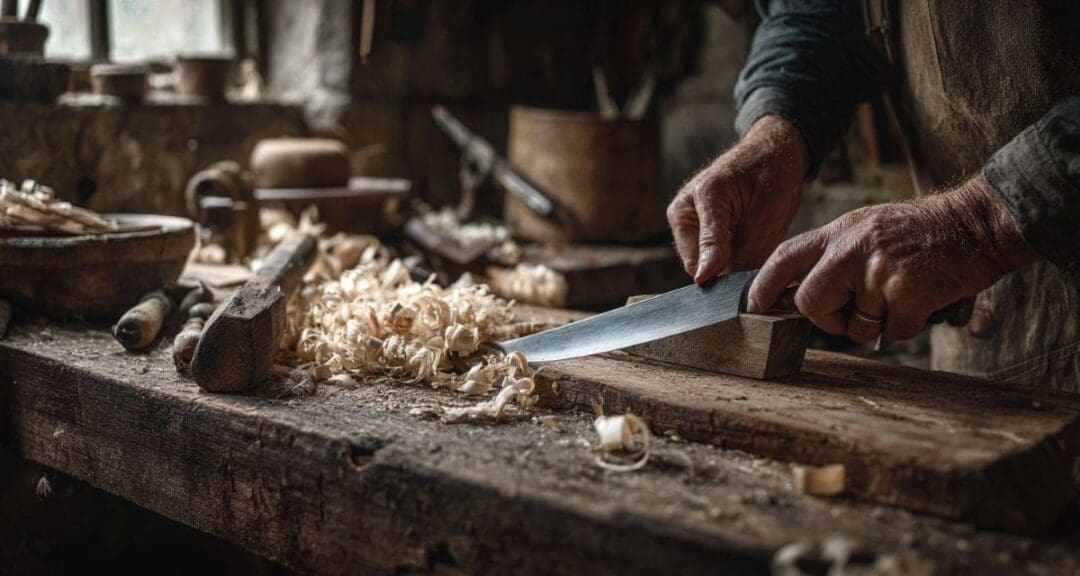
Stop tossing out your tools the moment they go dull! Sharpening them is simpler than you think! And here’s the scary part: dull tools don’t just slow you down, they’re also the ones most likely to injure you!
A sharp blade is safer, requires less force to use, and helps you work more efficiently, especially in a homestead or emergency setting where your energy matters. Sharpening doesn’t require expensive machines or complex kits. It only takes a few tried-and-true methods to get any blade razor sharp again.Once you learn the basics, keeping tools sharp becomes a simple weekly habit instead of a chore you dread.
Why Sharpness Matters for Self-Sufficiency
Sharp blades prevent you from forcing your muscles and reduce the risk of slips or accidents caused by forcing a dull tool to cut. A sharp edge also makes cleaner cuts on herbs, roots, wood, and meat, preserving quality during preparation.
In short, a sharp tool does the work; a dull one makes you work harder. A sharp edge ensures that the tool meets your strength halfway, saving stamina when energy becomes a valuable resource. For gardeners and homesteaders, a clean cut on plants prevents damage, infections, and diseases, keeping crops healthier and more productive. A well-maintained blade helps both your body and your garden thrive.
If you’re done being powerless when blades dull and lights go out you owe it to yourself to break free from the grid. See the Blueprints that let people slash electricity bills and build real independence at home – before someone else tells you it’s impossible.
Understanding the Edge: What You’re Really Sharpening
Every blade has two essential components:
- Bevel: The angle that forms the cutting edge.
- Burr: A tiny, bent piece of metal that forms when sharpening begins.
The burr is your best indicator that you’re sharpening correctly. Once it’s created and then removed, you know the blade has reached its optimal edge. Many beginners skip this step and end up polishing a dull tool instead of truly sharpening it. Without raising a burr, you are simply smoothing metal without ever restoring sharpness.
Think of sharpening as reshaping the metal, not polishing it. You remove small layers until a fine edge is formed, then refine it. When you understand this simple concept, sharpening becomes a practical skill you can master quickly. Knowing what is happening at the edge makes technique more important than brand names or expensive equipment. Our ancestors did not have automatic sharpening tools and created blades capable of literally cutting through bone like through butter.
Sharpening Tools You Can Use On or Off the Grid
 You don’t need advanced machines. These natural and practical methods work anywhere:
✔ Whetstone
A whetstone is the gold standard. Medium grit (1000-2000) removes dullness fast, and fine grit (3000-8000) polishes to razor sharpness.
Method:
- Wet the stone with water.
- Draw the blade across the surface at a 15–20° angle.
- Repeat until a burr forms, then switch sides.
- Finish on the fine side to polish.
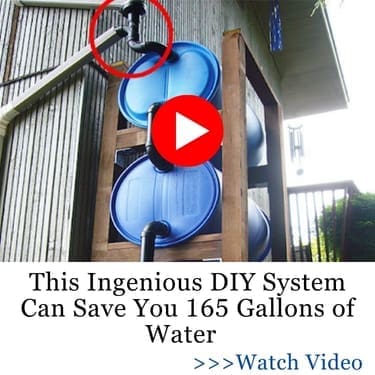
A whetstone lasts decades if stored dry between uses. Rainwater works perfectly for lubrication and the stone itself requires no electricity or harsh chemicals. It’s a quiet, low-cost sharpening tool that aligns with traditional ways of maintaining equipment. If you want to learn how to build a highly-effective rainwater collection system, you have all instructions here!
✔ Ceramic Mug
The unglazed underside of a ceramic mug acts like a sharpening stone.
Method:
Place the mug upside down and draw the blade along the rough ring at the same 15–20° angle.
This method shines in travel, camping, or emergencies, when tools are limited. While it doesn’t polish as finely as a whetstone, it restores working sharpness quickly and safely. A mug may seem humble, but in many households, it’s the most accessible sharpening surface available.
✔ Leather Strop
Stropping removes the burr and refines the edge. A simple leather belt works if you don’t own a strop. You might have seen your barber use a leather strap on the blade before shaving someone.
Method:
Pull the blade backwards across the leather, opposite the cutting direction.
Stropping doesn’t sharpen as much as it maintains an existing edge. This step keeps blades sharper for longer, reducing how often full sharpening is needed. A few strokes on a leather belt after each use can cut sharpening time down to a few minutes every week.
✔ Sandpaper on Wood
Coarse to fine sandpaper (400-2000 grit) wrapped around a flat piece of wood creates a makeshift sharpening system.
Sandpaper is inexpensive, widely available, and adaptable to nearly any tool shape. It’s an ideal method for homesteaders who sharpen many types of blades, from machetes to chisels. It also allows you to progressively refine the edge using grit changes, much like a multi-stone set.
If you want to go beyond sharp tools and build a homestead that feeds and protects you through every crisis you already feel that pull deep inside. This program teaches the real homestead skills nobody else will tell you.
The Best Angle for Any Blade
A correct angle protects and extends the blade’s life:
| Tool | Ideal Angle |
| Kitchen knives | 15–20° |
| Pocket knives | 20° |
| Axes & hatchets | 25–35° |
| Garden shears | 10–15° (single bevel) |
 Choosing too steep an angle weakens the edge; too broad, and the blade feels dull even when sharp. The angle determines not just how sharp a blade becomes, but how long that sharpness lasts.
Maintaining the right angle takes practice, but consistent pressure is more important than perfection. If needed, rest two coins under the blade to help guide the angle. Aim for consistency rather than chasing millimeter precision. A steady hand and awareness of the burr will always outperform expensive gadgets.
Use Water, Not Oil
Water works as an effective lubricant for whetstones and prevents the blade from overheating. Oil can trap metal particles, making it harder for beginners to judge progress.
If you’re off-grid, rainwater—even melted snow—works fine. Natural sharpening traditions almost always relied on water because it cleans the stone as you work, removing metal particles and preventing buildup. For everyday use, water is simple, clean, renewable, and perfectly effective. And you can always get all the water you need with this backpack-sized water generator you can have with you at all times.
Signs Your Blade Is Now Razor Sharp
A properly sharpened blade will:
- Cleanly slice a sheet of paper.
- Shave fine hair from your arm (use caution).
- Glide through vegetables or wood fibers without pressure.
- Catch slightly on your fingernail when touched gently at the edge.
These are simple field tests anyone can do. Each test measures a different property of the blade: precision slicing, fine edge polish, cutting efficiency, and edge grip. You don’t need laboratory tests or special gauges. Nature and common sense provide all the measurements you need.
You wouldn’t leave your tools dull when survival depends on them. So why leave your pantry empty? Go learn the step-by-step challenge that puts a full year of essentials inside your walls before an emergency blindsides you.
Natural Honing Oils You Can Make
Though water works for sharpening, honing oil becomes useful for ongoing blade maintenance. You can make your own from safe materials:
- Light olive oil mixed with beeswax (for axes and chisels)
- Mineral oil infused with lemon peel (for kitchen knives; prevents rust)
- Rendered animal fat (traditional option for farm tools)
Avoid vegetable oils alone as many turn rancid over time. Homemade honing oils nourish the metal and slow oxidation, especially on high-carbon steel. When stored in a small glass jar, these mixtures last a long time and fit well into a self-sufficient workshop.
Keeping Blades Sharp Longer
A few habits protect your edge:
- Always use wooden or bamboo cutting surfaces.
- Dry blades immediately after washing.
- Avoid twisting the blade mid-cut.
- Store knives in sheaths or blocks, never loose in drawers.
- Touch up edges weekly with a strop instead of waiting until they go dull.
These habits make sharpening faster, not harder. Maintenance becomes something you do in moments, not hours. A minute of after-use care prevents hours of future grinding. Respecting a blade each time you handle it is part of the rhythm of self-reliant living.
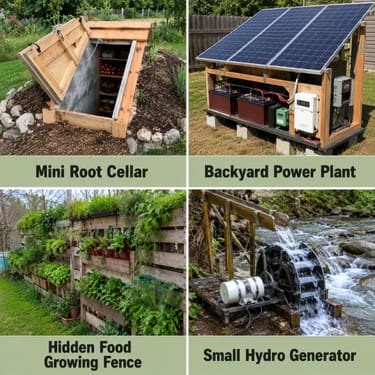
Sharpening today makes tomorrow easier and storing food makes tomorrow survivable. If you want real long-term security for your family put those plans in place now and build the underground storage that keeps you fed and safe when disaster hits.
Bonus Tips: Sharpening for Different Materials
Not all blades serve the same purpose, and your sharpening approach can be tailored to the material you’re cutting:
- For bone and meat processing: Choose a slightly wider angle (18–22°) to prevent chipping.
- For carving wood: Use a finer angle (12–15°) for control and precision.
- For heavy chopping tools: Polish only the cutting edge; leave a micro-bevel to reduce cracks.
- For garden tools: Clean sap and resin with rubbing alcohol before sharpening to prevent clogging stones.
Remember that sharpening is about balance between strength and precision, between bite and polish. The goal is longevity and safe, efficient cutting, not chasing the sharpest possible edge at the cost of durability.
Final Thoughts
A saves effort, reduces injuries, protects your harvest, and supports every task from crafting to cooking. You don’t need costly tools or electricity, just a few simple techniques and consistency.
With a stone, some water, and a few minutes, you can restore almost any blade to razor sharpness.
🔥 When Your Tools Stay Sharp but the Dollar Doesn’t, You Need to Pay Attention
You already know how quickly things break down when you let your tools go dull.
Now imagine what happens when your money dulls the exact same way.
Most people don’t realize it’s already happening.
Prices climbing. Savings shrinking. The value of every dollar slipping away faster than anyone wants to admit.
But you’re not “most people.”
You’re here because you understand self-reliance… and you feel the shift that others keep ignoring.
That’s why Dollar Apocalypse matters more now than ever.
It shows you exactly what to do before the economy hits the point of no return — the point where ordinary families lose everything while the prepared walk through it with stability and strength.
Inside, you’ll discover:
- The warning signs the media won’t talk about until it’s already too late
- How fast inflation can gut a family’s savings… and how to shield yours
- Where real value hides when the dollar weakens
- The step-by-step moves that protect your food, finances, and independence
- How to build a crisis-proof household even if you’re starting late
- What smart people do right now while everyone else waits for permission to panic
If you sharpen your tools to stay safe…
If you grow your food to stay independent…
If you stock your shelves because you understand how fragile supply lines really are…
Then you already know why preparing your money is just as essential.
Because when an economic storm hits, you don’t rise to the occasion —
you fall to the level of the preparation you’ve already done.
Don’t wait for a headline to tell you you’re out of time.
Take control of your future now, while the window is still open.
(74% Discount added for Self-Sufficient Projects Readers)
You may also like:
DIY Tools You Can Make from Bark, Rocks and Trees
75+ DIY Projects That Help You Survive Without Electricity (Video)
20+ Everyday Tools That Will Save Your Life In The Next Crisis
15 Tools That Should Not Be Missing From Your Gardening Kit
Best Indoor Propane Heaters: Stay Warm When the Grid Fails