Weeds usually appear because of compacted ground, exposed soil, or imbalanced growing conditions. And the fastest way to get rid of them is to use chemical herbicides. But before they were invented, people relied on healthy soil practices, steady maintenance, careful observation, and timing.
When you focus on natural weed control, the goal is not destruction, but to create conditions where weeds struggle to grow. As balance returns to your garden soil, many weeds lose their “advantage”. They simply cannot exist.
The methods to get rid of weeds naturally you’ll find below are drawn from long-standing land practices that have proven effective over generations.
Manual & Mechanical Weed Removal
 Hand pulling after rain
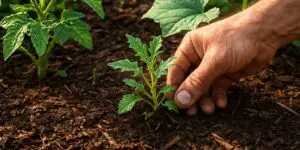
Pulling weeds by hand is most effective when the soil is moist. Rain softens the earth, allowing roots to slide out instead of snapping off. Removing the full root prevents regrowth and reduces the weed’s ability to return. This method works best for annual weeds and young plants. While simple, it builds awareness of soil conditions and plant behavior.
Hand pulling with a dandelion fork
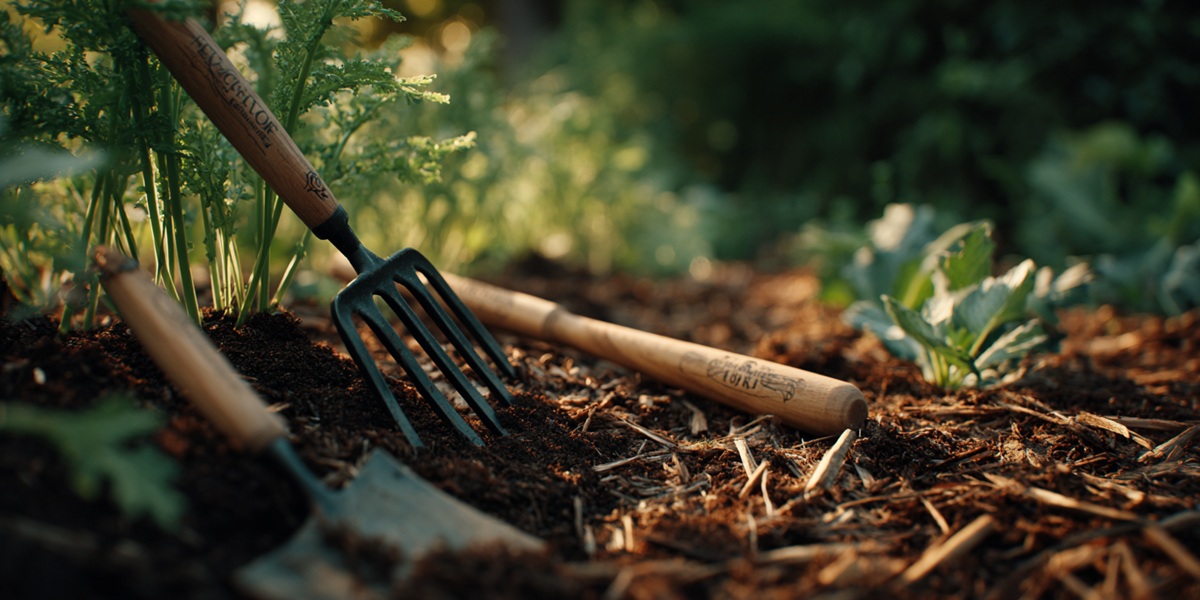
A dandelion fork reaches deep taproots that hands alone cannot remove. Taproot weeds store energy underground, so partial removal is ineffective. Using a fork ensures the root is extracted intact. This prevents the plant from regenerating. Over time, repeated removal weakens the seed bank in the soil.
Shallow hoeing
Hoeing just below the soil surface cuts weeds from their roots. This method works best in dry weather, when uprooted weeds quickly dehydrate. Shallow hoeing avoids disturbing deeper soil layers. Less disturbance means fewer dormant weed seeds are brought to the surface. Consistency is more important than force.
Stirrup hoe weeding
A stirrup hoe slices weeds with a back-and-forth motion. It is efficient for larger beds and row gardens. Because the blade stays near the surface, soil structure remains intact. This reduces erosion and moisture loss. Regular use keeps weeds from maturing.
Collinear hoe technique
This method involves holding the hoe nearly flat against the soil. It gently severs seedlings before they establish. Minimal soil disturbance reduces new weed germination. It is especially effective in fine garden beds. Precision, not strength, makes this method successful.
Broadfork soil loosening
A broadfork loosens compacted soil without turning it over. Compacted soil favors weeds that thrive in poor conditions. Looser soil improves root penetration for desired plants. Healthier plants naturally crowd out weeds. This method improves long-term soil resilience.
Strategic tilling
Tilling can disrupt persistent perennial roots when used carefully. It should be limited to specific situations rather than routine practice. Excessive tilling brings dormant weed seeds to the surface. Used sparingly, it can reset heavily infested ground. Follow-up mulching is essential.
Flame weeding
Flame weeding bursts plant cells with brief heat exposure. It does not burn weeds to ash but causes them to collapse. This works best on young weeds and hard surfaces. It should not be used near dry vegetation. Repeated passes may be necessary.
Steam weeding
Steam penetrates plant tissue and soil surface. It kills weeds without chemicals or flame. This method is useful around stone paths and cracks. It avoids introducing toxins into soil. Steam is effective but energy-intensive.
Boiling water treatment
Boiling water instantly denatures plant proteins. It works well in driveways and sidewalk cracks. This method leaves no residue. It should be used carefully to avoid burns. Plants may regrow if roots remain intact.
Weed brushing
Mechanical brushes physically remove weeds from hardscapes. They prevent regrowth by shredding foliage repeatedly. This weakens the plant over time. Brushes are chemical-free and effective. Regular maintenance is required.
Lawn dethatching
Excess thatch creates space for weed seeds. Removing it improves airflow and moisture penetration. Healthier grass competes better with weeds. Dethatching also improves nutrient absorption. Timing is important to avoid lawn stress.
Edge trimming
Clean edges prevent creeping weeds from spreading. Edges often serve as entry points. Regular trimming creates clear boundaries. This reduces seed migration. It also improves garden organization.
Root excavation for deep taproots
Some weeds require complete root removal. Partial removal encourages regrowth. Excavation prevents stored energy from fueling new shoots. This method demands patience. Over time, infestations decline dramatically.
Related: The Most Important Thing That’s Probably Missing From Your Backyard
Mulching & Smothering Methods
 Straw mulch

Straw blocks sunlight while allowing air flow. It suppresses germination effectively. Straw decomposes slowly, improving soil texture. It is ideal for vegetable gardens. Thickness determines effectiveness.
Wood chip mulch
Wood chips feed beneficial fungi as they break down. They suppress weeds by blocking light. Chips regulate soil temperature and moisture. They are best for trees and perennials. Over time, soil health improves.
Bark mulch
Bark lasts longer than many organic mulches. It is visually tidy and effective. Bark reduces evaporation and erosion. Weed suppression improves with depth. It suits ornamental beds.
Leaf mulch
Shredded leaves mimic forest floors. They improve soil biology naturally. Leaves suppress weeds while decomposing. This is a free and sustainable option. Autumn is the best time to apply.
Dry grass clippings
Dry clippings block light when applied thinly. They add nitrogen to soil. Fresh clippings should be avoided. Layering prevents matting. Use moderation.
Compost mulch
Finished compost feeds soil microbes. It covers weed seeds effectively. Compost improves moisture retention. Healthy soil resists weeds naturally. Quality compost is key.
Cardboard sheet mulching
Cardboard excludes light completely. It decomposes into organic matter. This method is excellent for new beds. Overlap prevents gaps. Mulch on top improves aesthetics.
Newspaper layers
Newspaper breaks down faster than cardboard. Multiple layers are required. It suppresses annual weeds effectively. Ink is generally safe. Always wet before covering.
Wool or felt mulch
Natural fibers suppress weeds and retain moisture. They insulate soil effectively. Wool decomposes slowly. This method suits raised beds. It is reusable in some cases.
Pine needle mulch
Pine needles interlock and stay in place. They suppress weeds effectively. Needles allow water infiltration. They suit acid-loving plants. Renewal is minimal.
Living mulch
Living plants cover soil continuously. They outcompete weeds for light. This improves biodiversity. Clover is a common example. Maintenance is required.
Plastic tarps
Tarps block light entirely. This starves weeds over time. Use between seasons. Remove before planting. Combine with composting.
Landscape fabric
Fabric limits weed emergence. It allows water through when installed properly. Mulch should cover it. Poor installation reduces effectiveness. Longevity varies.
Gravel with barrier underlay
Gravel alone does not stop weeds. A barrier prevents soil contact. This method suits pathways. Maintenance is minimal. Edges must be secured.
A Gentle Note About What the Land Is Telling You
When weeds appear again and again, they are often responding to something deeper in the soil. Traditional herbalists understood this well. They didn’t just remove plants. They observed patterns, learned which “weeds” arrived first, and used them as clues to restore balance.
 If this way of listening to the land speaks to you, Forgotten Home Apothecary offers a deeper continuation of that wisdom. It helps you understand plants not as enemies, but as teachers and helpers — even the ones growing where you didn’t intend them to.
Inside, you’ll discover:
-
How common wild plants reflect mineral deficiencies, compaction, and soil stress
-
Which so-called weeds were traditionally used for healing, nourishment, and soil repair
-
How to prepare simple herbal remedies using plants that often grow uninvited
-
Ways to rebuild soil health gently, without relying on chemicals or disruption
-
Why working with nature often solves problems that force never can
This is the kind of knowledge passed quietly from one generation to the next. It doesn’t rush. It restores confidence in your ability to read the land and respond with care instead of control. Learn more about it HERE!
Natural Sprays & Spot Treatments
Household vinegar
Vinegar burns leaf tissue on contact. It works best on sunny days. Roots may survive initial treatment. Repeat applications improve success. Avoid spraying soil directly.
Horticultural vinegar
Stronger vinegar works faster. Protective gear is necessary. Soil contact should be limited. Best for cracks and paths. Repeated use can affect soil life.
Vinegar and dish soap
Soap improves adhesion to leaves. This increases effectiveness. Use sparingly. Avoid overspray. This is a contact treatment only.
Vinegar and salt
Salt dehydrates plants permanently. It damages soil structure. Use only where nothing should grow. Apply carefully. Never use in garden beds.
Citric acid spray
Citric acid disrupts plant cells. It breaks down naturally. Effectiveness improves in sunlight. This is soil-safe when used carefully. Spot treatment is best.
Lemon juice concentrate
High acidity damages foliage. Young weeds are most vulnerable. Reapplication may be needed. Avoid beneficial plants. Use during dry weather.
Essential oil blends
Oils disrupt plant membranes. They are plant-derived. Concentration matters. Overuse can harm soil organisms. Spot application is recommended.
Clove oil spray
Clove oil is highly effective. It works quickly on young weeds. Protective gloves are advised. It leaves no residue. Repeat treatments may be required.
Cinnamon oil spray
Cinnamon suppresses seedlings. It also discourages fungal growth. It works best as prevention. Combine with mulch. Avoid heavy soil application.
Peppermint oil spray
Peppermint disrupts growth hormones. It acts as a repellent. Effectiveness varies by species. Use diluted solutions. Best for cracks and borders.
Alcohol spray
Alcohol dehydrates foliage rapidly. Dilution is critical. Overuse can damage soil. This is a spot method only. Works best on sunny days.
Soap-based herbicide
Soap strips protective leaf coatings. This causes dehydration. It does not persist in soil. Avoid concentrated solutions. Repeat as needed.
Baking soda
Baking soda alters surface pH. It is effective in cracks. Avoid garden soil use. It prevents regrowth temporarily. Precision is important.
Boiling saltwater
This combination is highly destructive. It sterilizes treated areas. Use only on hardscapes. Avoid runoff. This is a last-resort method.
Soil, Lawn & Garden Management
Dense planting
Dense planting shades soil. Weeds require light to germinate. Healthy plants dominate space. This reduces maintenance. Planning is essential.
Proper spacing
Balanced spacing avoids bare soil. Bare soil invites weeds. Plants grow stronger when spaced correctly. This improves airflow. Weed pressure decreases naturally.
Cover crops
Cover crops occupy soil between plantings. They suppress weeds effectively. Roots improve soil structure. They add organic matter. Termination timing matters.
Crop rotation
Rotation disrupts weed life cycles. It prevents adaptation. Different crops compete differently. Soil nutrients balance improves. Long-term weed pressure declines.
No-dig gardening
No-dig preserves soil layers. Weed seeds remain buried. Soil life thrives. Less disturbance means fewer weeds. Mulch is essential.
Raised beds
Raised beds allow soil control. Weed pressure is reduced. Soil warms faster. Drainage improves. Maintenance becomes easier.
Healthy lawn fertilization
Strong grass crowds out weeds. Balanced nutrients matter. Over-fertilizing invites problems. Timing is critical. Organic inputs work best.
Overseeding thin lawns
Thin lawns invite weeds. Overseeding fills gaps. Grass density improves. Seasonal timing matters. Results build over time.
Deep, infrequent watering
Deep watering encourages deep roots. Weeds prefer shallow moisture. This shifts advantage to desired plants. Soil resilience improves. Water efficiency increases.
Soil aeration
Aeration relieves compaction. Roots grow deeper. Water infiltration improves. Weeds lose advantage. Aerate during active growth.
Balanced soil pH
Certain weeds prefer acidic or alkaline soil. Balancing pH discourages them. Soil tests guide correction. Amendments take time. Stability matters more than speed.
Organic matter improvement
Organic matter feeds microbes. Microbes support plant health. Healthy plants resist weeds. Compost is the foundation. Consistency is key.
Timing, Prevention & Seed Control
Early-season weeding
Young weeds are weakest. Early removal prevents seeding. This reduces future pressure. Timing saves labor later. Observation is essential.
Removing weeds before seed set
One weed can produce thousands of seeds. Preventing seed formation is critical. Cutting tops works temporarily. Root removal is better. Persistence pays off.
Solarization
Clear plastic traps heat. High temperatures kill seeds. Moist soil increases effectiveness. Timing matters seasonally. Beds must rest afterward.
Tool sanitation
Tools carry seeds unknowingly. Cleaning prevents spread. This is often overlooked. Simple brushing is sufficient. Prevention saves work.
Compost heat management
Hot compost kills weed seeds. Cold compost does not. Turning maintains heat. Proper moisture is required. Finished compost is safer.
Weed-free mulch sourcing
Contaminated mulch spreads weeds. Inspect before use. Trusted sources matter. Heat-treated mulch is safer. Prevention avoids frustration.
Pathway and border design
Clear pathways limit spread. Physical barriers slow migration. Edging reduces maintenance. Design simplifies management. Order discourages weeds.
You Might Like: How to Filter Water Using a Sandwich Bag
Biological & Natural Competition Methods
Ground-cover plants
Ground covers block light. They stabilize soil. Many are perennial. They require establishment time. Maintenance is minimal once mature.
Companion planting
Some plants suppress weeds indirectly. They alter microclimates. Root interactions matter. Diversity improves resilience. Observation guides pairing.
Shade creation
Many weeds need full sun. Shade limits germination. Trees and trellises help. Planning prevents problems. Shade must suit crops.
Grazing animals
Animals consume weeds selectively. Chickens scratch seeds. Goats target woody plants. Management is essential. This mimics traditional systems.
Corn gluten meal
Corn gluten prevents germination. It does not kill existing weeds. Timing is critical. Soil temperature matters. Use as prevention only.
Encouraging soil microbe balance
Healthy microbes support plant dominance. Fungi and bacteria matter. Chemical inputs disrupt balance. Compost restores life. Living soil resists weeds naturally.
How People Managed Weeds Before Chemicals Ever Existed
Long before sprays and shortcuts, weeds were managed through rhythm, timing, and steady habits. Communities that lived close to the land learned that prevention mattered more than reaction. Their fields stayed productive not because they fought nature harder, but because they understood it better.
 The Amish Ways Book preserves many of these practical, soil-first traditions. It reflects the same principles found throughout this guide: fewer disruptions, healthier soil, and patience that pays off over time.
Within its pages, you’ll learn:
-
How traditional growers kept weeds in check through mulching, spacing, and soil care
-
Why minimal disturbance often results in fewer weeds year after year
-
How composting, crop rotation, and timing were used as primary weed defenses
-
Simple habits that reduced labor while improving soil fertility
-
Why balance, consistency, and observation mattered more than force
These methods weren’t designed for speed. They were designed to last. And they still work today, especially for those who want gardens that grow stronger instead of more dependent each season.
Learn more about The Amish Ways Book HERE!
Remember This About Weeds!
Traditional herbalists observed that weeds thrive where land is stressed. When soil is nourished, aggressive plants retreat on their own. Weed pressure often reflects missing minerals, compacted earth, or neglected growing rhythms. Listening to the land is as important as removing plants. Balance is always the long-term solution.
You may also like:
The Weeds in Your Backyard You Should Start Eating Today
The 4 Valuable Antibiotics BIG PHARMA Doesn’t Want You To Stockpile (Video)
The Vinegar Weed Killer Recipe Every Homesteader Should Know
The Best Time to Water Plants: A Natural Grower’s Guide
How to Water Your Plants When You’re Away